
ENGLISH VERSION BELOW: PLEASE, SCROLL DOWN!
Il polistrumentista Steve Blanco si lancia in un progetto solista con “Imprints of Man”, un album per pianoforte che reinventa la musica della sua band, Imperial Triumphant. Spogliando la complessità del loro metal d’avanguardia, Blanco trasforma i brani in pezzi intimisti e riflessivi per pianoforte solo. “Imprints of Man” uscirà il 15 novembre 2025.
Benvenuto, Steve! Il tuo nuovo album solista “Imprints of Man” reinventa attraverso il pianoforte il suono oscuro e labirintico degli Imperial Triumphant, trasformando musica caotica e intensa in meditazioni intime. Cosa rappresenta questo strumento per te a livello personale ed espressivo? Ti senti più pianista o bassista nel profondo, e come hai affrontato la sfida di tradurre l’intensità del tuo lavoro metal in pianoforte solo?
Il pianoforte e il basso significano tutto per me, mi collegano alla forza della musica in modi diversi ma ugualmente profondi. Proprio come ogni mente riceve informazioni dalla coscienza universale attraverso il proprio filtro, ogni strumento canalizza quell’energia in modo unico. Il pianoforte, però, ha un posto speciale nel mio spirito perché rappresenta l’esperienza solista definitiva. Reverisco il pianoforte acustico come un veicolo di solitudine, illuminazione ed espansione. Per me qualsiasi cosa può essere tradotta in qualsiasi altra: non ci sono regole. Così ho preso l’architettura complessa della musica di Imperial Triumphant e l’ho reinventata per il pianoforte. È la stessa forza, vista però attraverso una finestra diversa.
“Imprints of Man” impressiona per aver svelato l’architettura grezza delle composizioni degli Imperial Triumphant. Qual è stata la parte più difficile nel togliere distorsione e fiati, e c’è stata qualche storia, opera d’arte o idea portante che ha guidato la scrittura dell’album?
Ho passato qualche mese a lavorarci, trovando momenti tra gli strati del caos della vita per sedermi al pianoforte e lasciar fluire tutto. Non c’è stato un concetto unico che guidasse il processo, non stavo inseguendo un’idea, ma ricevendo quello che veniva. Ho solo cercato di rimanere aperto e canalizzare ciò che emergeva.
Il tuo lavoro solista mostra influenze provenienti dalla letteratura, dall’arte visiva e dalla musica classica (come “F# Minor Fugue” di Bach). Come traduci queste ispirazioni in musica, e c’è un filo comune che collega tutti i tuoi progetti solisti, da “Going To The Sun” a “Imprints of Man”?
Ogni singola molecola di questa esperienza umana mi influenza — suono, cinema, letteratura, architettura, pittura, silenzio — tutto. Le opere per tastiera di J.S. Bach hanno formato il mio mondo interiore fin dall’infanzia; sono tra le trasmissioni più divine mai scritte. Sono sempre stato attratto dall’esperimento e dal vivere fuori dagli schemi, sia nell’arte che nella vita. Tutti i miei progetti, che siano “Going To The Sun” o “Imprints of Man”, provengono dalla stessa corrente: la fonte universale che scorre attraverso tutto. Il mio ruolo è semplicemente ricevere e tradurre tutto in suono.
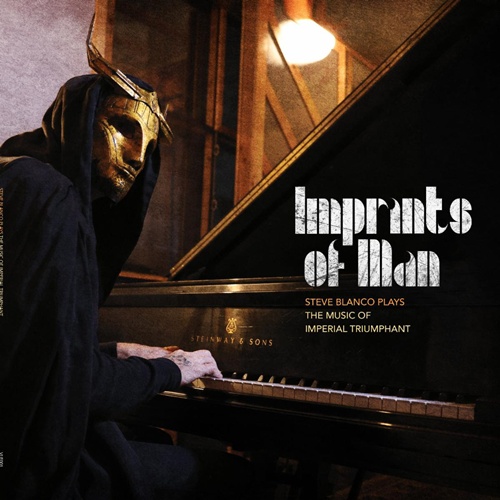
La copertina dell’album, realizzata da Louis F. Cuffari, è impressionante e atmosferica. Come è nata la collaborazione con lui, e quanto è importante l’arte visiva nel completare la tua visione musicale?
Louis è un amico d’infanzia e un artista fantastico. Collaboriamo a progetti da sempre. Per la copertina volevo una foto della sessione reale, così ho messo la maschera di Baal e abbiamo fatto lo shooting. Poi Louis ha curato l’impaginazione.
La tua musica spesso oscilla tra caos e contemplazione. Quanto è importante l’improvvisazione nel tuo processo creativo solista, e pensi mai a un ascoltatore ideale o è per lo più un’esperienza introspettiva?
Cerco di esprimere la mia esperienza in questo mondo canalizzando la musica. L’improvvisazione è tutto per me, è l’essenza della scoperta. Il semplice atto di toccare uno strumento per la prima volta, di esplorarne il suono, è già improvvisazione. In questo senso, la musica viene sempre improvvisata su qualche livello. Proprio come la maschera dell’ossigeno in aereo, devo prima soddisfare me stesso per respirare pienamente la musica, e solo dopo posso davvero connettermi con gli altri.
Sei cresciuto in una famiglia creativa con una madre ballerina di danza del ventre marocchina, un padre cinematografo e un fratello con disabilità mentale: come hanno influenzato queste esperienze personali il tuo approccio alla composizione e all’esecuzione della musica da solista? E il tuo background nel cinema influenza il modo in cui “vedi” la musica quando la arrangi?
Siamo tutti plasmati dalla somma delle nostre esperienze e dai lignaggi antichi che ci collegano all’universo per milioni di anni. Mi sento molto fortunato ad essere cresciuto in una casa così diversificata e creativa, mi ha dato un senso di presenza, vitalità e integrità che guida ancora tutto ciò che faccio. Il cinema mi ha insegnato anche a vedere il suono, a pensare in termini di atmosfera, movimento e luce. Quando compongo o eseguo musica solista, è come dirigere un film interiore che esiste oltre lo schermo.
I tuoi progetti musicali sono molto diversi, dal Steve Blanco Trio a Electric Voice Cult a El Chico Blanco. Come queste esperienze hanno influenzato l’approccio che hai avuto su “Imprints of Man”, e altre passioni, come la natura, le moto o iniziative imprenditoriali, influenzano mai il tuo lavoro solista?
Come ho detto prima, per me è tutta musica. La natura è musica e la musica è natura. Per quanto ne sappiamo, la musica o il suono in qualche forma potrebbe essere la forza divina della creazione. Così tanta antica saggezza lo allude. Amo tutto. Una moto è musica per le mie orecchie.
Quali album ti hanno spinto a diventare un pianista?
Guardando al futuro, immagini di sviluppare la tua carriera solista in una direzione multimediale — con video, arte visiva o performance site-specific — o pensi resterà principalmente focalizzata sul suono?
Ho già esplorato molti di questi mezzi nella mia vita, film, arte visiva e varie forme di performance. Al momento, sono più soddisfatto semplicemente di fare musica per me stesso quando possibile. Ho imparato a stare attento a dove indirizzo la mia energia; il mondo creativo spesso restituisce in modi che non corrispondono a ciò che ci metti. Così creare nel mio piccolo universo è diventato essenziale, mi mantiene equilibrato, ispirato e allineato a ciò che conta davvero.
Hai intenzione di eseguire “Imprints of Man” dal vivo, e se sì, che tipo di location preferiresti per queste performance? Immagini sale da concerto tradizionali, spazi più intimi o contesti site-specific?
Sto valutando di fare qualche micro-tour solista per eseguire questa musica dal vivo. La sfida sarà trovare pianoforti a coda eccellenti e spazi eleganti che davvero completino lo spirito dell’album. Qualche tour intimo negli Stati Uniti e in Europa sarebbe fantastico, penso che alcuni fan apprezzerebbero davvero vivere “Imprints of Man” in questo tipo di contesto.
Multi-instrumentalist Steve Blanco is stepping into solo territory with “Imprints of Man”, a piano album that reimagines the music of his band, Imperial Triumphant. Stripping down their avant-garde metal complexity, Blanco transforms the songs into intimate, reflective piano pieces. “Imprints of Man” is set to be released on November 15, 2025.
Welcome, Steve! Your new solo album “Imprints of Man” reimagines the dark, labyrinthine sound of Imperial Triumphant for solo piano, turning chaotic, intense music into intimate meditations. What does this instrument mean to you personally and expressively? Do you feel more like a pianist or a bassist at heart, and how did you approach translating the intensity of your metal work into solo piano?
Both the piano and bass mean the world to me, they connect me to the force of music in different, yet equally profound, ways. Just as every mind receives information from the universal consciousness through its own lens, each instrument channels that energy uniquely. The piano, however, holds a very special place in my spirit because it represents the ultimate solo experience. I revere the acoustic grand piano as a vessel of solitude, enlightenment, and expansion. To me, anything can be translated into anything, there are no rules. So I took the complex architecture of Imperial Triumphant’s music and reimagined it for the piano. It’s the same force, just seen through a different window.
“Imprints of Man” is praised for revealing the raw architecture of Imperial Triumphant’s compositions. What was the most challenging part of stripping away distortion and brass, and did any story, artwork, or central idea guide the writing of the album?
I spent a few months working on it, finding moments between layers of life’s hustle to sit at the piano and let it unfold. There wasn’t a single concept guiding the process, I wasn’t chasing an idea so much as receiving one. I just tried to stay open and channel whatever came through.
Your solo work shows influences from literature, visual art, and classical music (like “F# Minor Fugue” by Bach). How do you translate these inspirations into music, and is there a common thread that connects all your solo projects, from “Going To The Sun” to “Imprints of Man”?
Every single molecule of this human experience influences me, sound, cinema, literature, architecture, painting, silence, all of it. The keyboard works of J.S. Bach have shaped my inner world since childhood; they’re among the most divine transmissions ever written. I’ve always been drawn to experimentation and to living outside the box both in art and in life. All my projects, whether “Going To The Sun” or “Imprints of Man,” come from the same current: the universal source that flows through everything. My role is simply to receive and translate it into sound.
The album artwork by Louis F. Cuffari is striking and atmospheric. How did your collaboration with him come about, and how important is visual art in complementing your musical vision?
Louis is my childhood friend and a fabulous artist. We have been collaborating on projects as long as I can remember. For the cover I wanted a photo from the actual session so I put the Baal mask on and we did a shoot. Then Louis designed the layout.
Your music often shifts between chaos and contemplation. How important is improvisation in your solo creative process, and do you ever consider an ideal listener or is it mostly introspective?
I aim to express my experience in this realm by channeling music. Improvisation is everything to me: it’s the essence of discovery. The very act of first touching an instrument, of exploring its sound, is itself improvisation. In that sense, music is always being improvised on some level. Just like the oxygen mask on an aircraft, I first have to satisfy myself to breathe the music fully and only then can it truly connect with others.
Growing up in a creative household with a Moroccan belly dancer mother, a cinematographer father, and alongside a mentally disabled brother: how have these personal experiences shaped your approach to composing and performing solo music? And does your background in filmmaking influence how you ‘see’ music when arranging it?
We are all shaped by the sum total of our experiences and by the ancient bloodlines that connect us to the universe stretching back millions of years. I feel very fortunate to have grown up in such a diverse and creative home, it gave me a sense of presence, vibrancy, and integrity that continues to guide everything I do. Filmmaking also taught me to see sound, to think in terms of atmosphere, movement, and light. When I compose or perform solo music, it’s like directing an inner film that exists beyond the screen.
Your musical projects are very diverse, from the Steve Blanco Trio to Electric Voice Cult to El Chico Blanco. How do these different experiences inform the approach you took on “Imprints of Man”, and do other passions, like nature, motorcycles, or entrepreneurial ventures, ever influence your solo work?
As I stated earlier: it’s all music to me. Nature is music and music is nature. For all we know music or sound in some form may very well be the divine force of creation. So much ancient wisdom alludes to this. I love it all. A motorcycle is music to my ears.
Which albums inspired you the most to become a pianist?
Looking ahead, do you imagine developing your solo career in a multimedia direction — like with videos, visual art, or site-specific performances — or do you see it staying mainly focused on sound?
I’ve already explored so many of those mediums throughout my life, film, visual art, and various forms of performance. At this point, I’m most fulfilled simply making music for myself when possible. I’ve learned to be careful about where I direct my energy; the creative world often gives back in ways that don’t match what you put in. So creating within my own little universe has become essential, it keeps me balanced, inspired, and aligned with what truly matters.
Do you plan to perform “Imprints of Man” live, and if so, what type of locations would you prefer for these performances? Would you imagine traditional concert halls, more intimate spaces, or site-specific settings?
I’m considering doing some solo micro-tours to perform this music live. The challenge will be finding superb grand pianos and elegant spaces that truly complement the spirit of the album. A few intimate tours across the U.S. and Europe would be fabulous, I think some fans would really appreciate experiencing “Imprints of Man” in that kind of setting.
 Il Raglio del Mulo