
ENGLISH VERSION BELOW: PLEASE, SCROLL DOWN!
Gli Exhumed tornano con “Red Asphalt”, nuovo album gore metal su Relapse Records, un concept road-horror ad alto tasso di violenza e velocità. Tra riff frenetici, groove devastanti e immaginario pulp fatto di incidenti e biker zombi, la band guidata da Matt Harvey spinge ancora sull’acceleratore dopo “To The Dead” del 2022. Ne abbiamo parlato proprio con Matt.
Ciao Matt! Dai vostri demo adolescenziali alla trilogia “Gore Metal”, che nel 1998 ha contribuito a definire il genere, passando per concept epici come quello sugli omicidi di Edimburgo in “Death Revenge” e per la celebrazione della vostra storia con “To The Dead” nel 2022, anche grazie al contributo di ex membri come Mike Beams e Leon Del Muerte: come si inserisce “Red Asphalt” nella vostra evoluzione lunga 35 anni? Anche in questo caso i vecchi compagni hanno partecipato con riff o idee a questo concept stradale intriso di sangue?
E’ molto rappresentativo della nostra formazione attuale ed è qualcosa che abbiamo elaborato dopo la fine del ciclo di tour di “To the Dead”. È stato anche un vero e proprio lavoro di squadra, con Ross e Sebastian che hanno scritto un paio di canzoni ciascuno e io che ho creato il resto. Penso che sia abbastanza fresco e diverso da distinguersi e meritare l’inclusione nella nostra discografia, ma anche abbastanza fedele al nostro sound da soddisfare chi segue la band da un po’. Crediamo tutti molto nel disco e pensiamo che tutti i brani siano piuttosto forti.
Come è nato il concept “American roadway“ di “Red Asphalt” e quali incidenti reali, leggende metropolitane o film horror hanno contribuito a ispirare gli omicidi automobilistici, le auto difettose e le cricche di motociclisti zombificati?
Passiamo la maggior parte del tempo in tour spostandoci da un posto all’altro, ed essendo una band americana, andiamo in tour qui negli Stati Uniti più frequentemente che altrove, quindi è stato un approccio un po’ “guardiamo cosa succede al di fuori della finestra”. Ross stava ascoltando “The Road Behind” dei Gwar e mi ha sfidato a inventare la “road ballad death metal definitiva”, più per ridere che altro, ma più ci pensavo, più mi rendevo conto che era un filone piuttosto ricco a cui attingere. Abbiamo sicuramente visto più della nostra giusta quota di auto e camion in fiamme, ribaltati, accartocciati, schiacciati e piegati, e in vari stati di disordine durante i nostri viaggi, e anni fa, negli anni ’90, stavo guidando e sono rimasto coinvolto in un incidente stradale piuttosto grave in cui il veicolo si è ribaltato e Ross, che era sul retro del camion con la nostra attrezzatura, ha dovuto essere trasportato in elicottero in ospedale. Per fortuna, è rimasto sostanzialmente in buone condizioni, anche se ha ancora una cicatrice su un sopracciglio a ricordo dell’incidente. La melodia della “cricca di motociclisti zombificati” è quella di “Shovelhead”, ispirata a un paio di film – Werewolves On Wheels e soprattutto Psychomania – entrambi meravigliosi film di bassa lega degli anni ’70 a basso budget con imbrogli soprannaturali e caos motociclistico. Abbiamo parlato di molti film mentre elaboravamo i concetti, in particolare dei film horror della vecchia scuola per l’educazione stradale come Mechanized Death, Signal Thirty, The Iron Graveyard e, naturalmente, la serie Red Asphalt. Oltre al materiale documentaristico, abbiamo fatto riferimento anche a un bel po’ di film horror/motociclistici/thriller, da Road Games a Mad Max II, The Hitcher, Easy Rider, Angels From Hell, Death Race 2000, parti di Toxic Avenger e molti, molti altri.
Matt, hai definito “Red Asphalt” una “lettera d’amore alla strada” che è “familiare ma molto pericolosa”. Qual è il tuo testo gore preferito dell’album?
“Adoro Crawling From The Wreckage”, perché è un pezzo gore piuttosto diretto che “fa quello che promette”. Mi piace raccontare come le cinture di sicurezza, i finestrini e varie parti dell’auto diventino pericolose dopo l’incidente: è solo un’immagine divertente, ed è divertente fare una canzone che non cerca di essere troppo intelligente.
“Unsafe at Any Speed” incarna perfettamente quel groove squallido e sferzante. Qual è la storia dietro il titolo e come incarna il ritmo sincopato e frenetico dell’album?
Il titolo è stato una delle prime idee che mi sono venute in mente dopo “Red Asphalt”. “Unsafe”… è tratto dal titolo dell’omonimo libro del 1965 dell’avvocato dei consumatori Ralph Nader, che ha contribuito a rendere l’uso delle cinture di sicurezza la norma. Volevo fare qualcosa sull’omicidio stradale, e adoro l’aspetto da quiz televisivo di Death Race 2000, quindi è uscito questo brano. Inoltre, l’ho visto come una sorta di autoreferenzialità, nel senso che possiamo sfornare riff brutali sia che sfrecciamo alle nostre normali alte velocità, sia se scaliamo la marcia per entrare in un groove come nel bridge del brano.
Tracce come “Shovelhead” e “The Iron Graveyard” trasudano follia e sleaze, mentre “Red Asphalt” fonde riff frenetici, groove sferzanti e blast beat letali: come avete creato i ritornelli, bilanciando la loro accessibilità con la vostra classica furia gore metal durante la scrittura?
Penso che Ross, Sebastian ed io siamo tutti molto concentrati nel creare musica estrema, orecchiabile, piacevole da ascoltare e accessibile, e sperabilmente abbastanza memorabile da ispirare ascolti ripetuti. Se uno dei nostri riff o ritornelli vi rimane in testa, ci siamo riusciti. Non abbiamo mai evitato di abbracciare apertamente la scrittura tradizionale strofa/ritornello/strofa/ritornello/bridge/ritornello. In effetti, credo che sia stata una delle prime cose che ci ha aiutato a distinguerci dalla maggior parte delle band death/grind quando abbiamo iniziato a trovare il nostro stile a metà degli anni ’90.
Dopo aver autoprodotto “Horror” alla Darker Corners e aver lavorato con Jarrett Pritchard su “Death Revenge”, chi ha gestito la produzione di “Red Asphalt” e qual era l’atmosfera in studio?
Abbiamo costruito il nostro studio per registrare “Horror”, e da allora abbiamo registrato qui tutte le nostre parti principali di batteria e chitarra, usandolo più o meno come base. Sebastian ha un ottimo studio a Baltimora, ed è il più esperto per quanto riguarda l’ingegneria e la parte tecnica del processo di registrazione, quindi io e lui abbiamo supervisionato le registrazioni di batteria qui in California. Poi abbiamo lavorato insieme per ottenere i toni di chitarra ritmica che volevamo, e io ho fatto il mio lavoro da solo, il che mi permette di lavorare a un ritmo piuttosto rilassato. Avere il nostro studio ci permette di esplorare diverse idee mentre lavoriamo sul disco, il che è importante perché al giorno d’oggi viviamo tutti in zone diverse, quindi non lavoriamo sui brani durante le prove regolari. Realizziamo tutti i demo da remoto e poi aggiustiamo i dettagli man mano che procediamo durante la registrazione. Ci piace usare diversi fonici di mixaggio per ogni disco, in modo che ogni album abbia un’identità sonora distinta e si distingua dagli altri. Questa volta, Sebastian e Ross volevano tanto lavorare con Scott Evans, e si è rivelata un’ottima idea, dato che Scott ha ottenuto un mix fantastico da ciò che gli abbiamo mandato. Per noi è importante che i nostri dischi siano chiari e sufficientemente incisivi da suonare distinguibili e potenti, ma non così sterilizzati e modificati da sembrare sovraprodotti. Credo che abbiamo trovato un ottimo equilibrio con questo mix: sembra crudo e vivo.
Qual è l’incidente più bizzarro che vi è capitato in tour o che ha visto protagonista un fan, degno della Route 666?
Decenni fa, stavo guidando io, Leon del Muerte (che all’epoca suonava la chitarra per noi) e Ross di ritorno a San Jose dopo un concerto a Santa Barbara, e non stavo prestando attenzione: ho finito per sterzare eccessivamente e ribaltare un vecchio Toyota 4Runner. A quei tempi, i SUV erano estremamente pesanti e noti per il ribaltamento, e il fatto che avessimo tutta la nostra attrezzatura stipata alla rinfusa nel veicolo non aiutava. Per farla breve, il veicolo è andato distrutto e Ross è rimasto sepolto sotto la nostra attrezzatura, tanto da dover essere trasportato in elicottero all’ospedale. Per fortuna, l’unica ferita permanente dell’incidente è stata una cicatrice sul sopracciglio di Ross, ma è stata sicuramente un’esperienza straziante.
Avete in programma idee particolari per il tour o intenzione di tirare fuori nuovi video animati nello stile di “Shovelhead”? Farete un tour europeo per portare l’horror stradale di “Red Asphalt” ai fan Oltreoceano, includendo magari tappe in Italia?
Stiamo lavorando su alcuni nuovi elementi di produzione per il tour negli Stati Uniti e, successivamente, cercheremo di adattarli al meglio per il tour europeo: è difficile trasportare una motosega e una moto da cross in aereo, ahah! Detto ciò, saremo in Italia con i Gruesome questa primavera: Milano e Roma, quindi promettiamo una serata intensa per tutti i partecipanti!
Infine, qual è il tuo messaggio su “Red Asphalt” per i vostri fan?
Siamo entusiasti di invitarvi al nostro viaggio on the road all’inferno e ritorno: allacciate le cinture e preparatevi a partire!
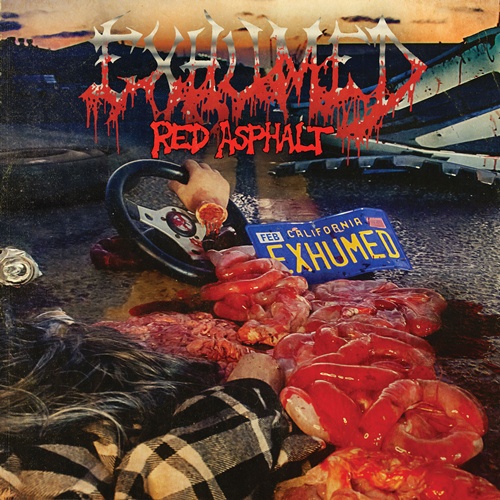
Exhumed are back with “Red Asphalt”, their new gore metal album on Relapse Records, a high-octane road-horror concept packed with violence and speed. Featuring frantic riffs, crushing grooves, and a pulp-inspired vision of crashes and zombie bikers, the band led by Matt Harvey hits the accelerator once again after “To The Dead” (2022). We discussed it all here with Matt himself.
Hello Matt! From your raw teenage demos and the genre-defining “Gore Metal” trilogy in 1998, through concept epics like “Death Revenge”‘s Edinburgh murders and “To the Dead”‘s history celebration in 2022 with ex-members like Mike Beams and Leon del Muerte, how does “Red Asphalt” fit into your 35-year evolution, did past lineups contribute riffs or ideas to this blood-soaked road theme?
This one was very representative of our current lineup and something we cooked up after the To the Dead touring cycle had wound down. It was also very much a team effort with Ross and Sebastian each writing a couple of songs and me coming up with the rest. I think it’s fresh and different enough to stand out and warrant inclusion in our discography, but also true enough to our sound to satisfy people who’ve followed the band for a while. We all really believe in the record and think that all the tunes are quite strong.
How did the “American roadway” concept emerge for “Red Asphalt”, and what real-life incidents, road lore, or horror films inspired the vehicular homicide, defective cars, and zombified biker gangs?
We spend most of the time on tour getting from one place to the next, and being an American band, we tour here in the USA more frequently than anywhere else, so it was kind of a “world outside your window” approach. Ross was listening to The Road Behind by Gwar and challenged me to come up with the ultimate “Death Metal road ballad,” more as a laugh than anything else, but the more I thought about it, the more I realized it was quite a rich vein to tap into. We’ve certainly seen more than our fair share of cars and trucks on fire, overturned, crumpled, crushed and bent, and in various states of disarray during our travels, and years ago in the 90s, I was driving and got in a pretty serious car accident where the vehicle flipped over and Ross, who was in the back of the truck with our gear, had to get airlifted to a hospital. Luckily, he was basically okay, although he still has a scar in one eyebrow to remember the incident by. The “zombified biker gang” tune is Shovelhead, which was inspired by a couple of movies — Werewolves On Wheels and especially Psychomania — both of which are wonderfully low-budget 70s schlock-fests featuring supernatural shenanigans and motorcycle mayhem. We talked about a lot of movies while working through the concepts, especially the old-school drivers’ education scare films like Mechanized Death, Signal Thirty, The Iron Graveyard, and of course the Red Asphalt series. Beyond the documentary stuff, there were a fair amount of horror / biker / thriller movies we referenced as well, everything from Road Games, Mad Max II, The Hitcher, Easy Rider, Angels From Hell, Death Race 2000, parts of Toxic Avenger, and lots and lots more.
Matt, you called “Red Asphalt” a “love letter to the road” that’s “familiar yet far more dangerous”, what’s your favorite gore-soaked lyric or imagery from the album?
I’m quite fond of Crawling From The Wreckage, as it’s a pretty straightforward gore thing that “does what it says on the box.” I like going into how the seat belts, windows, and various car parts become injurious after the accident — it’s just fun imagery, and it’s fun to do a song that isn’t trying to be too clever.
“Unsafe at Any Speed” nails that sleazy, whiplash groove, what’s the story behind the title and how did it capture the album’s high-speed deathgrind?
The title was one of the first things I came up with after Red Asphalt. Unsafe… was taken from the title of consumer advocate Ralph Nader’s 1965 book of the same name, which helped make using seat belts the norm. I wanted to do something about vehicular homicide, and I love the game-show aspect of how it was treated in Death Race 2000, so that became this song. Also, I looked at it as sort of self-referential, in that we can do brutal riffs whether we’re blazing along at our normal high speeds or if we downshift into a groove like we do in the bridge of the song.
Tracks like “Shovelhead” and “The Iron Graveyard” ooze riffy madness and sleaze, how did you craft those hooks while “Red Asphalt” blends frenetic riffs, whiplash grooves, and lethal blast beats, balancing hook-laden accessibility with your classic gore metal fury in the writing process?
I think Ross, Sebastian and I are all very focused on making extreme music that is catchy, listenable, and accessible, and hopefully memorable enough to inspire repeat listens. If one of our riffs or choruses gets stuck in your head, we’ve succeeded. We’ve never shied away from openly embracing traditional verse / chorus / verse / chorus / bridge / chorus songwriting. In fact, I think that was one of the first things that helped set us apart from most death / grind bands when we started finding our own style in the mid-90s.
After self-producing “Horror” at Darker Corners and working with Jarrett Pritchard on “Death Revenge”, who handled production for “Red Asphalt” and what was the studio vibe like?
We built our own studio to record Horror, and since then we’ve done all our primary drum and guitar tracking here and used it more or less as our home base. Sebastian has a great studio in Baltimore, and he is the most savvy as far as the engineering and tech side of the recording process, so he and I oversaw the drum tracking here in California. Then we worked together getting the rhythm guitar tones we wanted, and I did my stuff myself, which allows me to work at a pretty relaxed pace. Having our own studio allows us time to explore different ideas when working on the record, which is important because we all live in different areas these days, so we don’t work through the songs at regular rehearsals. We do all our demoing remotely and then work through the kinks as we go during the recording process. We do like to use different mixing engineers for each record, though, so that each album has a distinct sonic identity and stands apart from the others. This time, Sebastian and Ross really wanted to work with Scott Evans, and it turned out to be a great idea, as Scott got a great-sounding mix out of what we sent him. It’s important to us that our records are clear and punchy enough to sound discernible and powerful, but not so sanitized and edited that they sound overproduced. I think we found a really great balance with this mix — it feels raw and alive.
What’s the wildest touring mishap or fan story that echoes the Route 666 insanity?
Decades ago, I was driving myself, Leon del Muerte (who was playing guitar for us at the time), and Ross back to San Jose after a gig in Santa Barbara, and I wasn’t paying attention — I ended up overcorrecting and rolling an old Toyota 4Runner. In those days, SUVs were extremely top-heavy and notorious for rolling, and the fact that we had all our gear haphazardly crammed in the vehicle didn’t help. Long story short, the vehicle was totaled and Ross was buried underneath our gear and had to be airlifted via helicopter to the hospital. Thankfully, the only lasting injury from the accident was a scar in Ross’s eyebrow, but it was a harrowing experience for sure.
Any plans for visuals, epic tours, or sequels, like expanding the gore-road saga with more animated videos à la “Shovelhead”, and European tours to bring “Red Asphalt”‘s road horror to fans across the pond, perhaps hitting Italy or other metal hotspots?
We do have some new production elements that we’re working into the US tour, and then we’ll try to adapt them to the European tour as best we can — it’s difficult to fly with a chainsaw and a dirt bike, haha! That said, we will be in Italy with Gruesome this spring — we’re hitting Milan and Rome, so it should be a heavy night for all involved!
Finally, what’s your personal message to the fans excited for “Red Asphalt”?
We’re excited to invite you on our road trip to hell and back — fasten your seat belts and get ready to roll!
 Il Raglio del Mulo
Grande intervista a una grande band!
"Mi piace""Mi piace"