
ENGLISH VERSION BELOW: PLEASE, SCROLL DOWN!
Dopo sette anni di silenzio, i Violator sono finalmente tornati con il nuovo album “Unholy Retribution”, uscito il 5 settembre 2025 per Kill Again Records. Anticipato dal potente singolo “Chapel of the Sick”, il disco incanala la furia thrash che da sempre caratterizza la band, affrontando al tempo stesso temi di resistenza, vendetta e sopravvivenza in tempi oscuri. Fedeli alle loro radici underground ma rinvigoriti dall’esperienza, i brasiliani consegnano una delle loro opere più dure e senza compromessi. Abbiamo parlato con il bassista e cantante Pedro “Poney Ret Crucifier” del ritorno della band, della realizzazione del nuovo album e di ciò che li aspetta.
Ciao Pedro, benvenuto! È un piacere averti qui. Dopo la pausa iniziata nel 2018, cosa vi ha spinti a rimettere insieme la band e tornare a scrivere nuova musica?
Prima di tutto, grazie mille per l’interesse e per questa chiacchierata da così lontano; siamo davvero grati per questi ponti sotterranei che ci uniscono. In ogni caso, è stata una congiunzione di fattori: la fine della pandemia, la sconfitta di un governo neo-fascista in Brasile e il ritorno del nostro chitarrista Capaça, che aveva vissuto sei anni in Irlanda. Da tempo volevamo realizzare un nuovo album, ma ci è sembrato che non potesse esserci momento migliore per tornare con tutta la nostra rabbia.
Durante questi anni siete rimasti in contatto, musicalmente o a livello personale? Le vostre esperienze individuali hanno influenzato il modo in cui avete affrontato il ritorno della band?
Siamo sempre rimasti in contatto; siamo amici da quando eravamo ragazzini! (ride) Anche con Capaça all’estero, la band è rimasta attiva e ha continuato a suonare in tutti questi anni. Tra il 2018 e il 2023 abbiamo visitato molte volte l’Europa. In quel periodo, oltre ai concerti in Sud America, siamo tornati a suonare in Giappone e siamo stati per la prima volta in Cina. Abbiamo persino pubblicato un libro su quell’esperienza cinese, perché durante la pandemia scrivere era una cosa possibile. E a proposito di pandemia, anche nei momenti peggiori ci collegavamo online per parlare di riff! (altre risate)
Una volta deciso di tornare in studio, cosa vi passava per la testa? Avevate già un piano chiaro per il nuovo album o avete lasciato che le canzoni venissero fuori naturalmente?
Gli otto brani che compongono “Unholy Retribution” sono stati scritti negli ultimi cinque anni. Alcuni sono nati durante i nostri viaggi internazionali, separati da un oceano, altri nelle ultime settimane prima dell’arrivo del produttore dal Belgio, quando tutto era già programmato e noi provavamo in studio. Quello che ci accomuna è che, sin dai primi arrangiamenti, tutto è stato concepito per costruire un album completo, non una semplice raccolta di brani. E tutti puntano verso questa nuova gamma di riferimenti dei Violator, che avevamo iniziato a esplorare con l’EP “The Hidden Face of Death”: sonorità più grezze e primitive, un lato più oscuro ed “evil” del thrash metal.
Avete detto che il thrash classico, come “Reign in Blood” e “Hell Awaits”, vi ha influenzato molto. Come si è unita questa ispirazione al lavoro con il produttore Yarne Heylen in due settimane di sessioni dal vivo, e come ha plasmato il suono complessivo di “Unholy Retribution”?
Gli Slayer sono senza dubbio un’influenza inevitabile sull’album. Per essere più specifico con i maniaci del suono, direi che il disco rappresenta uno spostamento dai riferimenti di “Reign in Blood” verso un vero e proprio culto di “Hell Awaits”. Ma non solo: direi che Possessed, i primi Death e i primi Sepultura, Hellhammer/Celtic Frost e persino i Mercyful Fate sono nuovi orizzonti che emergono nei riff di questo album. Tutto questo si unisce allo stile ormai caratteristico dei Violator. Lavorare con Yarne è stata una delle migliori esperienze della nostra vita: per il lavoro svolto, ma anche per il tempo intenso e affettuoso trascorso insieme in Brasile. Credo che l’album rifletta l’ambiente speciale in cui è stato registrato.
“Chapel of the Sick” è un brano davvero potente. Puoi raccontarci qualcosa in più sui suoi temi e su come si inserisce nel quadro generale di “Unholy Retribution”?
“Chapel of the Sick” è una canzone che fa esplicito riferimento alla liberazione del popolo palestinese. Penso sia importante chiarirlo, perché la posizione dei Violator ha sorpreso e fatto discutere (ma anche raccolto molto sostegno) tra i vecchi headbanger. Per chi vive in regioni del mondo in cui l’impatto del colonialismo si fa sentire ogni giorno, anche dopo 500 anni, i crimini commessi dallo Stato coloniale di Israele e dal regime di apartheid che hanno imposto sono più che evidenti. Quindi, in un contesto più ampio di vendetta contro i nostri carnefici, che rappresenta il concetto generale di “Unholy Retribution”, “Chapel of the Sick” è il nostro gesto di sostegno alla resistenza palestinese.
C’erano idee o temi che volevate esplorare in “Unholy Retribution” ma che non sono stati inclusi? Qualcosa che possa dare ai fan un assaggio di un lato diverso della band?
È interessante che tu lo chieda. C’erano abbozzi che puntavano molto verso lo “speed metal” e che sono rimasti fuori, oppure l’inizio di un primo brano che volevamo fare in portoghese, ma che non è entrato nella scaletta finale perché non faceva parte della proposta complessiva dell’album. Forse sono strade che potremo esplorare in futuro.
Il disco affronta temi di resistenza e vendetta, che sono piuttosto pesanti. Come fate in modo che la musica colpisca duro ma riesca comunque a connettersi con chi ascolta?
Ottima domanda. Credo sia importante portare la Verità in questo approccio. Essere una band sudamericana ci mette davvero in una prospettiva diversa. Gran parte della “Vingança” (vendetta) a cui fa riferimento tutto il nuovo album riguarda l’aver sopravvissuto (e sconfitto) un governo neo-fascista in Brasile che durante la pandemia ha seppellito più di 700.000 persone. Tutto questo unito a un nuovo e bizzarro fondamentalismo cristiano. Quindi i temi della resistenza e del massacro qui sono molto reali.
Siete finalmente tornati con nuovo materiale: ci sono piani per tornare presto sul palco? Cosa possono aspettarsi i fan dai Violator dal vivo nel 2025 e oltre?
Dovremmo fare i concerti di presentazione alla fine di quest’anno e poi metterci in tour nel 2026. Ma ora che abbiamo 40 anni, lavori e figli, andare in tour significa un ritmo diverso, giusto? (ride). Vogliamo comunque suonare il più possibile, girare il nostro continente nel 2026, e mi piacerebbe molto visitare parti del mondo dove non siamo mai stati, come il Sud-est asiatico e l’Africa.
Con l’uscita di “Unholy Retribution” alle porte, cosa sperate che i fan portino via da questo disco e cosa ci sarà dopo per i Violator?
Vorrei davvero che chi ci segue ascoltasse i riff; siamo davvero appassionati di questo mestiere e dediti ad esso. Ma se non ti piace, nessun problema, spegni lo schermo e scrivi una recensione! Questo è l’underground, e non vogliamo stare fuori o sopra di esso. Alla fine, quello che credo rappresenti questo nuovo album, dopo 23 anni di carriera, è il nostro impegno incrollabile verso il thrash metal e l’approccio DIY nella produzione della nostra musica. Quindi celebriamolo!
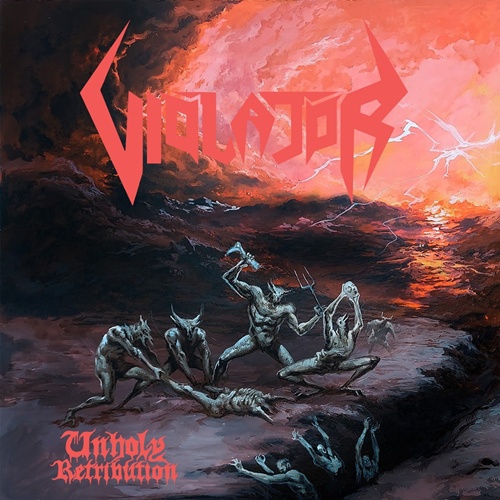
After seven years away, Violator are finally back with their new album “Unholy Retribution”, out on September 5th, 2025 via Kill Again Records. Anticipated by the striking single “Chapel of the Sick”, the record channels the band’s trademark thrash fury while confronting themes of resistance, vengeance and survival in dark times. True to their underground roots but sharpened by experience, the Brazilians deliver one of their most uncompromising works to date. We spoke with bassist and vocalist Pedro “Poney Ret Crucifier” about the band’s comeback, the making of the new album and what lies ahead.
Hello Pedro, and welcome! It’s awesome to have you here. After being on hiatus since 2018, what finally made you decide to get the band back together and start writing new music again?
First of all, thank you so much for your interest in speaking with us from so far away; we’re truly grateful for the underground bridges. In any case, it was a confluence of factors: the end of the pandemic and the defeat of a neo-fascist government in Brazil coincided with the return of our guitarist Capaça, who spent six years living in Ireland. We’d wanted to make a new album for a long time, but we felt there was no better time to be back with a vengeance;
During the years apart, did you keep in touch at all, musically or personally? How did your individual experiences shape the way you approached the band’s comeback?
We’ve always been in touch; we’ve been friends since we were kids! (laughs) Even with Capaça living abroad, we kept the band active and playing throughout these years. We visited Europe many times between 2018 and 2023. During this period, besides playing shows in South America, we also toured Japan once again and visited China for the first time. We even released a book about this Chinese experience, since writing was possible during the pandemic. Speaking of the pandemic, even at its worst, we still met online to talk about riffs! (more laughter)
Once you decided to return to the studio, what was going through your minds? Did you have a clear plan for the new album, or did you just let the songs come naturally?
The eight songs that make up the new album “Unholy Retribution” were written over the last five years. Between meetings on international trips when we were separated by an ocean, and the final weeks before the producer arrived from Belgium with everything scheduled and us rehearsing in the studio. What we have in common is that, from the very first arrangement, everything was designed to compose a complete album, not just a collection of songs. And they all point to this new range of Violator references, which we began exploring on the EP “The Hidden Face of Death,” with rawer and more primitive references, exploring a more evil side of Thrash Metal.
You’ve said before that classic thrash like “Reign in Blood” and “Hell Awaits” had a big influence on you. How did that inspiration, combined with working with producer Yarne Heylen for two weeks in a live session, shape the songwriting and the overall sound of “Unholy Retribution”?
Slayer is definitely an unavoidable influence on the album. I’d even be more specific to sound nerds; the album represents a shift from the references of Reign in Blood to a Hell Awaits worship. But not only that, I’d say that Possessed, the first Death and Sepultura albums, Hellhammer/Celtic Frost, and even Mercyful Fate are new horizons that emerge in the riffs on this album. All combined with Violator’s already characteristic style of thrash. Regarding working with Yarne, it was one of the best experiences of our lives. For the work he developed, but also for the intense and affectionate time we spent in Brazil. I believe the album reflects the special environment in which it was recorded.
“Chapel of the Sick” is a really striking track. Can you tell us a bit more about its themes and how it fits into the bigger picture of “Unholy Retribution”?
Chapel of the Sick is a song that explicitly references the liberation of the Palestinian people. I think it’s important to make this point clear, as Violator’s stance has apparently caused much surprise and controversy (but also much support) among old-world headbangers. But for those living in regions of the world where the impact of colonization is still felt every day, even 500 years later, the crimes committed by the colonial state of Israel and the apartheid regime they enforced there are all too clear. So, in a larger context of revenge against our tyrannical executioners who shape the general concept of “Unholy Retribution,” Chapel of the Sick is our gesture of support for the Palestinian resistance.
Were there any ideas or themes you wanted to explore on “Unholy Retribution” but didn’t end up including? Something that might give fans a glimpse of a different side of the band?
It’s interesting you ask. There were sketches that leaned heavily toward “speed metal” that were left out, or even the beginnings of a first song we were going to do in Portuguese, but that also didn’t make the cut because it wasn’t part of the album’s final proposal. Perhaps these are avenues we can explore in the future.
The song deals with resistance and retribution, which are heavy topics. How do you make sure the music hits hard but still connects with listeners?
Excellent question. I think it’s important to bring Truth into this approach. As a band from South America, this really puts us in a different perspective. A good part of the “Vingança” (Revenge) that the entire new album references is about having survived (and defeated) a neo-fascist government in Brazil that buried more than 700,000 people during the pandemic. All of this combined with a bizarre new Christian fundamentalism. So the themes of resistance and slaughter are very real here.
You’re finally back with new material—are there any plans to hit the stage soon? What can fans expect from Violator live in 2025 and beyond?
We should do the release shows at the end of this year and hit the road in 2026. But now that we’re 40, with jobs and kids, hitting the road means a different pace, right? (laughs). We still want to play as much as possible, tour our continent in 2026, and I’d love to see parts of the world we’ve never been to, like Southeast Asia and Africa.
With “Unholy Retribution” coming out soon, what are you hoping fans take away from it, and what’s next for Violator after the release?
I’d really like people who like the band to listen to the riffs; we’re truly passionate about this craft and dedicated to it. But if you don’t like it, no problem, just get off the screen and write a review! This is the underground, and we don’t want to be outside or above it. And ultimately, what I think this new album represents after 23 years as a band is our unwavering commitment to thrash metal and the DIY approach to producing our music. So let’s celebrate that!
 Il Raglio del Mulo