
ENGLISH VERSION BELOW: PLEASE, SCROLL DOWN!
Dopo dodici anni di silenzio, i Tierramystica tornano con il nuovo album in studio “Trinity”, pubblicato da Elevate Records. La band brasiliana, celebrata per la sua originale fusione tra heavy metal e tradizioni musicali andino-sudamericane, apre un nuovo capitolo fatto di simbolismi potenti e rinnovata energia creativa. Abbiamo chiacchierato con Alexandre Tellini della rinascita del gruppo, del lungo percorso che ha portato a questo attesissimo terzo disco e della visione mitologica che anima “Trinity”.
Benvenuto Alexandre! Per i vostri fan è un momento davvero emozionante: “Trinity” è il vostro primo album in studio dopo 12 anni. Si tratta di un grande ritorno, che unisce di nuovo il metal alla mitologia della trinità Inca. Come avete vissuto questa lunga pausa e quale è stato il vero punto di svolta che ha rimesso insieme i Tierramystica spingendovi a creare questo terzo, fondamentale capitolo?
Prima di tutto, grazie per l’opportunità di parlare dei Tierramystica e di “Trinity”. Siamo davvero felici di questo nuovo capitolo delle nostre vite e speriamo che sia i vecchi che i nuovi fan si divertano ad ascoltare il disco. È buffo, perché nessuno di noi — io (chitarra elettrica), Guy Antonioli (voce), Luciano Thumé (tastiere) e Duca Gomes (batteria) — pensava minimamente di tornare insieme dopo la rottura del 2015, annunciata poi nel 2016. In quel periodo erano rimasti solo Ricardo Durán (che detiene i diritti sul nome Tierramystica) e Fabiano Muller (chitarrista e manager della band). In realtà, io non ho mai voluto andarmene davvero, perché dal 2007 al 2015 questa band è stata la bussola della mia vita. Il mio primo pensiero al mattino era la band e l’ultimo prima di dormire era lo stesso. Lasciare tutto ciò che avevo costruito è stato estremamente doloroso per me, ma non avevamo scelta. Ci trovammo in una situazione che non potevamo controllare, un vero e proprio punto di rottura con il manager. Non avevamo i diritti sul nome e allo stesso tempo non volevamo mettere Ricardo in una posizione scomoda, costringendolo a scegliere da che parte stare. Così abbiamo deciso di lasciare. In quegli anni abbiamo preso strade diverse: siamo invecchiati, abbiamo accudito genitori malati — molti di noi poi li hanno persi — e diversi di noi si sono laureati o qualificati in qualcosa. Io, ad esempio, sono finalmente riuscito a completare la laurea in Popular Music dopo un’eternità. Ancora più importante, tutti abbiamo raggiunto una situazione economica più stabile che ha reso possibile un ritorno della band. Il vero innesco del nostro rientro è stato un invito di Ricardo Durán, che nel frattempo aveva interrotto la collaborazione con il nostro ex chitarrista e manager, e ci ha chiesto se volevamo tornare. Una triste coincidenza è che pochi giorni prima del nostro primo incontro per discutere se riprendere il progetto è morto André Matos. Era un punto di riferimento enorme per tutti noi: un idolo, un amico che ci ha sempre supportati, citandoci anche in una sua intervista nel 2009 come una band da ascoltare. La sua scomparsa mi ha fatto ripensare ai nostri “anni d’oro” e mi sono accorto di quanto i Tierramystica avessero lasciato un vuoto nella mia vita. Così quando Ricardo mi ha chiamato pochi giorni dopo, gli ho detto: “Se Guy, Luciano e Duca vogliono tornare, allora ci sono anch’io”. Musicalmente, nessuno di noi è mai rimasto fermo: Duca ha suonato nei Riffmaker, una band rock anni ’80, Luciano in una tribute band dedicata a Deep Purple, Rainbow e Whitesnake, io ho suonato in tantissimi pub in set che andavano dagli anni ’60 a oggi. Quell’esperienza mi ha anche fatto amare l’idea di essere l’unico chitarrista in una band. Guy e io abbiamo avuto anche una tribute band degli Iron Maiden con Bruno Sutter, ma a un certo punto mi sono stufato delle cover e ho preferito concentrarmi sull’insegnamento della chitarra. Guy invece ha continuato come vocal coach e cantante in concerti acustici e tribute band. Quella è stata tosta. Ahah.
“Trinity” esplora a fondo la potente trinità mitologica Inca del serpente, del puma e del condor, simboli dei tre mondi (Uku Pacha, Kay Pacha, Hanan Pacha). In che modo questo simbolismo profondo ha influenzato direttamente la scrittura, la composizione e i testi di brani chiave come “Cosmovision” e “The Eye of the Tribe”?
La trilogia Inca è sempre stata una grande fonte di ispirazione per i nostri testi. Un vecchio brano, “Vision of the Condor”, la citava già e poco dopo abbiamo iniziato a scrivere pezzi come “Cosmovision”, “Holy Trinity” (che poi è diventata “Eldritch War”), “The Eye of the Tribe” — ispirata a concetti gnostici — e “Raindancer”, che parla del modo in cui l’umanità ha cercato di imporre la propria volontà sulla natura attraverso preghiere e divinità. Tutte queste canzoni si muovono su temi spirituali e su diverse forme di interpretare e trasformare il mondo. Questo è il nostro terzo album… quindi perché no? Un’idea comoda che si è trasformata in qualcosa di molto più profondo. In tour abbiamo portato in scena il Condor, il Puma e il Serpente, una scenografia stupenda che materializza visivamente la nostra visione. Speriamo davvero di riuscire a portarla anche in Europa per qualche concerto.
La tracklist presenta un forte contrasto tra pezzi metal potenti e composizioni acustiche ricche di colori. Volevate mettere volutamente in evidenza questa dualità in “Trinity”? Quale brano secondo te rappresenta meglio l’equilibrio tra aggressività metal moderna e melodie tradizionali sudamericane?
Nel disco precedente, “Heirs of the Sun” (2013), eravamo andati un po’ troppo oltre con il lato acustico, c’era stato un eccesso. Un intro acustico lungo (“When a New Dawn Arrives”), una ballad come “Men of Earth”, sezioni acustiche estese in “Vision of the Condor” e “Shine Once Again”, un altro brano acustico in spagnolo scritto da Guy che si chiamava” Llanto de Mi Tierra” e un outro strumentale, “Inti Sunset”, anche quello completamente acustico. So che anche nel nuovo album c’è molto spazio per le atmosfere acustiche, però questa volta l’equilibrio è migliore. Per me l’esempio più riuscito di un pezzo potente che cattura perfettamente il nostro sound andino è “Chaski Way.” Lì è venuto tutto molto, molto bene.
Il vostro sound è famoso per la fusione tra heavy metal e misticismo del folklore andino e brasiliano. Come avete lavorato sull’integrazione di strumenti sudamericani come charango, zampoña e ocarina in “Trinity”, assicurandovi che fossero elementi davvero funzionali al metal e non solo decorativi?
Il concetto alla base della band nasce da Ricardo Durán, ancora prima che Tierramystica esistesse. Lui e il nostro ex chitarrista e manager avevano un gruppo chiamato Toccata Magna, che ebbe un piccolo successo per poi sciogliersi. Proprio da quella fine è nato il progetto che poi li ha portati da me e così abbiamo fondato Tierramystica insieme. Ricardo è nato in Cile, ma si è trasferito in Brasile da bambino. Da ragazzo ha scoperto il rock e il metal, ma a casa si parlava ancora spagnolo e la cultura andina ha sempre fatto parte della sua vita. La fusione tra musica andina e metal è stata un’evoluzione naturale per lui. Inoltre, nel sud del Brasile la cultura è molto diversa dal nord del Paese, siamo molto più vicini ad Argentina e Paraguay, territori dove molti elementi andini sono comuni nella tradizione popolare. Quindi, anche se non siamo andini, ci sentiamo molto legati a quel linguaggio musicale. Tutti portiamo idee, ma negli anni sono diventato io il principale compositore della maggior parte dei pezzi. Ho imparato tanto sui ritmi andini da Ricardo, che spesso mi mostra pattern ritmici con il charango, proprio come ha fatto nella parte andina di “Chaski Way”, che ha scritto lui. Ci ispiriamo a gruppi come Kjarkas e la band brasiliana Tarancón. Creare quelle atmosfere è la parte più divertente del songwriting. Di solito costruisco riff, doppia cassa, mille layer di chitarre e poi, boom! Arriva l’idea per una sezione andina, spesso nell’intro o nel mezzo della canzone. È fantastico. In genere, le quenas portano la melodia, le zampoñas creano arpeggi staccati, i toyos danno le note di basso. Le ocarine sono complicate da intonare perfettamente, quindi le lasciamo alle esibizioni live, nelle mani di Ricardo quando non suona il charango, non fa cori o non suona le zampoñas.
Parliamo della struttura dell’album. “Awaken (Instrumental)” apre il disco e “Death Whistle” lo chiude. Che tipo di viaggio narrativo o spirituale volevate far vivere all’ascoltatore fra questi due potenti brani strumentali?
“Awaken” è un brano diviso in tre parti, un viaggio sciamanico di trasformazione. Parte strisciando, con percussioni profonde e un pulsare sibilante e sinuoso, come un serpente. Poi si irrobustisce, prende forza, come un puma che corre selvaggio. Nel punto più alto comincia ad alzarsi, a volare attraverso atmosfere mutevoli, come un condor che guarda tutto dall’alto. Tutto l’album “Trinity” segue questo spirito. È costruito per catturare l’ascoltatore con inni metal potenti e intermezzi andini. Canzoni concise e senza fronzoli. Ogni pezzo ha un suo motivo per esserci. È un album onesto, fatto da persone oneste per ascoltatori onesti. Se alla fine senti il bisogno di riascoltarlo il giorno dopo, allora abbiamo raggiunto il nostro obiettivo. Non è un concept album, ma molti brani rendono omaggio a queste tematiche, passando dal viaggio cosmico di “Cosmovision” al conflitto tra libero arbitrio, bene e male in “Eldritch War”, fino alla narrazione dell’esodo da Babilonia e della nascita delle società gnostiche segrete in “The Eye of the Tribe”.
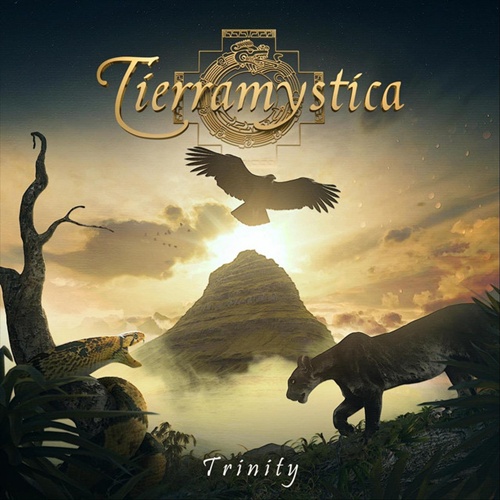
La vostra musica ha ottenuto nomination come “Miglior Album”, “Miglior Voce” e “Miglior Copertina”. Restando sulle immagini, qual è stato il concept dietro la cover di “Trinity” e in che modo la grafica comunica visivamente i temi mitologici del disco?
Un nostro amico, Thiago Heitor, ha suonato il basso con noi mentre stavamo ristrutturando la band. Lavora come graphic designer e ci ha aiutati molto con il concept iniziale dell’artwork. L’idea della trilogia Inca è mia, mentre credo sia stato Guy a suggerire per primo la disposizione degli animali a forma di triangolo. Thiago ha fatto una prima bozza, poi Ricardo ha ingaggiato João Pedro Chagas, un artista di San Paolo, che ha rifinito e completato il lavoro. La grafica rappresenta perfettamente il contenuto dei testi ed è davvero spettacolare anche sul palco con il backdrop e i teli laterali.
Avete condiviso il palco con realtà diversissime, da Scorpions e Nightwish a Sepultura e Symphony X. Per una band folk metal brasiliana, quale di queste esperienze è stata più memorabile o influente per voi? E in che modo ha cambiato il vostro approccio al live?
Aprire per band di quel livello è sempre stato un test, un vedere quanto lontano potevamo arrivare. Ogni volta imparavamo qualcosa e ci rendevamo conto di come lavorano davvero i professionisti. Se non lo vivi, non sai a cosa serve un tour manager o uno stage manager, come si gestisce un banchetto merchandise o quali sono i compiti reali di un roadie. Abbiamo assorbito tutto lungo il cammino. Magari siamo ancora una band emergente, ma ormai abbiamo la mentalità di una band professionale. Quando suoniamo con gruppi locali o più piccoli, si vede chiaramente quanto siamo cresciuti. Di momenti indimenticabili ce ne sono tanti. Una volta, dopo quattro date con gli Epica nel 2010, ci hanno chiamati sul palco per una foto finale, una cosa assurda. Tutti i concerti fatti con André Matos sono speciali: era una persona splendida, piena di luce. Nel 2011, quando abbiamo aperto per gli Angra in tour con “Aqua”, Edu non era nel suo periodo migliore e dopo il nostro show tanti ci dissero che eravamo stati meglio della band principale. Vendemmo una quantità assurda di dischi, pazzesco. Non ho mai pensato di essere “migliore”, amo gli Angra e sono un loro fan sfegatato, però quella notte è stata esplosiva. Poi c’è Timo Tolkki, durante il tour dei Symfonia, quel progetto con André che purtroppo non è decollato. Era incavolatissimo con il nostro manager e a un certo punto ci ha detto di “infilare i flauti nel—” vabbè, avete capito. E ancora, quando nel 2012 abbiamo aperto per i Nightwish a Buenos Aires, Marko Hietala si avvicinò a Guy dopo il concerto e gli chiese con le sopracciglia alzate: “Che diavolo avete fatto per incendiare così il pubblico?”. Guy fece spallucce e rispose: “Non lo so”. (ride)
Il vostro EP di debutto “New Eldorado” avrebbe venduto qualcosa come 100.000 copie, un risultato enorme per una band emergente del genere. A cosa attribuite quel successo regionale così forte?
È da un sacco che non sentivo più questa storia. La prima volta fu in un video fatto da un ragazzo canadese che ci aveva scoperti online e ne era diventato fan. Abbiamo effettivamente venduto moltissime copie di “A New Horizon” durante i concerti con gli Scorpions, quando scendevamo in mezzo al pubblico a venderli noi stessi. La cosa funzionò così bene che iniziammo a ripeterla a ogni concerto. “A New Horizon” è andato sold out due volte. Però una cosa è certa: il nostro demo non ha mai venduto centinaia di migliaia di copie. Se fosse vero, saremmo diventati ricchi ancora prima del primo album. Ahah. Abbiamo sempre venduto bene, per questo i nostri dischi vecchi sono difficili da trovare oggi. Quelle cifre spropositate probabilmente nascono dai download pirata sui siti russi nei primi anni o da qualche errore di traduzione che poi è circolato in rete. Purtroppo. Chissà, magari per il prossimo album ci inventiamo di nuovo lo Stone Portal e proviamo a ripetere la leggenda delle 100mila copie vendute.
Siete arrivati finalisti al Wacken Open Air Contest in Brasile. Che impatto ha avuto quell’esperienza sulla band? Ora che “Trinity” è uscito, quali sono i vostri obiettivi per portare questa nuova musica su palchi internazionali e grandi festival?
Perdere alla finale brasiliana del Wacken Open Air Contest è stata una botta tremenda. Anche perché era la prima volta che il contest aveva tre fasi: una nella nostra città e due a San Paolo. Quello che molti non considerano è che viaggiare in Brasile è carissimo. Ho vissuto in Italia per un periodo — mio padre è italiano, quindi ho sempre avuto un legame con il Paese — e lì puoi viaggiare tra vari Stati spendendo pochissimo. In Brasile è l’opposto. Un biglietto aereo comprato pochi giorni prima può costare anche uno stipendio minimo. Immagina lavorare un mese per poterti permettere di andare in un’altra regione del tuo stesso Paese. E noi l’abbiamo fatto due volte. Abbiamo vinto la fase locale, poi la semifinale a San Paolo… e in finale abbiamo perso. In quel momento avevamo valutazioni altissime e quando ci chiamarono per l’ultima fase pensammo: “Non ci faranno mica spendere tutti quei soldi per venire fin qui a perdere, no?”. Invece sì. A peggiorare le cose, quello fu anche il giorno in cui morì Ronnie James Dio. Una giornata pesante ed emotivamente indimenticabile. Qui in Sud America si tende a favorire band con messaggi politici, anche quando la musica non è forte. Noi invece siamo persone con idee spirituali e politiche diverse, ma non vogliamo portarle nella nostra arte. Non parliamo di politica, ideologie o rancori verso Paesi o culture. Non dovevamo vincere quella finale. Eravamo sette musicisti sul palco (all’epoca), l’altra band credo fosse composta da tre. Oggi abbiamo l’appoggio di quattro etichette, anche in Brasile, cosa per nulla scontata. Abbiamo partner anche in Messico, Giappone e Italia. Siamo davvero emozionati all’idea di andare in tour con “Trinity” e visitare tutti questi continenti.
After twelve years of silence, Tierramystica return with their new studio album “Trinity”, released via Elevate Records. Celebrated for their unique fusion of heavy metal with Andean and South American musical heritage, the Brazilian band opens a new chapter driven by powerful symbolism and renewed artistic energy. Alexandre Tellini spoke with us about the group’s rebirth, the long road that led to this crucial third album, and the mythological vision that shapes “Trinity.”
Welcome Alexandre! It’s an exciting time for your fans with the release of “Trinity,” your first studio album in 12 years. This new work is a powerful return, merging metal with the mythology of the Inca trinity. How did the band experience this long hiatus, and what was the main catalyst that finally brought Tierramystica back together and motivated you to create this crucial third chapter?
First of all, thank you for the opportunity to talk about Tierramystica and Trinity. We’re truly happy about this new chapter in our lives, and of course, we hope both our old and new fans have a great time listening to the album. It’s funny, because none of us — me (electric guitar), Guy Antonioli (vocals), Luciano Thumé (keyboards), and Duca Gomes (drums) — ever thought about coming back to the band after the breakup in 2015, which was only announced in 2016. At that time, only Ricardo Durán (the owner of the name Tierramystica) and Fabiano Muller (electric guitar and the band’s manager) remained. Actually, I also never wanted to leave, because from 2007 to 2015 this band was the compass of my life. My first thought when I woke up was about the band, and my last thought before I fell asleep was the same. So it was very, very painful for me to leave everything I had built behind and move on. At that time, the guys and I were faced with a situation we simply couldn’t avoid — it was literally a breaking point with the manager. We didn’t own the band’s name, and at the same time, we didn’t want to put Ricardo Durán in a difficult position by making him choose a side. So, we decided to leave. During this period, we all went our separate ways. We got older, took care of our sick parents — most of us eventually lost them — and many of us graduated or became more qualified. In my case, I finally completed my bachelor’s degree in Popular Music after a very long time. More importantly, we all reached a more stable financial situation, which was crucial to being able to restart the project. What triggered the return of the old guys was an invitation from Ricardo Durán, who had ended his partnership with our former guitarist and manager, and asked us to come back. A sad coincidence was that just a few days before our first meeting — when we were planning to discuss the arrangements and see if everyone wanted to return — André Matos passed away. He was such an important figure for all of us: our idol, and also a friend who always supported us, even mentioning Tierramystica in a 2009 interview as a band worth listening to. Losing him made me look back at those golden years and, for the first time, truly feel that Tierramystica had left a gap in my life. So, when Ricardo invited me a few days later, I told him: ‘If Guy, Luciano, and Duca want to come back, I’m in.’” Musically, we all stayed active. Duca played drums in an ’80s rock band called Riffmaker, and Luciano performed keyboards in a local tribute to Deep Purple, Rainbow, and Whitesnake. I played countless pub gigs covering songs from the ’60s to today, and that experience made me love being the only guitarist in a band. Guy and I also had an Iron Maiden tribute with Bruno Sutter, but eventually I got tired of playing covers and focused on teaching guitar. Guy continued as a vocal coach and performer, singing in acoustic shows and tribute bands. That was a hard one.
“Trinity” delves deep into the powerful Inca mythological trinity of the serpent, puma, and condor, which represent the three realms (Uku Pacha, Kay Pacha, Hanan Pacha). How did the profound symbolism of these ancient cultures directly influence the creative process, songwriting, and lyrics for key tracks like “Cosmovision” and “The Eye of the Tribe”?
The Inca trilogy has always been a major source of inspiration for our lyrics. An old song called Vision of the Condor already mentioned it, and soon we found ourselves writing songs like Cosmovision, Holy Trinity (which later became Eldritch War), The Eye of the Tribe — inspired by Gnostic ideas — and Raindancer, which explores humanity’s attempt to impose its will on nature through prayers and deities. All these songs deal with spirituality and different ways of understanding and transforming the world. This was our third album… so why not? It was a convenient idea that turned into something deeply inspiring. Now, during this tour, our stage features the Condor, the Puma, and the Snake — a beautiful production that brings this vision to life.We hapefuly want to bring t hem with us for a few concerts in Europe soon.
The tracklist features a strong contrast between powerful metal anthems and rich acoustic compositions. Was it a conscious goal to highlight this duality on “Trinity,” and which specific track do you feel best encapsulates this unique balance of modern metal aggression and ancient South American melody?
In our last record, Heirs of the Sun (2013), we went a bit too far with the acoustic side — it kind of got out of control. We had a long acoustic intro called When a New Dawn Arrives, a ballad named Men of Earth, extended acoustic passages in Vision of the Condor and Shine Once Again, another full acoustic song in Spanish written by Guy Antonioli called Llanto de Mi Tierra, and a closing instrumental track titled Inti Sunset, also entirely acoustic. I know this new album still has plenty of acoustic atmospheres, but this time we managed to balance it better. For me, the best example of a powerful metal song that also captures that typical Andean folk vibe is Chaski Way — we were very successful with that composition.
Your sound is celebrated for its unique fusion of heavy metal with the mysticism of Andean and Brazilian folk music. How did you approach incorporating native South American instruments like the charango, zampoña, and ocarina on “Trinity” to ensure they integrate seamlessly and enhance the metal compositions, rather than just serving as decorative elements?
The whole concept of the band actually started with Ricardo Durán, even before Tierramystica existed. He and our former guitarist and manager had a band called Toccata Magna, which had some minor success but soon broke up — and that breakup eventually brought them to me. The three of us then founded Tierramystica together. Ricardo came from Chile as a child, and during his teenage years he discovered rock and metal. His parents still speak Spanish at home, and Andean culture has always been part of his life. So blending Andean music with metal was a natural step for him. Also, in the very south of Brazil, we have a culture that’s quite different from the country’s north — we’re much closer to Argentina and Paraguay, where many of these Andean elements are common. So, even though we’re not Andean people ourselves, we feel very connected to that musical language. We all bring song ideas, but over the years I’ve become the main composer of most of them. I’ve learned a lot about Andean rhythms from Ricardo Durán, who often shows me rhythmic patterns on his charango — like he did in the Andean section of Chaski Way, which he composed. We’ve drawn inspiration from groups like Kjarkas and the Brazilian band Tarancón. Creating those typical atmospheres is the most enjoyable part of songwriting for me. I’m usually building riffs, double-bass parts, lots of guitar layers — and then, boom! The idea for an Andean section appears, often in the middle or intro of a song. It’s so fascinating. Usually, quenas carry the melodies, zampoñas are used to create staccato arpeggiated chords, and toyos provide the bass notes. Ocarinas are a bit tricky because it’s hard to keep them perfectly in tune, so we leave them for live performances — in Ricardo’s hands, when he’s not playing charango, singing backing vocals, or performing with the zampoñas.
Let’s discuss the album’s structure. “Awaken (Instrumental)” opens the album, while “Death Whistle” closes it. What kind of narrative or spiritual journey are you trying to create for the listener between these two powerful instrumental bookends?
Awaken is a song divided into three parts — a shamanic journey through transformation. It begins crawling, with deep bass drums and a serpentine, sibilant pulse, like a serpent. Gradually, it gains strength, growing muscles like a puma, running wild with vitality. The song reaches its peak, then rises — floating like a condor, soaring through shifting atmospheres. The entire Trinity album follows this spirit. It’s crafted to captivate the listener through powerful metal anthems and Andean interludes — concise, purposeful songs with no excess, no filler. Every track stands on its own. This is an honest album, made by honest people for honest listeners. And if, when it ends, you feel the urge to play Trinity again the next day — then we’ve achieved our mission. It is not a thematic album, but many songs pay homage to the background, whether traveling through space with Cosmovision, in the dualistic battle of free will between the choice of good and evil in Eldritch War, or in the narration of the exodus from Babylon and the origin of secret and Gnostic societies in The Eye of the Tribe.
Your music has earned nominations for “Best Album,” “Best Vocalist,” and “Best Cover Art.” Speaking of the visuals, what was the artistic vision behind the striking cover for “Trinity,” and how does the artwork visually communicate the album’s mythological themes?
A friend of ours named Thiago Heitor played bass with us while we were still restructuring the band. He works in graphic design and helped a lot with the initial concept for the artwork. I came up with the idea for the Inca trilogy concept. I think it was Guy Antonioli who first suggested the position of the animals (forming a triangle), so our friend made the first sketch. Ricardo Durán then hired João Pedro Chagas, an artist from São Paulo, who worked on and refined the artwork. The graphic design really speaks to the lyrical content, and it looked beautiful on stage with our backdrop and side drops.
You’ve had the privilege of sharing the stage with a very diverse group of major acts, from Scorpions and Nightwish to Sepultura and Symphony X. As a Brazilian folk metal band, which of these experiences was the most memorable or influential for you, and how did it affect your approach to live performance?
Playing as an opening act for those amazing bands has always been like testing ourselves — seeing how far we could go as a band. Every time, we got better and really learn how a top-level band operates. You don’t know what a tour manager or a stage manager actually does, what a professional merchandising stand looks like, or what the real duties of a roadie are. It’s funny, because we absorbed all of that along the way. We might still be an emerging band, but we carry the mindset of a top professional one. And when we play with local or smaller acts now, it becomes very clear how much we’ve evolved. We’ve had so many unforgettable moments. One of them was when we were called on stage to take a picture with Epica after finishing all four shows of their Brazil tour in 2010 — that was incredible. All the concerts we did with André Matos were special too; he was such a great guy, full of light. In 2011, Angra was touring with the Aqua album. Edu wasn’t in his best vocal phase at that time, and after our opening set, a lot of people came to us saying our concert had been even better than the main act’s. We sold so many records that night — it was unbelievable. Of course, I never believed we were “better,” because I’ve always loved Angra and I’m a huge fan. And then there was Timo Tolkki during the Symfonia tour — that project with André Matos that, unfortunately, didn’t take off. He was really upset with our manager back then and told us to “stick the flute in our—” well, you can imagine the rest! And one last story: in 2012, when we opened for Nightwish in Buenos Aires, Marko Hietala came up to Guy after the show and asked, with his eyebrows raised, “What the hell did you guys do to set the whole crowd on fire?” Guy just shrugged and said, “I don’t know.” (laughs)
Your debut EP, “New Eldorado,” reportedly sold a remarkable 100,000 copies, a massive success for an emerging band in the genre at the time. What do you attribute that early, huge regional success to?
It’s been a long time since I last read that! The first time was when a guy — I think he was from Canada — made a video about us. He had discovered us online and became a huge fan. We actually sold a lot of A New Horizon records during those Scorpions shows, when we played as their opening act. We literally grabbed the albums and jumped into the crowd to sell them ourselves — and it worked so well that we started doing it at every concert afterward! A New Horizon copies sold out twice. But I can guarantee one thing: our demo never sold hundreds of thousands of copies. If that were true, we’d have been rich even before the first album came out! (laughs) We always sold well, though — that’s why our older albums are so hard to find today. They’ve always moved fast. Those “huge numbers” people mention probably come from pirate downloads on Russian websites back in the early days, or maybe some translation error that got spread around. Unfortunately! Who knows — maybe for the next album we’ll bring back the Stone Portal and try to sell it again, repeating the legend of those 100,000 copies sold.
You were a finalist in the Wacken Open Air Contest in Brazil. How did that high-profile experience impact the band? Now that “Trinity” is released, what are your aspirations and plans for bringing this powerful new material to international stages and major festivals?
Losing the Brazilian Wacken Open Air Contest was a very sad moment for us. Mainly because that year was the first time they held three phases — one in our city, and then two more, the semifinals and finals, in São Paulo. A lot of people don’t realize this, but traveling across Brazil is extremely expensive! I lived in Italy for a while — my father’s Italian, so I’ve always had a close connection with the country — and there, it was possible to travel through several countries for a ridiculously small amount of money. In Brazil, things are totally different. Most people don’t know that a plane ticket bought just a few days before can easily cost an entire minimum wage. Imagine working a whole month just to afford a ticket to another state within your own country! And we had to do that twice. We won the first phase in our city, then we won the semifinal in São Paulo — and then, in the grand final, we lost. At that time, we were very well rated. So when they called us for the finals, we thought: “They wouldn’t make us spend all that money just to go to São Paulo and lose, right?” Well… they did. To make things even heavier, that was also the day Ronnie James Dio passed away. It was a very emotional and unforgettable day for all of us. Here in South America, people often tend to favor bands with political messages — even when the music itself isn’t that strong. We, on the other hand, are a band made up of people with different political and spiritual views, but we choose not to mix that with our art. We don’t talk about politics, ideologies, or resentment toward any country or culture. We wasn’t suposed to win that finals. We were seven guys (at that time – five guys nowadays) on the stage, the band that won was made of three, maybe I’m wrong. We have four labels supporting us this time, even in Brazil (wich is very hard thing to do) we got a very good deal. We have partners also in México, Japan and Italy. We are very excited to visit all this continents touring with the Trinity.
 Il Raglio del Mulo