
ENGLISH VERSION BELOW: PLEASE, SCROLL DOWN!
Attivi dal 1990, i tedeschi Casket sono tra i nomi più longevi e inossidabili dell’underground death metal europeo, artefici di un sound brutale, diretto e privo di compromessi. Dopo oltre trentacinque anni di devastazione sonora e più di duecento concerti in tutta Europa, la band torna nel 2026 con il nuovo full-length “In The Long Run We Are All Dead”, in uscita il 23 gennaio per Neckbreaker Records. A raccontarci passato, presente e futuro della death machine teutonica è stato Schorsch, voce e anima del trio.
Benvenuto Schorsch, prima di tutto grazie per aver trovato il tempo di parlare con me. Il vostro nuovo album, “In The Long Run We Are All Dead”, è appena uscito per Neckbreaker Records e include undici tracce death metal brutali e senza compromessi. Il titolo è d’impatto e quasi filosofico. Quale idea centrale o quale atmosfera tiene insieme l’intero album?
Ciao Giuseppe e mille grazie per averci ospitati. Il titolo è stato scelto per diversi motivi ed è stato inizialmente suggerito da un mio caro amico con cui sono andato a scuola. Lì, è saltata fuori questa citazione dell’economista J.M. Keynes e lui mi ha sempre spronato a usare questo titolo un giorno. È un titolo appropriato per un album di death metal. E non c’erano più sillabe disponibili dopo “Urn”…
Rispetto ai vostri precedenti full-length, qual è la principale differenza nel modo in cui è stato scritto questo album, non tecnicamente ma mentalmente ed emotivamente?
Fare e pubblicare “Urn” durante la pandemia e affrontare colpi personali e ostacoli a vari livelli, naturalmente, ha influenzato la scrittura così come il processo di registrazione e produzione, in modi positivi e negativi. Non credo che le cose siano migliorate mentalmente, hahaha. E se guardi la timeline dei nostri full-length, eravamo tutti persone diverse dieci, venti o più anni fa, naturalmente, emotivamente e in tutto il resto, marci.
Avete affrontato “In The Long Run We Are All Dead” come una continuazione del vostro percorso, o come un reset deliberato in qualche aspetto del songwriting o dell’atteggiamento?
Hm, non credo che ci sia mai stato un percorso che abbiamo cercato di seguire se non quello di scrivere musica brutale e senza troppi programmi. Penso sia stata la prima volta che tutte le canzoni sono state preparate fuori dalla sala prove usando un drum VST. Ma quelle versioni delle canzoni non si confrontano con il risultato finale che ascolti sull’album. Quindi la lavorazione e la maturazione fatte insieme come trio restano comunque le più importanti, testando anche nuove canzoni dal vivo ogni tanto per vedere cosa funziona.
Quale traccia dell’album rappresenta meglio i Casket di oggi, e quale mostra un lato della band che gli ascoltatori potrebbero non aspettarsi?
Ci piace molto “Hammer, Knife, Spade” per la sua varietà e il costante brivido. D’altra parte, tracce più lente come “Fundamental Rot” o “Strangulation Culture” vanno in contrasto perché sono… più lente o più cupe. L’ultima canzone, “Graveyard Stomper”, continua la storia di “Casketball” dal nostro primo demo a livello lirico.
Il vostro suono è ancora grezzo e senza compromessi. Cosa avete protetto consapevolmente durante la registrazione di “In The Long Run We Are All Dead” per assicurarvi che il materiale non diventasse troppo levigato o sterile?
Ho registrato tutto nella mia cantina, lì non troverai nulla di “levigato” o “sterile”, lo prometto. Seriamente, usiamo tutti lo stesso setup e lo stesso equipaggiamento di quando suoniamo dal vivo. L’unica cosa che non hai lì sul palco sono le chitarre raddoppiate, gli overlay e le cuffie, ovviamente. Alla fine, gran parte del merito per il super suono va al nostro mixer Roman, che ci fa suonare così fin dal nostro secondo demo tape del 1993.
I titoli come “Mainstream Mutilation” e “Strangulation Culture”, suggeriscono temi di tensione sociale, decadenza e violenza. Quanto sono collegati tra loro i testi dell’album? C’è un filo narrativo o si tratta per lo più di una raccolta di diverse prospettive dello stesso marciume?
E’ come lo descrivi, è proprio così: quest’ultima cosa con il marciume e le propsettive. Senza scendere troppo nei dettagli, i temi dietro molte di queste canzoni nascono dal vomito che uno deve ingoiare guardando troppe notizie o semplicemente uscendo in “città”, ecc. Ma cerco di non cadere troppo nella retorica del vecchio brontolone. Poi ci sono titoli come “Skull Bunker” o “Graveyard Stomper”, dove trovi solo fantasie su sangue e ossa.
In che modo la formazione a tre ha influito sul modo in cui sono state arrangiate queste nuove canzoni? Vi ha spinto verso un impatto più diretto o verso soluzioni più creative?
Impatto. Una delle intenzioni quando scriviamo e registriamo materiale è poterlo portare anche dal vivo. Certo, ci sono quei trucchetti di registrazione che non abbiamo dal vivo, che tutti usano in studio per rendere l’album ascoltabile. Ma non ottieni spesso dal vivo quel suono cristallino della batteria, le voci perfettamente combinate e il basso compatto con le chitarre raddoppiate otto volte.
Dopo più di tre decenni, cosa vi mette ancora alla prova quando scrivete un nuovo album dei Casket, e “In The Long Run We Are All Dead” ha presentato ostacoli creativi inaspettati?
L’unico vero ostacolo era ed è il tempo dedicato ad altre cose, non a scrivere musica. Per ottenere creatività, devi avere un po’ di spazio mentale e tempo libero senza “gestire la vita”. Ma questo non è nulla di nuovo per nessuno di noi che abbiamo un lavoro diurno, e non mi lamento…
Una volta concluso l’ascolto integrale di “In the Long Run We Are All Dead”, quale reazione dei fan vi confermerebbe che il disco ha colto nel segno?
Spero che la reazione sia “ascoltiamo di nuovo questa roba”, con un retrogusto di birra Augustiner e polvere di cimitero!
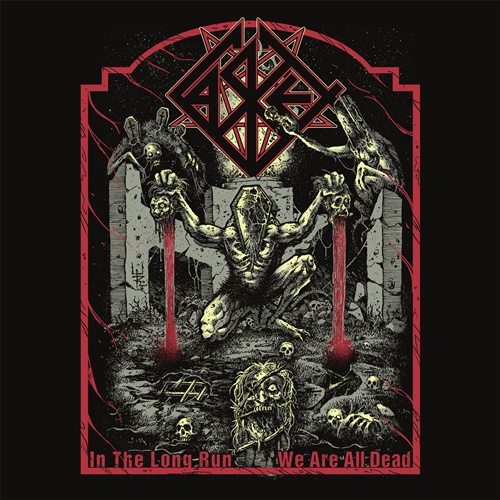
Formed in 1990, German death metal veterans Casket stand among the longest-running and most uncompromising acts in the European underground scene, delivering a brutal, direct, and no-frills approach to the genre. After more than thirty-five years of sonic devastation and over two hundred shows across Europe, the band returns in 2026 with their new full-length “In The Long Run We Are All Dead”, set for release on January 23rd via Neckbreaker Records. Guiding us through the past, present, and future of the Teutonic death machine is Schorsch, vocalist and driving force behind the trio.
Welcome Schorsch, first of all thank you for taking the time to speak with us. Your new album, “In The Long Run We Are All Dead”, has just been released via Neckbreaker Records and includes eleven brutal and uncompromising death metal tracks. The title is striking and almost philosophical. What core idea or mood holds the whole album together behind that statement?
Ciao Giuseppe and mille grazie for having us. The title has been chosen for different reasons and was initially suggested by a very good friend of mine with whom I went to school. There, this quote of the economist J.M. Keynes popped up and he always urged me to use this title someday. It’s an appropriate title for a Death Metal album. And there were no more syllables left after “Urn”…
Compared to your previous full-length releases, what was the main creative difference in how this album was written, not technically but mentally and emotionally?
Doing and releasing “Urn” during the pandemic and accepting personal blows and obstacles privately on different levels of course influenced the writing as well as the recording and production process in good and bad ways. I don’t think that things have improved mentally at all, hahaha. And if you check our full-length timeline, we’ve all been different people 10, 20 or more years ago, of course — emotionally and otherwise rotten.
Did you approach “In The Long Run We Are All Dead” as a continuation of your path, or as a deliberate reset in any aspect of your songwriting or attitude?
Hm, I don’t think there ever was a path we tried to follow except writing brutal music and not having too much of an agenda. I think it was the first time all songs were pre-done outside the rehearsal room using a drum VST. But those song versions don’t compare to the final result you hear on the album. So the crafting and maturing done together as a three-piece is still most important, also testing new songs live here and there to check what works.
Which track on the album best represents where Casket stand today, and which one shows a side of the band that listeners might not expect?
We all very much like “Hammer, Knife, Spade” because of its variety and constant thrill. On the other hand, slower tracks like “Fundamental Rot” or “Strangulation Culture” stand in contrast because they are… slower or moodier. The last song “Graveyard Stomper” continues the story of “Casketball” from our first demo lyrically.
Your sound is still raw and uncompromising. What did you consciously protect during the recording of “In The Long Run We Are All Dead” to make sure the material did not become too polished or sterile?
I recorded the whole thing in my cellar — you can’t find anything “polished” or “sterile” there, I promise. Seriously, we all use the same setup and gear as when playing live. The only thing you don’t have there on stage are the doubled guitars, overlays and earphones, of course. Finally, a lot of the credit for the great sound is due to our mixer Roman, who has been making us sound like we sound since our second demo tape in 1993.
The track titles, such as “Mainstream Mutilation” and “Strangulation Culture”, suggest themes of social pressure, decay and violence. How tightly connected are the lyrics across the album? Is there a narrative thread or more a collection of different angles on the same rot?
Because you describe it so appropriately: the latter — the rot and the angles. Without slipping too much into it, the themes behind many of those songs originate in the vomit one has to swallow when watching too much news or just going outside into “me, me, me town”, etc. But I try not to spiral too much into that grumpy old man direction. See titles like “Skull Bunker” or “Graveyard Stomper,” where it’s just fantasy about blood & bones.
How does the three-piece lineup influence the way these new songs were arranged? Did the format push you toward more direct impact or more creative solutions this time?
Impact. One of the intentions when writing as well as recording material is to be able to bring it live, too. Of course, there are those recording gimmicks we don’t have live, which everyone uses in the studio to make the album listenable. But you don’t get that crystal clear drum sound, perfectly fitted vocals and tight bass with eight-times doubled guitars live that often either.
After more than three decades as a band, what still challenges you when writing a new Casket album, and did “In The Long Run We Are All Dead” present any unexpected creative obstacles?
The only real obstacle was and is the time spent doing other things, not writing music. To gain creativity, you need some mental space and free time without “getting life done.” But that’s nothing new for any of us having a day job, and I won’t lament…
When fans finish listening to “In The Long Run We Are All Dead” from start to end, what reaction or aftertaste would tell you that the record worked exactly as intended?
I hope the reaction is “let’s listen to this stuff again,” with an aftertaste of Augustiner beer and dusty graveyard dirt. Salute!
 Il Raglio del Mulo