
ENGLISH VERSION BELOW: PLEASE, SCROLL DOWN!
I Puteraeon tornano con il nuovo full-length “Mountains Of Madness”, pubblicato da Emanzipation Productions. Ispirato al celebre racconto di H.P. Lovecraft, l’album segna una nuova, oscura tappa nella carriera della death metal band svedese. Abbiamo parlato con Jonas Lindblood, che ci ha raccontato genesi e visioni di questo lavoro.
Benvenut, Jonas, e congratulazioni per l’uscita di “Mountains Of Madness”! L’album si ispira al racconto di Lovecraft e rappresenta una progressione rispetto al vostro lavoro precedente, “The Cthulhian Pulse”. Come avete affrontato l’evoluzione sia del vostro sound che dell’esplorazione dell’orrore lovecraftiano per catturare il terrore cosmico e la follia della storia in questo nuovo disco?
Grazie mille. Beh, credo che facciamo quello che abbiamo sempre fatto: cercare di scrivere canzoni migliori. Questo è sempre l’obiettivo principale. Rendere le cose interessanti, e se qualcosa funziona bene, cercare di farlo ancora meglio la volta successiva, per così dire. Lavoriamo su Lovecraft da più o meno dieci anni in modo quasi esclusivo, ed eravamo già fortemente influenzati da lui prima ancora, quindi è stata una scelta ovvia continuare su questa strada. Cercando di farlo un po’ meglio rispetto all’ultima volta.
Qual è stata la parte più difficile di “Alle montagne della follia” da tradurre in musica e come avete affrontato questa sfida?
In realtà abbiamo scritto circa tre canzoni senza sapere ancora su quale racconto ci saremmo basati. A quel punto i brani non avevano ancora testi. È così che scrivo, di solito: prima la musica, poi compongo i testi e la storia. Una volta definito il racconto, ho sentito che la canzone “The Land of Cold Eternal Winter” doveva aprire la storia, e poi ad esempio “The Nameless City” doveva trovarsi più o meno a metà. Così abbiamo suddiviso il racconto in capitoli e cercato di collegarli tra loro, per così dire. “Miskatonic Expedition” è stata scritta per ultima, perché sentivo il bisogno di qualcosa che creasse l’atmosfera per l’album, una sorta di preludio.
I temi lovecraftiani sono sempre stati un marchio di fabbrica della musica dei Puteraeon. Questi concetti di orrore cosmico sono ancora al centro del vostro interesse artistico personale, o li esplorate principalmente perché sono ormai diventati un tratto distintivo della band?
Sì, certo. È un interesse vero, altrimenti non lo faremmo. Non abbiamo mai fatto nulla con i Puteraeon che non ci piacesse davvero o non ci interessasse. Facciamo tutto questo per puro amore verso il materiale e la musica.
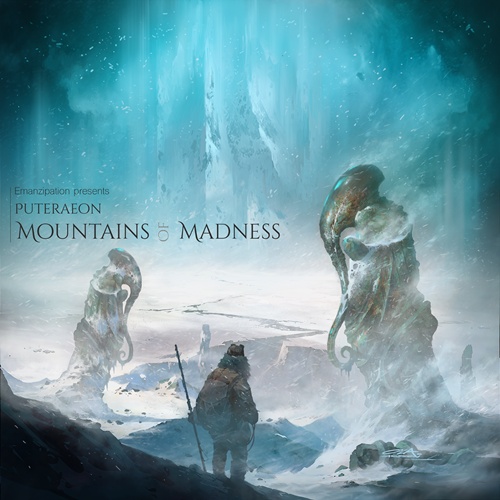
La copertina di “Mountains Of Madness” è suggestiva e d’impatto. A quale momento o scena specifica del racconto di Lovecraft si collega, e come avete lavorato con Ola Larsson per dare vita a questa visione?
L’artwork è stato realizzato da Ola, come hai detto tu, che ha già fatto molti lavori legati a Lovecraft in passato, e volevamo davvero che fosse lui a occuparsene. È quasi come un poster cinematografico, e a noi piace molto. L’immagine non è collegata a una parte specifica del racconto, ma potrebbe rappresentarne diverse. Ai miei occhi, è William Dyer che guarda verso le montagne della follia durante una forte tempesta di neve.
Quanto è importante per voi il contenuto lirico e narrativo? E come bilanciate la complessità dello storytelling con l’aggressività musicale, mantenendo la tradizione del death metal svedese old school e al contempo spingendo il vostro sound verso territori più oscuri e complessi?
È importante portare avanti la storia. Quindi sì, è importante, ma d’altra parte anche la musica lo è. Siamo una band, quindi utilizziamo un mezzo diverso da un libro o un semplice racconto. Dobbiamo lasciare che sia la musica a parlare. Aggiungiamo il nostro amore per melodie aggressive e oscure nel mix.
Dan Swanö ha definito questo come uno dei migliori album death metal svedesi di sempre. Com’è stato lavorare di nuovo con lui e in che modo ha influenzato il suono finale?
Lo ringraziamo per quelle bellissime parole. È un vero piacere lavorare con lui. Una persona fantastica con un talento enorme. Direi che ha avuto un’enorme influenza sul suono. Abbiamo grande fiducia in lui e ha centrato in pieno ciò che volevamo.
Cosa possono aspettarsi i fan dalle edizioni limitate in vinile in termini di artwork e presentazione fisica?
Beh, niente di più se non che è un’edizione limitata e che è in vinile.
Dalla formazione dei Puteraeon nel 2008, ci sono aneddoti o esperienze particolari dei primi anni che vi piacerebbe condividere, magari qualcosa che ancora oggi influenza il vostro approccio o la vostra musica?
Siamo un gruppo molto unito e ci piace davvero stare insieme. Abbiamo vissuto momenti belli e difficili. Quindi ovviamente ci sono molte storie diverse che potremmo raccontare. Non direi che abbiano influenzato direttamente il nostro modo di scrivere musica, ma come ho detto prima, cerchiamo sempre di perfezionare ciò che facciamo. Se suoniamo un brano dal vivo e ci accorgiamo che non coinvolge il pubblico, lo eliminiamo dalla scaletta la volta successiva, in modo da perfezionarla.
Con l’uscita di “Mountains Of Madness”, quali sono i vostri piani per concerti o tour? Come traducete l’intensità e l’atmosfera dell’album sul palco e cosa possono aspettarsi i fan dalle vostre prossime esibizioni?
Penso che siamo una band intensa dal vivo, quindi cercheremo di dare il massimo per trasmettere la stessa furia dell’album. Speriamo di metterci in contatto con dei booking agent per organizzare qualche tipo di tour.
Swedish death metal stalwarts Puteraeon return with their new full-length album “Mountains Of Madness”, released via Emanzipation Productions. Inspired by H.P. Lovecraft’s classic novella, the album expands the band’s sonic and conceptual journey into cosmic horror. We spoke with Jonas Lindblood, who walked us through the creation of the album and its thematic depth.
Welcome, Jonas, and congratulations on the release of “Mountains Of Madness”! The album is inspired by Lovecraft’s novella and represents a progression from your previous work, “The Cthulhian Pulse.” How did you approach evolving both your sound and your exploration of Lovecraftian horror to capture the cosmic dread and madness of the story in this new record?
Thank you very much. Well, I think we do what we have always done in the past: continue to try writing better songs. That is always the main thing. To make it interesting—what works out good, try doing that even better next time, so to say. We have done Lovecraft more or less exclusively for 10 years and were heavily influenced by his work even before that, so it was an obvious choice to continue doing his stuff. Trying to do it a little better than last time.
Which part of Lovecraft’s “At the Mountains of Madness” was the hardest to translate into music, and how did you approach that challenge?
We actually wrote like three songs without knowing which novella we were going to do. Back then, the songs didn’t have any lyrics. That’s mainly how I write. I try to do the music first, then piece together the lyrics and the story. Then when we had figured out the story, I felt like this song (“The Land of Cold Eternal Winter”) should open up the story, and then we had, for instance, “The Nameless City” ought to be somewhere in the middle. So we kind of chopped up the story into different chapters and tried to connect it through, so to say. “Miskatonic Expedition” was written last, because I felt I wanted something to set the mood for the album, a prelude.
Lovecraftian themes have always been a hallmark of Puteraeon’s music. Are these cosmic horror concepts still at the core of your personal artistic interest, or do you explore them mainly because they’ve become a distinctive trait for the band?
Yeah, of course. It is an interest—otherwise we wouldn’t have done it. It’s never been like we do anything with Puteraeon at all if it wasn’t for the fact that we like it or are interested in the stuff. We do this out of pure love for the material and the music.
The album cover for “Mountains Of Madness” is striking and evocative. Can you tell us which specific moment or scene from Lovecraft’s “At the Mountains of Madness” the artwork is connected to, and how you worked with Ola Larsson to bring that vision to life?
The artwork is done by Ola, as you said, who’s done lots of Lovecraft stuff in the past, and we really wanted him to do it. It’s almost like a movie poster, which we love. The artwork is not specified from any part of the story, but it could be several. In my eyes, it is William Dyer looking into the Mountains of Madness during a heavy snowstorm.
How important is the lyrical and narrative content for you, and how do you balance storytelling complexity with musical aggression while maintaining the tradition of old-school Swedish death metal and pushing your sound into darker, more complex territories?
It is important to keep the story going. So yes, it is important, but on the other hand, the music is also very important. We are a band, so we are doing another media than a book or just a story. We have to let the music speak—adding our love for aggressive and dark melodies into the bowl.
Dan Swanö called this one of the best Swedish death metal releases ever. What was it like working with him again, and how did his role influence the final sound?
And we thank him for those beautiful words. It is an absolute pleasure to work with him. Great guy with enormous talent. I would say that he had a huge impact on the sound. We have great confidence in him and he pretty much nailed it.
What can fans expect from the limited edition vinyl releases in terms of artwork and physical presentation?
Well, not much more than it is limited and that it is vinyl.
Over the years since Puteraeon’s formation in 2008, are there any memorable stories or unusual experiences from your early days as a band that you’d like to share—perhaps something that still influences your music or approach today?
We are a tight group and we really enjoy each other’s company. We’ve gone through good times and bad together. So there is of course a lot of different stuff that has happened. I wouldn’t say that it has influenced our way of writing music, but as I mentioned earlier, we always try to perfect it. If we played, for instance, a song live and noticed that we didn’t get that buzz from the crowd, we will skip it the next time, to in that way, perfect the setlist.
With the release of “Mountains Of Madness,” what are your plans for live shows or touring? How do you translate the album’s intense and atmospheric sound to the stage, and what can fans expect from your upcoming performances?
I think we are an intense live band, so we will try our best to deliver the same fury as on the album. Hopefully we will get in contact with bookers to get some kind of tour done.
 Il Raglio del Mulo