
ENGLISH VERSION BELOW: PLEASE, SCROLL DOWN!
Nei bassifondi della città, dove il degrado domina e i gli ultimi marciscono nel silenzio, i Lust of Decay tornano con una brutalità senza compromessi. A quasi vent’anni dal loro ultimo album, i death metaller del North Carolina sono risorti dagli abissi per scatenare “Entombed in Sewage”, il loro attesissimo nuovo lavoro in uscita il 12 dicembre per Comatose Music. Mixato e masterizzato da Tony Tipton e avvolto da un incubo visivo firmato Daemorph Art, questo disco promette una miscela feroce di tecnica, violenza pura e storie macabre senza filtro. Per parlare della rinascita della band e della visione marcia e soffocante dietro questo nuovo capitolo, abbiamo scambiato due parole con il chitarrista e voce di supporto Steve Green.
Ciao Steve, congratulazioni per “Entombed in Sewage”. Dopo quasi 20 anni dal vostro ultimo album, cosa ha motivato i Lust of Decay a tornare ora in studio?
Grazie mille. Dopo che i Lust of Decay si sono sciolti alla fine del 2007 per seguire altri progetti, nel 2014 ci siamo riformati con l’aggiunta di alcuni nuovi membri e del nostro batterista originale, ma quel ritorno è durato poco ed è finito nel 2016. Nel 2019 abbiamo deciso di tornare ancora una volta con la line-up del 2004, ma purtroppo il nostro bassista Joe è scomparso all’inizio del 2020. Dopo un po’ di riflessione, abbiamo deciso di andare avanti in suo onore e abbiamo passato gli ultimi cinque anni a scrivere “Entombed in Sewage”, che finalmente uscirà a dicembre.
Il suono dell’album è devastante ma sorprendentemente nitido. Quanto ha influito lavorare con Tony Tipton sull’identità sonora del disco?
Lavorare con Tony è stato fantastico! Oltre a essere un grande tecnico, è anche un musicista metal e sa davvero come tirare fuori quel suono massiccio che volevamo. È stato molto paziente e ci ha aiutato a trovare il giusto bilanciamento per ogni strumento. Volevamo un suono pesante e chiaro, ma non troppo “lucidato”, mantenendo un feeling grezzo e organico. Crediamo che Tony abbia trovato l’equilibrio perfetto.
Puoi raccontarci qualcosa sul concept di “Entombed in Sewage”? Come si traducono decomposizione e sudiciume in musica?
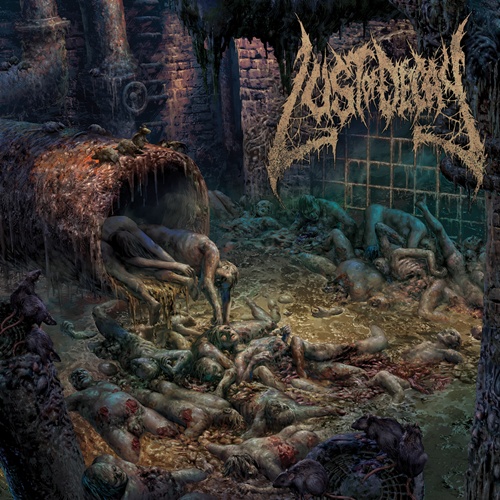
Ogni canzone è liberamente basata su storie vere. Jay è bravissimo a trovare storie assurde e trasformarle in testi folli. Musicalmente è una raffica continua di brutalità e tutto si unisce per creare otto tracce di death metal feroce, immerso in sporcizia, sangue e tragedia. Anche la copertina rappresenta benissimo l’atmosfera grafica e brutale del disco.
Il disco vede in lineup membri coinvolti in vari progetti death metal. Questa esperienza diversificata influenza la scrittura o l’esecuzione dei brani?
Sì, tutti noi siamo stati o siamo attivi in altre band… Non credo abbia influenzato molto la scrittura della musica, però forse nell’esecuzione sì: con Ryan al basso c’è più aggressività… porta tanta energia giovane nella band, e questo ci carica tutti.
Alcuni brani, come “Nourishing the Swine”, sono stati apprezzati per le strutture molto articolate. Come riuscite a combinare tecnica elevata e brutalità incessante?
Mi richiede un sacco di tempo a scrivere e provare da solo, sperimentando idee, tecniche e stili di plettraggio diversi. Mi piace mischiare riff tecnici a riff più groove, con molta velocità. Quando ho la struttura di base la porto al resto della band e la sistemiamo insieme con batteria e voce. In quel processo continuo a rifinire le parti per far scorrere meglio tutto. Alla fine, secondo me, il risultato è una canzone complessa e brutale.
La batteria è un elemento fondamentale nell’intensità dell’album. In che modo l’approccio di Jordan Varela contribuisce all’atmosfera generale?
Jordan è un batterista di un altro livello, il suo stile è unico. È davvero una delle ragioni che rendono i Lust of Decay una band particolare: il suo modo di suonare è intricato e fuori di testa. Da quando lo conosco ha sempre avuto un approccio super concentrato con un’esecuzione caotica e intensissima.
Dopo quasi due decenni senza pubblicare dischi, come vedi oggi la scena death metal? Vi sentite ancora parte di questo mondo?
Penso che la scena death metal sia forte al momento. Ha avuto alti e bassi negli anni, ma non sparirà mai. Anche se lontani dai dischi per un po’, siamo sempre rimasti attivi in altri progetti e io sono molto dentro la scena con Comatose Music. L’anno scorso siamo stati accolti alla grande al Texas Domination Fest, ed è stato bello vedere che i fan non si sono dimenticati di noi.
La copertina di Daemorph Art è molto d’impatto. Quanto conta l’aspetto visivo per trasmettere i vostri temi di morte, putrefazione e violenza?
Daemorph Art ha fatto un lavoro pazzesco. La copertina rappresenta perfettamente la title track “Entombed in Sewage”. Credo che l’artwork sia una parte molto importante di ogni album, e volevamo assolutamente qualcosa che avesse un impatto visivo forte, in linea con la nostra musica brutale e i testi.
Guardando al futuro, cosa devono aspettarsi i fan dei Lust of Decay? Ci saranno concerti o questo è più un statement da studio?
Per ora il futuro è un’incognita, non abbiamo show o festival in programma. Magari le cose cambieranno più avanti, ma al momento questo è un ritorno in studio di cui siamo davvero entusiasti e non vediamo l’ora di scatenarlo nel mondo!
Beneath the city streets where decay breeds and the forgotten rot in silence, Lust of Decay return with unapologetic brutality. Nearly two decades after their last full-length, the North Carolina death metal demigods have clawed their way back from the sepulchral depths to unleash “Entombed in Sewage”, their long-awaited new album arriving December 12th via Comatose Music. Mixed and mastered by Tony Tipton and wrapped in a grim visual nightmare by Daemorph Art, this record promises a vicious fusion of technical prowess, raw violence, and macabre storytelling. To discuss the band’s resurrection and the filth-infested vision behind this latest chapter, we spoke with guitarist and backing vocalist Steve Green.
Hi Steve, congratulations on “Entombed in Sewage”. After nearly 20 years since your last album, what motivated Lust of Decay to return to the studio now?
Thank you very much. Well, after Lust of Decay broke up in late 2007 to pursue other endeavors we reformed in 2014 with the addition of some new members and our original drummer, but the revival was brief and ended in 2016. In 2019 we decided to reform once again with our established line-up from 2004, but sadly our bassist Joe passed away in early 2020. After some thought and discussions, we decided to continue with Lust of Decay in Joe’s honor and spent the next five years writing ‘Entombed in Sewage’ and it’s finally coming out in December.
The album’s sound is both devastatingly heavy and surprisingly clear in production. How did working with Tony Tipton shape the sonic identity of the record?
Working with Tony was great! In addition to his engineering skills, he’s also a metal musician and knows how to really bring out that massive sound we wanted. He was very patient and helped get each instrument dialed in for us. We wanted an overall heavy tone that was clear, but not too polished, so it still has a raw and organic feel to it. We believe Tony really got the perfect balance for us.
Can you tell us more about the concept behind “Entombed in Sewage”? How does the imagery of decay and filth translate into the music itself?
Conceptually each song on ‘Entombed in Sewage’ is loosely based on true stories. Jay does a great job finding these wild stories and then translating them into some crazy lyrics. Musically it’s all about relentless brutality and it all comes together to create eight tracks of ferocious death metal steeped in filth, gore, and tragedy. The album cover also displays the graphic and savage atmosphere of ‘Entombed in Sewage’.
The album features members with backgrounds in multiple brutal death projects. How does this mix of experiences influence the writing and execution of the songs?
Yeah, we are all currently or were previously involved with other bands and projects… I don’t really think that had much influence on the writing of the music though… but perhaps the execution was a bit more aggressive with the addition of Ryan on bass… he brings youth and energy to the band, and we all feed from that.
Some tracks, like “Nourishing the Swine”, are praised for their intricate structures. How do you approach creating songs that are both technically complex and relentlessly brutal?
It requires a lot of writing and rehearsing on my own, trying different ideas, techniques and picking styles. I do like to mix technical riffs with groove riffs and lots of speed picking. Once I have the foundation of a song written I will present it to the rest of the band, and we will begin putting it all together with drums and vocals. During this process I will continue to work on the riffs, sometimes making slight changes on some parts to help with the overall structure and flow. Once everything is finished and tight the end result, in my opinion, is a complex and brutal song.
Drums play a crucial role in the intensity of the album. How did Jordan Varela’s approach to rhythm and dynamics contribute to the overall atmosphere?
Jordan is a next level drummer and his style is unmatched. He is truly what makes Lust of Decay a unique band, his playing is so intricate and over-the-top. For as long as I’ve known Jordan, his approach has always been very focused with chaotic and intense execution.
After almost two decades away from recording, how do you see the death metal scene now? Do you feel connected to it, or do you think the music was better in the past?
I believe the death metal scene is strong right now, it has had high points and low points over the years, but it’s never going away. We feel that Lust of Decay is still pretty connected to the scene after all these years since we all have been active in other bands during our time away, and I am very active in the scene with Comatose Music. We also had a great reception last year when we performed at the Texas Domination Fest, so it’s a good feeling to know that the fans haven’t forgotten about us and still show their undying support.
The artwork by Daemorph Art is very striking. How important is the visual representation in conveying the themes of death, decay, and violence in your music?
Daemorph Art did an amazing job on our new album cover. It perfectly represents the title track ‘Entombed in Sewage’. I think artwork is a very important element of any album, and we absolutely wanted our new album to have a strong visual impact that matched our brutal music and lyrics.
Finally, looking ahead, what can fans expect from Lust of Decay? Will there be live shows or is this release mainly a studio statement of your current vision?
For now, our future is uncertain, we have no shows or fests planned at this time. That could change at some point, but for now this is just a new studio release that we are very excited to finally unleash upon the world
 Il Raglio del Mulo