
ENGLISH VERSION BELOW: PLEASE, SCROLL DOWN!
Arcane Tales, progetto symphonic power metal italiano, giunge all’ottavo album con “Ancestral War”, uscito il 20 ottobre 2025 per Broken Bones Promotion & Productions. In questa intervista, Luigi Soranno, ideatore e motore creativo della saga musicale, racconta l’evoluzione del progetto iniziato con i Black Ravens, il ruolo della componente narrativa e visiva nella sua musica e il rapporto con fan e critica. Dalla scrittura dei brani agli arrangiamenti sinfonici, Luigi offre uno sguardo completo sul presente e sui progetti futuri di Arcane Tales.
Bentornato su Il Raglio del Mulo Luigi. Con “Ancestral War” arrivi all’ottavo capitolo musicale della tua saga: ti saresti mai aspettato, quando hai iniziato il progetto come Black Ravens, di portare avanti una storia così ampia e longeva?
Ciao e ben trovati! Diciamo che all’epoca sognavo altro e mi auguravo di raggiungere altri lidi con la band. Onestamente, se faccio un salto indietro al 2002, il momento in cui tutto è collassato e la band si è sciolta, non mi sarei mai aspettato di fare da solo ciò che poi ho fatto e che mi ha condotto a quest’ultimo “Ancestral War”.
L’album precedente, “Until Where The Northern Lights Reign”, è stato accolto con grande entusiasmo da fan e critica. In che modo questa risposta positiva ha influenzato la scrittura e la produzione del nuovo disco?
Come ogni critico analizza il mio operato, io analizzo ciò che viene scritto o detto su di esso, cercando di cogliere input o suggerimenti positivi, qualora ce ne fossero. Altre volte (per fortuna in pochi casi) mi è capitato o mi capita di leggere cose di cui onestamente non riesco a cogliere il senso che non sia ai miei occhi “fine” denigrazione. Diciamo che non tutti sono in grado di elargire un giudizio che non sia sopraffatto dai propri gusti, ma posso tentare di capire (con moltissimo sforzo). Ormai me ne sono fatto una ragione e cerco di andare avanti, nonostante mi piacerebbe sapere cosa sia in grado di fare al mio posto chi scrive (tante volte senza cognizione di causa, a mio modesto parere). Credo che questo insieme di cose, ad ogni modo, riesca a smuovere qualcosa in me che poi viene riversato sull’intero lavoro. Certo, se non avessi ispirazione, non riuscirei a fare nulla di tutto ciò, questo è lapalissiano.
Ogni tuo album è accompagnato da artwork molto curati. Quanto conta l’aspetto visivo nel dare forza al mondo narrativo di Arcane Tales e come nasce la copertina di “Ancestral War”?
Da amante dell’arte, credo sia fondamentale per dare il primo assaggio di un’opera. Sono il classico esempio di chi ha “sbranato” i booklet degli album che acquistava. Venivo letteralmente catturato dai vari artwork. Questo, soprattutto, quando la musica potevi solo ascoltarla se compravi i dischi a scatola chiusa. Era un qualcosa (e lo ritengo ancora oggi) che legava profondamente l’ascoltatore con quell’album in particolare. Ogni mio artwork cerca di rappresentare al meglio frammenti narrati nei miei libri. Come ho detto più volte in passato, questo progetto è una sorta di colonna sonora legata ad altre forme artistiche, come le copertine, ispirate dalle mie opere narrative, quindi sì, le ritengo molto importanti.
Le nuove tracce hanno titoli molto evocativi, da “Frozen Rhapsody” a “Blood and Honor”: quali sono i brani chiave per comprendere al meglio lo spirito dell’album?
Sono ispirate in gran parte a temi di battaglia narrati nei due volumi de “La Pietra di Zaffiro”. Credo i titoli debbano sempre essere evocativi, soprattutto in un genere che abbraccia tematiche fantasy. Secondo me la suite finale “Between Myth and Legend” rappresenta al meglio tante sfaccettature della mia proposta musicale e può benissimo inquadrare l’intero album.
Dal punto di vista musicale, quanto hai osato con questo nuovo capitolo rispetto a “Steel, Fire and Magic” e “Until Where The Northern Lights Reign”? Ci sono territori sonori che non avevi ancora esplorato?
Per questo tipo di progetto musicale io devo osare. Solo per il semplice fatto di non avere vincoli relazionati ad esibizioni live, sento e mi sforzo di spingere sempre più sul pedale del gas. Mi spiego meglio. Tanti, alle volte, compongono in maniera funzionale. Riuscire a portare su un palcoscenico dal vivo ciò che si crea in studio, facendolo risultare il più possibile simile a quanto si è suonato su disco è qualcosa che per me è “limitante” in qualche maniera. Quando compongo e sento che quella parte deve suonare in un modo piuttosto che un altro, per poi ritrovarmi a stravolgerla o minimizzarla perché dal vivo sarebbe magari difficile da eseguire, non ha senso, secondo me. Potrei adattarla al meglio che posso in sede live (come tanti fanno), ma questo è un qualcosa che esula dalla visione “artistica” incisa su disco. Il disco deve creare magia perché rimane per sempre, che ci siano “prestazioni” live decenti o meno. Ad ogni modo, l’esempio migliore che posso farti è questo: a tanti piace il teatro perché piace di più avere un rapporto diretto con il pubblico, con esitazioni, errori, improvvisazioni. Ad altri (io sono uno di questi) piacciono i film stratosferici, con effetti, al limite della perfezione esecutiva e della “prestanza scenica”, ecc. Per questo motivo ho deciso di concentrarmi e dedicare molto tempo alla produzione e spero in futuro di riuscire ad innalzare ulteriormente il livello qualitativo sonoro. È un qualcosa che mi preme sempre più per rendere giustizia a ciò che compongo.
I tuoi album sono spesso ricchi di cori, orchestrazioni e arrangiamenti sinfonici. In “Ancestral War” come hai lavorato su questi elementi?
La tecnologia VST è un qualcosa di magnifico. Le tue idee compositive vengono eseguite in maniera molto realistica con strumenti molto realistici. Cosa che non fa assolutamente la “famigerata” tecnologia AI, che va oltre questo processo, anzi, lo salta completamente, fregandosene dell’ispirazione e analizzando invece degli algoritmi e dei dati. Il mio è un lavoro molto lungo e complesso: scrivere nota per nota, bilanciare i suoni, le dinamiche, i fraseggi, ecc. Un lavoro duro e molto lungo che però, se fatto bene, ti dà delle soddisfazioni enormi. Non ci sono regole scritte. Quando ho delle idee parto nella stesura delle linee a cui assegno uno strumento e pian piano arrivo al risultato che si può ascoltare sui miei dischi.
In passato hai raccontato che il confronto con i fan, anche sulle scelte produttive, è stato importante per crescere come musicista. C’è stato qualche feedback particolare che ti ha aiutato nella realizzazione di “Ancestral War”?
Certamente! Come ho detto precedentemente, le critiche se fatte bene possono darti una mano a sistemare tante cose che magari hai fatto poco bene in passato, cose a cui magari non hai dato troppo peso o per semplici e banali carenze di esperienza hai tralasciato. Ho sempre accettato le critiche costruttive, quelle che mettono realmente in discussione il tuo operato per renderlo migliore in futuro. Quello che francamente mi manda in bestia è leggere cose scritte tanto per criticare e basta, o per colmare il vuoto di concetti inesistenti nelle analisi, a prescindere dai tuoi sforzi e dal percorso che ti ha portato fin lì. Imparerò col tempo a lasciarmi alle spalle anche i famosi criticoni da strapazzo, quelli che magari si vantano di avere alle spalle una lunga carriera di “ascoltatore” e pretendono di insegnarti cose di cui non sanno neanche il significato.
Traduci quali sono i tuoi cinque libri fantasy preferiti?
La saga di Arcane Tales ha superato ormai i venticinque anni di vita. Guardandoti indietro, quali sono stati i momenti più significativi di questo percorso?
Ti rimando alla prima domanda per rispondere anche a questa. Il momento veramente significativo e importante è stato quello in cui mi sono impuntato e ho deciso di credere in qualcosa che sembrava utopistico all’epoca, cominciando a scrivere canzoni su canzoni e, contemporaneamente, cominciando a scrivere i miei libri.
Guardando al futuro, hai già idee o spunti narrativi per i prossimi capitoli della saga, o preferisci vivere questa fase concentrandoti solo sulla promozione di “Ancestral War”?
Per il momento mi dedicherò al nuovo album e alla sua promozione. In futuro vedrò come muovermi. Tutto a tempo debito.
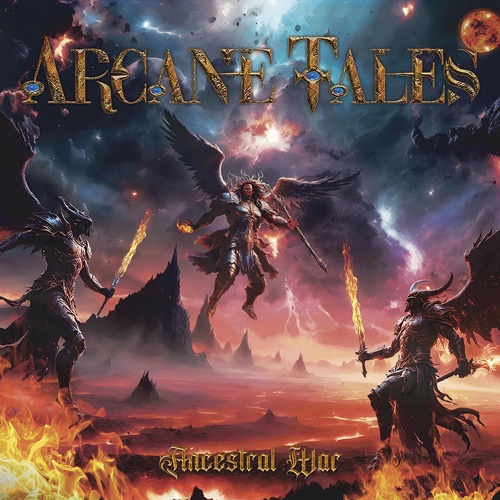
Arcane Tales, an Italian symphonic power metal project, reaches its eighth album with “Ancestral War”, released on October 20th, 2025 via Broken Bones Promotion & Productions. In this interview, Luigi Soranno, creator and driving force behind the musical saga, talks about the evolution of the project that began with Black Ravens, the role of narrative and visual elements in his music, and the relationship with fans and critics. From songwriting to symphonic arrangements, Luigi offers a complete insight into the present and future plans of Arcane Tales.
Welcome back to Il Raglio del Mulo, Luigi. With “Ancestral War” you reach the eighth musical chapter of your saga: did you ever expect, when you started the project as Black Ravens, to carry on such a broad and long-lasting story?
Hello and welcome! Let’s say that back then I dreamed of something else and hoped to reach other horizons with the band. Honestly, if I look back to 2002, the moment when everything collapsed and the band broke up, I would have never expected to do alone what I eventually did, leading me to this latest “Ancestral War”.
The previous album, “Until Where The Northern Lights Reign”, was met with great enthusiasm by fans and critics. How did this positive response influence the writing and production of the new record?
Just as every critic analyzes my work, I analyze what is written or said about it, trying to pick up positive input or suggestions, if there are any. Other times (fortunately rare) I have read things that, honestly, I cannot find any sense in, except what seems to me “pure” denigration. Not everyone is capable of giving a judgment that isn’t overwhelmed by their personal tastes, but I try to understand (with a lot of effort). I have come to terms with it and try to move forward, even though I would like to know what those who write would be able to do in my place (often without any real knowledge, in my humble opinion). I believe that this combination of factors, in any case, stirs something in me that is then poured into the whole work. Of course, without inspiration, I wouldn’t be able to do any of this—that’s obvious.
Each of your albums is accompanied by very detailed artwork. How important is the visual aspect in reinforcing the narrative world of Arcane Tales, and how was the cover of “Ancestral War” created?
As an art lover, I believe it is fundamental to give the first taste of a work. I am the classic example of someone who “devoured” the booklets of the albums I bought. I was literally captivated by the various artworks. This was especially true when music could only be heard if you bought the albums blindly. It was something (and I still consider it so today) that deeply connected the listener with that particular album. Every artwork I create tries to best represent fragments narrated in my books. As I have said many times in the past, this project is a sort of soundtrack linked to other artistic forms, like the covers inspired by my narrative works, so yes, I consider them very important.
The new tracks have very evocative titles, from “Frozen Rhapsody” to “Blood and Honor”: which are the key songs to best understand the spirit of the album?
They are largely inspired by battle themes narrated in the two volumes of “La Pietra di Zaffiro”. I believe titles should always be evocative, especially in a genre that embraces fantasy themes. In my opinion, the final suite “Between Myth and Legend” best represents many facets of my musical proposal and can very well frame the entire album.
From a musical point of view, how daring have you been with this new chapter compared to “Steel, Fire and Magic” and “Until Where The Northern Lights Reign”? Are there sonic territories you hadn’t explored before?
For this type of musical project, I have to be daring. Simply because I have no constraints related to live performances, I feel and strive to push the gas pedal further. Let me explain. Many, sometimes, compose in a functional way. Bringing to a live stage what is created in the studio, making it as close as possible to what was played on the record, is something that, for me, is somewhat “limiting.” When I compose and feel that a part should sound a certain way, only to later alter or minimize it because it might be difficult to perform live, it doesn’t make sense to me. I could adapt it as best as possible for live performances (as many do), but this is something that falls outside the “artistic” vision recorded on the album. The record must create magic because it lasts forever, whether live performances are decent or not. Anyway, the best example I can give is this: many people like theater because they enjoy a direct relationship with the audience, with hesitations, mistakes, improvisations. Others (I am one of these) prefer grand cinematic experiences, with effects, on the edge of perfect execution and “scenic presence,” etc. For this reason, I decided to focus and dedicate a lot of time to production, and I hope to further raise the sound quality level in the future. This is increasingly important to me to do justice to what I compose.
Your albums are often rich in choirs, orchestration, and symphonic arrangements. How did you work on these elements in “Ancestral War”?
VST technology is magnificent. Your compositional ideas can be executed very realistically with highly realistic instruments. Something the notorious AI technology absolutely does not do—it goes beyond this process, skipping it completely, ignoring inspiration and analyzing algorithms and data instead. My work is very long and complex: writing note by note, balancing sounds, dynamics, phrasing, etc. It is hard and time-consuming work that, if done well, gives enormous satisfaction. There are no written rules. When I have ideas, I start drafting the lines, assigning an instrument, and gradually arrive at the result that can be heard on my records.
In the past, you mentioned that interacting with fans, even regarding production choices, was important for your growth as a musician. Was there any particular feedback that helped you in creating “Ancestral War”?
Certainly! As I said earlier, criticism, if done well, can help you fix many things you may have done poorly in the past, things you may have overlooked, or simply due to lack of experience. I have always accepted constructive criticism, the kind that truly questions your work to make it better in the future. What really annoys me is reading things written just to criticize, or to fill a void of nonexistent concepts in the analysis, regardless of your efforts and the path that brought you there. I will learn over time to leave behind the so-called amateur critics, those who boast of a long career as “listeners” and pretend to teach you things whose meaning they don’t even understand.
What are your five favorite fantasy books?
The Arcane Tales saga has now surpassed twenty-five years. Looking back, what have been the most significant moments in this journey?
I refer you to the first question to also answer this one. The truly significant and important moment was when I insisted on believing in something that seemed utopian at the time, starting to write song after song, while simultaneously beginning to write my books.
Looking to the future, do you already have ideas or narrative cues for the next chapters of the saga, or do you prefer to live this phase focusing only on promoting “Ancestral War”?
For now, I will dedicate myself to the new album and its promotion. In the future, I will see how to proceed. Everything in its own time.
 Il Raglio del Mulo