
ENGLISH VERSION BELOW: PLEASE, SCROLL DOWN!
Urluk, il duo italiano di black-doom atmosferico formato da M. e U., torna a parlare con noi in occasione dell’uscita del nuovo full-length “Memories in Fade” via Pest Records. Il disco segna un’evoluzione del sound, fondendo le radici black-doom con alternative rock anni ’90, ambient e sfumature neo-folk, in un viaggio oscuro tra memoria e introspezione. M. e U. ci aprono le porte del loro universo sonoro, svelando le ispirazioni dietro i brani, le scelte compositive più audaci e le ombre che attraversano ogni traccia.
Bentornati su Il Raglio Del Mulo e grazie per essere di nuovo con noi: dopo la nostra precedente intervista ai tempi di “Loss”, torniamo a parlare di voi in occasione dell’uscita del nuovo full-length “Memories in Fade”. Come descrivereste a chi vi scopre ora l’evoluzione del vostro sound rispetto ai lavori precedenti?
M.: Innanzitutto grazie a voi per averci ricontattati, è un piacere ritrovarvi. In questi anni abbiamo lavorato in primis su noi stessi come individui e questo ha portato di riflesso un’evidente evoluzione anche della musica composta per il progetto Urluk. Descrivere in poche righe questa metamorfosi non è un’impresa così semplice, ma chi ci segue dall’inizio ha potuto cogliere e – si spera – apprezzare queste nuove sfumature che hanno preso vita nel corso del tempo e che sono entrate a far parte del mondo Urluk.
Nella precedente intervista emergeva come la “perdita” fosse una condizione universale e destabilizzante: in “Memories in Fade” questa dimensione sembra mutare verso qualcosa di più sfuggente e onirico. Come si è trasformato il vostro approccio emotivo e narrativo?
U.: In “Loss” il concetto di perdita era qualcosa di più diretto, quasi tangibile nella sua inevitabilità. Con “Memories in Fade” abbiamo sentito l’esigenza di esplorare una dimensione più sfumata, legata al ricordo e alla sua progressiva dissoluzione. È un approccio più introspettivo e meno lineare, dove l’emotività si muove tra ciò che è stato e ciò che resta in maniera distorta o incompleta. Anche a livello narrativo abbiamo lasciato più spazio all’interpretazione, cercando di evocare sensazioni piuttosto che descriverle in modo esplicito.
“Memories in Fade” incorpora black-doom, alternative rock anni ’90, ambient e neo-folk: tra queste influenze, quali hanno rappresentato una novità più sfidante rispetto ai lavori precedenti e perché?
M.: Mantenendo una precisa identità di base, questa volta con “Memories in Fade” abbiamo voluto fare un ulteriore passo in avanti. Abbiamo incorporato alcuni degli elementi nuovi da te citati e, al contempo, ne abbiamo rafforzato alcuni che sul precedente disco erano stati quasi un esperimento; nella fattispecie mi riferisco in primis all’utilizzo delle voci pulite che qui per la prima volta assumono un ruolo di prim’ordine. Più che un’influenza in particolare, la vera sfida è stata quella di amalgamarle tutte in maniera equilibrata al fine di dare al disco un’identità personale e multisfaccettata. Sentivamo il bisogno di guardarci dentro e di affrontare una nuova sfida personale.
In passato avete parlato di un equilibrio spontaneo tra musica e liriche; oggi, con una struttura narrativa più libera, come avete lavorato per mantenere coerenza e profondità espressiva lungo tutto l’album?
U.: Anche questa volta il processo è stato molto naturale, ma sicuramente più aperto rispetto al passato. Non ci siamo imposti una struttura rigida, bensì abbiamo lasciato che ogni brano trovasse una propria identità, mantenendo però un filo conduttore emotivo ben preciso. La coerenza dell’album nasce proprio da questo: da uno stato d’animo condiviso che ha accompagnato tutta la fase compositiva. Musica e liriche continuano a influenzarsi a vicenda in maniera spontanea, ma con una maggiore consapevolezza rispetto a prima.
Il primo singolo “Angles of Hauntology” anticipa l’atmosfera generale del disco: quanto pensate che un singolo possa raccontare un lavoro concepito come esperienza immersiva completa?
M.: “Angles of Hauntology” è stato il primo brano ad essere composto dal sottoscritto in funzione del nuovo album, il quale incorpora tutti i nuovi elementi presenti su “Memories in Fade” come ad esempio l’alternative rock e la corrente musicale hauntologica. Crediamo che questo brano, nel suo connubio musicale/lirico, rappresenti un ottimo biglietto da visita per capire il presente di Urluk. Inoltre è stato accolto molto positivamente dalla critica e questo non fa altro che gratificarci.
La collaborazione in studio con Francesco Cucinotta ha portato nuove prospettive al vostro sound: quanto l’apporto di ospiti esterni influenza la vostra creatività e il processo compositivo?
U.: La collaborazione con Francesco Cucinotta è stata estremamente stimolante sotto diversi punti di vista. Avere un orecchio esterno, ma allo stesso tempo affine alla nostra visione, ci ha permesso di osservare il materiale con maggiore lucidità. Il contributo di figure esterne non stravolge il nostro processo creativo, ma lo arricchisce, portando nuove prospettive e dettagli che magari dall’interno tendiamo a dare per scontati. È un confronto che, se ben bilanciato, può fare la differenza.
Il legame con il territorio, già presente nei vostri primi lavori e nelle foto del booklet, resta centrale: come ha evoluto il ruolo del contesto locale nella creazione delle atmosfere del nuovo disco?
U.: Il legame con il territorio rimane un elemento fondamentale per noi, anche se in “Memories in Fade” assume una forma meno esplicita e più evocativa. Se nei lavori precedenti era più riconoscibile, qui è diventato parte integrante dell’atmosfera, quasi un sottofondo costante. I luoghi continuano a influenzare profondamente il nostro modo di comporre, ma vengono filtrati attraverso una dimensione più interiore e meno descrittiva.
Le vostre composizioni hanno sempre avuto una componente narrativa forte; quali nuove sfide avete incontrato nel far dialogare tra loro brani molto diversi tra loro senza ricorrere a schemi convenzionali?
U.: La sfida principale è stata proprio quella di dare coesione a brani che nascono da impulsi anche molto diversi tra loro. Non volevamo forzare schemi o strutture convenzionali, quindi abbiamo lavorato molto sulle transizioni emotive più che su quelle tecniche. È stato un processo quasi istintivo, in cui ogni pezzo ha trovato il proprio spazio all’interno del disco mantenendo però un dialogo costante con gli altri. In questo senso, l’album va visto più come un flusso che come una semplice raccolta di tracce.
Guardando al futuro, e considerando la vostra naturale evoluzione dall’EP “Loss” fino a “Memories in Fade”, avete già in mente nuove direzioni artistiche o preferite lasciare che il percorso creativo si sviluppi in maniera spontanea?
M.: Al momento siamo concentrati sulla promozione del nuovo disco, dopodiché ci prenderemo una bella pausa doverosa prima di guardare al futuro. Posso anticipare però che stiamo valutando una ristampa del nostro EP di debutto “Loss” con nuove grafiche inedite e una traccia bonus, chissà magari già per la fine di quest’anno. Grazie ancora per il tempo che ci avete dedicato.
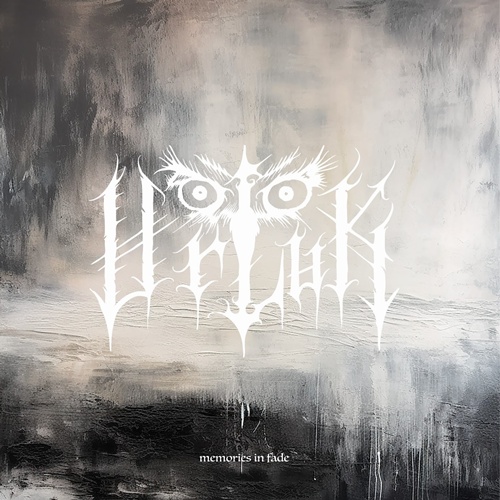
Urluk, the Italian atmospheric black-doom duo composed of M. and U., returns to speak with us on the occasion of their new full-length “Memories in Fade” via Pest Records. The album marks a bold evolution in their sound, blending black-doom foundations with ’90s alternative rock, ambient textures, and neo-folk shades in a dark journey through memory and introspection. M. and U. pull back the curtain on their sonic world, revealing the sparks behind each track, the daring creative choices, and the shadows that weave through the album.
Welcome back to Il Raglio Del Mulo and thank you for joining us again: after our previous interview around “Loss,” we’re here to talk about you again on the occasion of your new full-length “Memories in Fade.” How would you describe to newcomers the evolution of your sound compared to your previous work?
M.: First of all, thanks for reaching out again, it’s a pleasure to reconnect. Over the years we’ve primarily worked on ourselves as individuals, and this has naturally led to an evident evolution in the music composed for the Urluk project. Summarizing this metamorphosis in just a few lines isn’t easy, but those who have followed us from the beginning have been able to notice—and hopefully appreciate—the new shades that have emerged over time and have become part of the Urluk world.
In your previous interview, the theme of “loss” came across as a universal and unsettling condition: in “Memories in Fade,” this seems to shift toward something more elusive and dreamlike. How has your emotional and narrative approach evolved?
U.: In “Loss,” the concept of loss was more direct, almost tangible in its inevitability. With “Memories in Fade,” we felt the need to explore a subtler dimension, tied to memory and its gradual fading. It’s a more introspective and less linear approach, where emotion moves between what was and what remains in a distorted or incomplete way. Narratively, we’ve left more room for interpretation, aiming to evoke feelings rather than describe them explicitly.
“Memories in Fade” blends black-doom, ’90s alternative rock, ambient, and neo-folk: among these influences, which presented the most challenging novelty compared to your previous work, and why?
M.: While maintaining a clear core identity, this time with “Memories in Fade” we wanted to take another step forward. We incorporated some of the new elements you mentioned and, at the same time, strengthened aspects that were almost experimental on the previous album; in particular, I’m referring to the use of clean vocals, which here take a leading role for the first time. More than a single influence, the real challenge was to blend everything in a balanced way to give the record a personal and multifaceted identity. We felt the need to look inward and face a new personal challenge.
In the past, you’ve spoken about a spontaneous balance between music and lyrics; today, with a freer narrative structure, how did you work to maintain coherence and expressive depth throughout the album?
U.: This process was also very natural this time, but definitely more open than before. We didn’t impose a rigid structure; instead, we let each track find its own identity, while keeping a precise emotional thread. The album’s coherence comes from this: a shared mood that accompanied the entire writing process. Music and lyrics continue to influence each other spontaneously, but now with a greater awareness than before.
The first single, “Angles of Hauntology,” anticipates the overall atmosphere of the album: how much can a single track convey a work conceived as a fully immersive experience?
M.: “Angles of Hauntology” was the first track I composed for the new album, which incorporates all the new elements present in “Memories in Fade,” such as alternative rock and the hauntological musical current. We believe this track, in its musical/lyrical fusion, serves as an excellent calling card for understanding Urluk’s present state. Moreover, it was very well received by critics, which is extremely gratifying for us.
The studio collaboration with Francesco Cucinotta brought new perspectives to your sound: how much does the contribution of external guests influence your creativity and compositional process?
U.: Working with Francesco Cucinotta was extremely stimulating in many ways. Having an external ear, yet aligned with our vision, allowed us to observe the material with more clarity. The input of outside figures doesn’t disrupt our creative process, but enriches it, bringing new perspectives and details that we might take for granted internally. It’s a dialogue that, if well balanced, can make a real difference.
The connection to your local territory, present in your early work and in the booklet photos, remains central: how has the role of the local context evolved in shaping the atmospheres of the new album?
U.: The connection to our territory remains fundamental, although in “Memories in Fade” it takes on a less explicit, more evocative form. While it was more recognizable in previous works, here it becomes an integral part of the atmosphere, almost a constant undercurrent. Places continue to deeply influence our way of composing, but they are filtered through a more interior and less descriptive lens.
Your compositions have always had a strong narrative component; what new challenges did you encounter in making very different tracks interact without resorting to conventional frameworks?
U.: The main challenge was precisely giving cohesion to tracks that stem from very different impulses. We didn’t want to force conventional structures, so we focused on emotional transitions rather than technical ones. It was an almost instinctive process, where each piece found its place within the album while maintaining a constant dialogue with the others. In this sense, the album should be seen more as a flow than a simple collection of tracks.
Looking to the future, and considering your natural evolution from the “Loss” EP to “Memories in Fade,” do you already have new artistic directions in mind, or do you prefer to let the creative process develop spontaneously?
M.: At the moment, we’re focused on promoting the new album, and after that we’ll take a well-deserved break before looking ahead. I can reveal, however, that we’re considering a reissue of our debut EP “Loss” with new, unreleased artwork and a bonus track, maybe even by the end of this year. Thanks again for the time you’ve dedicated to us.
 Il Raglio del Mulo