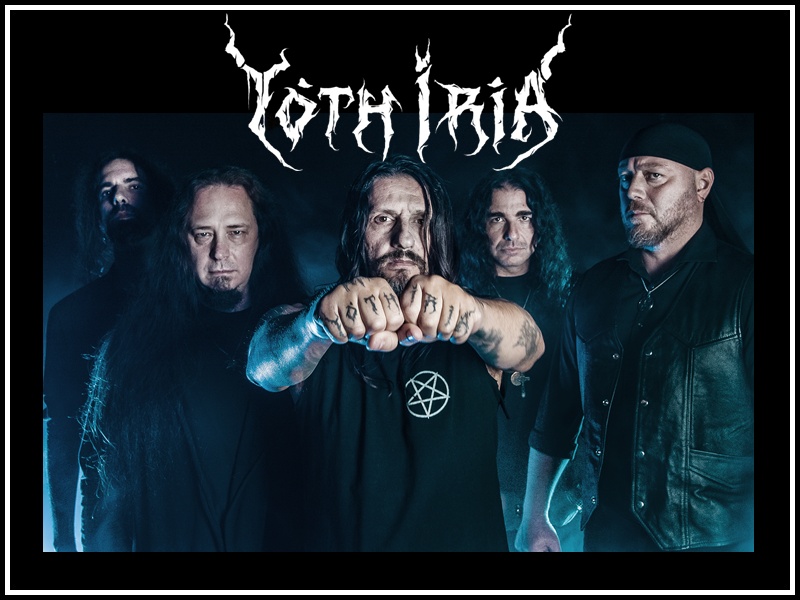

ENGLISH VERSION BELOW: PLEASE, SCROLL DOWN!
Ci sono dischi che non si limitano ad uscire, ma colpiscono come un rituale, e “Gone With The Devil” degli Yoth Iria, pubblicato via Metal Blade Records, è uno di questi. Incarnando lo spirito del black metal Ellenico, lo trasforma in qualcosa di più oscuro, introspettivo e visceralmente vivo. In questa conversazione, Nick e Jim aprono le porte a una visione che onora le proprie radici senza mai scivolare nella ripetizione, tracciando un percorso in cui la tradizione diventa trasformazione e non semplice memoria.
Saluti dalle profondità dell’abisso e grazie per avermi dedicato il vostro tempo: “Gone With The Devil” emerge come un rituale forgiato nel fuoco e nell’intimo, una dichiarazione che appare al tempo stesso antica e ribelle nel decadimento attuale. Come presentate questo disco a chi è pronto ad attraversare la soglia, e cosa ha acceso la prima scintilla nel vuoto?
Nick: Saluti dall’abisso, come dici, e grazie per le tue parole. “Gone With The Devil” non è semplicemente un altro album per noi; è una porta verso una forma di espressione più matura e spiritualmente intensa. Volevamo creare un’opera che risultasse senza tempo e allo stesso tempo immediata per l’ascoltatore. Questo album è un invito per chi è pronto ad abbandonare la sicurezza e a camminare consapevolmente verso la scoperta dell’equilibrio nel caos.
Scendendo più a fondo nella fiamma, il titolo “Gone With The Devil” evoca un paradosso tra potere e fede: quest’opera è concepita come una dottrina spirituale coerente oppure i brani sono invocazioni separate legate da un’unica corrente demoniaca?
Jim: “Gone With The Devil” può essere percepito come un enunciato ambiguo. Ogni traccia può reggersi da sola come un viaggio spirituale interiore, che conduce l’ascoltatore nel proprio conflitto interno e infine alla riconciliazione con sé stesso e con l’ambiente esterno. Quindi, alla fine, posso definirlo un paradosso benefico.
Il vostro suono porta con sé l’essenza del black metal Ellenico, ma si estende verso territori più oscuri ed eclettici: quanto è stato consapevole il bilanciamento tra tradizione e trasgressione nel plasmare l’identità sonora di questo album?
Jim: Si può dire che gli album precedenti erano più focalizzati sulla filosofia del black metal Ellenico, ma “Gone With The Devil” segue un percorso diverso. Probabilmente lo abbiamo fatto in modo subconscio. Ci siamo lasciati liberi di creare ciò che volevamo, anche senza accompagnamento musicale.
Da “As The Flame Withers” a “Blazing Inferno” fino a questo nuovo lavoro, si percepisce un’evoluzione deliberata: quali elementi del vostro passato avete mantenuto come sacri e quali avete volontariamente gettato nel fuoco per raggiungere questa nuova forma?
Nick: C’è sicuramente un’evoluzione deliberata tra “As The Flame Withers”, “Blazing Inferno” e ora “Gone With The Devil”. Ciò che è rimasto sacro è l’anima della band e ciò in cui crediamo. La dedizione all’atmosfera, alla melodia, all’oscurità e alle radici. Continuiamo ad approcciare la musica come qualcosa di spirituale piuttosto che puramente tecnico. Ciò che abbiamo volontariamente gettato nel fuoco sono stati i limiti, la prevedibilità e alcune abitudini compositive. Con questo album abbiamo permesso ai brani di respirare in modo più organico e di diventare più cinematografici.
La presenza di tempi controllati, quasi cerimoniali, dà peso a melodia e atmosfera prima che esploda la violenza: questo contrasto dinamico è stato un’arma centrale nella costruzione dell’impatto emotivo del disco?
Nick: Assolutamente. Le dinamiche sono state una delle armi più importanti nel plasmare la forza emotiva dell’album. Non abbiamo mai voluto aggressività continua senza significato. I tempi cerimoniali, la tensione, i momenti in cui le melodie possono svilupparsi lentamente; questi elementi creano l’atmosfera necessaria affinché le esplosioni risultino davvero potenti. Il metal non deve solo attaccare, deve anche ipnotizzare, possedere e trasportare l’ascoltatore oltre lo stato ordinario della mente.
Con delle radici intrecciate a realtà come Rotting Christ e Varathron, lo spirito della prima scena ellenica è ancora presente: come si manifesta oggi questa eredità senza ridursi a semplice ripetizione di un’era passata?
Jim: Non possiamo evitare il marchio del black metal Ellenico come titolo d’onore. Ma onestamente il mlack metal Ellenico è nato e morto negli anni ’90. Quello che abbiamo fatto con i Rotting Christ negli anni ’90 non può essere ripetuto, e non voglio nemmeno esserne una copia. Yoth Iria è una band moderna che rispetta il passato, ma realizza la propria musica con un’estetica più futuristica e progressiva. Ma per essere gentile con gli amanti del culto del black metal Ellenico, posso definire Yoth Iria come la nuova ondata del black metal Ellenico.
Brani come “Blessed Be He Who Enters” canalizzano ribellione, fuoco interiore e liberazione da strutture imposte: quanto questa visione lirica riflette uno scontro personale con le forme moderne di controllo e soffocamento spirituale?
Nick: Viviamo in un’epoca di controllo invisibile, vuoto spirituale e manipolazione costante mascherata da progresso. Brani come “Blessed Be He Who Enters” riflettono la necessità di recuperare il fuoco interiore e l’individualità contro sistemi progettati per sopprimerli. I testi non sono politici in senso stretto; sono esistenziali e spirituali. Parlano di risveglio, autodeterminazione e rifiuto della domesticazione spirituale.
Rifiutate confini rigidi pur mantenendo una forte identità: in una scena spesso divisa tra ortodossia e diluizione, dove si collocano gli Yoth Iria in questo conflitto interno al black metal stesso?
Jim: Bella domanda. Mi piace descriverci come osservatori esterni. In un mondo molto fragile, la musica è un veicolo che può risvegliare o almeno creare un’euforia mentale. Il black metal in particolare è un genere completamente anarchico che può attrarre una moltitudine di ideologie e azioni contraddittorie. Il black metal nella sua forma iniziale era basato sull’irriverenza e, alla sua base, aveva la ribellione dei demoni contro un dio autoritario e arrogante. Questo si adatta perfettamente agli Yoth Iria.
Oltre “Gone With The Devil”, quale sentiero si apre per voi nelle ombre: i prossimi passi approfondiranno questa espansione rituale o la frammenteranno in forme ancora più imprevedibili ed estreme?
Nick: Il percorso davanti è ancora nascosto nell’ombra. “Gone With The Devil” non è una destinazione finale. Siamo interessati a esplorare dimensioni più imprevedibili quando la musica lo richiede. L’evoluzione è essenziale perché la stagnazione è morte. Qualunque cosa verrà dopo porterà ancora lo spirito degli Yoth Iria, ma non nascerà mai da comfort o ripetizione.
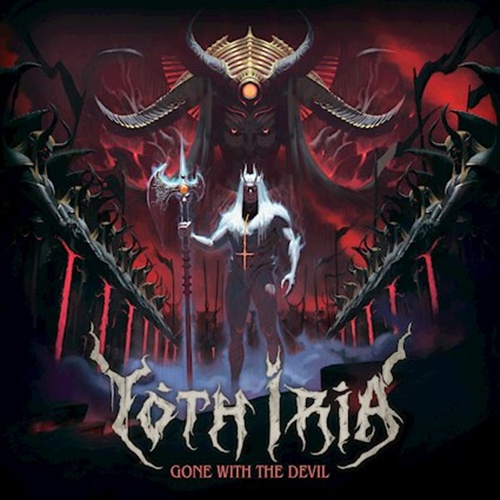
There are records that do not simply arrive, but descend like a ritual, and “Gone With The Devil” by Yoth Iria, released via Metal Blade Records, is one of them. It channels the spirit of Hellenic Black Metal into something darker, more introspective and fiercely alive. In this conversation, Nick and Jim open the gates to a vision that honors its roots while refusing repetition, forging a path where tradition becomes transformation rather than memory.
Hails from the abyss and respect for your time, “Gone With The Devil” emerges as a ritual forged in fire and intent, a statement that feels both ancient and defiant in the current decay, how do you unveil this record to those ready to cross the threshold, and what ignited its first spark in the void?
Nick: Hails from the abyss, as you say, and thank you for your words. “Gone With The Devil” is not simply another album for us; it is a gateway to a more mature and spiritually intense form of expression. We wanted to create a work that feels timeless while at the same time remaining immediate to the listener. This album is an invitation to those who are ready to abandon safety and consciously walk toward discovering the balance within chaos.
Moving deeper into the flame, the title “Gone With The Devil” evokes a paradox of power and faith, is this work conceived as a coherent spiritual doctrine, or do the songs stand as separate invocations bound by a shared daemonic current?
Jim: “Gone With The Devil” can be perceived as an ambiguous utterance. Each track can stand by itself as a spiritual inner journey, which leads the listener into his own internal conflict and in the final reconciliation with oneself and then with the external environment. So, in the end, I can call this a beneficial paradox.
Your sound carries the essence of Hellenic Black Metal while stretching into darker and more eclectic territories, how conscious was the balance between tradition and transgression when shaping the sonic identity of this album?
Jim: You can say the predecessors’ albums were more focused on the philosophy of Hellenic Black Metal, but “Gone With The Devil” follows a different path. We probably did that subconsciously. We let ourselves free to create whatever we liked, even without musical constraints.
From “As The Flame Withers” to “Blazing Inferno” and now this new opus, there is a sense of deliberate evolution, which elements of your past did you preserve as sacred, and which did you willingly cast into the fire to reach this new form?
Nick: There is definitely a deliberate evolution between “As The Flame Withers”, “Blazing Inferno” and now “Gone With The Devil”. What remained sacred was the soul of the band and what we believe in. The devotion to atmosphere, melody, darkness and roots. We still approach music as something spiritual rather than purely technical. What we willingly cast into the fire were limitations, predictability and perhaps certain habits of composition. With this album we allowed the songs to breathe more organically and to become more cinematic.
The presence of controlled, almost ceremonial tempos gives weight to melody and atmosphere before the violence erupts, was this dynamic contrast a central weapon in crafting the emotional impact of the record?
Nick: Absolutely. Dynamics were one of the most important weapons in shaping the emotional force of the album. We never wanted nonstop aggression without meaning. The ceremonial tempos, the tension, the moments where melodies are allowed to unfold slowly — these elements create the atmosphere necessary for the eruptions to feel truly powerful. Heavy Metal should not only attack, it should also hypnotize, possess and transport the listener somewhere beyond the ordinary state of mind.
With roots intertwined with entities like Rotting Christ and Varathron, the spirit of the early Hellenic scene still lingers, how does that legacy manifest in your current vision without becoming mere repetition of a bygone era?
Jim: We cannot avoid the character of Hellenic Black Metal as a title of honor. But honestly, Hellenic Black Metal was born and died in the 90s. What we did with Rotting Christ in the 90s cannot be repeated, I don’t want to be a clone either. Yoth Iria is a modern band that pays respect to the past, but we realize our music with a more futuristic and progressive aesthetic. But to be gentle with the lovers of Hellenic Black Metal cult, I can call Yoth Iria the new wave of Hellenic Black Metal.
Tracks like “Blessed Be He Who Enters” channel defiance, inner fire and liberation from imposed structures, how much of this lyrical stance reflects a personal confrontation with modern forms of control and spiritual suffocation?
Nick: We live in an age of invisible control, spiritual emptiness and constant manipulation disguised as progress. Songs like “Blessed Be He Who Enters” reflect the need to reclaim inner fire and individuality against systems designed to suppress them. The lyrics are not political in a narrow sense; they are existential and spiritual. They speak about awakening, self-determination and the refusal to become spiritually domesticated.
You openly reject rigid boundaries while still honoring a core identity, in a scene often trapped between orthodoxy and dilution, where do Yoth Iria stand in this ongoing conflict within Black Metal itself?
Jim: Nice question. I would like to describe us as external observers. In a very fragile world, music is a vehicle that can awaken or at least create a mental euphoria. Especially Black Metal is a completely anarchic musical genre that can attract a multitude of contradictory ideologies and actions. Black Metal in its earliest form was based on irreverence, and at its core it had the rebellion of demons against an authoritarian and arrogant god. This last one suits Yoth Iria perfectly.
Beyond “Gone With The Devil”, what path lies ahead in the shadows, will the next steps deepen this ritualistic expansion or fracture it into even more unpredictable and extreme manifestations?
Nick: The path ahead is still hidden in shadows. “Gone With The Devil” is not a final destination. We are interested in exploring more unpredictable dimensions when the music demands it. Evolution is essential because stagnation is death. Whatever comes next will still carry the spirit of Yoth Iria, but it will never be created from a place of comfort or repetition.

