
ENGLISH VERSION BELOW: PLEASE, SCROLL DOWN!
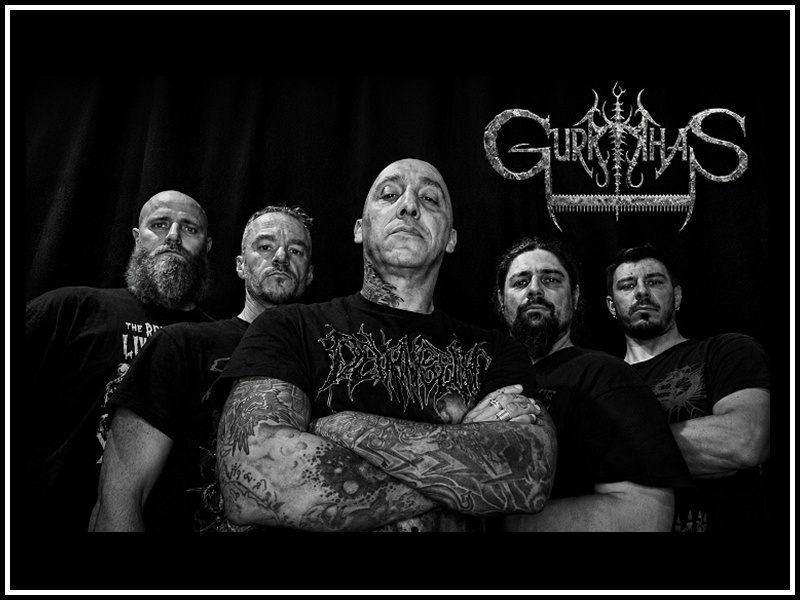
Dalle trincee dell’underground death metal francese a una nuova stagione di brutalità, i Gurkkhas tornano a scavare nel proprio passato con “Oaths Carved In The Shadow Of The Kukri”, una raccolta in doppio CD che riunisce “Engraved In Blood, Flesh And Souls” e “A Life Of Suffering”. Ne parliamo con Jeff, voce della band, ripercorrendo le origini della sua identità bellica, l’evoluzione del sound e la filosofia che continua ad alimentare i Gurkkhas ancora oggi. La raccolta è pubblicata da Underground Syndicate, etichetta indonesiana che ha acquisito i diritti per il mercato asiatico.
Prima di tutto, bentornato su Il Raglio Del Mulo, Jeff, e grazie per aver trovato il tempo di parlare con me. “Oaths Carved In The Shadow Of The Kukri” riunisce “Engraved In Blood, Flesh And Souls” e “A Life Of Suffering” in un’edizione doppio CD, offrendo un ritratto completo del primo capitolo della storia dei Gurkkhas. Guardando oggi questi due album nel loro insieme, cosa pensi che questa raccolta ci dica sull’identità della band in quel particolare momento storico?
Ciao, amico! Ancora una volta, grazie di cuore per averci ricontattati. Questo ci dimostra che lo spirito è ancora vivo. Siamo una band death metal con un approccio molto particolare, basato sul concept dei mistici guerrieri che sono i Gurkkhas. Questo mi dimostra che, vent’anni dopo, siamo ancora qui e che, con la forza di volontà, possiamo farcela. Forza!
“Engraved In Blood, Flesh And Souls” e “A Life Of Suffering” sono stati registrati a un solo anno di distanza, eppure tra i due dischi si nota già una progressione significativa, soprattutto per la crescente brutalità del sound. Riascoltandoli oggi, dove senti la maggiore evoluzione nel modo in cui i Gurkkhas componevano ed eseguivano la propria musica?
Sì, molte persone lo dicono. È vero, e dipende dal fatto che, nel periodo che separa i due album e quindi durante la fase di composizione, abbiamo ascoltato molto death metal brutal americano. Di conseguenza, questo si sente nel secondo album, mentre il primo ha sonorità più europee.
La raccolta contiene 18 brani, tra cui “Gurkkhas At War”, “Diabolic Mission”, “Blood And Hate”, “Atrocity”, “The 12 Gurkkhas Commandments” e “Kukri”, che nel loro insieme restituiscono un’immagine molto forte dell’identità aggressiva e bellicosa della band. Quanto di quell’atmosfera è nato spontaneamente durante la composizione e quanto, invece, è stato costruito deliberatamente come parte del concept dei Gurkkhas?
Abbiamo letto molti libri sui Gurkkhas, quindi, quando scrivevamo l’album, i testi sono venuti fuori spontaneamente, proprio come la musica. Abbiamo concepito questi album come degli “assalti in trincea”, pensati anche per essere suonati dal vivo, proprio per trasmettere una sensazione di aggressività permanente.
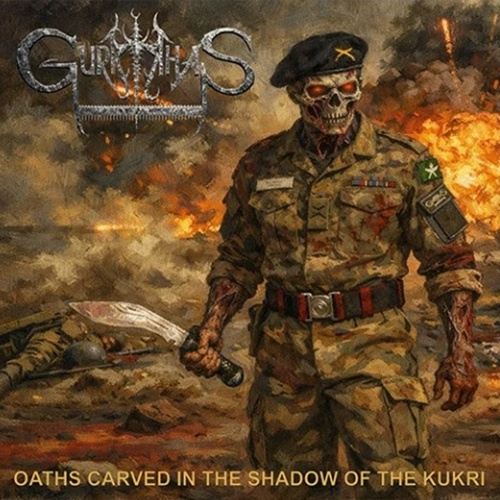
Il titolo “Oaths Carved In The Shadow Of The Kukri” mette al centro dell’immaginario della raccolta il kukri, il tradizionale coltello nepalese associato ai Gurkha. Che cosa rappresenta per te il kukri nella storia e nella filosofia dei Gurkkhas, e perché ti è sembrato il simbolo giusto per una raccolta che copre questi due album?
Il progetto della copertina e la scelta di mettere in risalto il kukri sono stati decisi da Underground Syndicate, l’etichetta discografica indonesiana che ci ha ingaggiati per i diritti relativi all’Asia. Conoscono bene il loro mercato e hanno pensato a un’immagine di questo tipo. Personalmente, credo che il risultato sia molto riuscito. Il kukri è un’arma da combattimento efficace sia nel corpo a corpo sia a distanza. È un coltello da combattimento ravvicinato grande e formidabile, ma, se usato da lontano, è efficace quanto un’ascia da lancio. È sempre stato utilizzato per difendersi dagli avversari e, tra l’altro, i Gurkkhas lo usano ancora oggi.
Riunire i due album originali significa anche riportare alla luce due momenti molto diversi della storia della band, dalle prime registrazioni fino al periodo legato ad “A Life Of Suffering”. Ci sono brani o interpretazioni particolari che hanno assunto un significato diverso per te quando li hai riascoltati durante la preparazione di questa raccolta?
Personalmente, “A Life Of Suffering” è davvero l’album che conta di più per me perché, quando ascolto per esempio il brano “Kukri”, mi tornano in mente tutto quel periodo, quella furia e tutta l’energia che abbiamo messo per fare in modo che i Gurkkhas andassero avanti e si facessero conoscere grazie alla singolarità del concept che li animava e che li anima ancora oggi. Quando metti piede su un palco per difendere il tuo album, senti tutto il peso, tutta l’energia e tutta la forza di volontà che sono serviti per far accadere tutto questo, e lo trovo… magico…
Nella nostra precedente intervista mi avevi detto che avevi scelto i brani di “A Life Of Suffering” anche perché rappresentavano ciò che i Gurkkhas erano sul palco. Ora che tutti i 18 pezzi sono riuniti, c’è un ordine particolare in cui consiglieresti di ascoltare “Oaths Carved In The Shadow Of The Kukri”, oppure è la stessa struttura dei due album a rappresentare al meglio i diversi lati della band?
Per me ci sono due brani fondamentali del primo album: “The 12th Gurkkhas…” e “Diabolic Mission”. Entrambi rappresentano ciò che sono i Gurkkhas, così come tutti i brani del secondo album.
Gli album originali appartengono a un periodo in cui l’underground death metal francese stava sviluppando una propria identità distintiva, mentre band come i Loudblast stavano già costruendo un’importante presenza internazionale. Riascoltando queste registrazioni a distanza di oltre vent’anni, che cosa pensi ci fosse di specificamente francese nell’approccio dei Gurkkhas e che cosa proveniva, invece, dalla scena death metal internazionale?
Se parliamo della scena attuale, è davvero impressionante vedere la crescita della scena francese. Non ha nulla a che vedere con quello che abbiamo vissuto vent’anni fa. Oggi ci sono festival dappertutto, continuamente, e abbiamo sei o sette festival davvero enormi. Per il death metal è fantastico. Inoltre, oggi le band affrontano la musica in modo molto professionale, ed è per questo che sono rispettate a livello internazionale. Loudblast, Massacra, Crusher, Agressor e, naturalmente, gli immancabili Mercyless sono i pionieri, senza dimenticare i Gojira, che si muovono su un altro versante. Guardando indietro, penso che i Gurkkhas siano sempre stati una band internazionale perché, soprattutto con il secondo album, il nostro sound era di stampo americano, mentre le altre band francesi non avevano quella sonorità. Forse è per questo che i nostri due album sono stati pubblicati da due etichette discografiche tedesche, Massacre Records e Morbid Records.
“Oaths Carved In The Shadow Of The Kukri” è chiaramente un documento storico, ma esce anche in un momento in cui i Gurkkhas sono tornati a essere una band attiva. Rivisitare questo materiale ti aiuta a capire quali elementi del vecchio sound dei Gurkkhas dovrebbero rimanere presenti nella nuova musica, oppure preferisci considerare la raccolta un capitolo chiuso e lasciare che i nuovi brani si sviluppino in modo indipendente?
Oggi sono l’unico sopravvissuto… Voglio dire che nessuno dei ragazzi che suonano attualmente nei Gurkkhas faceva parte della band quando uscirono entrambi i CD, oltre vent’anni fa. Quindi direi che questo terzo CD, che uscirà nel 2027, rappresenterà allo stesso tempo la continuità dello spirito dei Gurkkhas e il simbolo di un capitolo che deve essere chiuso per permetterci di far evolvere il nostro death metal, mantenendo però intatta la nostra forte identità.
Ora che questi due album sono finalmente riuniti e la loro storia riceve quel tipo di retrospettiva che all’epoca della loro uscita era impossibile, cosa speri che gli ascoltatori scoprano in “Oaths Carved In The Shadow Of The Kukri”?
E cosa dovrebbero aspettarsi quando i Gurkkhas si lasceranno definitivamente alle spalle questo capitolo e presenteranno il loro prossimo album in studio? Se apprezzano il nostro spirito e la nostra musica, allora, dopo aver ascoltato i Gurkkhas, possono aspettarsi un terzo album almeno altrettanto brutale, senza compromessi e in continua evoluzione. Vorrei ringraziarti, Giuseppe, per il tuo incredibile sostegno. Lo apprezziamo davvero! Siete la vera forza che alimenta la nostra musica e la nostra passione. Ogni CD che ascoltate, ogni T-shirt, ogni cappellino e ogni articolo di merchandising che indossate sono un simbolo del nostro legame e del nostro entusiasmo. Grazie per essere una parte essenziale di questa avventura e per far risuonare il nostro sound! Continuate a fare casino!
From the trenches of the French death metal underground to a new season of brutality, Gurkkhas are revisiting their past with “Oaths Carved In The Shadow Of The Kukri”, a 2CD collection bringing together “Engraved In Blood, Flesh And Souls” and “A Life Of Suffering”. We speak with Jeff, the band’s vocalist, about the origins of their warlike identity, the evolution of their sound, and the philosophy that continues to fuel Gurkkhas today. The collection is released by Underground Syndicate, the Indonesian label that acquired the rights for Asia.
First of all, welcome to Il Raglio Del Mulo, Jeff, and thanks for taking the time to speak with me. “Oaths Carved In The Shadow Of The Kukri” brings together “Engraved In Blood, Flesh And Souls” and “A Life Of Suffering” in a 2CD edition, offering a complete portrait of the first chapter of Gurkkhas. When you look at these two albums together today, what do you think this collection tells us about the band’s identity at that particular moment in time?
Hi, friend! Once again, a big thank you for getting back to us. This shows us that the spirit is still there. We are death metal with a very particular approach through this concept of the mystical warriors that are the Gurkkhas. It shows me that, 20 years later, we are still here and that, with willpower, we can get there. Strength!
“Engraved In Blood, Flesh And Souls” and “A Life Of Suffering” were recorded only a year apart, but there is already a noticeable progression between the two records, particularly in the increasing brutality of the sound. When you listen to them today, where do you hear the biggest evolution in the way Gurkkhas wrote and performed its music?
Yes, a lot of people say this. It’s true, and it’s because during the time that separates the two albums, and therefore during the composition period, we listened to a lot of brutal American death metal. Logically, this is reflected in the second album, while the first one has more European sounds.
The compilation contains 18 songs, including “Gurkkhas At War”, “Diabolic Mission”, “Blood And Hate”, “Atrocity”, “The 12 Gurkkhas Commandments” and “Kukri”, which collectively give a very strong impression of the band’s aggressive and warlike identity. How much of that atmosphere came naturally from the songwriting, and how much was deliberately constructed as part of the Gurkkhas concept?
We read a lot of books about the Gurkkhas, so when writing the album, the lyrics came naturally, as did the music. We designed these albums as “trench assaults” and also to be played live in order to give an impression of permanent aggression, precisely.
The title “Oaths Carved In The Shadow Of The Kukri” places the kukri, the traditional Nepalese knife associated with the Gurkhas, at the centre of the collection’s imagery. What does the kukri represent to you within the history and philosophy of Gurkkhas, and why did it feel like the right symbol for a compilation covering these two albums?
The design of the cover and the highlighting of the kukri were decided by Underground Syndicate, the record label in Indonesia that signed us for the rights in Asia. They know their market well and thought of this design in that way, and I think, for my part, it’s very successful. The kukri is a combat weapon that is effective both at close quarters and at a distance. It is a large, very formidable hand-to-hand combat knife that is as effective as a throwing axe when used from a distance. It has always been used to defend against opponents, and the Gurkkhas still use it, by the way.
Putting the two original albums together also means bringing back two very different moments in the band’s history, from the first recordings through to the period surrounding “A Life Of Suffering”. Were there any songs or particular performances that acquired a different meaning for you when you heard them again while preparing this compilation?
For my part, “A Life Of Suffering” is really the album that matters most to me because, when I listen to the track “Kukri”, for example, it reminds me of all that time, this fury, and all the energy we put into ensuring that Gurkkhas moved forward and made itself known through the singularity of the concept that animated it and still animates it. When you set foot on a stage to defend your album, you feel all the weight, all the energy, all the willpower it took for everything “that” to happen, and I find it… magical…
In our previous interview, you told me that you selected the songs for “A Life Of Suffering” partly because they represented what Gurkkhas was like on stage. With all 18 tracks now gathered together, is there a particular sequence in which you would recommend listening to “Oaths Carved In The Shadow Of The Kukri”, or does the two-album structure itself best represent the different sides of the band?
For me, there are two essential songs from the first album: “The 12th Gurkkhas…” and “Diabolic Mission”. Both are what Gurkkhas is, and all the songs from the second album are, too.
The original albums belong to a period when the French death metal underground was developing its own distinctive identity, while bands such as Loudblast were already establishing an important international presence. Listening to these recordings more than twenty years later, what do you think was specifically French about the Gurkkhas approach, and what came from the wider international death metal scene?
If we talk about our scene nowadays, it’s very impressive to see the surge in the French scene. It has nothing to do with what we experienced 20 years ago. Now you have festivals everywhere, all the time, and you have six or seven really huge festivals, so for death metal it’s fabulous. On top of that, bands are now very professional in their approach to music, which is why they’re respected internationally. Loudblast, Massacra, Crusher, Agressor, and, of course, the inevitable Mercyless are the pioneers, not to mention Gojira in another vein. Now, when I look back, I think that Gurkkhas has always been an international band because, especially with the second album, our sound was in the US style when the others in France were not. This is perhaps why our two albums were produced by two German record companies (Massacre Records and Morbid Records).
“Oaths Carved In The Shadow Of The Kukri” is obviously a historical document, but it is also being released at a time when Gurkkhas is an active band again. Does revisiting this material help you understand what elements of the old Gurkkhas sound should remain present in the new music, or do you prefer to treat the compilation as a closed chapter and let the new songs develop independently?
Today, I am the only one who survived. I mean, none of the guys who actually play in Gurkkhas were on either of the two CDs released over 20 years ago. So I would say that this third CD, which will be out in 2027, will simultaneously represent the continuity of the Gurkkhas spirit and the symbol of a chapter that must be closed to allow us to evolve our death metal while keeping our strong identity.
With these two albums now reunited and the story behind them finally receiving the kind of retrospective treatment that was impossible during the original era, what do you hope listeners discover in “Oaths Carved In The Shadow Of The Kukri”, and what should they expect when Gurkkhas finally moves beyond this chapter and presents its next studio album?
If they like our spirit and our music, then whatever comes out of listening to Gurkkhas, they can expect a third album that is at least as brutal, without concessions and in full evolution. I would like to thank you, Giuseppe, for your incredible support. It is really appreciated! You are the true force that powers our music and passion. Each CD you listen to, each T-shirt, each cap, each piece of merch that you wear is a symbol of our connection and our enthusiasm. Thank you for being an essential part of this adventure, and for making our sound resonate! Keep making noise!

