
ENGLISH VERSION BELOW: PLEASE, SCROLL DOWN!
I visionari dell’heavy rock da Lancaster, Wytch Hazel, tornano con il loro quinto album, “V: Lamentations”, pubblicato per Bad Omen Records / Metal Blade. Guidati ancora una volta dalla spinta creativa e spirituale del frontman Colin Hendra, e raffinati sotto l’occhio esperto del produttore Ed Turner, l’album esplora in profondità temi di dolore, fede e redenzione. Con il suo intenso mix di malinconia e speranza, “V: Lamentations” si dimostra il lavoro più emotivamente potente della band fino ad oggi. Abbiamo parlato con Colin dei sacrifici dietro la sua realizzazione, del potere terapeutico della musica e dei progetti futuri per i Wytch Hazel.
Benvenuto su Il Raglio del Mulo, Colin ! Il vostro nuovo album “V: Lamentations” prosegue il percorso degli Wytch Hazel con un sound emotivamente ricco e dettagliato dal punto di vista sonoro. Qual era la tua visione per questo nuovo capitolo e come ha influenzato il risultato finale lavorare di nuovo con Ed Turner?
Grazie, è un piacere parlare con voi. Con “V: Lamentations” volevo davvero approfondire la tensione emotiva e spirituale che è sempre stata al centro dei Wytch Hazel. C’è un peso in questo album, un’onestà che sentivo il bisogno di esprimere. Non direi che la visione fosse chiara fin dall’inizio, ma sapevo che doveva essere più personale, più cruda. Lavorare di nuovo con Ed Turner è stato fondamentale: ha un modo di tirare fuori il meglio di me. Sa come orientare i miei istinti compositivi e aiutarmi a affinare gli arrangiamenti senza perdere quella scintilla di spontaneità. Il suo approccio tecnico è molto preciso ma mai sterile, ed è fondamentale per un disco così emotivamente intenso.
Hai detto che la maggior parte del materiale per “V: Lamentations” era già pronta quando è uscito “Sacrament” nel 2023. Cosa ha causato il ritardo nella pubblicazione e come ti ha messo alla prova il processo di registrazione, fisicamente e mentalmente?
Sì, è vero, le canzoni erano praticamente scritte, ma abbiamo incontrato diversi ritardi. Alcuni erano di natura pratica — programmazione, logistica e le realtà della vita. Ma, onestamente, gran parte del ritardo è derivata dal bisogno di prendere tempo per vivere veramente il materiale. Dopo “Sacrament” ero esausto, non creativamente, ma emotivamente. Registrare “V: Lamentations” mi ha consumato molto. Ho dovuto scavare a fondo, e questo ha comportato una grande fatica fisica e mentale. Alcuni giorni non riuscivo proprio a entrare nello stato mentale giusto per cantare o prendere decisioni sulle scelte produttive. Non era solo fare un album — era elaborare una grande quantità di riflessioni personali.
Da brani come “I Lament” e “Run The Race” fino alla coppia finale “Heavy Load” e “Healing Power”, l’album mostra un profondo contrasto emotivo. In che modo le tue esperienze personali e spirituali influenzano questo mix di dolore e speranza nella tua scrittura?
Questo contrasto è molto intenzionale — è ciò che è la vita, davvero. La mia fede è sempre stata centrale nella mia scrittura, e non è una fede immune alle difficoltà. C’è dolore nel cammino cristiano — lutto, dubbi, lamenti — ma c’è anche una speranza incredibile. Brani come “I Lament” nascono da vere difficoltà, persino preghiere. Ma poi qualcosa come “Healing Power” mostra la luce che emerge. Non voglio scrivere inni che saltano il dolore — voglio scrivere canzoni che affrontano onestamente il dolore e arrivano a qualcosa di redentivo.
La scrittura delle canzoni sembra arrivarti in modo molto istintivo, quasi mistico. Puoi dirci di più su come nascono le tue canzoni e cosa le ispira?
È difficile da spiegare, ma la scrittura spesso sembra qualcosa che accade a me, non qualcosa che costruisco consapevolmente. Non mi siedo e dico: “Ok, è ora di scrivere una canzone su X.” Un riff o una frase mi arrivano, spesso in un momento di calma — o persino di caos — e poi è come se io inseguissi l’idea, cercando di fare abbastanza spazio per lasciarla formare. Molto di questo sembra una preghiera, o una ricerca interiore. L’ispirazione viene dalle Scritture, sì, ma anche dall’esperienza personale, dalla natura, dalle conversazioni, dal silenzio. Non voglio mai che sembri artificiale.
L’arco finale di “Heavy Load” seguito da “Healing Power” lascia l’ascoltatore con un forte senso di risoluzione. Terminare l’album su una nota di speranza è stata una decisione consapevole?
Sì, assolutamente. Chiudere con “Healing Power” era intenzionale. Non volevo che questo album lasciasse l’ascoltatore appesantito dal lamento. Il senso del viaggio è che alla fine c’è guarigione. La vita ha il suo peso, ma non siamo fatti per portarlo da soli. L’ultima canzone parla di lasciar andare, ricevere grazia, e doveva essere la parola finale. È una sorta di benedizione.
Con il ritorno del batterista originale Aaron Hay e una formazione solida, come è cambiata la chimica della band, specialmente durante i live negli ultimi anni?
Avere Aaron di nuovo con noi è fantastico. C’è una sorta di memoria muscolare quando suoni insieme da così tanto tempo — non serve pensare troppo, e questo crea spazio per una vera chimica sul palco. Siamo cresciuti musicalmente e personalmente, e credo che i live lo riflettano. C’è un legame più stretto ora e un senso più profondo dello scopo di ciò che facciamo. L’energia è più concentrata, ma sempre molto viva.
A maggio avete aperto per Michael Schenker nel suo tour UK, un chitarrista che ammiri da bambino. Cosa ha significato questa opportunità per te, sia personalmente che come band?
È davvero surreale. Schenker è stata un’enorme influenza sul mio modo di suonare la chitarra fin dal primo giorno. Condividere un palco con lui è sia umiliante che ispirante. È un po’ un momento di chiusura del cerchio. Per la band è stata un’ottima opportunità per raggiungere un pubblico più ampio — persone che potrebbero non aver mai sentito parlare di Wytch Hazel, ma che apprezzano i toni classici e la sensibilità melodica di cui ci facciamo portavoce. È stato un onore.
Dopo l’uscita di “V: Lamentations”, quali sono i vostri piani per live o tour futuri? I fan in Europa avranno presto la possibilità di vedere Wytch Hazel sul palco?
Sì — assolutamente. Il tour è una grande priorità ora che l’album è uscito. Abbiamo in cantiere altre date nel Regno Unito e in Europa, e stiamo lavorando duramente per arrivare in posti dove non siamo mai stati. I live sono dove le canzoni respirano davvero, e vogliamo condividere “V: Lamentations” con quante più persone possibile. Quindi sì: Europa, arriviamo!
I Wytch Hazel portano con orgoglio la fiaccola dell’heavy metal britannico, un genere nato nella vostra terra. Pochi giorni fa l’Inghilterra ha reso omaggio a una delle sue leggende fondatrici con il gran finale dei Black Sabbath a Birmingham. Secondo te, qual è lo stato attuale del metal tradizionale e classico nel Regno Unito? Esiste ancora una scena solida per questa forma più pura del genere?
C’è sicuramente un rinnovato apprezzamento per il metal classico e tradizionale nel Regno Unito. Forse non è mainstream, ma il sottobosco è vivo con band che mantengono vivo quel sound — basta guardare i festival, le ristampe in vinile, i concerti locali. C’è fame di autenticità, di qualcosa radicato nella melodia e nella capacità musicale. La kermesse dei Sabbath è un ottimo esempio di quanto sia influente l’eredità del genere — non è solo nostalgia, è cultura. -I Wytch Hazel vogliono onorare quella tradizione e portarla avanti. Non cerchiamo di copiare il passato, ma di mantenere vivo il suo spirito con integrità. E sì, credo che ci sia ancora spazio — forse persino in crescita — per questo genere nel Regno Unito.
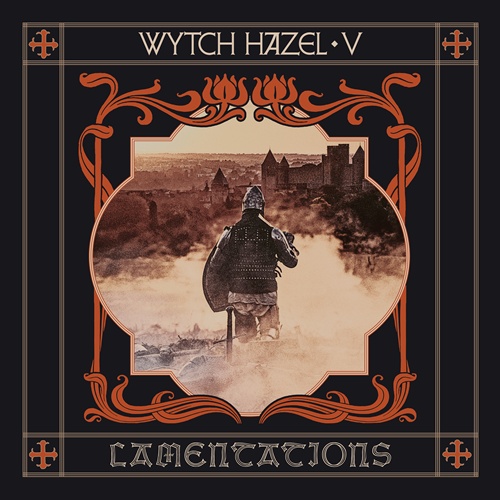
Lancastrian heavy rock visionaries Wytch Hazel return with their fifth full-length, “V: Lamentations”, released via Bad Omen Records/Metal Blade Records. Guided once again by the songwriting and spiritual drive of frontman Colin Hendra, and refined under the steady hand of long-time producer Ed Turner, the album delves deeper into themes of sorrow, faith, and redemption. With its striking blend of sorrow and hope, “V: Lamentations” stands as the band’s most emotionally charged work to date. We spoke with Colin about the struggles behind its creation, the healing power of music, and the road ahead for Wytch Hazel.
Welcome to Il Raglio del Mulo, Colin! Your new album “V: Lamentations” continues the journey of Wytch Hazel with a sound that is both emotionally rich and sonically detailed. What was your vision for this new chapter, and how did working again with Ed Turner shape the final result?
Thank you—it’s great to be speaking with you. With “V: Lamentations”, I really wanted to delve deeper into the emotional and spiritual tension that’s always been at the heart of Wytch Hazel. There’s a weight to this album, a kind of honesty that I felt compelled to express. I wouldn’t say the vision was neatly mapped out at the start, but I knew it had to be more personal; more raw. Working with Ed Turner again was essential—he’s got a way of pulling the best out of me. He knows how to navigate my songwriting instincts and help sharpen the arrangements without losing that spark of spontaneity. His engineering approach is very precise but not sterile, which is key for a record like this that’s so emotionally driven.
You’ve said that most of the material for “V: Lamentations” was ready by the time “Sacrament” came out in 2023. What caused the delay in its release, and how did the recording process take a toll on you physically and mentally?
Yes, that’s true—the songs were pretty much written, but we ran into a number of delays. Some of it was practical—scheduling, logistics, and just the realities of life. But honestly, a lot of the delay came from me needing time to actually live with the material. I found myself exhausted after “Sacrament”—not creatively, but emotionally. Recording “V: Lamentations” took a lot out of me. I had to dig deep, and that came with physical and mental fatigue. Some days I just couldn’t get into the right headspace to deliver the vocals or commit to the production choices. It wasn’t just making an album—it was processing a lot of personal reflection.
From songs like “I Lament” and “Run The Race” to the closing duo “Heavy Load” and “Healing Power”, the album reflects a deep emotional contrast. How do your personal and spiritual experiences influence this blend of sorrow and hope in your songwriting?
That contrast is very intentional—it’s what life is, really. My faith has always been central to my writing, and it’s not a faith that’s immune to struggle. There’s sorrow in the Christian walk—grief, doubt, lamentation—but there’s also incredible hope. Songs like “I Lament” are born out of real struggles, prayers even. But then something like “Healing Power” shows the light that breaks through. I don’t want to write hymns that skip the pain—I want to write songs that wrestle honestly and arrive at something redemptive.
Songwriting seems to come to you in a very instinctive, almost mystical way. Can you tell us more about how your songs are born, and what inspires their creation?
It’s hard to explain, but songwriting often feels like something that happens to me, not something I consciously construct. I don’t sit down and say, “Right, time to write a song about X.” A riff or a phrase will come to me, often in a moment of stillness—or even chaos—and then it’s like I’m chasing it down, trying to get out of the way enough to let it form. A lot of it feels like prayer, or some kind of inner searching. Inspiration comes from Scripture, yes, but also from personal experience, from nature, from conversations, from silence. I never want it to feel manufactured.
The closing arc of “Heavy Load” followed by “Healing Power” leaves the listener with a strong sense of resolution. Was ending the album on a hopeful note a conscious decision?
Yes, absolutely. Ending with “Healing Power” was very intentional. I didn’t want this album to leave listeners weighed down by lament. The whole point of the journey is that there is healing at the end. Life has heaviness, but we’re not meant to carry it alone. That last song is about letting go, receiving grace, and it needed to be the final word. It’s a kind of benediction.
With the return of original drummer Aaron Hay and a solid line-up in place, how has the band’s chemistry evolved, especially during live performances in recent years?
Having Aaron back has been fantastic. There’s a kind of muscle memory when you’ve played together for so long—you don’t have to overthink things, and that creates space for real chemistry on stage. We’ve matured musically and personally, and I think the live shows reflect that. There’s a tighter bond now, and a deeper sense of purpose in what we’re doing. The energy is more focused, but still very alive.
In May you opened for Michael Schenker on his UK tour — a guitarist you’ve admired since childhood. What did this opportunity mean to you, both personally and as a band?
It’s genuinely surreal. Schenker has been a massive influence on my guitar playing from day one. To share a stage with him is both humbling and inspiring. It feels like a bit of a full-circle moment. For the band, it was a great opportunity to connect with a wider audience—people who might not have heard of Wytch Hazel but who appreciate the classic tones and melodic sensibilities we’re all about. It was an honour.
After the release of “V: Lamentations”, what are your plans for future live shows or tours? Will fans across Europe have the chance to see Wytch Hazel on stage soon?
Yes—absolutely. Touring is a big priority for us now that the album’s out. We’ve got plans brewing for more dates in the UK and across Europe, and we’re working hard to get to places we haven’t played yet. The live shows are where the songs really breathe, and we want to share “V: Lamentations” with as many people as we can. So yes—Europe, we’re coming!
Wytch Hazel proudly carries the flame of British heavy metal, a genre that was born in your homeland. Just a few days ago, England paid tribute to one of its founding legends with the Black Sabbath ballet in Birmingham. In your view, what is the current state of traditional, classic metal in the UK? Is there still a strong scene for this purer form of the genre?
There’s definitely a renewed appreciation for classic and traditional metal in the UK. It might not be mainstream, but the underground is alive with bands keeping that sound alive—just look at the festivals, the vinyl reissues, the grassroots gigs. There’s a hunger for authenticity, for something rooted in melody and musicianship. The Sabbath ballet is a great example of how far-reaching the genre’s legacy is—it’s not just nostalgia; it’s culture. What Wytch Hazel aims to do is honour that tradition while pushing it forward. We’re not trying to copy the past, but to carry its spirit with integrity. And yes, I think there’s still a place—maybe even a growing place—for that in the UK.
 Il Raglio del Mulo