
ENGLISH VERSION BELOW: PLEASE, SCROLL DOWN!
I Månegarm hanno pubblicato “Edsvuren” il 29 agosto 2025 via Napalm Records. Per festeggiare i 30 anni, l’album si ispira al folklore di Roslagen e alla mitologia norrena, bilanciando potenza grezza e melodia con strumenti tradizionali e voci femminili. Nella nostra conversazione, Erik Grawsiö e Jakob Hallegren ci hanno parlato delle storie narrate nel disco — dallo spirito della foresta di “I skogsfruns famn” alla resistenza pagana attorno al lago Mälaren — e del metodo di scrittura più diretto, basato sulle canzoni, che ha dato forma all’album.
Benvenuti e grazie per aver trovato il tempo di parlare con me. “Edsvuren” segna il vostro 12° album in studio e celebra i 30 anni dei Månegarm. Cosa rappresenta per voi personalmente e musicalmente questo traguardo, e cosa ha fatto sì che la band andasse avanti per tre decenni?
Erik: Suonare nei Månegarm insieme ai miei migliori amici è la cosa più bella del mondo, ed è questo che ci ha tenuti in piedi: la pura gioia di fare musica. Quando abbiamo iniziato nel 1995 non ci aspettavamo di essere ancora qui 30 anni dopo, ma sono davvero felice che lo siamo. Penso che stiamo ancora pubblicando musica buona e interessante ed “Edsvuren” lo dimostra. Sono orgoglioso di quello che abbiamo realizzato finora e non abbiamo finito; abbiamo ancora molto da dare.
Il vostro nome deriva dal lupo mitologico destinato a divorare la luna durante il Ragnarök. Come influenza questa immagine la vostra identità, le storie che raccontate e i temi esplorati in “Edsvuren”?
Jakob: Raccontare storie sulla mitologia norrena e l’epoca vichinga è stata l’idea portante fin dall’inizio, quindi è una parte molto importante del concept dei Månegarm. L’album “Edsvuren” non è un concept album nello stesso senso dei nostri due precedenti lavori. Tuttavia, certi temi ricorrenti e testi intrecciati creano una storia più ampia in alcuni brani. I temi principali includono: la resistenza pagana contro la diffusione del cristianesimo attorno al lago Mälaren in Svezia — supportata da ricerche recenti sulla religione e la storia norrena; l’importanza di luoghi specifici — spesso radicati nella nostra regione o nei suoi dintorni, come il ruolo del mare oltre la nostra terra, siti di sepoltura mitici e il folklore locale su esseri soprannaturali e i loro poteri. Quindi “Edsvuren” si ispira alla poesia e alla prosa norrena, a resoconti medievali della Svezia pre-cristiana, alle rune e al loro potere magico, e alle credenze popolari che sono rimaste vive a Roslagen fino al XX secolo. Tutto ciò continua quello che i Månegarm hanno sempre fatto nei 30 anni di musica.
L’apertura dell’album, “I skogsfruns famn”, si ispira al mito dello spirito seducente della foresta. Potete raccontarci di più sulle ispirazioni mitologiche dietro questo e altri brani?
Jakob: La Ninfa della Foresta (Skogsfrun), più conosciuta in Svezia come Skogsrået (“lo spirito della foresta” o “la ninfa della foresta”), è uno degli esseri del folklore svedese più famosi. Nella tradizione, la Skogsrå era un essere femminile soprannaturale, padrona della foresta, che controllava gli animali, la fortuna nella caccia e poteva attirare gli uomini in incontri erotici. La figura è conosciuta in tutta la Svezia e nei paesi vicini, anche se con nomi e sembianze diverse. A Roslagen, da dove veniamo, il nome più comune era Skogsfrun. Circa dieci anni fa, quando ho iniziato a lavorare a un libro sul folklore di Roslagen, ho trovato un sacco di storie sulle esperienze delle persone con questo essere. Una in particolare mi ha colpito. Di solito la Skogsrå è descritto come straordinariamente bella, ma con tratti soprannaturali come una schiena cava simile a un albero marcio o una coda di volpe. In alcune storie di Roslagen, però, si dice avesse la coda di un lupo — un dettaglio raro che abbiamo incluso nei testi. Con “I skogsfruns famn” diamo nuova vita a questa vecchia storia della nostra regione.
Avete incorporato strumenti tradizionali nordici e ospiti alle voci, tra la figlia di Erik, Lea Grawsiö Lindström, e Liv Hope Lenard, creando contrasti tra durezza e armonia. Come riuscite a bilanciare questo nella scrittura e negli arrangiamenti?
Erik: Ho un sacco di idee quando compongo; nella mia testa posso “sentire” il violino o il flauto in una certa melodia. Quando lo proviamo spesso funziona, ma non sempre. Nei Månegarm c’è sempre stato un mix tra durezza e delicatezza, quindi penso di essere diventato abbastanza bravo in questo, haha.
I Månegarm utilizzano voci femminili fin dai primi demo alla fine degli anni ’90. Come è cambiato il loro uso rispetto a quei primi lavori?
Erik: Non so se sia cambiato tantissimo negli anni. Lavoriamo più o meno nello stesso modo; ho delle idee, le proviamo e speriamo ci piacciano. Ma rispetto ai demo degli anni ’90, ovviamente, c’è differenza. All’epoca volevamo solo rendere speciali alcune parti di una canzone, tipo “ahh questo verso potrebbe suonare bene con una voce femminile”. Adesso possiamo comporre interi brani pensati per voci femminili, quindi hanno un ruolo più grande nelle canzoni.
Ripensando ai vostri primi demo “Vargaresa” e “Ur Nattvindar”, come si adattano ancora oggi con la vostra filosofia e il vostro stile musicale?
Erik: La filosofia è la stessa: facciamo questo perché amiamo suonare metal. L’idea iniziale era suonare metal con temi mitologici norreni e continuiamo così. Musicalmente ora è più melodico, un po’ più lento e folk, ma il “feeling” è la stesso.
Durante la registrazione di “Havets Vargar” avete affrontato problemi con etichetta e studio che hanno portato Erik a impugnare il microfono. Come ha influenzato questo periodo la direzione e la resilienza della band?
Erik: Viktor, il cantante di allora, non scriveva musica o testi, quindi non ha avuto impatto. Il fatto che io abbia preso le vocali ha probabilmente portato a uno stile di canto più vario. Viktor era un ottimo cantante, ma growlava solo. Io ho iniziato a sperimentare con una voce grezza/ruvida ma melodica, che poi è diventata una grande parte del suono dei Månegarm.
La vostra musica mescola aggressività, melodie folk e narrazione mitica. Come è cambiato il vostro processo compositivo per lavori concettuali come “Ynglingaättens Öde” ed “Edsvuren”?
Erik: La composizione è diventata più professionale in ogni aspetto. Anni fa componevo senza computer, avevo tutto in testa: riff, armonie, melodie principali, arrangiamenti… tutto. Potevo “tenere in testa” 4-5, forse 6 canzoni prima che fosse troppo, haha. Poi ho iniziato a usare piccoli dispositivi di registrazione e più tardi il telefono, così non dimenticavo le idee. Sei o sette anni fa mia moglie mi ha detto: “Erik, componi la musica per i Månegarm, e la registri col telefono?? Compra un computer e un software decente!” Hahaha aveva ragione. Così ho comprato il necessario e ho iniziato a registrare demo decenti. Ha aperto molte opportunità. È impossibile avere tutto in testa, quindi il computer mi ha fatto evolvere nella scrittura. Ora scrivo in modo più professionale ma anche più semplice e diretto. Prima le canzoni erano più complesse, con molti riff insieme; adesso scrivo canzoni molto più semplici, niente di complicato. È così che mi piace, non mi piacciono le musiche complicate con tempi strani e altre cose bizzarre. Non è “il mio genere” per niente.
Oltre alla musica, cosa sperate che gli ascoltatori provino o portino con sé dopo aver ascoltato “Edsvuren” dall’inizio alla fine?
Erik: Che abbiano appena ascoltato un album molto bello, vario e interessante, e che abbiano voglia di riascoltarlo… subito!!!!!
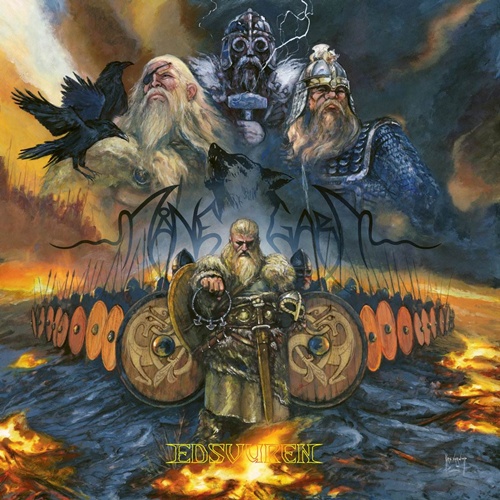
Månegarm released “Edsvuren” on August 29, 2025 via Napalm Records. Marking 30 years, the album draws on Roslagen folklore and Norse myth, balancing raw power and melody with traditional instruments and female vocals. In our conversation, Erik Grawsiö and Jakob Hallegren trace the stories — from the forest spirit of “I skogsfruns famn” to pagan resistance around Lake Mälaren — and the streamlined, song-first writing that shaped it.
Welcome, and thank you for taking the time to speak with me. “Edsvuren” marks your 12th studio album and celebrates 30 years of Månegarm. What does this milestone represent for you personally and musically, and what has kept the band forging ahead for three decades?
Erik: To play in Månegarm together with my best friends is the best thing in the world and that is what kept us going; the pure joy to play music. When we started in 1995 we didn’t expect to still be around 30 years later but I’m really glad we are. I think we’re still releasing good and interesting music and “Edsvuren” is a proof of that. I’m proud of what we have achieved so far and we are not done yet; we have much more to give.
Your band name comes from the mythological wolf destined to devour the moon at Ragnarök. How does this imagery influence your identity, storytelling, and the themes you explore on “Edsvuren”?
Jakob: To tell storys about the Norse mythology and the Viking era was the idea from the beginning so that is a really big part of the Månegarm concept. The album “Edsvuren” is not a concept album in the same sense as our previous two releases. However, certain recurring themes and interwoven lyrics create a larger story across some tracks. The main themes explored include: The pagan resistance against the spread of Christianity around the lake Mälaren of Sweden — supported by recent research on the Norse religion and history. The significance of specific places — often rooted in our home region or its surroundings. Like the role of the sea beyond our home, mythical burial sites, and local folklore concerning supernatural beings and their powers. Thus, “Edsvuren” draws upon Norse poetry and prose, medieval accounts of pre-Christian Sweden, runes and their magical influence, and folk beliefs that remained alive in Roslagen well into the 20th century. All of this serves as a continuation of what Månegarm has always done throughout our 30 years of creating music.
The album opener, “I skogsfruns famn,” draws from the myth of the seductive forest spirit. Can you tell us more about the mythological inspirations behind this and other tracks on the record?
Jakob: The Forest Nymph (Skogsfrun), more widely known in Sweden as skogsrået (Eng. “the forest spirit” or “the forest nymph”), is one of Sweden’s most famous folklore beings. In Swedish folklore, the skogsrå was a supernatural female being, mistress of the forest, who controlled animals, hunting luck, and could lure men into erotic encounters. The figure is known throughout Sweden and in neighboring countries, though under different names and appearances. In Roslagen, where we come from, Skogsfrun was the more common name. About ten years ago, when I began working on a book about the folklore of Roslagen, I found a great number of stories about people’s experiences and encounters with this being. One longer local tale in particular captured my interest. Usually the skogsrå is described as unnaturally beautiful but with supernatural traits such as a hollow back like a rotted-out tree, a trough-shaped back, or a fox’s tail. In some Roslagen accounts, however, she is said to have a wolf’s tail — a rare detail that we have included in the lyrics. With “I Skogsfruns famn,” we give new life to this old story from our home region.
You’ve incorporated traditional Nordic instruments alongside guest vocalists, including Erik’s daughter, Lea Grawsiö Lindström, and Liv Hope Lenard, to create contrasts between harshness and beauty. How do you achieve this balance in the songwriting and arrangement process?
Erik: I get a lot of ideas when composing; in my head I can for example “hear” the violin or flute in a certain melody. When we then try it out it often turnes out good but not all the time. There has always been a mix between the harsch and soft in Månegarms music so I guess I have gotten pretty good at this haha.
Månegarm has included female vocals since the early demos in the late ‘90s. How has your use of them evolved from those early recordings to the present?
Erik: I don’t know if it has evolved super much over the years. We work quite the same; I get some ideas that I want to try out, we try them and hopefully we like them. But compared to the late 90-s demos it’s a difference of course. Back then we wanted to spice up some special parts of a song, like “ahh this verse might sound cool with female vox”. Now days we can compose whole songs that are ment for female vocals, so they take a bigger part in the songs now.
Looking back at your first demos “Vargaresa” and “Ur Nattvindar”, how do those early works still resonate with your current music philosophy and style?
Erik: The philosophy is the same in the sense that we are doing this because we love playing metal. The idea when we started was to play metal with a Norse mythological theme and we have continued with that. Music-wise it’s more melodic nowdays and a bit slower and folky, but the “feeling” is the same.
During the recording of “Havets Vargar”, you faced label and studio challenges that led to Erik taking over on vocals. How did that period shape the band’s direction and resilience?
Erik: Viktor, the singer we had back then, didn’t compose any music or wrote any lyrics so it didn’t had any inpact there. Me taking over the vocals probably lead to a more diverse way of singing. Viktor was a great singer but the just growled. I started experimenting with this raw/harsch but melodic voice wich later on became a big part of the Månegarm sound I would say.
Your music blends aggression, folk melodies, and mythic storytelling. How has your songwriting process evolved when crafting concept-driven works such as “Ynglingaättens Öde” and “Edsvuren”?
Erik: The song writing process has become more professional in every aspect. Many years ago I composed music with no computer. I had it all in my head; The riffs, the harmonies, the lead melodies, the arrangements…everything. I could “store” like 4-5, maybe 6 songs in my head before it got to much hahaha. I then started to use a small recording device and later on recorded shorter stuff on the phone so I wouldn’t forget cool stuff. 6 or 7 years ago my wife said; “Erik, you compose the music for Månegarm right, and you record the music on your fkn phone!! Buy a computer and soft ware so you can record decent stuff!!!” Hahaha she was soooo right. And said and done, I bought necessary stuff and then I started to record decent demos for the new songs. It opened up opportunities to say the least. It is impossible to have it all in your head so when I started using the computer I could evolve my song writing. So the song writing is more professional but it’s also more simple and direct. Back in the days the songs could be more tricky with a lot of different riffs put together; Now days I think that I write much more simple songs, it ain’t complicated at all. And that’s just the way I like it, I don’t like complicated music with strange paces and other wierd stuff. That’s not “my cup of tea” at all.
Beyond the music itself, what do you hope listeners will feel or take away after experiencing “Edsvuren” from start to finish?
Erik: That they’ve just listened to a very nice, varied och interesting album that they want to listen to again… now!!!!!
 Il Raglio del Mulo