
ENGLISH VERSION BELOW: PLEASE, SCROLL DOWN!
I Walk in Darkness tornano con il loro quinto album, “Gods Don’t Take Calls”, un’opera che consolida e approfondisce l’universo gothic/symphonic della band, spingendolo verso una dimensione ancora più essenziale, filosofica e spirituale. Un disco che parla di smarrimento, resistenza interiore e ricerca di senso in un mondo in cui gli dèi tacciono e l’uomo è costretto a guardarsi dentro. Ne abbiamo parlato con il chitarrista della band, Shaman.
Benvenuto su queste pagine, Shaman! Il vostro quinto album, “Gods Don’t Take Calls”, segna un nuovo capitolo nel vostro universo poetico e concettuale. In che modo questo lavoro rappresenta un’evoluzione rispetto ai dischi precedenti, e quali sono stati i punti fermi che avete voluto mantenere nella vostra identità gothic/symphonic?
“Gods Don’t Take Calls” è un disco più essenziale e più consapevole. L’evoluzione non consiste nel cambiare linguaggio, ma nel purificarlo. La componente sinfonica e cinematica è diventata più organica, meno decorativa, più necessaria. I punti fermi restano la visione filosofica, l’idea del viaggio e la centralità dell’essere umano di fronte al tempo, alla perdita e all’inevitabile.
L’album dipinge un mondo di rovine, silenzio e rinnovamento interiore, in cui gli dei non rispondono più e l’umanità deve contare solo sulla propria spiritualità. Come si intrecciano tra loro i nove brani nel raccontare questa visione, e quali canzoni considerate le vere “chiavi di accesso” al cuore di “Gods Don’t Take Calls”?
I brani non sono capitoli separati, ma stazioni dello stesso cammino. L’album parla di smarrimento e di resistenza interiore. “Nico Rising” apre la soglia, “Towards Chang’an” indica una direzione spirituale, “You Who Dream” custodisce il nucleo più intimo del messaggio. Non esiste una sola chiave d’accesso: il disco chiede un ascolto continuo, come un viaggio che non promette una meta ma un attraversamento.
Nella tracklist troviamo titoli come “Nico Rising”, “Across the Oceans”, “Towards Chang’an”, “You Who Dream” o “Last Siren (Revisited)”, che evocano viaggi, origini, memoria e orizzonti lontani. Puoi raccontarci qualche retroscena sulla nascita di questi brani e sul perché abbiano assunto un ruolo così centrale nel percorso narrativo del disco?
I viaggi non sono geografici, ma interiori e simbolici. Oceani, orizzonti, antiche capitali o sirene non sono luoghi reali, ma stati dell’anima. Ogni titolo è un’immagine archetipica: non serve a spiegare, ma a permettere il riconoscimento. È un linguaggio che non indica, ma evoca.
“No Banners No Glory” e “Chasing the Horizon” vedono la partecipazione di Clara Sorace ed Emiliano Pasquinelli, mentre “Last Siren (Revisited)” rilegge in chiave nuova un vostro brano storico. Come sono nate queste collaborazioni e la scelta di tornare su “Last Siren”, e che cosa aggiungono, in termini emotivi e concettuali, all’equilibrio dell’album?
Le collaborazioni nascono dalla risonanza, non dalla strategia. Clara ed Emiliano portano voci complementari, non alternative. “Last Siren (Revisited)” non è nostalgia, ma un cerchio che si chiude. È come ruotare sull’orizzonte degli eventi e guardarsi dopo anni, per comprendere cosa si è diventati. Tornare indietro, a volte, è l’unico modo per andare avanti.
Da sempre i Walk in Darkness uniscono riff pesanti, orchestrazioni cinematiche e testi fortemente filosofici, creando un immaginario quasi profetico. Come avete lavorato su suoni e liriche di “Gods Don’t Take Calls” per spingervi oltre i confini del genere e definire ancora meglio l’identità Walk in Darkness?
Abbiamo eliminato il superfluo. Ogni suono deve avere una funzione narrativa, ogni scelta deve essere necessaria. Le liriche non vogliono convincere, ma risuonare. Non cerchiamo di rappresentare o superare un genere: utilizziamo ogni genere come linguaggio per dire altro, per articolare un pensiero, una visione.
Una vostra peculiarità è la scelta di mostrare il volto di Nicoletta, mentre gli altri membri restano incappucciati e mascherati, quasi a voler annullare l’ego individuale a favore del messaggio. Quanto pesa questa scelta simbolica sul vostro modo di scrivere, suonare e rapportarvi al pubblico, sia nei video che sul palco?
È una scelta simbolica. L’ego individuale deve arretrare affinché il messaggio possa avanzare in modo universale. Siamo tutti Walk in Darkness. Nicoletta è un medium, un archetipo vocale; il resto è ombra necessaria. L’ombra non nasconde: accoglie, con benevolenza, i viandanti stanchi e smarriti.
Spesso vi si colloca in un’area di “avanguardia spirituale” del metal, accanto a realtà che costruiscono veri universi concettuali e mitologie proprie. Vi riconoscete in questa definizione e quali sono le maggiori sfide nel mantenere coerente, nel tempo, un mondo artistico così complesso come quello di Walk in Darkness?
Se per avanguardia spirituale si intende la ricerca di una nuova connessione con l’umanità, l’anticipazione di visioni future o di livelli più profondi di coscienza, allora sì. Non innoviamo per rottura, ma per fedeltà: all’antico, al presente e al futuro che immaginiamo. Ci muoviamo come figure trans-temporali, osservando e scrivendo, cercando un inizio, una fine e soprattutto una coerenza nel cammino. La coerenza è la forma più difficile di libertà.
Nei vostri testi emergono spesso riferimenti alla tecnologia, alla disumanizzazione e al rischio di diventare “figli di un secolo doloroso” governato da algoritmi e macchine. Quanto sentite urgente questo tema, e in che modo pensate che la musica possa ancora essere uno spazio di resistenza umana e spirituale dentro questo scenario?
Perché è reale. Viviamo in un tempo in cui le macchine rispondono più degli dèi. La musica resta uno spazio di resistenza umana, non perché possa trasformare il mondo, ma perché può ricordarci chi siamo. E ricordare, oggi, è già un atto radicale.
Guardando oltre l’uscita di “Gods Don’t Take Calls”, quali passi avete in mente sul fronte live: state progettando uno show con elementi scenografici e visual specifici per questo album, o magari un modo diverso di far vivere al pubblico il vostro universo, anche al di fuori del classico concerto?
Non cerchiamo il concerto come rito sociale standard. Stiamo lavorando a una forma teatrale e immersiva, capace di incarnare davvero l’universo Walk in Darkness. Quando esisterà il luogo giusto, accadrà. Non prima. Come scintille fugaci sulle onde, i Walk in Darkness non sono nulla, eppure disegnano un orizzonte. Chi, tra i lettori de Il Raglio del Mulo, cerca un orizzonte, navigherà con loro e, prima o poi, lo troverà.
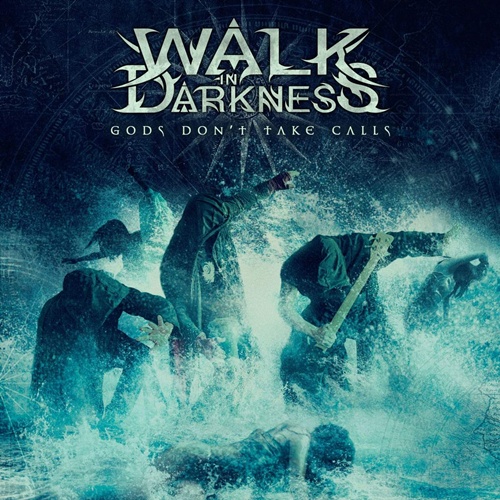
Walk in Darkness return with their fifth album, “Gods Don’t Take Calls”, a work that consolidates and deepens the band’s gothic/symphonic universe, pushing it toward an even more essential, philosophical, and spiritual dimension. An album that speaks of disorientation, inner resistance, and the search for meaning in a world where the gods have fallen silent and humanity is forced to look within. We discussed it with the band’s guitarist, Shaman.
Welcome to these pages, Shaman! Your fifth album, “Gods Don’t Take Calls”, marks a new chapter in your poetic and conceptual universe. In what way does this record represent an evolution compared to your previous releases, and what were the elements you wanted to keep as cornerstones of your gothic/symphonic identity?
“Gods Don’t Take Calls” is a more essential, more self-aware record. The evolution isn’t about changing language, but about refining it. The symphonic and cinematic side has become more organic, less decorative, more necessary. The cornerstones remain the philosophical vision, the idea of the journey, and the central role of the human being when faced with time, loss, and the inevitable.
The album paints a world of ruins, silence, and inner renewal, where the gods no longer answer and humanity has to rely solely on its own spirituality. How do the nine tracks connect in telling this vision, and which songs do you see as the real “keys” to the heart of “Gods Don’t Take Calls”?
The tracks aren’t separate chapters, but stations along the same path. The album speaks about disorientation and inner resistance. “Nico Rising” opens the threshold, “Towards Chang’an” points toward a spiritual direction, “You Who Dream” holds the most intimate core of the message. There isn’t a single key: the record asks for continuous listening, like a journey that doesn’t promise a destination, only a crossing.
In the tracklist we find titles like “Nico Rising”, “Across the Oceans”, “Towards Chang’an”, “You Who Dream” or “Last Siren (Revisited)”, which evoke journeys, origins, memory, and distant horizons. Can you share some background on how these songs were born and why they took on such a central role in the album’s narrative path?
The journeys aren’t geographical, but inner and symbolic. Oceans, horizons, ancient capitals, or sirens aren’t real places, but states of the soul. Every title is an archetypal image: it’s not there to explain, but to allow recognition. It’s a language that doesn’t point things out, it evokes.
“No Banners No Glory” and “Chasing the Horizon” feature Clara Sorace and Emiliano Pasquinelli, while “Last Siren (Revisited)” reinterprets one of your historical tracks. How did these collaborations come about, and why did you choose to return to “Last Siren”? What do they add, emotionally and conceptually, to the album’s balance?
The collaborations come from resonance, not strategy. Clara and Emiliano bring complementary voices, not alternative ones. “Last Siren (Revisited)” isn’t nostalgia, but a circle closing. It’s like rotating along the event horizon and looking at yourself years later, to understand what you’ve become. Sometimes going back is the only way to move forward.
Walk in Darkness have always combined heavy riffs, cinematic orchestrations, and deeply philosophical lyrics, creating an almost prophetic imagery. How did you work on sounds and lyrics for “Gods Don’t Take Calls” to push beyond genre boundaries and further define the Walk in Darkness identity?
We removed what wasn’t necessary. Every sound has to serve a narrative function, every choice has to be essential. The lyrics don’t want to convince, but to resonate. We’re not trying to represent or overcome a genre: we use every genre as a language to say something else, to articulate a thought, a vision.
One of your distinctive traits is the choice to show Nicoletta’s face, while the other members remain hooded and masked, almost as if to erase individual ego in favor of the message. How much does this symbolic choice influence the way you write, play, and relate to the audience, both in videos and on stage?
It’s a symbolic choice. Individual ego has to step back so the message can move forward in a universal way. We are all Walk in Darkness. Nicoletta is a medium, a vocal archetype; the rest is necessary shadow. Shadow doesn’t hide: it welcomes, kindly, tired and lost travelers.
You’re often placed in an area of “spiritual avant-garde” within metal, alongside acts that build true conceptual universes and their own mythologies. Do you recognize yourselves in this definition, and what are the biggest challenges in keeping such a complex artistic world coherent over time?
If by spiritual avant-garde we mean the search for a new connection with humanity, the anticipation of future visions or deeper levels of consciousness, then yes. We don’t innovate by breaking, but by staying faithful: to the ancient, to the present, and to the future we imagine. We move like trans-temporal figures, observing and writing, looking for a beginning, an end, and above all coherence along the path. Coherence is the hardest form of freedom.
Your lyrics often reference technology, dehumanization, and the risk of becoming “children of a painful century” ruled by algorithms and machines. How urgent does this theme feel to you, and how can music still be a space of human and spiritual resistance in this scenario?
Because it’s real. We live in a time where machines answer more than gods do. Music remains a space of human resistance, not because it can change the world, but because it can remind us of who we are. And remembering, today, is already a radical act.
Looking beyond the release of “Gods Don’t Take Calls”, what steps are you planning on the live front? Are you working on a show with specific visual or scenic elements for this album, or perhaps on a different way to let the audience experience your universe, even outside the classic concert format?
We’re not interested in the concert as a standard social ritual. We’re working toward a theatrical and immersive form, capable of truly embodying the Walk in Darkness universe. When the right place exists, it will happen. Not before. Like fleeting sparks on the waves, Walk in Darkness are nothing, and yet they draw a horizon. Those among Il Raglio del Mulo’s readers who are looking for a horizon will sail with them and, sooner or later, they’ll find it.
 Il Raglio del Mulo