
ENGLISH VERSION BELOW: PLEASE, SCROLL DOWN!
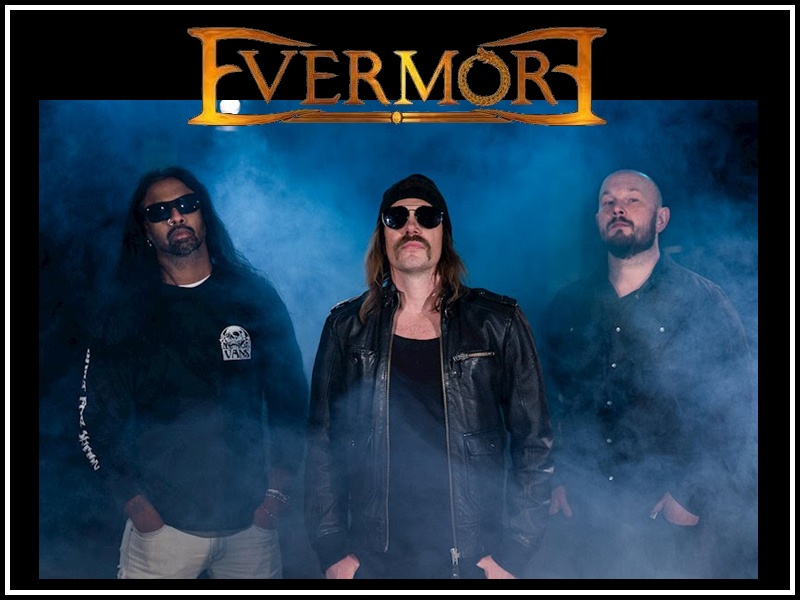
Dalle fredde terre svedesi, gli Evermore tornano sotto l’egida di Scarlet Records con il terzo sigillo in studio, “Mournbraid”: un viaggio power metal carico di pathos, melodie taglienti e visioni introspettive. Riflessioni su songwriting, identità sonora e rapporto con i fan, Andreas e Johan aprono uno squarcio sul processo creativo della band, tra consapevolezza, evoluzione e tensione verso nuovi orizzonti.
Benvenuti su Il Raglio Del Mulo e grazie per essere con noi. Il vostro terzo album, “Mournbraid”, è stato descritto come un’odissea power metal esaltante, con hook più forti, riff potenti e una produzione rifinita. Quando avete iniziato a lavorare su questo disco, avevate l’intenzione di portare il vostro sound a un nuovo livello oppure questa evoluzione è avvenuta in modo naturale durante il processo di scrittura?
Andreas: Credo che abbiamo sempre lavorato per migliorare il suono complessivo e la qualità a ogni album, quindi è stato qualcosa che è avvenuto in maniera piuttosto naturale. Anche il nostro produttore Marcus ha attraversato un processo di crescita con ogni disco. Ha prodotto tutti i nostri album e “Court Of The Tyrant King” è stato il suo primo lavoro power metal. Di conseguenza, abbiamo tutti imparato qualcosa di nuovo durante le registrazioni e la produzione di ogni album, o quantomeno abbiamo imparato dagli errori del passato su cosa non fare o su cosa evitare perché troppo dispendioso in termini di tempo o simili. Per quanto riguarda il songwriting e quella parte del nostro sound, penso che sentivamo di non aver ancora esaurito il discorso legato allo stile e alle atmosfere di “In Memoriam”. Volevamo creare più brani che rientrassero in quel mood, così da poter dire di aver dato il massimo per offrire l’esperienza d’ascolto che avevamo in mente.
Essendo il terzo capitolo della discografia degli Evermore, in che modo “Mournbraid” definisce oggi l’identità della band rispetto alle uscite precedenti? Quali sono gli elementi chiave che rendono questo album una progressione e non una semplice ripetizione?
Johan: In un certo senso è una ripetizione (ride). Vediamo “Mournbraid” come un seguito naturale di “In Memoriam”, perché sentivamo che quel disco avrebbe potuto essere ampliato con più canzoni. “Mournbraid” è come un’espansione del lavoro precedente: riprende la stessa atmosfera, lo stesso suono e lo stesso feeling, portandoli però più a fondo e sviluppandoli ulteriormente. Ora che abbiamo completato “Mournbraid”, sentiamo di aver dato il massimo per offrire l’esperienza d’ascolto che cercavamo. Il prossimo album potrebbe invece proporre qualcosa di leggermente diverso, magari non completamente fuori dal nostro stile, ma con un tono, un’atmosfera o una direzione un po’ diversi. Abbiamo già qualche idea!
A questo punto della vostra carriera, cosa significa per gli Evermore il concetto di successo: libertà creativa, impatto dal vivo, risposta dei fan o qualcos’altro?
Andreas: La musica degli Evermore è sempre stata e sarà sempre dedicata ai fan. Riguarda la loro risposta, la loro interpretazione e le loro esperienze soggettive con la nostra musica.
Johan: Questo non cambierà mai. La nostra musica può essere vista in modo piuttosto netto: o la capisci e riesci davvero a connetterti, oppure no e ti sembra qualcosa di già sentito. Per noi non è un problema. Creiamo musica per chi la ascolta e per chi riesce a relazionarsi con essa. Non importa se sono migliaia di persone o solo pochi ascoltatori. Ci piacerebbe molto anche riuscire a portare tutto questo dal vivo in futuro, ma è ancora un work in progress.
A livello lirico, ogni brano racconta una storia diversa dal punto di vista di individui alle prese con difficoltà personali e sfide esistenziali. Da cosa nasce l’approccio narrativo dietro “Mournbraid”? Le storie sono basate su esperienze reali, personaggi di finzione o un mix di entrambi?
Andreas: Scriviamo i testi più o meno nello stesso modo fin da “Court Of The Tyrant King”, ma ancora di più con “In Memoriam” e “Mournbraid”. Cerchiamo di costruire i testi su più livelli: il primo è quello più immediato, con liriche dal suono figo, classiche, in pieno stile metal, facili da cantare e perfettamente in linea con il genere. È nel livello sottostante che nascondiamo i temi più personali e contemporanei. In questo modo, se vuoi limitarti a cantare testi metal che suonano bene senza pensarci troppo, puoi farlo. Ma se vuoi approfondire, spesso puoi trovare un significato più profondo analizzandoli meglio. Molte volte i testi contengono frammenti di esperienze vissute da noi o da altre persone, come i fan, che cerchiamo di intrecciare in una storia che si adatti alla musica. Quindi è un mix. A volte si tratta di storie completamente fittizie, ma pensate per farti riflettere o per farti immedesimare in un certo tema. La cosa più bella è quando i fan ci contattano con la loro interpretazione dei testi. Lo adoriamo. A volte arrivano a interpretazioni a cui noi stessi non avevamo pensato. Ed è proprio questo il punto: devi poter prendere le canzoni e farle tue.
La title track e brani come “Oath Of Apathy” o “The Illusionist (Raise The Curtain)” suggeriscono tematiche forti, emotive e simboliche. Quanto è importante il simbolismo nei vostri testi e come trasformate emozioni astratte in espressioni musicali concrete?
Andreas: Domanda molto interessante. Direi che per noi è fondamentale. È proprio il nostro marchio di fabbrica, almeno per quanto riguarda i testi. Dedichiamo moltissima attenzione e cura alle liriche in un genere dove spesso sono solo un veicolo per la musica e non vengono considerate così importanti, a parte il fatto che devono suonare bene. Vogliamo che siano abbastanza astratte da non diventare troppo oniriche o difficili da afferrare, ma allo stesso tempo non vogliamo essere troppo espliciti e spiegare tutto all’ascoltatore. Deve esserci un equilibrio, dove l’interpretazione personale di chi ascolta ha un ruolo centrale e i testi stimolano a riflettere sul loro significato.
L’album è stato registrato agli MWC Studios, prodotto e mixato da Marcus “Mackan” Alfsson e masterizzato da Svante ai Chartmakers West. In che modo lavorare con questo team ha influenzato il suono finale del disco? Vi hanno spinto in nuove direzioni?
Johan: Abbiamo lavorato con lo stesso produttore per tutti i nostri album. Anche Svante ai Chartmakers ha curato il mastering dei lavori precedenti. Ci troviamo molto bene con loro e sentiamo che soprattutto Marcus ha avuto un grande impatto sull’evoluzione del nostro sound. Sia lui che la band hanno imparato molto lungo il percorso e, se sarà disponibile, ci piacerebbe lavorare ancora con lui anche sul prossimo album.
Dal punto di vista musicale, quali sono le influenze principali che ancora oggi plasmano il sound degli Evermore — soprattutto considerando i paragoni con band come Helloween, Stratovarius o Avantasia — e come fate a mantenere una vostra identità?
Johan: Tutte le band che hai citato sono influenze per noi, insieme ad altri gruppi power metal degli anni ’90 e dei primi 2000 come Edguy, Nocturnal Rites e Primal Fear. Traiamo ispirazione anche da altri generi metal, come Children Of Bodom, Slayer e Metallica. Direi che se metti su un disco degli Evermore puoi aspettarti influenze dal metal più old school, indipendentemente dal sottogenere. Questo non cambierà. Siamo più legati a quel tipo di suono rispetto al metal moderno. A volte la critica dice che suoniamo come band del passato e, considerando le nostre influenze, è comprensibile. Però cerchiamo sempre di metterci del nostro, creando una nostra versione di quel sound e mescolando vari elementi per dare vita al suono Evermore. Non siamo d’accordo con l’idea che un genere, solo perché è già stato suonato, sia “esaurito” e non possa essere riproposto con una nuova prospettiva. Sarebbe un modo molto triste di vivere la musica. Prima di tutto sarebbe difficile trovare qualcosa di completamente nuovo, e poi non è così che funziona la musica. Si possono amare sia le cose vecchie che quelle nuove, o una combinazione di entrambe. Ancora oggi si suonano e si ascoltano blues, jazz, folk e country, anche se esistono da decenni. Non serve rivoluzionare tutto per apprezzarlo. Ogni band ha il suo tocco. Se trovi qualcosa che ti piace, goditelo. Se scopro una nuova band che mi dà vibes alla Iron Maiden ma con un approccio fresco, ne sono entusiasta. Posso apprezzarla anche se amo gli Iron Maiden originali. Speriamo che, in una playlist di cento nuovi brani power metal, qualcuno riesca a riconoscerci dal nostro sound. Magari perché richiama la golden age del power metal. In ogni caso, per noi va benissimo così (ride).
“Mournbraid” uscirà anche in vinile in edizione limitata. In un’epoca dominata dal digitale, quanto è importante il formato fisico per una band come gli Evermore e per il vostro rapporto con i fan?
Johan: Ci piace molto il formato fisico. Per noi è importante, soprattutto per chi, come me, è un collezionista. Se dipendesse da me pubblicherei i nostri album anche su cassetta, ma dubito che Scarlet Records sarebbe d’accordo (ride). Ci piace tutto il processo: scegliere la copertina, aprire il vinile o il CD, guardare l’artwork mentre ascolti la musica. Fa parte dell’esperienza completa. Siamo decisamente old school da questo punto di vista.
Guardando al futuro dopo l’uscita di “Mournbraid”, quale sarà il prossimo passo per gli Evermore? Ci sono obiettivi – musicali o live – che volete ancora raggiungere come band?
Andreas: Abbiamo iniziato a pianificare un quarto album. Abbiamo idee, brani incompleti, spunti lirici e concept che vogliamo sviluppare.
Johan: Abbiamo anche messo insieme una line-up completa per poter suonare dal vivo. Ora dobbiamo trovare il tempo per provare e prepararci. È un processo molto lungo e impegnativo. Vogliamo davvero portare la nostra musica sui palchi, è una cosa fondamentale per noi. Ovviamente ci sono ancora ostacoli da superare prima che diventi realtà. In ogni caso, stiamo lavorando a nuova musica e a nuovi contenuti legati agli Evermore. Abbiamo un milione di idee e troppo poco tempo per realizzarle. La storia della nostra vita.
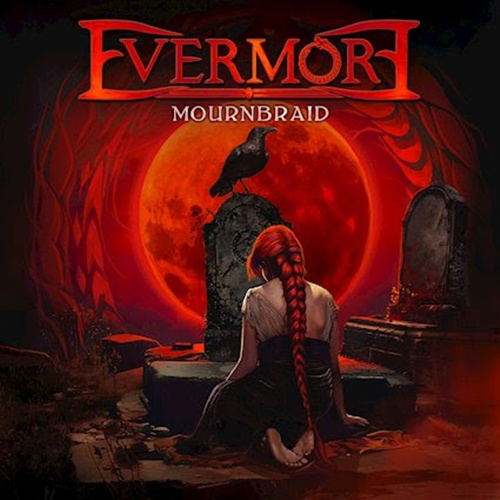
From the cold Swedish lands, Evermore return under Scarlet Records with their third studio chapter, “Mournbraid”: a power metal journey filled with emotion, sharp melodies and introspective visions. Touching on songwriting, sonic identity and fan connection, Andreas and Johan offer a glimpse into the band’s creative process, shaped by awareness, evolution and the drive to explore new horizons.
Welcome to Il Raglio Del Mulo and thanks for joining us. Your third album, “Mournbraid”, is described as an uplifting power metal odyssey with stronger hooks, powerful riffs and a refined production. When you started working on this record, did you intentionally aim to elevate your sound to a new level, or did that evolution happen naturally during the writing process?
Andreas: I believe we have continuously worked on trying to improve the overall sound and quality for each album, so that has kind of happened naturally. Our producer Marcus has also been through a learning process with each album. He has produced all our albums and “Court Of The Tyrant King” was his first power metal album. Naturally, we have all been learning as we record/produce and have learnt something new with each album, or at least we have learned from past mistakes on what not to do or stuff that we should avoid because it is too time-consuming or similar. When it comes to songwriting and that part of our overall sound, I think we felt that we were not quite finished with the sound and style of “In Memoriam”. We wanted to create more songs that fit that overall theme and sound so that we could feel we had offered our best take on the listening experience we were aiming for.
As the third chapter in Evermore’s discography, how does “Mournbraid” define the band’s identity today compared to your previous releases? What are the key elements that make this album feel like a progression rather than a repetition?
Johan: In some sense it is repetition (laugh). We kind of look at “Mournbraid” as a natural follow-up to “In Memoriam” as we felt that “In Memoriam” could have been expanded with more songs. “Mournbraid” is like an expansion of the previous album that kind of takes the same atmosphere, sound and feeling and explores that further and more in-depth. Now that we have shipped “Mournbraid” I think we feel that we have given our best shot at trying to offer the listening experience we were going for. It feels like the next album might offer something a little bit different, maybe not completely different and unusual for our usual sound but maybe in a bit more different tone, atmosphere or direction. We have some ideas!
At this point in your career, what does success mean for Evermore — creative freedom, live impact, fan response, or something else entirely?
Andreas: The music of Evermore has always and will always be about the fans. It is about their response, their interpretation and their subjective experiences of our music.
Johan: That will never change going forward. Our music might be a kind of binary thing like: either you get it and you feel like you can really connect to it or you don’t and you just feel that it sounds like everything else. To us that doesn’t matter. We create our music for the people who listen to it and for those who can relate to it. It doesn’t matter if that is thousands of people or just a couple of listeners. We really want to be able to go out and play live as well in the future, but that is a work in progress.
Lyrically, each track tells a different story from the perspective of individuals facing personal struggles and existential challenges. What inspired the narrative approach behind “Mournbraid”, and are these stories based on real experiences, fictional characters, or a mix of both?
Andreas: We have always written our lyrics in the same way since “Court Of The Tyrant King”, but perhaps even more so with “In Memoriam” and “Mournbraid”. We try to write the lyrics in layers so that the first layer is more cool-sounding, generic and classic metal-style lyrics that sound good, are easy to sing along to and fit the music genre. It is in the layer underneath we try to hide the more subjective and contemporary subjects. In that way, if you just want to sing along to cool metal lyrics that don’t really mean anything, you can. But if you want to, you can often find a deeper meaning in the lyrics if you look more closely and start taking them apart. Many times, the lyrics have pieces of self-lived experiences or sometimes experiences from other people, like fans, that we try to weave into a story that fits the music. So, it is a mix of both. Sometimes it is a completely fictional story, but it is trying to make you think about something in particular or relate to a subject. The absolutely best part is when fans reach out to us with their own interpretation of the lyrics. We love that. It sometimes happens that our fans come with interpretations of the lyrics that we haven’t even thought of ourselves. That is the whole idea. You should be able to take the songs and make them your own.
The title track and songs like “Oath Of Apathy” or “The Illusionist (Raise The Curtain)” suggest strong emotional and symbolic themes. How important is symbolism in your lyrics, and how do you translate abstract feelings into concrete musical expressions?
Andreas: That is a very good question. I would say that is extremely important to us. That is kind of our thing, at least when it comes to the lyrical part of our music. We put a lot of effort and thought into the lyrics in a genre where the lyrics are mostly just a vessel to carry the music and are perhaps not considered very important other than needing to sound cool. We want it to be just abstract enough that it won’t become too dream-like and hard to grasp. At the same time, we don’t want to be overly obvious and spell the meaning out for the listener. It needs to be a good balance where the listener’s own interpretation is given a huge role and the lyrics inspire you to think about them and what they mean.
The album was recorded at MWC Studios, produced and mixed by Marcus “Mackan” Alfsson and mastered by Svante at Chartmakers West. How did working with this production team influence the final sound of the record? Did they push you in new directions?
Johan: We have worked with the same producer for all our albums. Svante at Chartmakers also mastered our previous albums. We feel very comfortable with those guys and we also feel that especially Marcus has been a big influence on how our sound has evolved. Both he and the band have learned a lot along the way and if he is up for it, we’d love to make the next album with him as well!
From a musical perspective, who are the biggest influences that still shape Evermore’s sound today — especially considering comparisons to bands like Helloween, Stratovarius or Avantasia — and how do you ensure your music maintains its own identity?
Johan: All the bands you’ve mentioned are influences for us, along with additional power metal bands from the ’90s and early 2000s like Edguy, Nocturnal Rites and Primal Fear, etc. We draw inspiration from other metal genres as well like Children Of Bodom, Slayer and Metallica. I think it is fair to say that if you put on an Evermore album you should expect to hear inspiration from the more old-school metal bands regardless of subgenre. I think that is not going to change. We are more drawn and rooted in that kind of sound compared to modern metal. Sometimes critics feel that we sound like older bands and we guess that is fair considering those bands are our influences. However, we are trying to put our own twist on it and create our own version of that sound and mix those genres together to create the Evermore sound. We do not agree on the notion that just because a certain genre has been played before that it is now considered “exhausted” and can’t be played again with a new twist to it. To us, that would be a very depressing way of listening to music if you could only appreciate ground-breaking new things never heard of before. First of all, it will be very hard to find those bands and second, that is not how music generally works, really. People can enjoy older stuff and new stuff and a combination of it all. People to this day still play and listen to blues, jazz, folk and country even though it has been done to death over decades by now. It really doesn’t need to constantly be revolutionized in order to be appreciated. Each band has its own touch and sound and if you enjoy listening to that, then knock yourself out! If I find a new band that gives me Iron Maiden vibes and feels like a fresh take on that style, I will most likely be ecstatic. I can still appreciate that even though I like the original Iron Maiden. We hope that in a playlist of 100 newly released power metal songs people probably could identify us in that list based on our sound. Maybe that is because we sound like the golden days of power metal? Either way, we are completely fine with that (laugh).
“Mournbraid” will also be released on limited vinyl. In today’s digital-driven music scene, how important is the physical format for a band like Evermore and for your connection with the fans?
Johan: We really like the physical format. We think that is important, especially to a record collector like myself. If I got to decide I would release our albums on cassette as well, but our guess is that Scarlet Records wouldn’t be onboard with that (laugh). We like the whole process of deciding on an album cover and the experience of opening a physical disc/vinyl and seeing the artwork while listening to the music. It is a part of the whole experience. Once more, we are old school like that.
Looking ahead after the release of “Mournbraid”, what do you see as the next step for Evermore? Are there ambitions — musically or on the live stage — that you still want to achieve as a band?
Andreas: We have started planning for a fourth album. We have some ideas, some unfinished songs, lyrical ideas and overall concepts that we want to explore.
Johan: We have also put together a complete setup of musicians in order to be able to play live. Now we have to find time in our schedules to get together and play and rehearse. That whole process is very time-consuming. We do really want to be able to go out and play live. We feel that is absolutely a big thing for us. However, like always, there are obstacles and difficulties we need to overcome before that becomes a reality. Either way, we are planning for more music and more Evermore-related content in the future. We have a million ideas and too little time to execute them. Story of our lives.

