
ENGLISH VERSION BELOW: PLEASE, SCROLL DOWN!
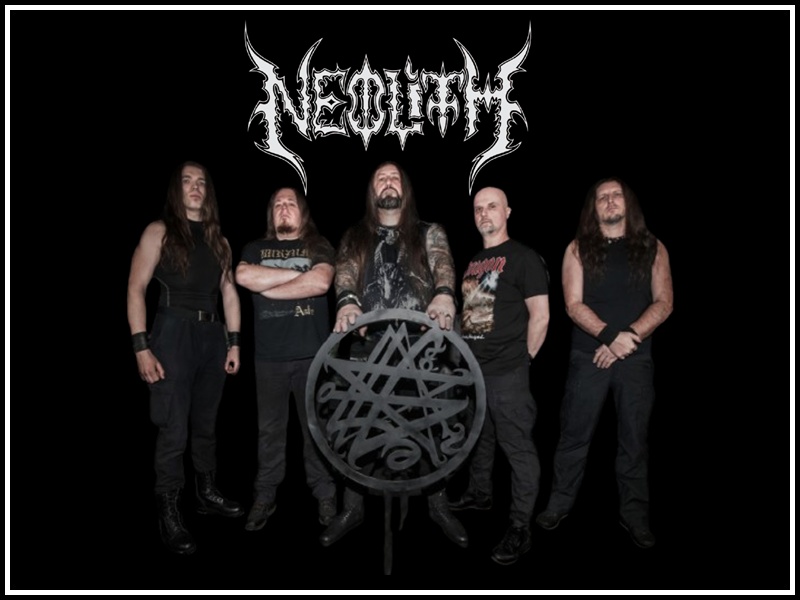
Dopo più di tre decenni di metal estremo, i Neolith continuano a combattere la loro battaglia senza compromessi. Con il vocalist Levi al timone, i veterani polacchi tornano con “Inbir”, il loro lavoro più ambizioso e maturo, un disco in cui l’immaginario dell’antica Mesopotamia, la spiritualità, il potere e il conflitto umano si scontrano con la brutalità del death metal e l’istinto old school. In vista dell’uscita dell’album per Deformeathing Production, Levi ci porta dentro il nuovo capitolo della band, dall’arrivo di Semuss e dalla chimica creativa dell’attuale formazione alla produzione ruvida curata da Haldor Grunberg e Satanic Audio, ripercorrendo anche il viaggio iniziato nel 1991.
Prima di tutto, grazie per aver trovato il tempo di parlare con Il Raglio Del Mulo e benvenuto sulle nostre pagine, Levi. A quasi sette anni da “I Am The Way”, i Neolith tornano con “Inbir”, un album che avete descritto come il vostro lavoro più ambizioso, complesso e maturo fino a oggi, costruito attorno all’antica parola sumera che significa “guerra”: qual è stata la scintilla che ha dato davvero vita a questo nuovo capitolo e cosa ha reso questo particolare concept quello giusto per la band in questo momento della sua storia?
Grazie a te per avermi ospitato. Penso che la nascita di “Inbir” sia stata meno legata a un momento preciso e più a tutto ciò che era accaduto ai Neolith dopo “I Am The Way”. Abbiamo attraversato la pandemia, cambiamenti nella formazione, un periodo di incertezza e infine una nuova esplosione di energia quando Zi’aR e Semuss si sono uniti a noi. Una volta tornati a essere una band pienamente operativa, ci siamo improvvisamente resi conto di avere qualcosa di davvero forte da dire. L’idea di “Inbir”, l’antica parola sumera che significa “guerra”, si adattava perfettamente a quel momento. Ma non abbiamo mai voluto realizzare un album semplicemente “sulla guerra” nel senso convenzionale del termine. Per noi la guerra è qualcosa di molto più ampio: riguarda il potere, la fede, l’ambizione, la paura, il dominio e l’eterna lotta che sembra essere insita nella natura umana. Possiamo guardare all’antica Sumeria e riconoscerci. Sono passati migliaia di anni, la tecnologia è cambiata oltre ogni immaginazione, ma l’essere umano è rimasto sorprendentemente simile. Questo contrasto è diventato la vera scintilla alla base dell’album.
“Inbir” esplora temi come il potere, il mistero, la spiritualità e il destino dell’umanità, mentre la vostra musica continua a muoversi tra death e black metal, rimanendo profondamente radicata in un’estetica old school: come avete trasformato questi temi in un’identità sonora precisa senza permettere alla componente concettuale di mettere in ombra la potenza istintiva dei brani?
Non affrontiamo mai la musica partendo dalla creazione di un concept intellettuale per poi cercare di costringere i brani ad adattarvisi. Con i Neolith, la musica deve funzionare prima di tutto a livello puramente istintivo. Deve avere energia, peso e quella sensazione che ti fa venire voglia di alzare il volume. La componente concettuale entra in gioco in un secondo momento, dando alla musica un’altra dimensione invece di controllarla. Con “Inbir”, il carattere death metal più estremo è venuto semplicemente in modo naturale. Non ci siamo seduti a tavolino decidendo che questo dovesse essere il nostro album più brutale. È stato il risultato di ciò che siamo oggi come musicisti e dell’energia dell’attuale formazione. Allo stesso tempo, l’elemento black metal, l’atmosfera e le nostre radici old school sono ancora presenti. Penso che sia questo equilibrio a rendere i Neolith ciò che sono. I testi e l’immaginario sumero aggiungono profondità, ma non è necessario sapere nulla della mitologia mesopotamica per percepire la potenza di queste canzoni. Ed è esattamente così che dovrebbe essere.
L’album passa da titoli fortemente legati al vostro fascino per l’antica Mesopotamia, come “Ashur Has Given Me A Brother” e “The Four ETEMMŪ Of KURNUGI”, a titoli più enigmatici come “Morte” e “Ouroboros”: quanto era importante costruire una narrazione lungo la tracklist e quale ruolo hanno avuto i testi, l’immaginario e il simbolismo nel dare forma ai singoli brani?
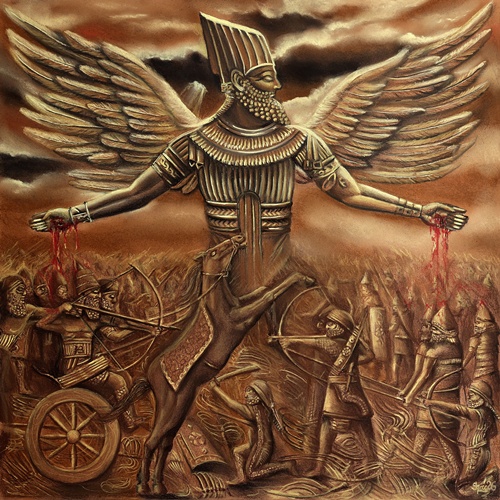
Non descriverei “Inbir” come un concept album con una storia lineare dall’inizio alla fine. I testi sono più simili a frammenti, schizzi e riflessioni individuali collegati da un’atmosfera comune e da un insieme di idee ricorrenti. Jacko S. scrive e sviluppa il mondo lirico dei Neolith insieme a noi da più di vent’anni e il suo approccio è molto importante in questo caso. Alcuni titoli fanno riferimento direttamente al mondo sumero o mesopotamico, mentre altri sono molto più universali o simbolici. “Morte” o “Ouroboros”, per esempio, non richiedono alcun contesto storico specifico per comprenderne il peso emotivo. Lo stesso vale per l’artwork. Artur Szolc conosceva la nostra musica e la band da anni e abbiamo avuto innumerevoli conversazioni sui testi, sui temi e sull’atmosfera prima che iniziasse a lavorare al dipinto. Quindi la parte visiva non è stata semplicemente una decorazione aggiunta alla fine. Musica, parole e immagini sono diventate gradualmente parti diverse dello stesso mondo.
Una volta stabilita l’idea centrale di “Inbir”, come si è sviluppato concretamente il processo di composizione all’interno della band? La musica è venuta prima, trovando poi il proprio significato tematico, oppure i concept, le immagini e i riferimenti all’antichità contenuti nell’album hanno influenzato attivamente riff, arrangiamenti e atmosfere di ogni brano?
Nel nostro caso, di solito viene prima la musica. Conrad lavorava ai riff da molto tempo e, quando abbiamo avuto la formazione completa, gran parte delle fondamenta musicali era già pronta. Una volta entrati Zi’aR e Semuss, abbiamo finalmente potuto iniziare a mettere insieme tutti quei pezzi come una vera band. La cosa interessante è che la musica non aveva bisogno del concept sumero per esistere. I riff erano già abbastanza forti da soli. Le idee liriche e visive sono arrivate parallelamente e hanno gradualmente dato ai brani le loro identità individuali. A volte una particolare atmosfera o immagine si adattava perfettamente a una canzone, ma non abbiamo mai cercato di comporre un riff semplicemente perché dovesse rappresentare un’antica divinità o una storia. Penso che sia importante, perché “Inbir” doveva innanzitutto rimanere un album dei Neolith. La mitologia sumera è la cornice, il linguaggio e la fonte d’ispirazione, ma la musica arriva comunque da noi: dalle nostre esperienze, emozioni e influenze accumulate in più di trent’anni.
Un album così oscuro e stratificato rischia facilmente di perdere il proprio impatto se la produzione diventa eccessivamente patinata: lavorando con Haldor Grunberg e Satanic Audio, avete invece puntato a un suono potente e coeso. Quanto è stato difficile trovare il punto esatto in cui produzione moderna, dettaglio e brutalità old school potessero convivere senza compromettere l’identità della band?
Questa è stata in realtà una delle sfide più importanti. Sapevamo esattamente cosa non volevamo. Non volevamo che l’album suonasse sterile, iperprodotto o artificialmente perfetto, perché questo avrebbe distrutto gran parte di ciò che rende i Neolith quello che sono. Allo stesso tempo, volevamo che gli strumenti avessero abbastanza chiarezza e potenza da permettere a tutti quei dettagli di emergere. Avevo già preso in considerazione l’idea di lavorare con Haldor per l’album precedente, quindi sapevo che sarebbe stata un’ottima scelta. Abbiamo registrato il materiale nella nostra sala prove e nei nostri home studio, quindi gli abbiamo dato la nostra visione grezza invece di una produzione da studio già finita. Abbiamo parlato molto del suono e, quando ci ha mandato il primo sample, ho capito immediatamente che aveva compreso ciò che stavamo cercando. Il trucco era preservare l’aggressività grezza e organica dando allo stesso tempo all’album sufficiente profondità e definizione. Naturalmente, lungo il percorso ci sono stati alcuni piccoli aggiustamenti, ma Haldor ci ha davvero aiutato a tirare fuori ciò che era già presente invece di sostituirlo con la sua idea di come dovessero suonare i Neolith. Per me, questa è la chiave di una buona produzione.
Guardando alla vostra lunga storia, c’è qualcosa di particolarmente interessante nei Neolith: siete nati nel 1991, avete attraversato più di tre decenni di cambiamenti nella scena metal estrema polacca e siete arrivati a “Inbir” senza inseguire le mode del momento. Cosa pensi abbia permesso alla band di mantenere la propria direzione mentre generazioni e tendenze del metal cambiavano continuamente intorno a voi?
Penso che la risposta sia sorprendentemente semplice: non abbiamo mai iniziato i Neolith con l’intenzione di seguire una determinata tendenza e ancora oggi non lo facciamo. Quando abbiamo cominciato nel 1991, la Polonia era appena uscita dal comunismo e l’intera scena del metal estremo era un mondo completamente diverso. Siamo cambiati enormemente come persone e musicisti, ma una cosa è rimasta: il bisogno autentico di suonare questa musica. Inoltre, non abbiamo mai sentito la pressione di pubblicare dischi tanto per avere qualcosa di nuovo da proporre. Se un album non è pronto, aspettiamo. Non abbiamo contratti che ci costringano a lavorare secondo una tabella di marcia e questo è un lusso che apprezziamo enormemente. Tutto deve maturare in modo naturale. Naturalmente, il nostro sound si è evoluto. Le nostre capacità tecniche sono diverse, l’attrezzatura è migliore, la nostra consapevolezza musicale è maggiore e le nostre vite sono cambiate. Ma questi sono cambiamenti naturali. Ciò che non è cambiato è che vogliamo ancora che i Neolith suonino come i Neolith. Dopo più di trent’anni, penso che questo sia probabilmente il risultato più importante: non rimanere congelati nel passato, ma svilupparsi senza perdere la propria identità.
Anche la formazione ha attraversato diversi cambiamenti nel corso degli anni, compreso l’arrivo di Semuss alla batteria dopo l’uscita di Daniel Rutkowski: in che modo questi cambiamenti hanno influenzato l’equilibrio creativo della band e quanto della personalità dei musicisti che oggi fanno parte dei Neolith è confluito nel nuovo materiale?
I cambiamenti di formazione sono sempre un momento importante per qualsiasi band, soprattutto per una con una storia così lunga come i Neolith. Ci siamo divertiti molto a suonare con Daniel e lui ha portato nella band una grande esperienza e una notevole consapevolezza musicale. È già una figura affermata e rispettata nella scena metal estrema, quindi ovviamente il suo contributo ai Neolith è stato importante. Allo stesso tempo, non mi piace molto fare paragoni tra musicisti. Ogni persona porta qualcosa di diverso ed è proprio questo a rendere interessante una formazione. Quello che mi rende particolarmente felice oggi è vedere Semuss crescere. Quando ci siamo conosciuti, ha ammesso apertamente di non essere ancora pronto per suonare correttamente nei Neolith. Ci ha chiesto sei mesi per portarsi al livello richiesto e ha assolutamente mantenuto la parola. Da allora, ho visto la sua tecnica crescere enormemente e sono sinceramente felice che lo stia facendo con noi. E non si tratta solo di batteria. Semuss si è inserito perfettamente nei Neolith anche a livello personale e umano. Passiamo molto tempo insieme e questa chimica conta enormemente. Puoi avere cinque musicisti tecnicamente straordinari, ma se non c’è sintonia tra loro, prima o poi questo emergerà nella musica. Con Semuss abbiamo sia il legame musicale sia quello umano e penso che si possa sentire questa energia in “Inbir”.
“Inbir” si apre con la title track, un brano descritto da te come uno dei pezzi più diretti e brutali dell’album, quasi un manifesto di aggressività, sincerità e assenza di compromessi: quando avete deciso di metterlo in apertura, stavate semplicemente scegliendo il punto d’ingresso più efficace oppure volevate dichiarare fin dal primo minuto quale fosse l’attitudine dei Neolith nel 2026?
Penso che fosse una combinazione di entrambe le cose. La title track aveva quel tipo di energia che pretendeva immediatamente di essere messa in apertura. È diretta, aggressiva e non ti lascia molto tempo per prepararti. Volevamo colpire subito l’ascoltatore, invece di costruire lentamente la tensione fino ad arrivare al materiale più pesante. Ma c’è anche qualcosa di simbolico nell’aprire l’album con “Inbir”. La parola significa “guerra” e la canzone stabilisce il tono per tutto ciò che segue. Non necessariamente la guerra come conflitto militare, ma la guerra intesa come qualcosa di profondamente radicato nella natura umana: lotta, ambizione, potere, violenza e il bisogno costante di dimostrare chi siamo. Quindi sì, in un certo senso è una dichiarazione d’intenti. Questo è il punto in cui si trovano oggi i Neolith. Nessuna introduzione inutile, niente dietro cui nascondersi, nessun tentativo di smussare gli angoli. Volevamo che i primi minuti dell’album dicessero molto chiaramente: questo è ciò che siamo, questo è ciò in cui crediamo musicalmente e questo è il sound che avrà “Inbir”.
Con “Inbir” in uscita a settembre, il prossimo passo sarà portare questi brani dallo studio al palco: quali sono i piani per i prossimi concerti e come state immaginando la scaletta e la resa live di “Inbir”? Ci sono già concerti, tour o festival specifici che potete annunciare e cosa possono aspettarsi i fan quando i Neolith torneranno sul palco?
Suonare questi brani dal vivo è probabilmente la cosa che attendo con più impazienza. I Neolith sono sempre stati una live band e penso che con “Inbir” abbiamo del materiale che può funzionare incredibilmente bene sul palco. L’album è molto energico e fisico, quindi non voglio trasformare i concerti in una semplice riproduzione della registrazione in studio. Ovviamente costruiremo la scaletta attorno a “Inbir”, ma abbiamo anche più di tre decenni di materiale alle spalle, quindi ci sono alcune canzoni che il pubblico si aspetta semplicemente di ascoltare. Trovare il giusto equilibrio tra il nuovo materiale e i brani più vecchi sarà importante. Alcune canzoni di “I Am The Way”, per esempio, sono diventate parti fisse della nostra scaletta dal vivo per il modo in cui reagisce la gente. Per quanto riguarda i concerti specifici, stiamo lavorando ai programmi proprio ora e annunceremo le date confermate non appena tutto sarà definito. Per quanto riguarda la prima fase della nostra offensiva live, siamo estremamente felici che inizierà con due grandi festival: Summer Dying Loud e Metal Kommando. Entrambi sono eventi con un’atmosfera fantastica e un forte legame con la scena estrema, quindi non avremmo potuto chiedere un modo migliore per iniziare a portare “Inbir” sul palco. Quello che posso promettere è che vogliamo suonare il più possibile e portare “Inbir” alla gente, invece di limitarci a pubblicarlo e passare oltre. La nuova formazione ha fame di palco e, dopo tutto quello che abbiamo passato per mettere insieme questo album, penso che abbiamo una quantità enorme di energia che deve essere liberata da qualche parte. Il palco sembra il posto perfetto per farlo.
After more than three decades of extreme metal, Neolith continue to wage their own uncompromising battle. With vocalist Levi at the helm, the Polish veterans return with “Inbir”, their most ambitious and mature work to date, a record where ancient Mesopotamian imagery, spirituality, power and human conflict collide with death metal brutality and old-school instinct. Ahead of the album’s release on Deformeathing Production, Levi takes us inside the band’s new chapter, from the arrival of Semuss and the creative chemistry of the current lineup to the raw production of Haldor Grunberg and Satanic Audio, while looking back at the journey that began in 1991.
First of all, thank you for taking the time to speak with Il Raglio Del Mulo and welcome to our pages, Levi. Nearly seven years after “I Am The Way”, Neolith are returning with “Inbir”, an album you have described as your most ambitious, complex and mature work to date, built around the ancient Sumerian word for “war”: what was the spark that truly gave birth to this new chapter, and what made this particular concept the right one for the band at this point in your history?
Thank you for having me. I think the birth of „Inbir” was less about one particular moment and more about everything that had happened to Neolith after „I Am The Way”. We went through the pandemic, changes in the lineup, a period of uncertainty and finally a new burst of energy when Zi’aR and Semuss joined us. Once we were back together as a functioning band, we suddenly felt that we had something really strong to say. The idea of „Inbir”, the ancient Sumerian word for “war”, fitted that moment perfectly. But we never wanted to make an album simply “about war” in the conventional sense. For us, war is much broader – it’s about power, faith, ambition, fear, domination and the eternal struggle that seems to be built into human nature. We can look at ancient Sumer and recognize ourselves there. Thousands of years have passed, technology has changed beyond recognition, but the human being remains surprisingly similar. That contrast became the real spark behind the album.
“Inbir” explores themes such as power, mystery, spirituality and the fate of mankind, while your music continues to move between death and black metal and remains deeply rooted in an old school aesthetic: how did you transform these themes into a precise sonic identity without allowing the conceptual side to overshadow the instinctive power of the songs?
We never approach music by first creating an intellectual concept and then trying to force the songs to fit it. With Neolith, the music has to work on a purely instinctive level first. It has to have energy, weight and that feeling that makes you want to turn the volume up. The conceptual side comes into play afterwards, giving the music another dimension rather than controlling it. With „Inbir”, the more extreme death metal character simply came naturally. We didn’t sit down and decide that this had to be our most brutal album. It was the result of where we are as musicians today and the energy of the current lineup. At the same time, the black metal element, the atmosphere and our old-school roots are still there. I think that’s the balance that makes it Neolith. The lyrics and the Sumerian imagery add depth, but you don’t need to know anything about Mesopotamian mythology to feel the power of these songs. And that’s exactly how it should be.
The album moves from titles strongly connected to your fascination with ancient Mesopotamia, such as “Ashur Has Given Me A Brother” and “The Four ETEMMŪ Of KURNUGI”, to more enigmatic titles such as “Morte” and “Ouroboros”: how important was it to build a narrative throughout the tracklist, and what role did the lyrics, imagery and symbolism play in shaping the individual songs?
I wouldn’t describe Inbir as a concept album with a linear story from beginning to end. The lyrics are more like fragments, sketches and individual reflections connected by a common atmosphere and a set of recurring ideas. Jacko S. has been writing and developing Neolith’s lyrical world with us for more than twenty years, and his approach is very important here. Some titles refer directly to the Sumerian or Mesopotamian world, while others are much more universal or symbolic. „Morte” or „Ouroboros”, for example, don’t require any specific historical context to understand their emotional weight. The same applies to the artwork. Artur Szolc knew our music and the band for years, and we had countless conversations about the lyrics, themes and atmosphere before he started working on the painting. So the visual side wasn’t simply decoration added at the end. Music, words and imagery gradually became different parts of the same world.
Once the central idea of “Inbir” was established, how did the actual songwriting process unfold inside the band? Did the music come first and then find its thematic meaning, or did the concepts, images and ancient references contained in the album actively shape the riffs, arrangements and atmosphere of each song?
In our case, the music usually comes first. Conrad had been working on riffs for a long time, and by the time we had the complete lineup, a huge part of the musical foundation was already there. Once Zi’aR and Semuss joined, we could finally start putting all those pieces together as a real band. The interesting thing is that the music didn’t need the Sumerian concept in order to exist. The riffs were already strong enough on their own. The lyrical and visual ideas came in parallel and gradually gave the songs their individual identities. Sometimes a particular atmosphere or image would fit a song perfectly, but we never tried to compose a riff simply because it had to represent some ancient deity or story. I think that’s important because „Inbir” had to remain a Neolith album first. Sumerian mythology is the framework, the language and the source of inspiration, but the music still comes from us – our experiences, emotions and influences accumulated over more than thirty years.
An album this dark and layered can easily lose its impact if the production becomes excessively polished: working with Haldor Grunberg and Satanic Audio, you instead aimed for a powerful and cohesive sound. How difficult was it to find the exact point where modern production, detail and old school brutality could coexist without compromising the band’s identity?
That was actually one of the most important challenges. We knew exactly what we didn’t want. We didn’t want the album to sound sterile, overproduced or artificially perfect, because that would kill a large part of what makes Neolith what it is. At the same time, we wanted the instruments to have enough clarity and power for all those details to come through. I had already considered working with Haldor on the previous album, so I knew he would be a great choice. We recorded the material in our rehearsal space and home studios, so we gave him our raw vision rather than a finished studio production. We talked a lot about the sound, and when he sent us the first sample, I immediately knew he understood what we were after. The trick was to preserve the raw, organic aggression while giving the album enough depth and definition. There were some small adjustments along the way, of course, but Haldor really helped us bring out what was already there rather than replacing it with his own idea of what Neolith should sound like. For me, that’s the key to a good production.
Looking back at your long history, there is something particularly interesting about Neolith: you were formed in 1991, have lived through more than three decades of changes in the Polish extreme metal scene, and have reached “Inbir” without chasing the trends of the moment. What do you think has allowed the band to maintain its own direction while generations and trends within metal have constantly changed around you?
I think the answer is surprisingly simple: we never started Neolith with the intention of following a particular trend, and we still don’t. When we began in 1991, Poland was only just emerging from communism and the whole extreme metal scene was a completely different world. We changed enormously as people and musicians, but one thing remained – the genuine need to play this music. We also never felt the pressure to release records just for the sake of having something new. If an album isn’t ready, we wait. We don’t have contracts forcing us to work according to a schedule, and that’s a luxury we value enormously. Everything has to mature naturally. Of course, our sound has evolved. Our technical abilities are different, the equipment is better, our musical awareness is greater and our lives have changed. But those are natural changes. What hasn’t changed is that we still want Neolith to sound like Neolith. After more than thirty years, I think that’s probably the greatest achievement – not remaining frozen in the past, but developing without losing your identity.
The line-up has also gone through several changes over the years, including the arrival of Semuss on drums after Daniel Rutkowski’s departure: how have these changes affected the band’s creative balance, and how much of the personality of the musicians currently in Neolith has found its way into the new material?
Line-up changes are always a significant moment for any band, especially one with such a long history as Neolith. We had a great time playing with Daniel, and he brought a lot of experience and musical awareness to the band. He is already a well-established and respected figure on the extreme metal scene, so obviously his contribution to Neolith was important. At the same time, I don’t really like comparing musicians. Every person brings something different, and that’s what makes a lineup interesting. What makes me particularly happy today is watching Semuss develop. When we first met, he openly admitted that he wasn’t yet ready to play Neolith properly. He asked us for six months to get himself up to the required level – and he absolutely kept his word. Since then, I’ve watched his playing grow tremendously, and I’m genuinely happy that he is doing that with us. And it’s not only about drums. Semuss fitted into Neolith perfectly on a personal and social level too. We spend a lot of time together, and that chemistry matters enormously. You can have five technically brilliant musicians, but if there is no understanding between them, sooner or later it will show in the music. With Semuss, we have both the musical and the human connection, and I think you can hear that energy on „Inbir”.
“Inbir” opens with the title track, a song described by you as one of the most direct and brutal pieces on the album, almost a manifesto of aggression, sincerity and a lack of compromise: when you decided to place it at the beginning, were you simply choosing the most effective entry point, or did you want to declare from the very first minute what Neolith’s attitude is in 2026?
I think it was a combination of both. The title track had the kind of energy that immediately demanded to be at the beginning. It’s direct, aggressive and doesn’t really give you much time to prepare yourself. We wanted to hit the listener straight away, rather than slowly building towards the heavier material. But there is also something symbolic about opening the album with „Inbir”. The word means “war”, and the song sets the tone for everything that follows. Not necessarily war as a military conflict, but war understood as something deeply rooted in human nature – struggle, ambition, power, violence and the constant need to prove ourselves. So yes, in a way it is a statement of intent. This is where Neolith is today. No unnecessary introduction, no hiding behind anything, no attempt to soften the edges. We wanted the first minutes of the album to say very clearly: this is who we are, this is what we believe in musically, and this is what Inbir is going to sound like.
With “Inbir” set for release in September, the next step will be to bring these songs from the studio into the live arena: what are the plans for the upcoming live shows, and how are you imagining the setlist and stage presentation of “Inbir”? Are there already specific concerts, tours or festivals that you can announce, and what can fans expect when Neolith return to the stage?
Playing these songs live is probably the part I’m looking forward to most. Neolith has always been a live band, and with „Inbir” I think we have material that can work incredibly well on stage. The album is very energetic and physical, so I don’t want to turn the live shows into a simple reproduction of the studio recording. We’ll obviously build the set around „Inbir”, but we also have more than three decades of material behind us, so there are certain songs that people simply expect to hear. Finding the right balance between the new material and older tracks will be important. Some songs from „I Am The Way”, for example, have become permanent parts of our live set because of the way people react to them. As for specific shows, we’re working on the plans now and we’ll announce confirmed dates as soon as everything is locked in. As for the first stage of our live offensive, we’re extremely happy that it will begin with two great festivals: Summer Dying Loud and Metal Kommando. Both are events with a fantastic atmosphere and a strong connection to the extreme metal scene, so we couldn’t have asked for a better way to start bringing Inbir to the stage. What I can promise is that we want to play as much as possible and take „Inbir” to people rather than simply release it and move on. The new lineup is hungry for the stage, and after everything we’ve been through getting this album together, I think we have a lot of energy that needs to be released somewhere. The stage seems like the perfect place to do it.

