
ENGLISH VERSION BELOW: PLEASE, SCROLL DOWN!
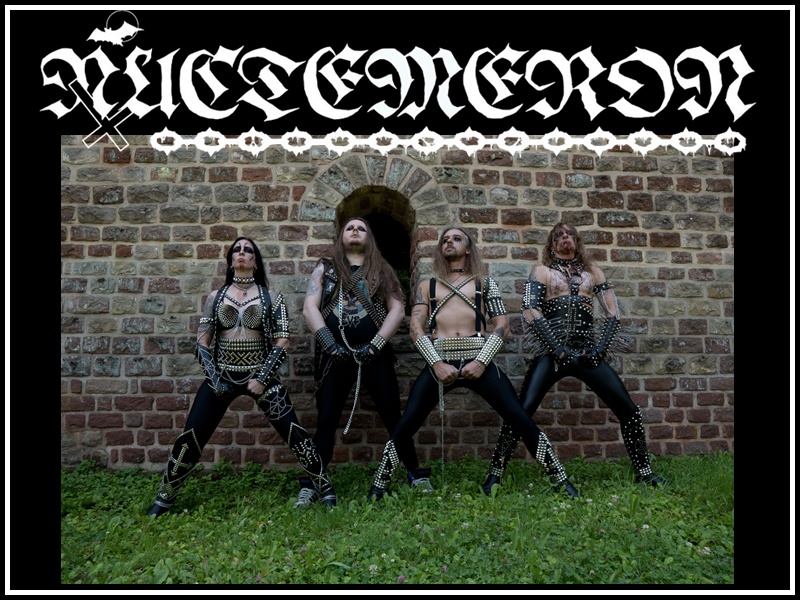
Ci sono dischi che arrivano in sordina, e poi ci sono dischi che sfondano quella cazzo di porta a calci. Dopo dodici anni passati ad affilare le lame nell’underground, Nuctemeron scatenano finalmente “Demonic Sceptre”, un debutto sulla lunga distanza che puzza di pelle, fumo, velocità e acciaio nero. Abbiamo fatto una chiacchierata con L. Aggressor per parlare della lunga strada da “Knights Of Hell” al primo album della band, del DNA ruvido dell’heavy, speed, thrash e black metal degli anni ’80, dell’immaginario infernale creato con Sebastian Frigerio, della devozione della band ai Venom e del futuro dell’attacco senza compromessi dei Nuctemeron. Pubblicato da I Hate Records, “Demonic Sceptre” è un disco per chi crede ancora che il black/speed metal debba suonare pericoloso, lurido e fottutamente vivo.
Ciao L. Aggressor, e grazie per aver trovato il tempo di parlare con Il Raglio Del Mulo. Dopo dodici anni di attività, innumerevoli split ed EP, il vostro attesissimo debutto sulla lunga distanza, “Demonic Sceptre”, è finalmente arrivato, riunendo black/speed metal tedesco, violenza old school e una notevole varietà tra i brani. Cosa ha reso questo il momento giusto per scatenare finalmente il vostro primo full-length e quanto pensate che rappresenti il percorso seguito dai Nuctemeron fin da “Knights Of Hell”?
Saluti infernali a voi e a tutti i lettori del fanzine Il Raglio Del Mulo. Sì, dopo 12 anni è finalmente arrivato il momento: siamo riusciti a pubblicare il primo full-length dei Nuctemeron, “Demonic Sceptre”. Come hai detto tu, la strada per arrivare fin qui è stata lunga, passando attraverso diversi EP e split EP, ma come dice il proverbio, le cose buone richiedono tempo, e noi quattro siamo molto soddisfatti del risultato. Il motivo per cui tutto questo sta accadendo proprio ora è, ovviamente, che dopo aver “bruciato” così tanti chitarristi nel corso degli anni, finalmente abbiamo avuto di nuovo Exterminator tra le nostre fila; è tornato con noi dopo un’assenza di diversi anni. Con lui a bordo, siamo riusciti a scrivere e suonare i brani e l’intero album esattamente come lo avevamo immaginato. Penso anche che siamo rimasti assolutamente fedeli allo stile che abbiamo seguito fin dall’inizio; su questo album lo abbiamo semplicemente affinato e perfezionato, senza diventare eccessivamente tecnici o complessi, per assicurarci che gli ascoltatori ricevessero una solida dose di “Black Witching Blitz Metal Of Satan” sparata dritta nelle loro orecchie.
I brani di “Demonic Sceptre” hanno ognuno una propria identità, eppure l’album non perde mai il suo carattere black/speed metal old school. Quando scrivete un brano dei Nuctemeron, come riuscite a bilanciare la necessità di avere una personalità distintiva con lo spirito senza compromessi del genere?
Quella parte è stata in realtà piuttosto semplice durante il processo di composizione, perché fin dall’inizio sapevamo di voler puntare ancora di più sulle nostre radici musicali, che affondano chiaramente nell’heavy, speed, thrash e black metal degli anni ’80, e semplicemente infondere questa influenza nei brani e nell’intero album, testi compresi. Penso che con “Demonic Sceptre” ci siamo riusciti perfettamente, senza ovviamente sacrificare i tratti distintivi dei Nuctemeron. Tutti e quattro sapevamo esattamente cosa volevamo e come realizzarlo. Quando incarni davvero quell’attitudine, quella passione per l’heavy metal assassino, ottenere il risultato giusto diventa molto più facile.
Questa varietà diventa particolarmente interessante passando da un brano come “Fresh Blood For The 13th Coffin” a “Metallic Thunder” o “Brandish The Hammer Of Hell”. Volevate deliberatamente che ogni canzone avesse un proprio carattere, oppure questa diversità è emersa naturalmente durante il processo di composizione?
È interessante che tu abbia scelto proprio quei tre brani, considerando che “Fresh Blood For The 13th Coffin” è in realtà soltanto l’intro dell’album e l’introduzione al brano d’apertura, “The Bat”. Ma sì, durante la scrittura del materiale eravamo determinati a fare in modo che l’album non diventasse noioso e che, pur rimanendo fedeli alla formula di base dei Nuctemeron, assolutamente Speed, ogni brano si distinguesse dagli altri. Penso anche che l’ordine specifico delle tracce che abbiamo scelto aiuti a mettere in risalto queste differenze tra i brani.
I titoli e i testi di “Demonic Sceptre” sono intrisi di violenza occulta, morte e pura ostilità metal. Quanto sono importanti questi temi e l’immaginario che li circonda quando create l’atmosfera di un brano dei Nuctemeron?
Oh, quei testi e quei titoli sono importantissimi per noi! Ovviamente i testi sono pieni dei cliché che noi quattro associamo al black heavy metal, ma sono importanti perché vogliamo portare l’ascoltatore in un viaggio attraverso l’inferno dei Nuctemeron; questo particolare stile di testi e titoli dei brani fornisce la cornice perfetta per l’esperienza d’ascolto musicale di “Demonic Sceptre”. E i testi sono in realtà piuttosto diversi tra loro, se le persone si prendono la briga di leggere i testi stampati nell’inserto, di leggere un po’ tra le righe e di rendersi conto che dietro quelle parole c’è una grande dose di serietà.
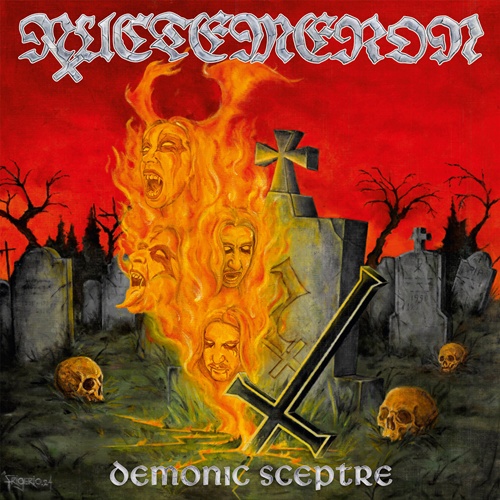
L’album possiede anche una forte identità visiva, con l’artwork di Sebastian Frigerio che si sposa perfettamente con l’attitudine fatta di pelle, borchie, catene e cartucciere che circonda la band. Quanto avete lavorato a stretto contatto con Sebastian e cosa volevate che la copertina comunicasse prima ancora che l’ascoltatore avesse sentito un solo riff?
Sì, affidare a Sebastian la realizzazione della copertina è stata esattamente la decisione giusta. Riesce a catturare alla perfezione quel classico, purista e fighissimo stile delle copertine metal anni ’80 che amiamo. Ci è piaciuta immediatamente la sua tecnica artistica, ed è anche una gran brava persona che ha capito fin dall’inizio cosa volevamo. Abbiamo lavorato a stretto contatto con lui e l’intero processo è stato assolutamente privo di problemi. Sebastian è un artista di prim’ordine nel suo campo e, oltre a questo, è un totale maniaco del metal proprio come noi. Fin dall’inizio avevamo immaginato che i colori e l’artwork rendessero l’album davvero irresistibile, stuzzicando la curiosità della gente su ciò che avrebbe trovato. Il messaggio è semplice: “Questo è un album metal old school per il tipo di persone che amano questo stile di musica metal” – niente di più, niente di meno.
Guardando agli anni che hanno portato a “Demonic Sceptre”, comprese pubblicazioni come “Beastfuck” e gli split con Nocturnal e Nunslaughter, ci devono essere innumerevoli storie dietro la band. C’è un episodio particolare della storia dei Nuctemeron che ancora oggi vi fa ridere, rabbrividire o semplicemente pensare: “Questo è esattamente ciò che significa essere in questa band”?
Oh, questa è una bella domanda – dovrei davvero pensarci. Certo, ci sono un sacco di ricordi, come le volte durante i concerti dei Nuctemeron in cui qualcosa andava storto con il nostro show, ma che oggi possiamo ricordare con un sorriso. Per esempio, c’è stato il concerto all'”Odyssey To Blasphemy” di Oberhausen, dove mi sono accidentalmente bruciato la parte anteriore dei capelli mentre sputavo fuoco e poi ho dovuto andare in giro con la frangetta per mesi. Oppure quando stavamo registrando le parti di chitarra nello studio di Daniel Avenger: dato che Exterminator è un fumatore accanito, noi tre abbiamo fumato abbastanza sigarette da dieci persone nell’arco di un weekend; scherziamo dicendo che abbiamo “fumato” l’album fino a farlo esistere. Ripensando alla storia della band, ci sono parecchi ricordi e aneddoti di questo tipo. Pensarci mi fa sorridere molto, anche se ci sono state anche cose del passato che sono andate storte e che ancora oggi mi fanno arrabbiare o rattristare. Ma penso che faccia semplicemente parte del gioco; personalmente, ho imparato a gestire i trionfi e le sconfitte, che nel caso dei Nuctemeron spesso sono separati da una distanza davvero minima. Ma questa, ovviamente, è soltanto la mia personale prospettiva sulle cose.
Il vostro DNA musicale riconduce chiaramente al lato più feroce del primo black, speed e thrash metal, con Violent Force, Nifelheim, Tormentor e Sodom tra i nomi associati al vostro sound. Quali dischi di quell’epoca hanno avuto l’impatto più profondo sull’identità musicale dei Nuctemeron e ci sono pubblicazioni meno scontate che meriterebbero molta più attenzione da parte dei metallari di oggi?
Oh, questa è una domanda difficile, perché ci sono così tanti album che hanno plasmato il nostro sound che elencarli tutti probabilmente andrebbe oltre i limiti di questa intervista. Provo a fare una selezione: “Show No Mercy”, “Kill ‘Em All”, “Anno Domini”, “Malevolent Assault Of Tomorrow” e anche “Phoenix Rising”: sono soltanto alcuni degli album che sono stati assolutamente fondamentali e formativi per i Nuctemeron e, nello specifico, per questo album. Ovviamente anche il legame con “Obsessed By Cruelty” è sempre stato importante per noi, non fosse altro che per il nome della nostra band. E sì, ci sono sicuramente un sacco di gemme della scena metal degli anni ’80, e anche di epoche successive, che meriterebbero molta più attenzione. Ma è qualcosa che i metallari di oggi devono scoprire da soli; dopotutto, è proprio questo che rende l’heavy metal così entusiasmante, anche per noi oggi: quando ti imbatti in una gemma che non conoscevi o che non avevi mai avuto sul radar, poi la ascolti in loop e pensi semplicemente che sia fottutamente fantastica, con tutto ciò che ne consegue. Penso che l’heavy metal non diventi mai noioso!
“Angeldust” compare come bonus track su CD ed è originariamente un brano dei Venom. Cosa vi ha spinto a scegliere proprio questo pezzo e cosa rappresentano i Venom per i Nuctemeron, al di là del fatto di essere tra i padri fondamentali della tradizione black e speed metal?
Dato che la nostra ultima cover era “Reaper” dei Bathory, questa volta abbiamo pensato di dedicarci a un altro pioniere e a una delle maggiori influenze, non soltanto per noi. E visto che siamo tutti fan dei Venom e veneriamo quel trio caotico di Newcastle, democraticamente abbiamo scelto il brano “Angeldust”. Penso che con la versione dei Nuctemeron siamo riusciti davvero a imprimere il nostro marchio sul pezzo. I Venom ovviamente significano moltissimo per noi; i loro primi quattro album sono capolavori assoluti sotto ogni punto di vista, incredibilmente importanti per l’intera scena metal, allora come oggi.
Ora che “Demonic Sceptre” ha finalmente spezzato il sigillo dopo dodici anni di attività, considerate questo album la conclusione di un capitolo o l’inizio di qualcosa di ancora più violento? E cosa può aspettarsi l’underground dai Nuctemeron in futuro?
Io, o meglio, noi, non consideriamo affatto questo disco la fine di un capitolo; al contrario, vogliamo continuare esattamente come abbiamo fatto con “Demonic Sceptre”, perché, a mio parere, è ciò che si adatta meglio alla visione dei Nuctemeron. Ci siamo separati dal nostro chitarrista Exterminator perché le sue priorità erano al di fuori della band, ma abbiamo già trovato un sostituto degno e straordinario in Doomhammer; tra l’altro, abbiamo già suonato con lui insieme ai Protector a Wolfsburg. Siamo anche sul punto di iniziare a scrivere i brani per il secondo album dei Nuctemeron. Credo che con questa nuova formazione riusciremo sicuramente a creare un altro album dei Nuctemeron in stile black-speed metal, dotato di un carattere old school ma allo stesso tempo incredibilmente vario. Quindi, restate sintonizzati.
There are records that arrive quietly, and then there are records that kick down the fucking door. After twelve years spent sharpening their blades in the underground, Nuctemeron finally unleash “Demonic Sceptre”, a debut full-length that reeks of leather, smoke, speed and blackened steel. We caught up with L. Aggressor to talk about the long road from “Knights Of Hell” to the band’s first album, the raw DNA of 80s heavy, speed, thrash and black metal, the hellish imagery created with Sebastian Frigerio, the band’s devotion to Venom, and the future of Nuctemeron’s uncompromising attack. Released by I Hate Records, “Demonic Sceptre” is a record for those who still believe that black/speed metal should sound dangerous, filthy and fucking alive.
Hello Nuctemeron, and thank you for taking the time to speak with Il Raglio Del Mulo. After twelve years of activity, countless splits and EPs, your long-awaited debut full-length, “Demonic Sceptre”, has finally arrived, bringing together German black/speed metal, old school violence and a striking variety between the songs. What made this the right moment to unleash your first full-length, and how do you feel it represents the path Nuctemeron have followed since “Knights Of Hell”?
Infernal greetings to you and all the readers of the Il Raglio Del Mulo fanzine. Yes, after 12 years, the moment has finally arrived: we’ve managed to release the first full-length Nuctemeron album, “Demonic Sceptre”. As you mentioned, the road to get here was long, spanning various EPs and split EPs, but good things take time, as the saying goes, and the four of us are very pleased with the result. The reason it’s happening now, of course, is that, after “burning through” so many guitarists over the years, we finally had Exterminator back in our ranks; he returned to us after an absence of several years. With him on board, we were able to write and execute the songs and the entire album exactly as we had envisioned. I also think we’ve remained absolutely true to the style we’ve pursued from the very beginning; we’ve simply refined and perfected it on this album, without becoming overly technical or complex, to ensure that listeners get a solid dose of “Black Witching Blitz Metal Of Satan” hammered straight into their ears.
The songs on “Demonic Sceptre” each have their own identity, yet the album never loses its old school black/speed metal character. When writing a Nuctemeron song, how do you balance the need for a distinctive personality with the uncompromising spirit of the genre?
That part was actually quite easy during the songwriting process, because from the very beginning we knew we wanted to focus even more on our musical roots, which clearly lie in 80s heavy, speed, thrash, and black metal, and simply infuse the songs and the entire album, lyrics included, with that influence. I think we succeeded perfectly in doing that with “Demonic Sceptre”, without sacrificing our signature Nuctemeron trademarks, of course. All four of us knew exactly what we wanted and how to execute it. When you truly embody that attitude, that passion for killer heavy metal, it makes achieving the right result so much easier.
That variety becomes particularly interesting when moving from a track such as “Fresh Blood For The 13th Coffin” to “Metallic Thunder” or “Brandish The Hammer Of Hell”. Did you deliberately want every song to have its own character, or did this diversity emerge naturally during the songwriting process?
It’s interesting that you picked those three songs, considering “Fresh Blood For The 13th Coffin” is really just the album’s intro and the lead-in to the opening track, “The Bat”. But yes, while writing the material, we were determined to ensure the album wouldn’t get boring and that, despite sticking to the core Nuctemeron formula, absolutely Speed, each song would stand out from the others. I also think the specific track order we chose helps highlight those differences between the songs.
The titles and lyrics on “Demonic Sceptre” are soaked in occult violence, death and pure metal hostility. How important are these themes and the imagery surrounding them when you create the atmosphere of a Nuctemeron song?
Oh, those lyrics and titles are hugely important to us! Of course, the lyrics are full of the clichés that the four of us associate with black heavy metal, but they matter to us because we want to take the listener on a journey through Nuctemeron’s hell; this specific style of lyrics and song titles provides the perfect framework for the musical listening experience of “Demonic Sceptre”. And the lyrics are actually quite diverse, too, if people take the trouble to read the printed lyrics in the insert, read a little between the lines, and realize that there is a great deal of seriousness behind the words.
The album also has a strong visual identity, with the artwork by Sebastian Frigerio perfectly fitting the leather, spikes, chains and bullet belt attitude surrounding the band. How closely did you work with Sebastian, and what did you want the cover to communicate before the listener had even heard a single riff?
Yes, having Sebastian create the cover artwork was exactly the right decision. He captures perfectly that classic, purist, cool 80s metal cover style that we love. We immediately liked his artistic technique, and he’s a great guy who understood what we were after right from the start. We worked very closely with him, and the whole process was completely hassle-free. Sebastian is a top-notch artist in his field, and on top of that, he’s a total metal maniac just like us. From the beginning, we envisioned the colors and the artwork making the album truly compelling, piquing people’s curiosity about what to expect. The message is simple: “This Is An Old-School Metal Album For The Kind Of People Who Love This Style Of Metal Music” – nothing more, nothing less.
Looking back at the years leading to “Demonic Sceptre”, including releases such as “Beastfuck” and the splits with Nocturnal and Nunslaughter, there must be countless stories behind the band. Is there one particular episode from Nuctemeron’s history that still makes you laugh, cringe or simply think: “This Is Exactly What Being In This Band Is About”?
Oh, that’s a good question – I’d really have to think about it. Sure, there are plenty of memories, like times during Nuctemeron live shows when things went wrong with our stage act, but which we can look back on with a smile now. For instance, there was the gig at “Odyssey To Blasphemy” in Oberhausen where I accidentally burned off the front of my hair while fire-breathing and had to walk around with bangs for months afterward. Or when we were recording guitar tracks at Daniel Avenger’s studio, since Exterminator is a heavy smoker, the three of us smoked enough cigarettes for ten people over the course of a weekend; we joke that we “smoked” the album into existence. Looking back at the band’s history, there are quite a few memories and anecdotes like that. Thinking about it makes me smile a lot, though there are also things from the past that went wrong and still make me angry or sad. But I think that’s just part of it; personally, I’ve learned to handle the triumphs and defeats, which often lie so close together, when it comes to Nuctemeron. But that’s just my own perspective on things, of course.
Your musical DNA clearly leads back to the most vicious side of early black, speed and thrash metal, with Violent Force, Nifelheim, Tormentor and Sodom among the names associated with your sound. Which records from that era had the deepest impact on Nuctemeron’s musical identity, and are there any less obvious releases that deserve much more attention from today’s metalheads?
Oh, that’s a tough question, because there are so many albums that shaped our sound, listing them all would probably go beyond the scope of this interview. Let me try a selection: “Show No Mercy”, “Kill ‘Em All”, “Anno Domini”, “Malevolent Assault Of Tomorrow”, and also “Phoenix Rising”, those are just a few that were absolutely crucial and formative for Nuctemeron, and specifically for this album. Of course, the connection to “Obsessed By Cruelty” was always important to us, too, if only because of our band name. And yes, there are certainly plenty of gems from the 80s metal scene, and from later eras, too, that deserved far more attention. But that’s something today’s metalheads have to discover for themselves; after all, that’s exactly what’s exciting about heavy metal, even for us today, when you stumble upon a gem you didn’t know or hadn’t had on your radar before, then listen to it on repeat and just think it’s awesome, with everything that entails. I think heavy metal just never gets boring!
“Angeldust” appears as a CD bonus track and is originally a Venom song. What made this particular track the right choice, and what does Venom represent to Nuctemeron beyond being one of the fundamental ancestors of the black and speed metal tradition?
Since our last cover version was of Bathory’s “Reaper”, we considered dedicating ourselves this time to another pioneer, and a major influence, not just for us. And since we’re all Venom fans and revere that chaotic trio from Newcastle, we democratically settled on the song “Angeldust”. I think that with the Nuctemeron version, we really managed to put our own stamp on the track. Venom obviously means a great deal to us; their first four albums are absolute masterpieces in every respect, incredibly important to the entire metal scene, both then and now.
Now that “Demonic Sceptre” has finally broken the seal after twelve years of activity, do you see the album as the culmination of one chapter or as the beginning of something even more violent, and what can the underground expect from Nuctemeron next?
I, or rather, we, definitely don’t see this as the end of a chapter; instead, we want to continue exactly as we did with “Demonic Sceptre”, as that, in my opinion, best fits the vision of Nuctemeron. We parted ways with our guitarist Exterminator because his priorities lay outside the band, but we’ve already found a worthy and outstanding replacement in Doomhammer; incidentally, we’ve already performed with him alongside Protector in Wolfsburg. We’re also on the verge of starting to write songs for the second Nuctemeron album. I believe that with this new lineup, we’ll definitely succeed in creating another Nuctemeron album in the black-speed metal style, one that possesses an old-school character while also being incredibly diverse. So, stay tuned.

