
ENGLISH VERSION BELOW: PLEASE, SCROLL DOWN!
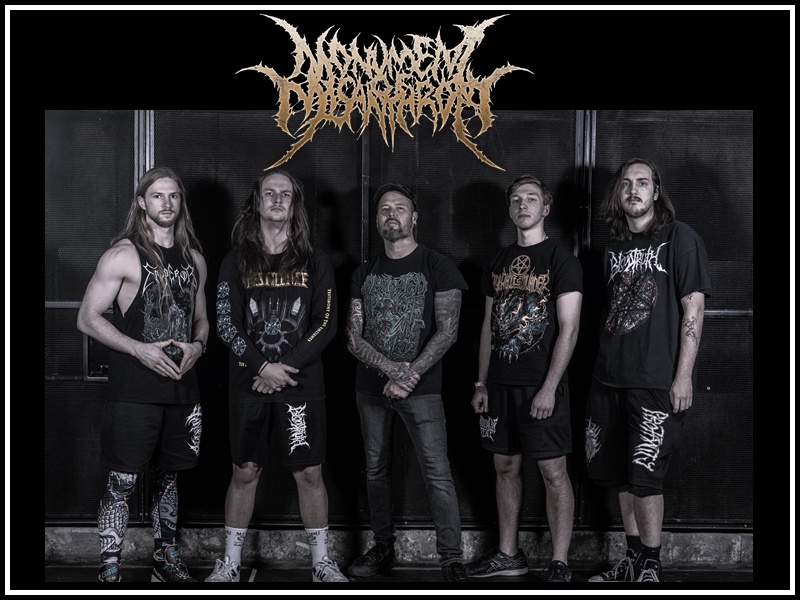
Con “Washington State Charm” appena pubblicato via Listenable Records, i Monument Of Misanthropy scolpiscono il capitolo più disturbante e narrativo del loro percorso nel Death Metal estremo moderno. Abbiamo parlato con George, la mente dietro il concept, per entrare nel cuore della struttura psicologica del disco, nella sua brutalità cinematica e in quel confine sottile tra narrazione e oscurità reale. Ne emerge non una celebrazione dell’estremo fine a sé stesso, ma una discesa controllata tra dettagli, struttura e intenzione, dove ogni brano sembra una scena di un film malato in cui ci si rifiuta di staccare gli occhi dallo schermo.
Prima di tutto, grazie per il tempo concesso a Il Raglio Del Mulo, George, e congratulazioni per “Washington State Charm”, un disco che spinge i Monument Of Misanthropy ancora più a fondo nei territori concettuali più disturbanti continuando la vostra evoluzione nel Death Metal brutale: dopo l’intensità di “Vile Postmortem Irrumatio”, cosa vi ha spinto a costruire un intero album attorno alla psicologia distorta di Ted Bundy?
Dopo aver affrontato Jack Unterweger ed Ed Kemper, ci siamo trovati davanti alla sfida brutale di scegliere il prossimo soggetto per un altro concept album sui serial killer. Abbiamo persino chiesto ai fan, e i soliti nomi tornavano sempre fuori: Jeffrey Dahmer, Ed Gein, Richard “Night Stalker” Ramirez e Ted Bundy. Dahmer è stato subito escluso perché i Macabre avevano già percorso quella strada anni fa. Così ho iniziato a scavare a fondo nelle vite degli altri killer, leggendo biografie e fascicoli dei casi, e alla fine Bundy è emerso come l’incubo perfetto da trasformare in un concept lirico oscuro e inquietante. La sua infanzia distorta, le relazioni vuote e spezzate, la discesa nell’omicidio, le fughe dal carcere, il circo mediatico attorno a lui: tutto porta verso quella marcia finale verso la sedia elettrica. L’intera storia aveva un’atmosfera cinematica ed inquietante, perfetta per un disco Death Metal.
Piuttosto che concentrarsi solo sulla violenza, il disco sembra tracciare l’intero sviluppo psicologico di Bundy, dall’adolescenza goffa fino all’esecuzione sulla sedia elettrica: quanto era importante per voi rappresentare la costruzione graduale del mostro invece di limitarsi a shock e gore?
Penso che sia una linea che non puoi oltrepassare, perché c’è una differenza sottilissima tra raccontare una storia oscura e glorificare il mostro al centro di essa. Certo, c’è sempre una componente di shock value, la stessa ragione per cui le persone sono attratte da film horror, slasher e documentari true crime, ma per me la vera fascinazione è sempre stata il decadimento psicologico dietro queste atrocità. Cosa spinge qualcuno come Ted Bundy a diventare ciò che è diventato? Quella è la parte che mi interessa di più. Quando scavi abbastanza a fondo, le radici sono quasi sempre nell’infanzia: umiliazione, isolamento, rifiuto, sentirsi inferiori, completamente scollegati da chi ti circonda. Quel tipo di danno fermenta per anni. Un’anima torturata e umiliata può mutare in qualcosa di davvero malvagio, e quella oscurità è ciò che cerchiamo di catturare nei testi.
Brani come “Neath Tacoma Asphalt”, “The 1974 PNW Spree” e “Chi Omega Blood Rage” rivisitano momenti legati ai crimini di Bundy: come avete affrontato la trasformazione di un orrore storico reale in musica estrema senza renderlo superficiale o mera speculazione?
È esattamente il tipo di mentalità che devi avere quando scrivi un album basato su orrori reali. Non ho mai voluto che diventasse una sorta di colonna sonora da slasher a basso costo o qualcosa di gore fine a sé stesso. Quel territorio appartiene più alla scena slam, e non è mai stato il nostro obiettivo. Per me questi temi devono essere affrontati con serietà e rispetto, perché alla fine si tratta di eventi reali e di vittime reali. Anche se tutti i coinvolti non ci sono più, devi comunque trattare l’argomento con attenzione. L’obiettivo non è mai stato celebrare la violenza, ma esplorare l’oscurità dietro di essa e raccontarla in modo inquietante, onesto e disturbante.
Musicalmente, “Washington State Charm” sembra combinare la vostrasolita brutalità con influenze Deathcore e dinamiche ritmiche più moderne: la collaborazione con musicisti come Mendel Bij De Leij, Johnny Ciardullo, Gabe Mangold e Hal Microutsicos ha spinto la scrittura verso direzioni che non avreste esplorato da soli?
Forse, ma il motivo principale per cui abbiamo coinvolto questi musicisti incredibili è semplicemente perché siamo fan enormi di ciò che fanno e del livello di professionalità che portano in studio. Le loro capacità sono su un altro livello. Gli elementi più moderni e Deathcore erano già stati introdotti nel nostro album precedente “Vile Postmortem Irrumatio”, scritto quasi interamente dal nostro chitarrista Julius Kössler. Quel disco ci aveva già spinto verso una direzione più oscura e contemporanea, e penso che evolversi nel tempo sia fondamentale per qualsiasi band seria. Non ho mai voluto che diventassimo l’ennesima copia di Morbid Angel o Suffocation. Nel mondo ci sono già infinite band che fanno quello stile in continuazione. Per noi l’obiettivo è sempre stato suonare come MoM e nessun altro, creare una nostra identità, i nostri marchi sonori, riff e hook memorabili che restano in testa invece di diventare rumore di fondo dopo pochi ascolti.
Hai parlato di una cura maniacale per dettagli nascosti, giochi lirici e arrangiamenti microscopici: quando scrivi materiale così denso e stratificato, come bilanci precisione tecnica e istinto brutale tipico del Death Metal estremo?
Questa è una bella domanda, e credo che la risposta stia nel modo in cui lavoriamo come band. Non mi siedo mai a dare istruzioni rigide ai chitarristi o al bassista quando portano idee. Mi fido completamente del loro istinto. Loro sanno già che tipo di atmosfera deve avere un brano legato a un certo tema: inquietante, violento, oppressivo, a volte dissonante e caotico, a volte schiacciante con groove enormi e breakdown, a volte persino sorprendentemente melodico. Il nostro processo è particolare perché io prendo i brani così come vengono scritti e costruisco i testi sopra quella base strumentale. E questo diventa una sfida enorme: raccontare una storia complessa, dall’infanzia fino alla morte, su nove tracce senza perdere pezzi fondamentali, dettagli psicologici e snodi narrativi. Scrivere un classico album Death Metal pieno di gore inventato sarebbe molto più facile. Molti testi in giro sembrano scritti da un ragazzino delle elementari che vuole fare l’estremo. Noi abbiamo sempre voluto andare oltre e creare qualcosa con atmosfera, profondità e una vera narrativa. Quindi sì, siamo orgogliosi di quello che abbiamo fatto. (ride)
La traccia conclusiva “Strapped To The Throne (Burn, Bundy, Burn)” viene descritta come un’atmosfera “God Of Emptiness ma ancora più malata”: cosa l’ha resa la chiusura definitiva del disco, sia musicalmente che concettualmente?
Hal mi ha mandato il brano molto presto nelle prime fasi di scrittura, e dal primo ascolto sono rimasto completamente ipnotizzato dalla sezione finale. C’era qualcosa in quell’atmosfera, malata, oscura, dissonante ma allo stesso tempo stranamente melodica, che mi ha fatto scattare subito in testa la frase “Burn Bundy Burn”. Si è incastrata immediatamente con la parte finale del brano. E considerando che fuori dal carcere la folla stava davvero scandendo quelle parole durante l’esecuzione di Bundy, è diventato subito evidente che quel pezzo dovesse chiudere il disco. La traccia aveva già un senso di tensione, collasso e finalità totale, quasi come la colonna sonora degli ultimi istanti prima che scatti l’interruttore della sedia elettrica. Era la chiusura perfetta dell’intero arco narrativo.
I Monument Of Misanthropy hanno sempre esplorato violenza, patologia e depravazione umana, ma questo disco sembra ancora più cinematografico e narrativo: avete affrontato “Washington State Charm” come se steste dirigendo un film horror psicologico attraverso la musica?
Assolutamente sì. Onestamente, mi piacerebbe che le persone vivessero il disco nel modo vecchia scuola: mettere il vinile sul piatto, sedersi con la copertina e i testi tra le mani e sparire dentro la musica e la storia per 35 minuti. Nessuna distrazione, nessuno skip, solo immersione totale nell’atmosfera dall’inizio alla fine. È esattamente così che ascoltavo i dischi da ragazzo. Ricordo ancora quando ho messo per la prima volta “Reign In Blood” degli Slayer o “Dahmer” dei Macabre, seguendo i testi mentre la musica si svolgeva come un incubo davanti a me. Mi venivano i brividi ascoltando “Dahmer” perché era tutto così intenso e vivido. Se i nostri concept sui serial killer riescono a dare anche solo una minima parte di quella sensazione, quel senso di essere trascinati in un’altra dimensione attraverso musica e racconto, sarebbe uno dei complimenti più grandi che potremmo ricevere.
Da “Unterweger” a “How To Make A Killer” fino a “Washington State Charm”, la vostra discografia sembra sempre più legata alla psicologia criminale e all’oscurità reale: cosa continua ad attrarti artisticamente in questi temi così scomodi e profondamente umani?
Credo che ci sia qualcosa di profondamente radicato nella natura umana che spinge verso l’oscurità, la tragedia e le storie true crime realmente accadute. Ricordo mia nonna che mi raccontava storie di campagna su omicidi, furti, sparizioni e cose strane accadute nel suo quartiere. Da bambino ero terrorizzato, ma allo stesso tempo completamente affascinato. Volevo sempre saperne di più: persone scomparse nel nulla, voci di paese, leggende inquietanti che nessuno riusciva a spiegare. Col senno di poi erano praticamente la versione primitiva degli attuali documentari true crime di Netflix. E se guardi cosa consuma la gente oggi, è evidente che questa fascinazione non è mai sparita. Ogni volta che controllo le classifiche, c’è sempre qualche documentario su serial killer al primo posto. Quindi penso che sia una curiosità umana normale: cercare di capire il male, la paura e le zone più oscure della mente.
Dopo aver pubblicato quello che potrebbe essere il vostro lavoro più concettuale e dettagliato, dove vedi i Monument Of Misanthropy andare in futuro, e pensi continuerete con album narrativi o cambierete direzione verso altre forme di estremità?
È esattamente la domanda che mi sto facendo da quando abbiamo consegnato il disco a Listenable Records. Ora siamo contenti di avere un po’ di tempo per capire dove andrà il prossimo capitolo. Ho già alcune idee, ovviamente, ma come per i soggetti dei nostri concept album mi piace sorprendere completamente il pubblico e portarli dove non si aspettano (ride). Credo che l’imprevedibilità sia fondamentale per una band come la nostra. Nel momento in cui la gente pensa di sapere già come suonerà il prossimo disco o quale storia racconteremo, un po’ di magia sparisce. Abbiamo sempre voluto che i MoM fossero pericolosi, inquietanti e imprevedibili, non solo a livello lirico ma anche musicale. Quindi qualunque cosa venga dopo, posso promettere che non sarà la scelta ovvia. O forse sì, chi lo sa.
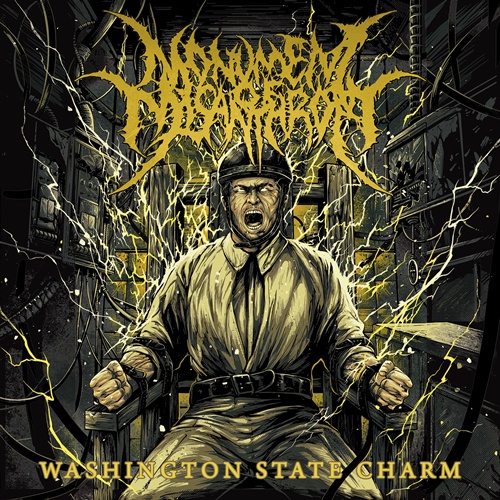
With “Washington State Charm” now unleashed via Listenable Records, Monument Of Misanthropy continue to carve their most unsettling and narrative driven chapter yet in modern brutal Death Metal. We spoke with George, the mind behind the concept, to dig into the album’s psychological framework, its cinematic brutality, and the fine line between storytelling and real world darkness. What emerges is not a celebration of extremity for its own sake, but a controlled descent into detail, structure, and intent where every track feels like a scene from a disturbed film that refuses to cut away.
First of all, thanks for taking the time to speak with Il Raglio Del Mulo, George, and congratulations on “Washington State Charm”, a record that pushes Monument Of Misanthropy even deeper into disturbing conceptual territory while continuing your evolution in brutal Death Metal: after the intensity of “Vile Postmortem Irrumatio”, what drove you toward building an entire album around the twisted psychology of Ted Bundy?
After tackling Jack Unterweger and Ed Kemper, we were facing the brutal challenge of picking the next subject for another serial killer concept album. We even threw the question out to the fans, and the usual names kept coming back, Jeffrey Dahmer, Ed Gein, Richard “Night Stalker” Ramirez, and Ted Bundy. Dahmer was off the table right away since Macabre had already carved that path years ago. So I started digging deep into the lives of the remaining killers, reading biographies and case files, and in the end Bundy stood out as the perfect nightmare to shape into a dark and haunting lyrical concept. His twisted childhood, the broken and empty relationships, the descent into murder, the prison escapes, the media circus surrounding him, it all built toward that final march to the electric chair. The whole story had this eerie, cinematic atmosphere that felt made for a Death Metal record.
Rather than focusing only on violence, the album seems to trace Bundy’s entire psychological development, from awkward adolescence to execution on the electric chair: how important was it for you to portray the gradual construction of monstrosity instead of simply presenting shock and gore?
I think that’s an important line you can’t cross, because there’s a razor thin difference between telling a dark story and outright glorifying the monster at the center of it. Sure, there’s always that element of shock value, the same reason people are drawn to horror films, slashers, and true crime documentaries, but for me the real fascination has always been the psychological decay behind these atrocities. What drives somebody like Ted Bundy to become what he became? That’s the part that interests me the most. When you dig deep enough, the roots are almost always buried in childhood, humiliation, isolation, rejection, feeling inferior, feeling completely disconnected from everyone around you. That kind of damage festers for years. A tortured and humiliated soul can mutate into something truly evil, and that darkness is what we try to capture in the lyrics.
Songs like “Neath Tacoma Asphalt”, “The 1974 PNW Spree” and “Chi Omega Blood Rage” revisit infamous moments connected to Bundy’s crimes: how did you approach transforming real historical horror into extreme music without turning it into something superficial or exploitative?
That’s exactly the mindset you need when you’re writing an album based on real horrors like this. I never wanted it to turn into some cheap slasher soundtrack or gore for the sake of gore kind of musical experience. That territory fits more into the slam scene, and that was never what we were aiming for. For me, this stuff has to be approached with a certain level of seriousness and respect, because at the end of the day these are real events and real victims. Even if everyone involved is long gone now, you still have to handle the subject carefully. The goal was never to celebrate the violence, but to explore the darkness behind it and tell the story in a haunting, honest, and unsettling way.
Musically, “Washington State Charm” appears to combine your established brutality with stronger Deathcore influences and more modern rhythmic dynamics: did collaborating with musicians such as Mendel Bij De Leij, Johnny Ciardullo, Gabe Mangold and Hal Microutsicos push the songwriting into directions you would not have explored otherwise?
Maybe, but the main reason we brought those insane musicians on board was simply because we’re huge fans of what they do and the level of professionalism they bring into the studio. Their musical abilities are just on another level. The more modern and Deathcore influenced elements were already introduced on our previous album “Vile Postmortem Irrumatio”, which was almost completely written by our guitarist Julius Kössler. That record already pushed us into a darker, more contemporary direction, and I think evolving over the years is important for every serious band. I never wanted us to become just another clone of Morbid Angel or Suffocation. There are already countless bands across the globe doing that style over and over again. For us, the goal has always been to sound like MoM and nobody else, to create our own identity, our own trademarks, memorable hooks, and riffs that stick in your head instead of becoming repetitive background noise after a few listens.
You mentioned obsessing over hidden details, lyrical puns and microscopic arrangements throughout the album: when writing such dense and layered material, how do you balance technical precision with the raw instinct and aggression that brutal Death Metal demands?
That’s actually a really good question, and I think the answer comes down to the way we work as a band. I never sit down and give strict instructions to the guitarists or bass players when they bring in their ideas. I trust their instincts completely. They already know what a song built around a certain theme has to feel like, eerie, violent, oppressive, sometimes dissonant and chaotic, sometimes crushing with huge grooves and breakdowns, and sometimes even surprisingly melodic. What makes our process special is that I usually take the songs exactly as they’re presented to me and then build the lyrics around that instrumental foundation. And honestly, that can become a pretty demanding challenge. You’re trying to tell a complex story, from childhood all the way to death, across nine tracks without leaving out the essential moments, psychological details, and turning points. Writing a standard Death Metal album full of fictional gore and random blood soaked lyrics would definitely be the easier route. A lot of those lyrics out there sound like they were written by a fifth grader trying to be edgy. We always wanted to push beyond that and create something with atmosphere, depth, and an actual narrative. So if you ask whether we’re proud of what we created? Hell yes, we are. (laughs)
The closing track “Strapped To The Throne (Burn, Bundy, Burn)” is described as carrying a “God Of Emptiness but with more sickness” atmosphere: what made that particular song become the definitive finale for the record, both musically and conceptually?
Well, Hal sent me the track very early during the first stages of the songwriting process, and the moment I heard it for the first time, I was completely hypnotized by the ending section. There was something about that atmosphere, sick, dark, dissonant, but at the same time strangely melodic, that instantly triggered the phrase “Burn Bundy Burn” in my head. It just locked in immediately with the final part of the song. And considering that the crowd outside the prison was actually chanting those exact words during Bundy’s execution, it became obvious right away that Hal’s song had to be the grand finale of the album. The track already carried this overwhelming sense of tension, collapse, and finality, almost like the soundtrack to the very last moments before the switch gets pulled on the electric chair. It felt like the perfect ending to the entire story arc.
Monument Of Misanthropy has always explored themes of violence, pathology and human depravity, but this album feels especially cinematic and narrative driven: did you approach “Washington State Charm” almost like directing a psychological horror film through music?
A hundred percent. Honestly, I would love for people to experience the album the old school way, putting the vinyl on the turntable, sitting down with the record sleeve and lyrics in their hands, and just disappearing into the music and the story for 35 minutes. No distractions, no skipping tracks, just fully immersing yourself in that dark atmosphere from beginning to end. That’s exactly how I experienced albums when I was younger. I still remember throwing on Slayer “Reign In Blood” or listening to Macabre “Dahmer” for the very first time, following the lyrics while the music unfolded like some horrifying nightmare in front of me. I remember getting actual goosebumps listening to “Dahmer” because it felt so intense and vivid. If our serial killer concept albums can give listeners even a fraction of that same feeling, that sense of being pulled into another dimension through music and storytelling, then I’d consider that one of the greatest compliments we could ever get as a band.
From “Unterweger” to “How To Make A Killer” and now “Washington State Charm”, your discography increasingly feels interconnected by fascination with criminal psychology and real world darkness: what continues to attract you artistically to these uncomfortable and deeply human subjects?
To be honest, I think there’s something deeply rooted in human nature that pulls people toward darkness, tragedy, and true crime stories that actually happened. I still remember my grandmother telling me all these old countryside tales about murders, burglaries, disappearances, and strange things that happened in her neighborhood. As a kid, I was completely horrified by those stories, but at the same time absolutely fascinated by them. I always wanted to hear more, more stories about people who vanished without a trace, more rumors, more unsettling local legends that nobody could fully explain. Looking back now, those late night storytelling sessions were basically the early version of today’s Netflix true crime documentaries and serial killer series. And if you look at what people consume nowadays, it’s obvious that this fascination never disappeared. Every time I check the Netflix charts, there’s always some true crime documentary or serial killer series sitting at number one. So I honestly think this attraction to the morbid and mysterious is completely normal. It’s part of human curiosity, trying to understand evil, fear, and the darker corners of the human mind.
After releasing what may be your most conceptual and detail oriented work so far, where do you see Monument Of Misanthropy heading next, and do you think the band will continue exploring narrative albums or move toward entirely different forms of extremity?
That’s exactly the question I’ve been asking myself ever since we delivered the album to Listenable Records. Right now I’m actually happy that we still have some time to figure out where the next chapter will lead us. I already have a few ideas in mind, of course, but just like the subjects of our concept albums, I enjoy catching the audience completely off guard and leading them somewhere they didn’t expect. (laughs) I think unpredictability is important for a band like us. The moment people believe they already know exactly what your next record will sound like or what story you’re about to tell, some of the magic disappears. We always wanted MoM to feel dangerous, unsettling, and unexpected, not only lyrically, but musically as well. So whatever comes next, I can promise it won’t be the obvious choice. Or maybe not, time will tell.

