
ENGLISH VERSION BELOW: PLEASE, SCROLL DOWN!
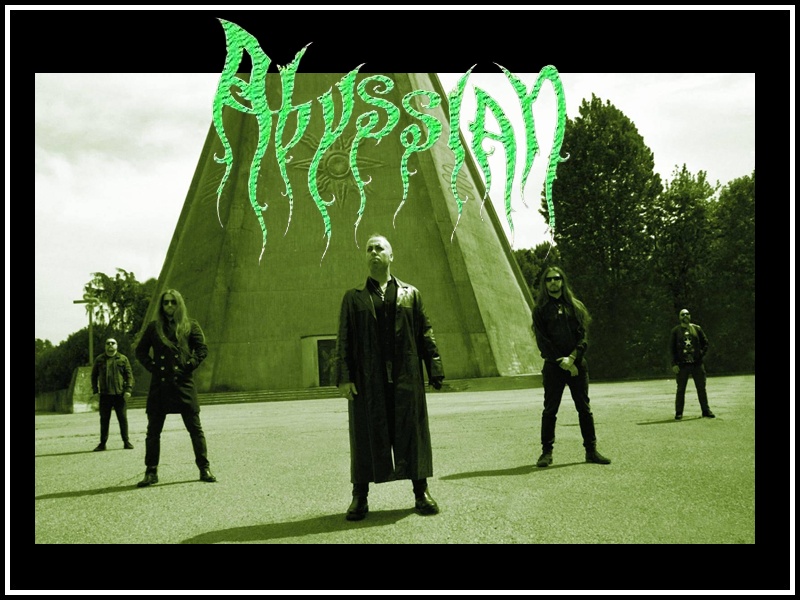
Dalle profondità più oscure del Doom emergono ancora una volta gli Abyssian, pronti a trascinare l’ascoltatore in un viaggio dove cosmologie perdute, spiritualità ancestrale e riflessioni esistenziali si fondono in un’unica visione. In occasione dell’uscita di “Let Me Die Under The Stars”, pubblicato da Black Widow Records, abbiamo ritrovato Roberto, che ci ha guidati attraverso la genesi del nuovo album, il fondamentale ingresso di Umberto Vono, l’evoluzione del sound della band e una filosofia artistica che continua a guardare oltre l’orizzonte del Doom tradizionale, senza mai perdere di vista il potere evocativo della musica.
Ciao e bentornato su Il Raglio Del Mulo! Grazie per essere nuovamente con noi e complimenti per l’uscita di “Let Me Die Under The Stars”, un album che inaugura una nuova fase della vostra storia grazie anche all’ingresso di Umberto Vono alla voce. Quali emozioni e quali aspettative accompagnano questo terzo capitolo degli Abyssian?
Un saluto a te Giuseppe e a tutto lo staff, è un grande piacere ritrovarvi. La realizzazione di “Let Me Die Under The Stars”, a differenza dei precedenti album, è stata già diversa nel concepirne la struttura, proprio perché questa grande title track, suddivisa in tre capitoli, è il nucleo centrale dell’album. La natura vocale di Umberto poi ha senz’altro permesso di aggiungere più solennità al sound e ha rappresentato un grande plus valore all’economia sonora. Un po’ per l’utilizzo del nero e del verde nelle nostre estetiche, un po’ per il suo timbro vocale, siamo ovviamente stati accostati ai Type O Negative, il che come idea non ci dispiace affatto, anche perché alcuni di noi li adorano, ma in realtà siamo piuttosto differenti nello stile, così come nel significato del nostro verde rispetto al loro. È il verde abissale, ma anche il verde alieno o del rettile. Ci auguriamo che il nuovo album possa entrare nel maggior numero possibile di case e cuori, ma ovviamente questo è l’augurio di chiunque abbia un nuovo album tra le mani e lo stia diffondendo.
Fin dagli esordi avete costruito un immaginario unico, fatto di Atlantide, civiltà sommerse, antichi alieni e cosmologie sumeriche. In che modo questi temi continuano a ispirarvi dopo oltre quindici anni di attività e cosa rappresentano oggi per voi rispetto agli inizi del progetto?
Se si approfondiscono tutte le tematiche che hai menzionato e ci si predispone fin dall’inizio ad un’apertura mentale di un certo tipo, ci si accorge che quello che viene citato nell’epica sumera racconta la stessa versione della creazione della Terra, ma senza le censure della nostra Bibbia. Possiamo apprendere da dove e da cosa nacque il nostro pianeta, che un tempo era chiamato Tiamat e che fu “decapitato” da Kingu/Marduk (Nibiru). Questo è solo un piccolo esempio di come quelle che possono spesso essere relegate come favolette e leggende, se si prendono invece con la dovuta attenzione e analisi, possono essere in grado di raccontarci, se non tutto, gran parte del nostro passato remotissimo e con una logica e precisione sconcertanti. Ma, ripeto, bisogna davvero voler essere predisposti ad accettare determinate teorie, eventualità. In “Nibiruan Chronicles”, tutto era molto descrittivo di luoghi, nomi e gesta; su “Godly” mi sono concentrato sull’aspetto più devozionale e di un ipotetico interfacciarsi tra il pagano e il cristiano; su “Let Me Die Under The Stars”, direi che tutto è più narrativo, più teatrale se vogliamo, con questi colloqui tra il Mortale e il Divino, dove la divinità si racconta e istruisce il mortale, ma dove anche essa stessa si scopre vulnerabile e forse sola, troppo sola. Se devo quindi rispondere alla tua domanda, direi che sì, assolutamente, tali tematiche mi ispirano ancora. Un domani chissà…
Nella nostra precedente intervista hai definito la musica degli Abyssian come un “flusso intenso”, qualcosa che richiede tempo, predisposizione e ascolti ripetuti per essere pienamente compreso. “Let Me Die Under The Stars” segue ancora questa filosofia oppure avete cercato un approccio più immediato e diretto nella scrittura dei nuovi brani?
Credo che il Doom, e tutto ciò che come sonorità ci si avvicina, presupponga di base la voglia di sintonizzarsi attraverso calma e introspezione; non a caso tutto è dilatato, lungo e a volte oscuro. Sebbene però i nostri brani abbiano un minutaggio considerevole, nelle strutture ho quasi sempre cercato di dare chiarezza e immediatezza. Di prediligere la forma canzone, anche se è vero che questo non accade in ogni brano. Dei tre capitoli di “Let Me Die Under The Stars”, ad esempio, il terzo è forse quello più emotivo, frammentato e prog, se così vogliamo definirlo. I brani nell’album, credo siano molto diretti, ma in realtà, al di là dei minutaggi, ciò succedeva già anche negli album precedenti.
L’arrivo di Umberto Vono come cantante stabile ha inevitabilmente portato nuova linfa creativa alla band. Quanto ha inciso la sua personalità artistica sulla composizione dei brani e quali possibilità espressive vi ha permesso di esplorare che in passato erano rimaste inesplorate?
L’apporto di Umberto ha contribuito enormemente a definire il sound del nuovo album e ovviamente avrà un ruolo fondamentale anche per il futuro, perché la sua timbrica grave apre a delle possibilità vocali che non avevamo mai potuto permetterci prima di adesso. Poter disporre di una vocalità di questo tipo ci può permettere maggiormente di suggerire quel senso di profondo e abissale, appunto. Non è comunque l’unica modalità in cui pensiamo di utilizzarla.
Nel corso degli anni avete mantenuto volutamente la presenza di elementi elettronici e parti di drum machine accanto agli strumenti tradizionali. Cosa rappresenta per voi questo equilibrio tra componente organica e artificiale all’interno del sound Abyssian?
Anche se il Metal rimane senza dubbio un ascolto prevalente, ho sempre amato anche le sonorità Dark, Wave, elettroniche o etniche e fin dall’inizio non ho mai voluto precludermi la possibilità di sperimentare degli inserimenti non tipici del Metal. I miei scaffali a casa contengono album non di rado molto distanti tra loro come generi e, in questo senso, ho degli ascolti molto vasti e aperti; davvero puoi trovarci dentro da Mozart ai Terrorizer, con quasi tutto quello che ci passa in mezzo. Se la musica ha contenuti e qualità, le sonorità con cui è espressa sono soltanto il tramite. Una scelta di quali medium utilizzare. Alcune partiture elettroniche appartengono al nostro lato più sperimentale nel sound. Anche sul nuovo album ne trovi in giro qualche traccia.
Se “Nibiruan Chronicles” era un viaggio cosmico e “Godly” un’opera più spirituale e devozionale, quale posizione occupa “Let Me Die Under The Stars” all’interno della vostra mitologia artistica e quali nuovi interrogativi cerca di affrontare?
“Let Me Die Under The Stars”, come già detto, è forse il più teatrale dei nostri album. Il titolo mi è venuto in mente mentre guardavo un film dal finale epico. C’era un sovrano messo supino sotto un cielo stellato, non ricordo assolutamente il titolo adesso. Stava per dire le sue ultime parole a un suddito inginocchiato accanto a lui, per poi esalare l’ultimo respiro. Nel capitolo 1 di “Let Me Die Under The Stars”, è l’umano che si rivolge ai suoi simili. Nel 2 fanno la loro comparsa i semidei, che interrogano sé stessi sul perché si ritrovino in un luogo in cui non sono nati. Uno di essi intreccia una relazione con una mortale e arriverà il momento in cui la loro differente biologia e ruolo porrà dei dilemmi, e per altri versi non ne porrà affatto. Nel terzo capitolo l’umano viene edotto dal divino, che ha già vissuto nel tempo passato, presente e futuro dei mortali; riconosce qualsiasi volto perché è lui l’Ente generatore e può attraversarti leggendoti, senza che tu te ne possa rendere conto.nomia di un brano, non mi tiro certo indietro. In realtà non ho mai un’idea precisa di dove andrò a finire quando mi avventuro nella composizione, ma il bello, secondo me, sta proprio in questo: nel viaggio, non nella destinazione. Mai.
Roberto, il tuo percorso con i Sinoath ha attraversato alcune delle stagioni più affascinanti dell’underground estremo italiano. Guardando agli Abyssian di oggi, quali elementi del tuo passato musicale senti ancora vivi e quali, invece, hai volutamente lasciato alle spalle per costruire un’identità autonoma?
Con i Sinoath abbiamo visto nascere e svilupparsi i sottogeneri del Black, Death, Gothic Doom. Inutile dire che quando qualcosa si vive sul momento, non ci si rende conto di avere il nuovo tra le mani. Ma di fatto era proprio così. Uscivano album incredibili, eccezionali e suonavano davvero nuovi, c’era proprio una magia nell’aria e, se sapevi coglierla e magari ti trovavi nel posto giusto al momento giusto, tutto poteva fare la differenza. Noi, da isolani, fondamentalmente eravamo nel posto sbagliato, ma paradossalmente ricevevamo e rimandavamo vibrazioni di tutti questi sottogeneri appena nati. È così che è nata tutta la produzione dei Sinoath in quegli anni. Ricordo ancora come ogni album fisico dell’epoca analogica fosse come un dono, una gioia, qualcosa di cui poter discutere appassionatamente. Rimanere fino a notte fonda nella nostra sala prove a chiacchierare del nuovo album di questa o quella band, o di come formulare il nostro sound. È stato tutto meraviglioso e lo porterò per sempre nel mio cuore. Oggi purtroppo sono cambiate moltissime cose. In primis il ritmo con cui tutto si consuma. Tutto troppo in fretta; fai una fatica enorme ad assimilare un album, perché ce ne sono miriadi di altri messi lì in fila che devono ancora essere ascoltati. È sparita o quasi del tutto la ritualità dell’ascolto. Entrare nel negozio di musica, acquistare l’album, tornarsene a casa e mettersi ad ascoltarlo con calma e senza distrazioni; toccandone tutte le sue parti, leggendo i testi, sfogliandolo. Noi siamo fatti di questo. Di tangibilità. Di fisicità. Rispondendoti, credo che la mia forma mentis musicale sia rimasta immutata nel tempo e risale proprio alla mia formazione, ma oggi con gli Abyssian ho cercato di costruire una sorta di lente, qualcosa che guarda al nostro passato e a certe suggestioni, cercando poi di metterle in musica.
In passato hai raccontato come la semplicità, intesa come sintesi intelligente ed emotiva, sia sempre stata al centro del vostro songwriting. In un’epoca in cui spesso si tende a privilegiare la complessità tecnica, quanto è importante per voi preservare questa filosofia compositiva?
È un aspetto per me fondamentale. Gli Abyssian vogliono essere innanzitutto emozionali. Il dato tecnico è senza dubbio importante, ma cerco sempre di farlo sottintendere al messaggio che vuole fare passare il brano. Quello che suono, credo possa farlo davvero chiunque abbia un minimo di esperienza sullo strumento, ma il punto non è quello. Bastano davvero pochissime note, ma se sono messe nel modo giusto sono in grado di trapassarti. È questo il tipo di approccio che preferirò sempre.
Con “Let Me Die Under The Stars” si apre un nuovo capitolo della vostra storia. Guardando al futuro, quali territori sonori, concettuali o narrativi sentite il desiderio di esplorare e quale direzione immagini per la prossima evoluzione degli Abyssian?
È lecito supporre che l’impianto sonoro sarà sempre appartenente al Doom, in fondo la nostra natura principale è pur sempre quella, e il fatto che ci sia qualche nuovo brano già in cantiere può farmelo confermare, ma è anche vero che non mi pongo mai dei limiti predefiniti. Se mi accorgo che una certa soluzione “non troppo Metal” potrebbe rivelarsi efficace all’economia di un brano, ad esempio, non mi tiro certo indietro. In realtà non ho mai troppo un’idea certa di dove si andrà a finire quando mi avventuro nelle composizioni, ma il bello secondo me sta proprio in quello. Nel viaggio, non nella destinazione.
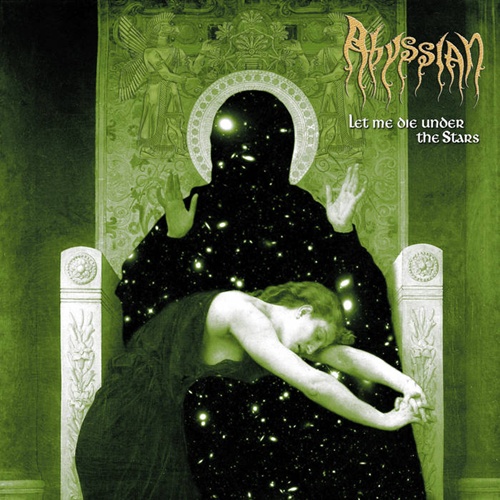
From the darkest depths of Doom, Abyssian return to drag listeners into a world where forgotten cosmologies, ancient spirituality and existential reflection merge into a single, immersive vision. With the release of “Let Me Die Under The Stars”, out now via Black Widow Records, we caught up once again with Roberto, who guided us through the making of the band’s third album, the crucial addition of Umberto Vono behind the microphone, the evolution of their sound and the artistic philosophy that continues to push Abyssian far beyond the traditional boundaries of Doom Metal.
Welcome back to Il Raglio Del Mulo! It’s great to have you with us again, and congratulations on the release of “Let Me Die Under The Stars”, an album that marks a new chapter in your journey thanks also to the arrival of Umberto Vono as your new vocalist. What emotions and expectations are surrounding this third chapter in the history of Abyssian?
Greetings to you, Giuseppe, and to the entire staff. It’s a real pleasure to be back with you. The creation of “Let Me Die Under The Stars” was conceived very differently from our previous albums, mainly because this massive title track, divided into three chapters, represents the very core of the record. Umberto’s vocal nature undoubtedly allowed us to add even more solemnity to our sound and proved to be a tremendous added value to the album’s overall sonic identity. Partly because of the use of black and green in our aesthetics, and partly because of his vocal timbre, we’ve naturally been compared to Type O Negative. Honestly, we don’t mind that at all, especially since some of us absolutely adore them. Still, we’re actually quite different in terms of style, just as the meaning of our green differs from theirs. Ours is the green of the abyss, but also the green of the alien and the reptile. We sincerely hope this new album will find its way into as many homes and hearts as possible, although that’s obviously the wish of anyone releasing a new record into the world.
Since the very beginning you’ve built a unique artistic universe made of Atlantis, lost civilizations, ancient aliens and Sumerian cosmologies. How do these themes continue to inspire you after more than fifteen years, and what do they represent for you today compared to the early days of the project?
If you truly delve into all the themes you’ve mentioned and approach them with an open mind from the very beginning, you eventually realize that what is told in Sumerian mythology presents the very same story of Earth’s creation, only without the censorship found in our Bible. We can learn where our planet came from and what it originally was, back when it was called Tiamat and was “beheaded” by Kingu/Marduk (Nibiru). That’s just a small example of how things often dismissed as fairy tales or legends can actually reveal, if approached with the proper attention and analysis, not everything perhaps, but certainly a huge portion of our most ancient past with astonishing logic and precision. But, once again, one must genuinely be willing to accept certain theories and possibilities. On “Nibiruan Chronicles”, everything was highly descriptive, focusing on places, names and heroic deeds. With “Godly”, I concentrated much more on the devotional aspect and on a hypothetical dialogue between Paganism and Christianity. On “Let Me Die Under The Stars”, I’d say everything has become far more narrative, even theatrical if you will, with these conversations between the Mortal and the Divine, where the deity tells its own story and instructs mankind, while at the same time revealing itself to be vulnerable and perhaps… unbearably alone. So, to answer your question, yes, absolutely—these subjects still inspire me today. As for the future… who knows?
In our previous interview you described Abyssian’s music as an “intense flow”, something that requires time, the right mindset and repeated listens before it can be fully understood. Does “Let Me Die Under The Stars” still follow that philosophy, or did you consciously aim for a more immediate and direct songwriting approach this time around?
I believe Doom, and everything that comes close to it sonically, naturally requires a willingness to tune yourself into a slower pace, into introspection. That’s why everything feels stretched, expansive and, at times, deeply obscure. Even though our songs often have a considerable running time, I’ve almost always tried to keep the structures clear and immediate, favouring the classic song format whenever possible, although that’s not always the case. Of the three chapters of “Let Me Die Under The Stars”, for example, the third is probably the most emotional, fragmented and progressive, if that’s the right way to define it. Overall, I think the songs on this album are actually very direct, but truth be told, that was already true of our previous records despite their length.
The arrival of Umberto Vono as the band’s permanent vocalist has inevitably brought fresh creative energy into Abyssian. How much has his artistic personality influenced the songwriting, and what new expressive possibilities has it allowed you to explore that had previously remained out of reach?
Umberto’s contribution has played an enormous role in defining the sound of the new album and will obviously be just as fundamental in shaping our future, because his deep vocal timbre opens up possibilities we simply couldn’t have explored before. Having a voice like his at our disposal allows us to convey that profound, abyssal feeling much more effectively. That said, this certainly isn’t the only way we intend to make use of his vocal abilities.
Throughout the years you’ve deliberately kept electronic elements and drum machine parts alongside traditional instruments. What does this balance between the organic and the artificial represent within the Abyssian sound?
Although Metal unquestionably remains the music I listen to the most, I’ve always loved Dark, Wave, electronic and ethnic music as well, and from the very beginning I’ve never wanted to limit myself by excluding elements that aren’t traditionally associated with Metal. The shelves in my house are filled with albums that are often worlds apart stylistically, and in that sense my musical tastes are incredibly broad and open-minded. You could literally find everything from Mozart to Terrorizer, and almost everything in between. If music has substance and quality, the sounds used to express it are merely the vehicle—a choice of medium through which that message is delivered. Some of our electronic passages belong to the band’s more experimental side, and you’ll find traces of that approach scattered throughout the new album as well.
If “Nibiruan Chronicles” was a cosmic journey and “Godly” explored a more spiritual and devotional dimension, where does “Let Me Die Under The Stars” fit within Abyssian’s artistic mythology, and what new questions does it seek to explore?
As I mentioned before, “Let Me Die Under The Stars” is probably the most theatrical album we’ve ever made. The title came to me while I was watching a film with a truly epic ending. There was a king lying on his back beneath a star-filled sky—unfortunately I can’t remember the title of the movie anymore. He was about to speak his final words to a loyal subject kneeling beside him before taking his last breath. In Chapter One of “Let Me Die Under The Stars”, it is mankind that speaks to its own kind. In Chapter Two, the demigods make their appearance, questioning why they find themselves in a place where they were never born. One of them falls in love with a mortal woman, and eventually the differences in their biology and their respective roles will raise difficult dilemmas—while, in other respects, they won’t raise any at all. In the third chapter, humanity is instructed by the Divine, an entity that has already witnessed the past, present and future of mortals. It recognises every face because it is the generating Being itself, capable of looking straight through you and reading your very essence without you ever becoming aware of it.
Roberto, your journey with Sinoath crossed some of the most fascinating eras of the Italian extreme underground scene. Looking at today’s Abyssian, which elements from your musical past do you still feel alive, and which ones have you deliberately left behind in order to build an independent identity?
With Sinoath, we witnessed the birth and development of the Black, Death and Gothic Doom subgenres. Needless to say, when you are living through something as it happens, you don’t realize that you are actually holding something new in your hands. But that was exactly the case. Incredible, exceptional albums were being released, records that truly sounded different and fresh; there was a certain magic in the air and, if you were able to capture it and perhaps found yourself in the right place at the right time, everything could make a difference. As islanders, we were basically in the wrong place, but paradoxically we absorbed and transmitted the vibrations of all these newly born subgenres. That’s how Sinoath’s entire production during those years came to life. I still remember how every physical album from that analogue era felt like a gift, a joy, something you could passionately discuss for hours. Staying up until late at night in our rehearsal room, talking about the new album from this or that band, or about how to shape our own sound. It was all absolutely wonderful, and I will carry those memories in my heart forever. Unfortunately, many things have changed today. First and foremost, the speed at which everything is consumed. Everything happens too fast; you struggle to truly absorb an album because there are countless others lined up, waiting to be listened to. The ritual of listening has almost completely disappeared. Walking into a record store, buying an album, going home and listening to it calmly without distractions; touching every part of it, reading the lyrics, going through the artwork. That’s what we are made of. Tangibility. Physicality. To answer your question, I believe my musical mindset has remained unchanged over time, and it goes back to my original musical formation. Today, with Abyssian, I’ve tried to build a sort of lens, something that looks back at our past and at certain influences, trying to transform them into music.
In the past you explained how simplicity, understood as an intelligent and emotional synthesis, has always been at the heart of your songwriting. In an era where technical complexity is often placed above everything else, how important is it for you to preserve this compositional philosophy?
This is absolutely fundamental for me. Abyssian wants to be emotional above all else. The technical aspect is undoubtedly important, but I always try to make it serve the message that the song wants to convey. I believe that what I play can truly be performed by anyone with a minimum amount of experience on their instrument, but that’s not the point. You only need a very small number of notes, but if they are placed in the right way, they can pierce straight through you. That is the kind of approach I will always choose.
With “Let Me Die Under The Stars”, a new chapter in your history has begun. Looking towards the future, what sonic, conceptual or narrative territories would you like to explore, and what direction do you imagine for the next evolution of Abyssian?
It is fair to assume that our sonic foundation will always remain rooted in Doom, because that is, after all, our true nature, and the fact that we already have some new songs in the works confirms this. At the same time, I never set myself predetermined boundaries. If I realize that a certain solution that is “not too Metal” could actually work well within the structure of a song, I certainly won’t hold myself back. Truthfully, I never have a completely clear idea of where I will end up when I embark on the songwriting process, but in my opinion that is exactly what makes it beautiful. It is about the journey, not the destination.

