
ENGLISH VERSION BELOW: PLEASE, SCROLL DOWN!
Ci sono dischi che raccontano un territorio e altri che sembrano scavare direttamente sotto la sua pelle. Con Hesperia, Hesperus trasforma storia, folklore, dialetto e leggende delle Marche in un viaggio black metal glaciale e rituale. “Picenum (True Marchigian Black Metal Renaissance)”, pubblicato da Hammerheart Records, non guarda semplicemente al passato: lo riporta in superficie attraverso cronache, voci familiari, tradizioni popolari e atmosfere capaci di aprire veri e propri cancelli temporali. Abbiamo parlato con Hesperus di memoria, cultura, ritualità e del prossimo capitolo di questa oscura esplorazione delle ere italiche.*
Prima di tutto, benvenuto su Il Raglio Del Mulo e grazie per essere qui con noi. “Picenum (True Marchigian Black Metal Renaissance)” non è semplicemente un nuovo album black metal: è un viaggio nella parte più oscura della storia, del folklore e delle leggende delle Marche, dalle fortezze maledette fino alla grotta della Sibilla. Quando hai deciso di trasformare questa materia così profondamente legata alla tua terra in un’opera black metal, cosa volevi realmente evocare nell’ascoltatore?
Inizio ringraziandovi per questa richiesta di intervista. Lo scopo principale è che l’ascoltatore senta un black metal freddo, invernale, glaciale ma allo stesso tempo fortemente radicato nel luogo di provenienza, trasmettendone la matrice culturale più vera e nella maniera più viscerale e profonda possibile.
Il termine “Picenum” rimanda a un territorio antico, precedente alla stessa idea moderna di Marche, e il disco sembra voler scavare sotto la superficie della regione per riportare alla luce qualcosa di molto più arcaico. Per Hesperia, il black metal è soprattutto musica, narrazione storica o una forma di evocazione della memoria di un luogo?
Diciamo tutti e tre gli aspetti allo stesso tempo. Hesperia offre diversi piani di lettura da quello più superficiale a quello più profondo. Chi si ferma alla superficie percepirà un black metal pagano e atmosferico, che viene offerto con l’intento di creare dei brani nel migliore dei modi a me possibile; e qui siamo sul livello esteriore e prettamente musicale. Scendendo più in profondità l’ascoltatore potrà percepire sia nei testi che nella musica un livello, per così dire “narrativo” da racconta storie o canta storie. Poi c’è il livello più profondo, quello immersivo, che cerca di trascinare l’ascoltatore nel tempo della narrazione, di trasportarlo ere indietro, circondarlo di atmosfere ricostruendo ambienti sonori attorno a lui. Questo chiaramente richiede anche la volontà di soffermarsi da parte dell’ascoltatore, ed è qualcosa che entra in gioco nell’ascolto serio, non con la modalità skip così diffusa oggi.
La prima parte dell’album ci trascina nella storia più nera della regione, dalla Lega Maledetta del 1375 alla Rocca di Pitino e alla Roccaccia, con tanto di guerra, Chiesa, morte e negromanzia. Quando lavori su episodi realmente accaduti e sulle leggende che li hanno trasformati nel tempo, dove tracci il confine tra ricerca storica e libera interpretazione?
Il primo passo è raccogliere il maggior numero di fonti possibili, sia cartacee che nel web (ovviamente in contesti attendibili e verificati); poi nel frequente caso di fonti discordanti (soprattutto quando parliamo di leggende o di fonti orali) subentra la mia personale suggestione, quello che mi ha particolarmente colpito e ha riempito il mio spirito suscitando una forte ispirazione musicale e concettuale.
Poi la storia lascia spazio al folklore con “Lu Lupu Manna”, “La Sdrega” e le altre creature della tradizione marchigiana, mentre la voce di tua nonna, purtroppo scomparsa, racconta alcune di queste leggende. Cosa significa per te avere nel disco una voce reale, appartenente alla tua famiglia, invece di una semplice ricostruzione folkloristica realizzata in studio?
Significa immortalare quello che è stato parte di me, sia in senso genetico che in senso culturale; è un imprimere su supporto un pezzo di cultura locale, l’equivalente di una fotografia, ma in questo caso non guardiamo ma ascoltiamo. È un vero documento nudo e crudo, non un canto, o una narrazione che potrei fare io indirettamente con la mia voce, o potrei far fare ad un ospite. Testimonia qualcosa che c’era e ora non c’è più ma rimane impressa, la saggezza del racconto popolare (fatta col preciso vernacolo) di una generazione che è stata, quello che era ma con il tempo scompare. Un modo per lasciarne traccia e non farlo scomparire, un conservarne la memoria nella maniera più diretta possibile.
Il dialetto marchigiano occupa in “Picenum” uno spazio ancora più importante rispetto all’italiano. In un genere che spesso cerca lingue considerate più “oscure” o rituali, quanto può essere potente utilizzare proprio la lingua della propria terra, con le sue inflessioni e la sua musicalità, per rendere il black metal qualcosa di profondamente locale e allo stesso tempo universale?
Il dialetto è la forma più intima del nostro quotidiano, il modo più familiare e diretto per esprimerci, il veicolo culturale più naturalmente radicato alle nostre origini, quindi si sposa benissimo con un tipo di musica molto diretto, estremo ed ancorato, appunto, alla riscoperta delle proprie origini. Il black metal si è dimostrato il genere musicale che meglio ha saputo raccogliere e ospitare queste sfumature culturali. Purtroppo molte persone provano quasi vergogna per il proprio dialetto, cosa che trovo completamente fuori luogo, poiché equivale a vergognarsi della propria cultura o sottocultura di provenienza e quindi vergognarsi di se stessi. Al contrario il dialetto è una enorme ricchezza culturale che va tutelata, e che rischia di scomparire.
Musicalmente parli di Medieval Black Metal anni Novanta, ma anche di proto-black anni Ottanta e arrangiamenti rinascimentali, mentre gli elementi folk e ambient sono incorporati all’interno dei brani. Quanto ti interessa spezzare la struttura classica della canzone black metal per creare qualcosa che assomigli più a un lungo rituale, nel quale l’ascoltatore non sa più dove finisca il riff e dove inizi l’atmosfera?
Nel comporre sento la forte esigenza di aprire spaccati ambientali per creare una sorta di film sonoro che trasmetta ogni sensazione all’ascoltatore, come se si trovasse nel luogo della storia, in modo che il là e l’allora ritorni ad essere un QUI e ORA per lui. Questo che in maniera più esteriore ha molto del film, ad uno sguardo più approfondito ha molto dei RITUALE. È il rituale che reitera e ripete elementi chiave per ripetere e rendere nuovamente presente qualcosa che proviene da un passato, spesso remoto. E in questi tempi potrei dire che questo rappresenta la maniera che Hesperia ha di aprire cancelli temporali.
La parte finale ci riporta sui Monti Sibillini attraverso il viaggio del Chevalier De la Sale, personaggio realmente esistito che nel XV secolo cercò di comprendere cosa si nascondesse nella grotta della Sibilla. Ti affascina maggiormente l’uomo storico che decide di entrare nell’ignoto oppure ciò che la leggenda ha costruito intorno a chi è entrato nella grotta e non ne è più uscito?
Entrambi gli aspetti. De la Sale è il testimone oltre che lo scrittore di quelle cronache. È più di un uomo del suo tempo; pur essendo un cavaliere medievale ha un approccio molto moderno alla documentazione dei fatti, tali e quali egli li vede o li sente raccontare nel suo viaggio (reale e storico) nei monti Sibillini, a Montemonaco e nell’ingresso della grotta. Tra le storie che gli vengono raccontate c’è poi quella del cavaliere tedesco (molto simile al Tannhäuser) che esce ma torna PER SEMPRE nella grotta perché non ottiene il perdono del papa. A differenza del fatto storico e dell’approccio totalmente reale di De la Sale, la leggenda ci affascina perché costruisce tutto un immaginario (praticamente iniziatico e vicino alle saghe arturiane nella cerca del Graal se vogliamo) di difficoltà e pericoli oscuri, ed esseri oscuri all’interno della grotta, un mondo ctonio e sepolto sotto la montagna raccontato da storie e leggende a cui A. De la Sale non credette, ma egli stesso ci dice che neppure proseguì oltre il vestibolo della grotta.
“Il Paradiso Della Regina Sibilla Atto II” arriva a oltre dodici minuti e racconta la storia del cavaliere tedesco che, non perdonato dalla Chiesa, rimane nella grotta per sempre. È una conclusione quasi perfetta per un’opera black metal: quando hai costruito questa suite, volevi che rappresentasse una vera e propria discesa finale nell’oscurità, oppure è stata la storia stessa a imporre una struttura così monumentale?
Volevo che si capissero i passaggi, le difficoltà affrontate dal cavaliere all’interno della grotta e quindi nelle viscere del Monte Sibilla: il ponte sopra il fiume sotterraneo e l’abisso, il forte vento, i due dragoni di pietra con occhi luminosi a guardia di porte di metallo che sbattono di continuo e giù fino a raggiungere il regno sotterraneo della Sibilla con le sue fate ancelle e i suoi abitanti, tra sfarzo, fasti e “lussuria”, ma che celano l’orrore quando ogni venerdì a mezzanotte si trasformano in mostri e bisce. Qui siamo in piena leggenda medievale, nella demonizzazione del peccato ma anche in quello che può essere il preludio di ciò che a posteriori potremmo definire anche orrore gotico (o meglio quello che poi sarebbe confluito in quello che conosciamo oggi come orrore gotico). La suite doveva essere così lunga per far respirare appieno tutto questo e per trasportare l’ascoltatore nel ventre della montagna, e alla fine esserne inghiottito per sempre come il cavaliere tedesco in un connubio di dannazione/beatitudine. Questo è il Paradiso della Regina Sibilla, che però viene descritto come qualcosa che ha in sé anche l’Inferno.
Hesperia è un progetto interamente nelle tue mani, con voce, strumenti ed effetti affidati a Hesperus. Dopo aver trasformato storia, folklore, dialetto e paesaggio marchigiano in “Picenum”, quale sarà il prossimo territorio da esplorare? Esiste già una nuova leggenda, un luogo o una storia dimenticata che sta bussando alla porta di Hesperia, oppure preferisci lasciare che sia l’oscurità a decidere quando sarà il momento di tornare?
Certamente. Dallo scorso anno ho già deciso il concept, il titolo, e i titoli dei brani. Ho creato il nuovo immaginario visivo anche graficamente, e ho iniziato a registrare i primi due brani. È l’album per cui sto studiando di più sia a livello concettuale che musicale, e sembrerà qualcosa di inusuale per Hesperia, ma in realtà non lo è. Andrò avanti con le ere italiche, sarà un’unica storia, ma con personaggi realmente esistiti dal punto di vista storico o mostri del folclore non ancora da me raccontati, ma visti dal punto di vista archeologico/antropologico e non in maniera fantasy. Hesperia parla di documenti quindi sarà orrore vero, non fantastico, circondato da Inquisizione e pestilenza. Questo per ora è quanto posso anticipare. Un saluto a te Giuseppe, alla redazione e ai lettori, grazie per l’opportunità.
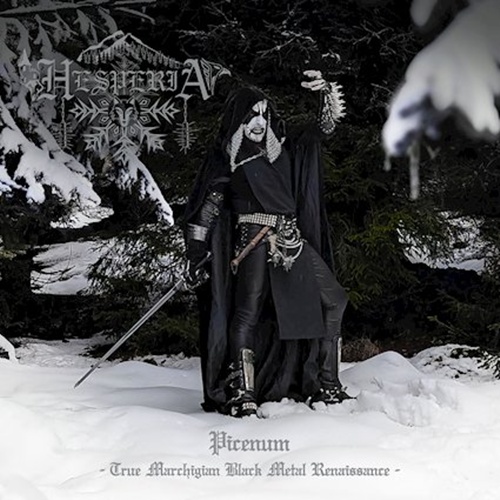
Some records tell the story of a territory, while others seem to dig directly beneath its skin. With Hesperia*,* Hesperus turns the history, folklore, dialect and legends of the Marche region into a journey through icy, ritualistic black metal. “Picenum (True Marchigian Black Metal Renaissance)”, released by Hammerheart Records*, does not simply look back into the past: it brings it back to the surface through chronicles, familiar voices, folk traditions and atmospheres capable of opening genuine gates through time. We spoke with Hesperus about memory, culture, ritual and the next chapter in this dark exploration of the Italic ages.*
First of all, welcome to Il Raglio Del Mulo, and thank you for being here with us. “Picenum (True Marchigian Black Metal Renaissance)” is not simply a new black metal album: it is a journey into the darkest side of the history, folklore and legends of the Marche, from cursed fortresses to the Cave of the Sibyl. When did you decide to turn material so deeply connected to your homeland into a black metal work, and what did you really want to evoke in the listener?
I’ll start by thanking you for this interview request. The main goal is for the listener to experience a cold, wintry, glacial black metal sound, while at the same time being deeply rooted in the place of origin, conveying its truest cultural essence in the most visceral and profound way possible.
The term “Picenum” refers to an ancient territory, predating even the modern concept of the Marche, and the album seems to dig beneath the surface of the region to bring something far more archaic back to light. For Hesperia, is black metal primarily music, historical storytelling, or a way of evoking the memory of a place?
I’d say all three aspects at the same time. Hesperia offers several layers of interpretation, from the most superficial to the deepest. Those who stop at the surface will perceive pagan and atmospheric black metal, presented with the intention of creating the best songs I possibly can; this is the external and purely musical level. Going deeper, the listener can perceive, both in the lyrics and in the music, a sort of “narrative” level, that of telling or singing stories. Then there is the deepest level, the immersive one, which seeks to drag the listener into the time of the narrative, transporting them eras backwards, surrounding them with atmospheres and reconstructing sonic environments around them. Clearly, this also requires the listener to be willing to stop and immerse themselves, and it comes into play during a serious listening experience, rather than the widespread skip mentality of today.
The first part of the album takes us into the darkest history of the region, from the Cursed League of 1375 to Rocca di Pitino and the Roccaccia, complete with war, Church, death and necromancy. When you work with events that really happened and with legends that have been transformed over time, where do you draw the line between historical research and free interpretation?
The first step is to gather as many sources as possible, both on paper and online, obviously within reliable and verified contexts. Then, when sources conflict, which frequently happens, especially when dealing with legends or oral traditions, my personal suggestion comes into play: what particularly struck me and filled my spirit, giving rise to a strong musical and conceptual inspiration.
The story then gives way to folklore with “Lu Lupu Manna”, “La Sdrega” and the other creatures of Marche tradition, while the voice of your grandmother, who sadly passed away, tells some of these legends. What does it mean to you to have a real voice belonging to your family on the album, rather than a simple folkloric reconstruction recorded in the studio?
It means preserving and immortalising something that has been part of me, both genetically and culturally; it means imprinting a piece of local culture onto a medium, the equivalent of a photograph, only in this case we do not look at it, we listen to it. It is a true document, raw and unfiltered, not a song or a narration that I could deliver indirectly with my own voice, or have a guest perform. It bears witness to something that once existed and no longer does, yet remains preserved: the wisdom of folk storytelling, expressed in the precise vernacular of a generation that has come and gone, what it was, but which gradually disappears with time. It is a way of leaving a trace of it and preventing it from disappearing, preserving its memory in the most direct way possible.
The Marche dialect occupies an even more important place on “Picenum” than Italian. In a genre that often seeks languages considered darker or more ritualistic, how powerful can it be to use the language of your own land, with its inflections and musicality, to make black metal something deeply local and, at the same time, universal?
Dialect is the most intimate form of our everyday life, the most familiar and direct way of expressing ourselves, the cultural vehicle most naturally rooted in our origins, so it fits extremely well with a type of music that is very direct, extreme and, precisely, anchored in the rediscovery of our origins. Black metal has proven to be the musical genre that has best been able to embrace and accommodate these cultural nuances. Unfortunately, many people are almost ashamed of their own dialect, something I find completely misplaced, because it is equivalent to being ashamed of your culture or the subculture you come from, and therefore being ashamed of yourself. On the contrary, dialect is an enormous cultural wealth that must be protected, and it is at risk of disappearing.
Musically, you describe the sound as Nineties Medieval Black Metal, but also drawing from Eighties proto-black metal and Renaissance arrangements, while folk and ambient elements are incorporated into the songs. How much do you feel the need to break away from the classic black metal song structure and create something that feels more like one long ritual, where the listener can no longer tell where the riff ends and the atmosphere begins?
When composing, I feel a strong need to open up environmental passages, creating a sort of sonic film that conveys every sensation to the listener, as if they were actually standing in the place where the story takes place, so that the there and then can once again become a HERE and NOW for them. What, on a more superficial level, has a lot in common with film, upon closer examination has a great deal to do with RITUAL. Ritual reiterates and repeats key elements in order to make something from the past, often the distant past, present once again. And in these times, I could say that this represents Hesperia’s way of opening gates through time.
The final part takes us back to the Sibillini Mountains through the journey of Chevalier De la Sale, a real historical figure who, in the fifteenth century, sought to understand what was hidden inside the Cave of the Sibyl. Are you more fascinated by the historical man who chooses to enter the unknown, or by what legend has built around those who entered the cave and never came out again?
Both aspects. De la Sale is both the witness and the writer of those chronicles. He is more than just a man of his time; although he was a medieval knight, he had a very modern approach to documenting events exactly as he saw them or heard them recounted during his real and historical journey through the Sibillini Mountains, Montemonaco and the entrance to the cave. Among the stories told to him is that of the German knight, very similar to Tannhäuser, who comes out but returns to the cave FOREVER because he does not receive the Pope’s forgiveness. Unlike the historical fact and De la Sale’s completely realistic approach, the legend fascinates us because it creates an entire imaginary world, practically initiatory in nature and close, if we want, to the Arthurian sagas and the quest for the Grail, filled with dark difficulties and dangers, and dark beings within the cave, a chthonic world buried beneath the mountain, recounted through stories and legends that A. De la Sale did not believe in. Yet he himself tells us that he did not venture beyond the vestibule of the cave.
“Il Paradiso Della Regina Sibilla Atto II” runs for more than twelve minutes and tells the story of the German knight who, having been denied forgiveness by the Church, remains in the cave forever. It is an almost perfect ending for a black metal work: when you constructed this suite, did you want it to represent a true final descent into darkness, or did the story itself demand such a monumental structure?
I wanted the different stages and the difficulties faced by the knight inside the cave, and therefore within the bowels of Mount Sibilla, to be understood: the bridge over the underground river and the abyss, the powerful wind, the two stone dragons with glowing eyes guarding metal doors that constantly slam shut, and then all the way down to the underground kingdom of the Sibyl, with its fairy handmaidens and inhabitants, amid splendour, grandeur and “lust”, yet concealing horror when, every Friday at midnight, they transform into monsters and snakes. Here we are fully immersed in medieval legend, in the demonisation of sin, but also in what, in hindsight, could be seen as a precursor to what we would later define as Gothic horror, or rather what would eventually develop into what we know today as Gothic horror. The suite had to be this long in order to let all of this breathe fully and transport the listener into the belly of the mountain, only to be swallowed by it forever in the end, just like the German knight, in a union of damnation/bliss. This is the Paradise of the Queen Sibyl, which, however, is described as something that also contains Hell within it.
Hesperia is a project entirely in your hands, with vocals, instruments and effects all handled by Hesperus. After transforming history, folklore, dialect and the landscape of the Marche into “Picenum”, what will be the next territory to explore? Is there already a new legend, place or forgotten story knocking at Hesperia’s door, or do you prefer to let the darkness decide when it is time to return?
Certainly. Since last year, I have already decided on the concept, the title and the track titles. I have also created the new visual imagery, including the graphic side of it, and I have started recording the first two songs. It is the album I am studying the most, both conceptually and musically, and it may seem like something unusual for Hesperia, but in reality it is not. I will continue through the Italic ages; it will be one single story, but with historically documented real figures or creatures from folklore that I have not yet covered, seen from an archaeological/anthropological perspective rather than through fantasy. Hesperia speaks of documents, so this will be real horror, not fantasy, surrounded by the Inquisition and plague. That is all I can reveal for now. Greetings to you, Giuseppe, to the editorial staff and to the readers. Thank you for the opportunity.

