
ENGLISH VERSION BELOW: PLEASE, SCROLL DOWN!
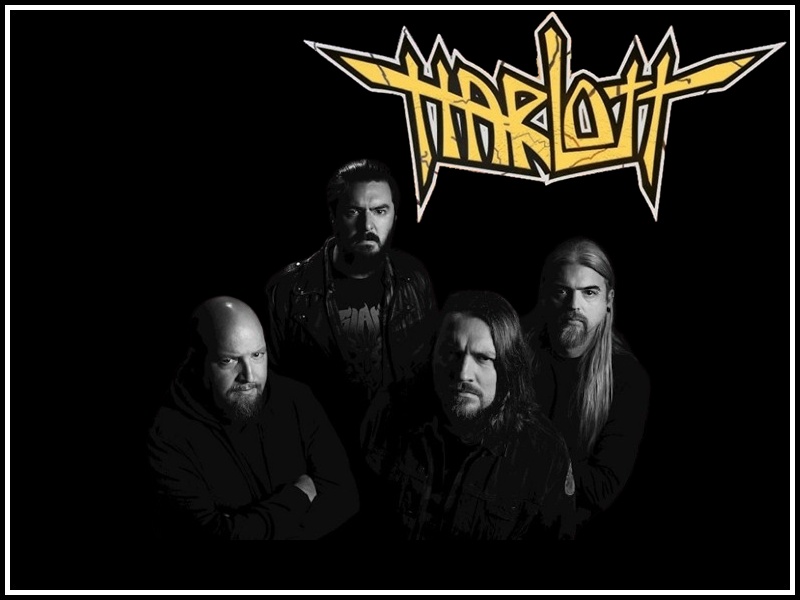
Il thrash metal deve essere pericoloso, e gli Harlott non sembrano avere alcuna intenzione di renderlo più innocuo. Sei anni dopo “Detritus Of The Final Age”, la band australiana torna con “Exsequiis”, un assalto senza tregua fatto di velocità, precisione e violenza old-school, pubblicato da Metal Blade Records. Abbiamo parlato con Andrew, Leigh e Tom del processo di scrittura della band, del ruolo delle loro influenze, del basso sempre più protagonista e della rabbia che nasce dalla realtà e alimenta il loro disco più aggressivo di sempre.
Prima di tutto, bentornati su Il Raglio Del Mulo e grazie per essere nuovamente con noi. Sei anni dopo “Detritus Of The Final Age”, tornate con “Exsequiis”, un album che suona più veloce, più feroce e più sicuro di sé, sviluppando ulteriormente alcune delle idee esplorate nel disco precedente: quando hanno iniziato a circolare i primi riff per questo album, sapevate già di voler realizzare qualcosa di più aggressivo, oppure sono state le canzoni stesse a spingere gradualmente gli Harlott in quella direzione?
Andrew: Le canzoni tendono per fortuna a scriversi da sole, ma sono sempre molto consapevole del fatto che la canzone d’apertura debba essere una dichiarazione d’intenti per l’album e penso che “Void” (e la sua traccia introduttiva) sia un buon esempio di quello che ci si può aspettare. È un buon mix di ferocia e melodia e utilizza alcune delle idee che avevamo esplorato in “Detritus Of The Final Age”, ed è stata la prima canzone scritta per “Exsequiis”. Da lì in poi tutto il resto è andato al suo posto piuttosto facilmente, con solo alcune canzoni che hanno avuto bisogno di essere domate a forza.
Gli Harlott sono sempre stati ossessionati dalle armi fondamentali del thrash metal: velocità, oscurità, violenza e riff che ti fanno venire voglia di spaccarti la testa contro il muro. Quando un nuovo riff entra in sala prove, cosa deve avere prima che possiate definirlo un vero riff degli Harlott, e cosa distingue un riff micidiale da uno che finisce semplicemente nel cestino?
Andrew: Sono un grande sostenitore dell’idea che i riff debbano essere abbastanza belli da reggersi in piedi da soli, indipendentemente da come vengono utilizzati. Un riff di strofa avrà senza dubbio le voci sovrapposte, ma questo non significa necessariamente che possa essere spogliato e semplificato. Anche i riff sotto gli assoli sono a volte molto più elaborati di quanto dovrebbero essere e, riascoltando l’album e sentendo quanto alcuni di essi siano sepolti nel mix, penso che forse in alcuni casi ci abbia messo un po’ troppo impegno.
“Reign In Blood” è la vostra risposta indiscutibile quando si parla dello standard aureo del thrash, e “Exsequiis” ha quella stessa produzione brutalmente immediata in cui ogni strumento sembra concepito per arrivare dritto in faccia all’ascoltatore: quando stavate definendo il sound di questo album, inseguivate un particolare riferimento sonoro oppure cercavate semplicemente di realizzare la versione più violenta possibile degli Harlott?
Andrew: Sono piuttosto negato quando si tratta di sapere quali suoni funzioneranno e quali no, e lascio la magia al nostro ingegnere Julian Renzo, che ha l’esperienza necessaria per sapere cosa debba essere catturato da ogni singolo elemento. Io uso sempre indicazioni di comodo come “Voglio che suoni onesto” e “Questa parte deve essere enorme” e in qualche modo lui riesce a decifrare le mie stronzate e a trasformarle esattamente in quello che avevo in mente. È stato fondamentale nel portarmi fuori dalla mia zona di comfort per gran parte dell’album e penso che il risultato finale parli da solo.
Qui c’è parecchio materiale da sviscerare per gli ascoltatori di thrash più maniaci, con lampi di Sepultura dell’era “Arise”, Overkill anni ’90, la tecnicità alla Testament e cori da gang vocal tipici del crossover. Quanto siete consapevoli di questi riferimenti mentre scrivete? Vi capita mai che qualcuno nella band dica: “Questo suona come gli Slayer”, “Questa è roba da Overkill” oppure “Qui ci vuole più Sepultura”, o queste influenze vengono fuori semplicemente in modo naturale perché fanno parte del vostro DNA musicale?
Andrew: Le influenze sono spesso molto presenti nel processo, oppure molto evidenti nel risultato, e siamo abbastanza fortunati da essere cresciuti in un’epoca in cui tutte queste influenze erano disponibili, con un catalogo enorme a disposizione. I Testament hanno avuto un’enorme influenza sulle strutture dei riff e sui pattern di pennata che utilizzo, e do gran parte della colpa a “The Legacy”, che è stato il primo album che abbia mai imparato a suonare dall’inizio alla fine. “Years Of Decay” degli Overkill è stata una masterclass di costruzione e articolazione creativa, mentre gli Slayer, ovviamente, hanno una tale predominanza sonora che desidero assolutamente quando ascolto del thrash puro.
Una delle cose più coinvolgenti di “Exsequiis” è il lavoro di chitarra, soprattutto il dialogo costante tra le due. Come decidete quando una canzone ha bisogno di un assolo selvaggio, dritto alla gola, e quando invece serve qualcosa di più melodico, tecnico o completamente fuori di testa? E quando ci sono due chitarristi coinvolti, quanta sana competizione finisce inevitabilmente per rendere gli assoli ancora più folli?
Leigh: Ho utilizzato diverse strategie per gli assoli di questo album. Per gli assoli più lunghi, dove la parte ritmica era semplice, generalmente cercavo di utilizzare ogni tecnica possibile per mantenerli interessanti, e questo poteva trasformarsi in un lungo viaggio prima che tutto prendesse davvero forma. Per alcuni degli assoli più brevi e veloci, ci sediamo semplicemente e tiriamo fuori un mucchio di take improvvisate, scegliendo le migliori. In questi casi, penso più al feeling che alle note. Alcuni assoli, nati dal continuo scambio di idee con me stesso e con gli altri, hanno una rabbia autentica e crescente che, in realtà, ha funzionato meglio del pensarci troppo. A volte bisogna andare a tutta.
Andrew: Lascio il lavoro chitarristico più complesso a Leigh, visto che è di gran lunga il musicista migliore…
Il basso ha una presenza sorprendentemente potente in “Exsequiis”, con il playing di Tom che diventa particolarmente evidente in diverse sezioni invece di limitarsi a rimanere nascosto sotto le chitarre. Era qualcosa che volevate mettere specificamente in risalto questa volta, e dare più spazio al basso ha cambiato il modo in cui la band ha affrontato riff e arrangiamenti?
Tom: Il basso ha spesso una presenza più defilata nel thrash metal, seguendo le chitarre e contribuendo a riempire le frequenze basse. Suono un basso a 5 corde, che non è uno strumento tradizionalmente presente nel thrash, e volevo utilizzare il più possibile il Si basso per fare qualcosa di un po’ diverso. Il nostro produttore ha sostenuto pienamente questa scelta e ha dissipato il nostro timore che, facendo così, il basso avrebbe perso dinamica e sarebbe diventato troppo impastato nel mix. Inoltre, le note che compongono i riff di “Exsequiis” sono complementari alla possibilità di utilizzare le note più basse a cui si può accedere grazie alla quinta corda. Alcune delle canzoni di “Exsequiis” sono piuttosto impegnative da suonare, e registrare il basso in studio è stato difficile, considerato il livello molto alto a cui lavora il nostro produttore. Dopo un lungo processo di registrazione e mantenendo quello standard, il risultato è stato una traccia di basso incredibilmente potente che volevamo fosse molto presente su “Exsequiis”. Tornando ai riff di questo album, ci sono anche sezioni scritte affinché il basso avesse il suo momento invece di seguire costantemente le chitarre. Un esempio è la sezione centrale di “Kleptogenesis”. Godetevela!
Quando vi ho intervistato nel 2020 a proposito di “Detritus Of The Final Age”, mi avete raccontato che lavorare al di fuori della vostra abituale routine di songwriting era stata un’esperienza sorprendentemente gratificante, soprattutto dopo aver coinvolto musicisti esterni nel processo di scrittura. Guardando indietro, quell’esperimento ha cambiato il modo in cui scrivete, e riuscite a sentire qualche traccia di quella lezione nel modo in cui è nato “Exsequiis”?
Andrew: Ci sono sicuramente tracce dei progressi fatti con “Detritus Of The Final Age” e questa volta è stato più facile mettere insieme le canzoni, sapendo di avere qualche asso in più nella manica su cui poter contare. Ho lavorato con un mio caro amico, Fabien, per scrivere “Endling”, ed è stato un vero piacere mettere insieme una canzone piuttosto diversa dal nostro solito, ma che fosse comunque inequivocabilmente Harlott.
Il thrash è sempre stato al suo meglio quando ha qualcosa di reale contro cui scagliarsi, e “Exsequiis” punta dritto contro disinformazione, divisione sociale, ossessione per il mondo online e la realtà sempre più assurda che ci circonda. C’è stato un momento, un evento o qualche follia contemporanea in particolare che vi ha fatto pensare: “Fanculo, dobbiamo scrivere una canzone su questa cosa”, e oggi la realtà offre materiale migliore per il thrash di quanto potrebbe mai fare la finzione?
Andrew: Non è tanto che senta il bisogno di scrivere una canzone su queste cose, quanto il fatto che sia molto facile trovare materiale di partenza quando cerco qualcosa su cui scrivere parole rabbiose. Ammetto che gli ultimi anni sono stati piuttosto divisivi e la saturazione dei social media ha portato alla luce una quantità enorme di opinioni che, in condizioni normali, probabilmente non mi sarebbero mai arrivate davanti. Ci sono un sacco di persone là fuori con pochissime informazioni e ancora meno capacità di comprenderle, ma con un eccesso osceno di spavalderia per urlare con sicurezza le loro opinioni mal informate e, francamente, di cattivo gusto. Sarebbe divertente se non fosse così estenuante.
Dopo sei anni senza un nuovo full-length, “Exsequiis” merita di essere scatenato davanti a un pubblico, preferibilmente al massimo volume e con un pit dall’aspetto pericoloso davanti al palco: cosa potete dirci dei prossimi programmi live degli Harlott, e ci sono già tour, date europee o festival in programma dove i fan potranno finalmente ascoltare “Exsequiis” alla massima velocità?
Andrew: Arriveremo in Europa per qualche settimana a metà settembre per celebrare l’uscita e suonare una serie di concerti tra Germania, Polonia, Austria, Repubblica Ceca, Lussemburgo, Paesi Bassi e Belgio, compresa la partecipazione ad alcuni festival come Nuclear Intervention e Hellfort. Abbiamo riempito la scaletta con canzoni che coprono l’intero arco della nostra discografia, oltre ad alcuni brani scelti dalla nuova uscita. Date un’occhiata ai nostri social per le date dei concerti e i link per i biglietti!
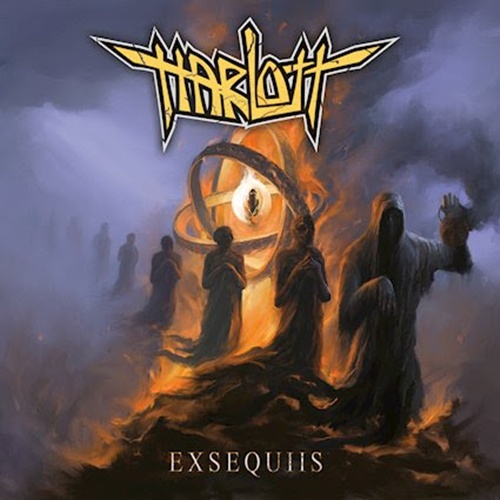
Thrash metal is supposed to be dangerous, and Harlott clearly have no intention of making it any safer. Six years after “Detritus Of The Final Age”, the Australian band return with “Exsequiis”, a relentless assault of speed, precision and old-school violence, released through Metal Blade Records. We caught up with Andrew, Leigh and Tom to talk about the band’s songwriting process, the role of their influences, the increasingly prominent bass work and the real-world anger fuelling their most aggressive record yet.
First of all, welcome back to Il Raglio Del Mulo, and thanks for joining us again. Six years after “Detritus Of The Final Age”, you return with “Exsequiis”, an album that sounds faster, harsher and more confident while pushing further into some of the ideas explored on the previous record: when the first riffs for this album started flying around, did you already know you wanted to make something more aggressive, or did the songs themselves gradually push Harlott in that direction?
Andrew: The songs tend to write themselves thankfully, but I am always very conscious of making sure the opening song is a statement for the album and I think “Void” (and its intro track) is a good example of what to expect. It’s a good blend of savagery and melody and utilises some of the ideas we explored in “Detritus Of The Final Age”, and it was the first song that was written for “Exsequiis”. From there everything else fell into line pretty easily, with only a few songs that needed wrestling into submission.
Harlott have always been obsessed with the basic weapons of thrash metal: speed, darkness, violence and riffs that make you want to smash your head against the wall. When a new riff enters the rehearsal room, what does it need to have before you can call it a proper Harlott riff, and what separates a killer riff from one that simply gets thrown in the bin?
Andrew: I am a big believer in riffs being good enough to stand alone regardless of what they are used for. A verse riff will no doubt have vocals layered all over, but that doesn’t always mean it can be stripped back and simplified. Even the riffs under solos are sometimes far more involved than they need to be, and listening back to the album and hearing how buried in the mix some of them are, I do think that I may have put a little bit too much effort into some of them.
“Reign In Blood” is your unquestionable answer when it comes to the gold standard of thrash, and “Exsequiis” has that same kind of brutally immediate production where every instrument seems designed to hit the listener directly in the face: when you were shaping the sound of this album, were you chasing a particular sonic reference, or were you simply trying to make the most violent version of Harlott possible?
Andrew: I am pretty useless when it comes to knowing what tones will and won’t work, and I leave the magic up to our engineer Julian Renzo, who has the experience to know what needs to be captured from each individual. I always use cop-out prompts like “I want it to sound honest” and “This section needs to be big”, and somehow he deciphers my gibberish into exactly what I was after. He was instrumental in taking me out of my comfort zone for much of the album, and the finished product speaks for itself, I think.
There is plenty here for obsessive thrash listeners to dissect, with flashes of Arise-era Sepultura, 90s Overkill, Testament-style technicality and crossover gang vocals. How conscious are these references while you are writing? Is there ever a moment when someone in the band says, “That sounds like Slayer”, “That’s pure Overkill” or “We need more Sepultura here”, or do these influences simply come out naturally because they are part of your musical DNA?
Andrew: The influences are often very present in the process, or very apparent in the product, and we are lucky enough to have grown up in a time when all of those influences were available to us with an enormous catalogue. Testament are hugely influential to the riff structures and picking patterns that I utilise, and I blame most of that on “The Legacy”, which was the first album I ever learnt to play start to finish. Overkill’s “Years Of Decay” was a masterclass in creative structuring and phrasing, and of course Slayer just have a tonal dominance that I absolutely crave when listening to pure thrash.
One of the most addictive things about “Exsequiis” is the guitar work, especially the constant dialogue between the two guitars. How do you decide when a song needs a savage, straight-to-the-throat solo and when it needs something more melodic, technical or completely unhinged? And when two guitarists are involved, how much friendly competition inevitably ends up making the solos crazier?
Leigh: I used a number of different strategies for the solos on this album. For the longer solos where the rhythm was simple, I would generally try and use every technique I could find to keep it interesting which could be a long journey before it really comes together. Some of the shorter, faster solos, we just sit down and smash out a bunch of improv takes, picking out the best. In these cases, I think more about the vibe than the notes. Some solos, from going back and forth with ideas with myself and others, have a genuine built-up anger about them which actually worked better than overthinking them. Sometimes you gotta go full Kez.
Andrew: I leave the complex guitar work to Leigh, as he is the vastly superior musician…
The bass has a surprisingly powerful presence on “Exsequiis”, with Tom’s playing becoming particularly noticeable in several sections instead of simply hiding underneath the guitars. Was that something you specifically wanted to emphasise this time, and did giving the bass more room change the way the band approached the riffs and arrangements?
Tom: The bass often has a lower-profile presence in thrash metal, shadowing the guitars and helping to fill the lower frequencies. I play a 5-string bass which is not traditionally found in thrash and wanted to use the low-B as much as I could to make something a bit different. Our producer was highly supportive of this and dispelled our concern that by doing this the bass would lose it dynamics and become too woofy in the mix. Further to this, the notes that make up the riffs on “Exsequiis” are complimentary to letting me use the lower notes that you can access with the fifth string. Some of the songs on “Exsequiis” are quite challenging to play, and tracking the bass in the studio was difficult given the very high standard that our producer works to. From the lengthy recording process and standard being adhered to, the result was an incredibly powerful bass track that we wanted to be very present on “Exsequiis”. Coming back to the riffs on this album, there are also sections that were written for the bass to have its moment instead of constantly following the guitars. An example is the middle section of “Kleptogenesis”. Enjoy!
When I interviewed you back in 2020 about “Detritus Of The Final Age”, you told us that working outside your usual songwriting routine had been a surprisingly rewarding experience, especially after bringing outside musicians into the writing process. Looking back now, did that experiment change the way Harlott write, and can you hear any trace of that lesson in the way “Exsequiis” was created?
Andrew: There are definitely traces of the progress we made with “Detritus Of The Final Age” and it felt easier putting the songs together this time around knowing we had a few more tricks up our sleeve that we could depend on. I worked with a good friend Fabien to write “Endling” and it was a real joy putting together a song that was quite different from the norm for us, but still unequivocally Harlott.
Thrash has always been at its most dangerous when it has something real to attack, and “Exsequiis” goes straight for disinformation, social division, online obsession and the increasingly absurd reality surrounding us. Was there a particular moment, event or piece of contemporary madness that made you think, “Fuck this, we need to write a song about it”, and does reality now provide better material for thrash than fiction ever could?
Andrew: It’s not so much that I need to write a song about these things so much as it is very easy to find source material when I’m looking for something to write angry words about. I will admit that the last few years have been quite divisive and the saturation of social media has exposed opinions en masse that ordinarily might not have made their way in front of me. There are a lot of people out there with very little information and even less comprehension, but an obscene excess of bravado to shout confidently their badly informed and frankly distasteful opinions. It would be funny if it wasn’t so exhausting.
After six years without a new full-length, “Exsequiis” deserves to be unleashed properly in front of a crowd, preferably at maximum volume and with a dangerous-looking pit in front of the stage: what can Harlott reveal about the upcoming live plans, and are there already tours, European dates or festivals in the works where fans will finally get to hear “Exsequiis” at full speed?
Andrew: We are coming to Europe for a few weeks mid-September to celebrate that launch and play a selection of shows across Germany, Poland, Austria, Czech, Luxembourg, Netherlands, and Belgium which includes a couple of festival performances at Nuclear Intervention and Hellfort. We have loaded the setlist with songs from the span of our entire catalogue and some choice cuts from the new release.
Check out our social media for show dates and ticket links!
 Il Raglio del Mulo