
ENGLISH VERSION BELOW: PLEASE, SCROLL DOWN!
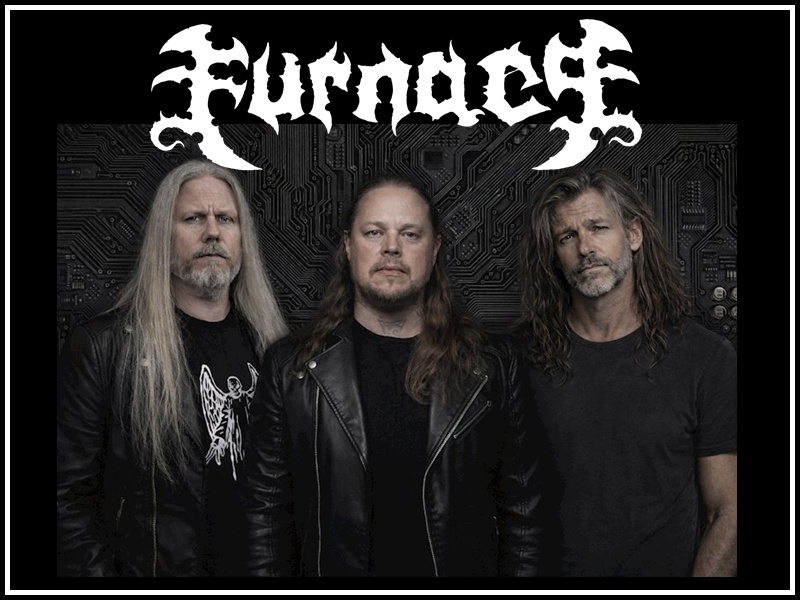
I Furnace tornano con “Echoes Of A Distant Future”, settimo full-length della band melodic death metal svedese guidata da Rogga Johansson e Peter Svensson, pubblicato via Emanzipation Productions. Il disco prosegue la narrazione introdotta con “Trojan Hearse”, ampliando la saga distopico-sci-fi della band fatta di dominio alieno, fuga dall’aldilà e una Terra del futuro ormai al collasso. Musicalmente, i Furnace continuano a fondere death metal old school, venature gothic e strutture progressive, con un approccio fortemente cinematografico che trasforma l’album in una sorta di colonna sonora da action movie oscuro. In questa intervista abbiamo parlato con il gruppo del nuovo capitolo, del concept e dell’evoluzione della loro saga in continuo sviluppo.
Saluti dalle profondità più gelide e grazie per avermi dedicato il vostro tempo, “Echoes Of A Distant Future” è un altro capitolo scolpito nella roccia all’interno della vostra saga in continua espansione. Come presentate questa nuova discesa nella distopia a chi vi segue fin dagli inizi, e cosa ha dato il via a questa visione specifica?
Peter – Saluti e grazie per esserti immerso nel mondo dei Furnace. Il nuovo album segue la nostra tradizione di concept album a tutti gli effetti. Abbiamo cercato di muoverci in sfere diverse e di toccare temi differenti nei vari dischi. I primi tre album formavano una sorta di trilogia (anche se i primi due erano stati scritti come lavori a sé stanti, mentre il terzo è stato concepito come conclusione e anche come collegamento delle due storie in un unico arco narrativo). Poi abbiamo pubblicato il triplo CD “The Casca Trilogy”. Quando abbiamo iniziato con “Trojan Hearse”, mi era chiaro che la storia poteva espandersi ulteriormente, ma per mantenere le cose fresche abbiamo deciso di mischiare la cronologia degli album, inserendo “Eternally Enthroned”, un concept completamente scollegato e high fantasy, dopo “Trojan Hearse”. E ora è il momento del secondo capitolo della saga “Trojan Hearse”. Il concept è nato quando ho capito che, se il tempo si ferma nell’aldilà, allora sulla Terra il tempo continua ad avanzare, quindi mentre il protagonista era intrappolato nell’aldilà, al suo ritorno sarebbe finito nel futuro (“Echoes Of A Distant Future”). L’ambientazione futuristica è stata fortemente influenzata dal film “Essi Vivono”. È anche una sorta di commento sulla nostra società. Anche se il caos sulla Terra è principalmente causato da alieni ai vertici del potere, non ho dubbi che noi umani saremmo abbastanza stupidi da creare lo stesso caos e la stessa distruzione da soli. Senza spoilerare troppo, posso dire che ci sarà ancora un altro album nella saga “Trojan Hearse”.
Riprendendo direttamente da “Trojan Hearse”, la narrazione si immerge in fuga, dominio alieno e resistenza. Quanto è importante la continuità nel vostro storytelling e affrontate ogni album come una discesa autonoma o come parte di una spirale più grande e inevitabile?
Peter – “Trojan Hearse” non era stato scritto fin dall’inizio come l’inizio di una trilogia, ma è diventato evidente una volta completato che ci sarebbe stato altro materiale da esplorare, vedi la prima risposta. Così ho iniziato a sviluppare la struttura di base di “Echoes Of A Distant Future”. Una volta definito lo schema, ho trattato la storia come una storia a sé stante, però tenendo d’occhio gli elementi che volevo sviluppare nell’album finale, così da farla risultare naturale quando arriverà quel disco. L’album “Eternally Enthroned” era una storia autonoma e ci sarà anche un altro concept completamente diverso prima della conclusione finale della saga “Trojan Hearse”.
C’è una forte identità svedese classica nel vostro sound, ma filtrata attraverso strutture progressive e una tensione più oscura e quasi gothic. Come bilanciate l’istinto grezzo del death metal old school con questo approccio più ampio e cinematografico?
Rogga – L’hai descritta perfettamente, è fondamentalmente death metal old school e gothic old school mescolati con un approccio più progressivo. Penso soprattutto che la batteria attacchi i pezzi in modo diverso rispetto al death metal più classico o al gothic tradizionale. È quasi un approccio più heavy metal, e alla fine è questo che crea il suono dei Furnace, secondo me.
L’influenza di band come Edge Of Sanity e il peso oscuro dei Paradise Lost si percepisce senza mai dominare la vostra identità. Come assorbite queste eredità senza rimanere intrappolati nell’omaggio?
Rogga – Possiamo solo scrivere quello che sentiamo davvero, e poi essere contenti che alla fine suoni come qualcosa di nostro. Non ho mai provato a copiare nulla, ho solo lasciato che tutto ciò che ascolto mi aiutasse a creare qualcosa di mio, e con i Furnace non penso che suoniamo davvero come nessun’altra band, il che è una cosa molto bella. Detto questo, sono sicuro che ci siano parti qua e là che possano ricordare le band che hai citato.
Rogga sei un moto perpetuo dell’underground death metal svedese da decenni. In che modo la tua esperienza influenza il songwriting nei Furnace e come eviti che il fuoco creativo diventi routine?
Rogga – I Furnace sono una band molto facile per scrivere musica, mi basta accordare la chitarra in D e lasciare che scorra tutto. Qualsiasi cosa scriva, in qualsiasi genere, può essere adattata e trasformata in un brano dei Furnace. È come se la band assorbisse ogni riff e ogni melodia per farne qualcosa di proprio. È molto divertente lavorare su questo progetto, spesso scrivo due o tre pezzi in mezz’ora quando mi ci metto.
L’atmosfera del disco è stratificata e immersiva, a tratti quasi soffocante. In studio c’è stato un lavoro consapevole per rendere la produzione più narrativa che semplicemente aggressiva?
Peter – Penso che tutti i nostri album siano un po’ come “film d’azione” con una colonna sonora melodic death metal. Ci sono molti testi e Rogga li interpreta in modo molto cinematografico a volte. Sono contento che tu abbia colto l’atmosfera, volevamo creare una sensazione di futuro distopico. Sono molto orgoglioso del piccolo soundscape alla fine di “Refracted City Lights”.
Il concetto di un uomo che fugge dall’Inferno per ritrovarsi in un futuro distopico controllato suggerisce un ciclo più che una vera fuga. È una visione nichilista o c’è ancora una forma di ribellione nella storia?
Peter – In realtà c’è una frase nei testi quando il protagonista si trova davanti all’esecuzione: “Vedo l’assurdità di questa situazione; sono tornato dalla morte per affrontare la condanna”. Non volevo che la storia sembrasse un ciclo, ma piuttosto una lunga e incredibile avventura. Detto questo, il mondo dei Furnace è comunque intriso delle mie visioni misantropiche, se ci penso. “Black Stone Church” parla di un culto che stermina l’umanità, “Casca” si chiude con la presa di coscienza che l’uomo non smetterà mai di fare guerre, e “Trojan Hearse” include la parte in cui Dio è stremato dal caos sulla Terra. Quando si arrende, nessuna anima può più passare dall’aldilà, quindi l’aldilà si sovraffolla. I demoni dell’Inferno si annoiano e salgono sulla Terra a tormentare ulteriormente l’umanità. Beh, i demoni e gli alieni di “Echoes Of A Distant Future” si assomigliano parecchio, con la differenza che gli alieni vogliono sfruttare le risorse della Terra per il loro guadagno (e noi, stupidi umani, glielo lasciamo fare, ovviamente…).
Il death metal svedese è da sempre legato a un suono e a un’etica molto precisi, dall’era Sunlight fino alle evoluzioni moderne più pulite. Dove si collocano oggi i Furnace in questa linea?
Rogga – Penso che i Furnace possano stare un po’ ovunque, proprio perché sono un po’ diversi. Abbiamo il feeling old school ma anche una componente più progressiva, e sia melodia che pesantezza. Spero che più gente scopra i Furnace, perché penso possano piacere a molti tipi diversi di ascoltatori.
Guardando oltre “Echoes Of A Distant Future”, il prossimo capitolo continuerà ancora questa storia o ci sarà una rottura narrativa e sonora capace di ridefinire i Furnace?
Peter – Beh, ci sarà prima un altro album concept con una storia completamente diversa, forse in uscita il prossimo anno?! E poi concluderemo la saga “Trojan Hearse”. Dopo abbiamo in programma un altro grande release, ma ne parleremo più avanti. Per noi è importante mantenere le cose fresche, ed è per questo che non voglio restare bloccato in una sola storyline o con gli stessi personaggi. Cerchiamo anche di inserire elementi diversi nei vari dischi, ad esempio guest a voce e chitarra.
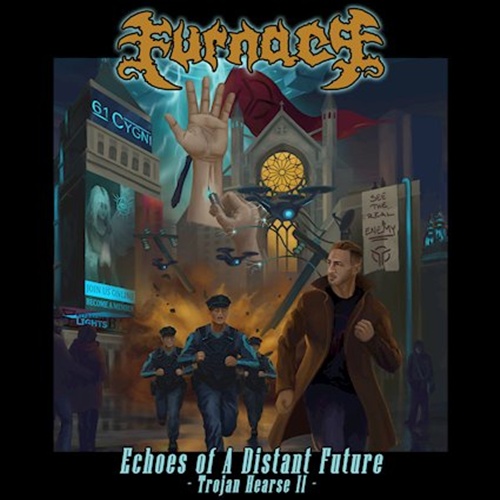
Furnace return with “Echoes Of A Distant Future”, the seventh album from the Swedish death metal outfit led by Rogga Johansson and Peter Svensson, released via Emanzipation Productions. The record continues the “Trojan Hearse” storyline, pushing further into their dystopian sci-fi concept of alien control, afterlife escape and a collapsing future Earth. Musically, the band sticks to their mix of old-school death metal, gothic darkness and progressive edge, delivered with a strong cinematic feel. In this interview we talk about the new chapter, the concept behind it, and how Furnace keep their saga moving without losing their underground identity.
Hails from the cold depths and respect for your time, “Echoes Of A Distant Future” feels like another chapter carved in stone within your ever-expanding saga. How do you present this new descent into dystopia to those who have followed Furnace since the early days, and what set this specific vision in motion?
Peter – Hails and thank you for digging deep into the world of Furnace. The new album follows our tradition of full-blown concept albums. We have tried to move around in different spheres and touch different topics on the different albums. The first three albums formed sort of a trilogy (well, actually the first two were written as stand-alone but the third was written as a conclusion and also combining the two stories into one story arc). Then we released the triple CD “The Casca Trilogy”. When we started on “Trojan Hearse”, I felt that the story could be expanded to more albums, however in order to keep things fresh we decided to mix up the album chronology, so we put in “Eternally Enthroned”, which is a totally unrelated high fantasy concept, after “Trojan Hearse”. And now it’s time for the second album in the “Trojan Hearse” saga. The concept came after I realized that if time stands still in the afterlife then time on Earth would move forward, so while the protagonist was trapped in the afterlife, when he finally returned he would arrive in the future (“Echoes Of A Distant Future”). The story setting in the future was heavily influenced by the movie “They Live”. It is also sort of a commentary on our society. Even if the chaos on Earth is mainly caused by aliens in power positions, I have no doubt that we humans are stupid enough to create that chaos and destruction on our own. Without spoiling anything, I can disclose that there will be one more album in the “Trojan Hearse” saga.
Picking up directly from “Trojan Hearse”, the narrative dives into escape, alien domination and resistance. How crucial is continuity in your storytelling, and do you approach each album as a standalone descent or as part of a larger, inevitable spiral?
Peter – “Trojan Hearse” was not immediately written as the beginning of a trilogy, however it became evident when it was done that there would be more material to explore, see the first answer. So I started to flesh out the basic outline for “Echoes Of A Distant Future”. Once the outline was done I sort of treated the story more as its own story, however I kept an eye on things I wanted to explore in the final album so it would seem natural once that album drops. The album “Eternally Enthroned” was a stand-alone story, and there will also be another, completely different concept, released before the final conclusion to the “Trojan Hearse” saga.
There’s a strong sense of classic Swedish DNA in your sound, yet filtered through progressive structures and a darker, almost gothic tension. How do you balance the raw instinct of old-school death metal with this more expansive and cinematic approach?
Rogga – You really described it perfectly there, it’s basically old-school death metal and old-school gothic metal mixed up with a more progressive feel. Mainly I think the drumming attacks the songs in a different way than maybe more classic death metal or gothic drums would do. It’s almost more a heavy metal approach there, and that in the end makes for the sound Furnace has, I think.
The influence of bands like Edge Of Sanity and the shadowy weight of Paradise Lost can be felt without ever dominating the identity of Furnace. How do you absorb these legacies without becoming trapped in homage?
Rogga – We can only write what we feel really, and then be happy that it turns out rather our own thing. I’ve never tried to copy anything, just tried to let it all make me do my own thing, and with Furnace I don’t think that we sound particularly like any other band at all, which is really cool. With that said, I’m sure there are parts here and there that maybe remind of the bands you mention.
Rogga you are a relentless force within the Swedish death metal underground for decades. How does your experience shape the songwriting process within Furnace, and how do you keep the creative fire from turning into routine?
Rogga – Furnace is such an easy band to write for really, I just make sure the guitar is tuned in D and then let it flow. Anything I come up with in any genre really can then be tweaked and fit Furnace easily, it’s like this band wants to absorb every riff and melody and make it into a Furnace part. So it’s very fun to work on this band, often I write two or three songs in just half an hour when I sit down with it to work.
The album’s atmosphere feels layered and immersive, almost suffocating at times. Was there a conscious effort in the studio to push the production toward something more narrative-driven rather than purely aggressive?
Peter – I think all our albums are sort of “action movies” with a melodic death metal soundtrack. There is a lot of lyrics and Rogga delivers them quite cinematic at times. I am glad that you picked up on the atmosphere, we wanted to create something that would generate a feeling of a dystopic future. I am quite proud of the little soundscape at the end of “Refracted City Lights”.
The concept of a man escaping Hell only to face a controlled dystopian future suggests a cycle rather than an escape. Is this a reflection of a more nihilistic worldview, or is there still a trace of defiance embedded in the story?
Peter – Well, there is actually one line in the lyrics when the protagonist is facing execution: “I see the absurdity of this situation; I’ve returned from the dead to face termination”. I did not really intend the story to feel like a cycle but rather like one long unbelievable adventure. With that being said, the world of Furnace is steeped in my misanthropic views when I come to think of it. “Black Stone Church” is about a cult killing off mankind, “Casca” ends with the realisation that mankind will never stop wars, and “Trojan Hearse” has the section about God being burnt out from all the chaos on Earth. When he gives up, no souls can pass from the afterlife, which means that it gets too crowded there. The devils in Hell get bored and move up to Earth to torment us further. Well, the devils and the aliens of “Echoes Of A Distant Future” quite resembled each other, with the difference that the aliens want to exploit the Earth’s resources for their own gain (and we, stupid humans, let them of course…).
Swedish death metal has long been associated with a very specific sound and ethos, from the Sunlight era to the more polished modern wave. Where do Furnace position themselves within this lineage today?
Rogga – I think Furnace fits in just about anywhere there really, just because it’s a bit different. We have the old-school feel but also with a more progressive thing to it, and both melody and heaviness. I hope that more people will come across Furnace, as I think it could be something that fits a lot of different people.
Looking beyond “Echoes Of A Distant Future”, will the next chapter continue this storyline even further into the void, or do you foresee a rupture in the narrative and sound that could redefine Furnace once again?
Peter – Well, there will be another concept album with a completely different story first, maybe released next year?! And then we will conclude the “Trojan Hearse” saga. After that we have plans for another massive release, but more on that in the coming years. It is quite important for us to keep things fresh, this is why I don’t want to get locked into a specific story arc or characters. We also try to include different elements in the different releases, guests on vocals and guitar for example.

