

ENGLISH VERSION BELOW: PLEASE, SCROLL DOWN!
Trent’anni di carriera e ancora tanta creativa: i Solace restano una delle realtà più riconoscibili dell’underground heavy americano. Con Justin Skyler Daniels e Tommy Southard alla guida del progetto, la band del New Jersey si prepara a pubblicare “Fading Failing Ruin” via Magnetic Eye Records, confermando una volta di più una visione personale, distante da mode e schemi. Tra strutture fuori dagli standard, atmosfere apocalittiche e una storia fatta di evoluzioni continue, abbiamo parlato con la band del presente e del passato che li ha resi ciò che sono oggi.
Prima di tutto, grazie per essere con noi, Justin e Tommy benvenuti su Il Raglio Del Mulo. Il nuovo album “Fading Failing Ruin” uscirà il 3 luglio per Magnetic Eye Records e da poco avete pubblicato il singolo finale “Malengine (The Scaffold)”: descrivereste questo disco come dichiarazione d’identità della band in questa fase della vostra carriera, soprattutto rispetto ai trent’anni di percorso alle spalle?
J: Mi piace ciò che siamo diventati. Il nostro suono e la nostra scrittura si sono evoluti, ma alla base è ancora chiaramente Solace. Probabilmente anche perché non vogliamo continuare a scrivere sempre la stessa canzone e perché i nuovi membri hanno portato idee diverse e nuove prospettive.
T: Questo è semplicemente il proseguimento di ciò che abbiamo sempre fatto. Cerchiamo di scrivere riff e ritornelli che troviamo interessanti. Qualcosa che ci piacerebbe ascoltare anche se non l’avessimo scritto noi.
“Malengine (The Scaffold)” si distingue per una struttura insolita e un andamento ritmico in continua evoluzione: invece del classico approccio alla scrittura, come avete costruito questo brano dal punto di vista compositivo, soprattutto quando vi siete resi conto che non seguiva schemi di tempo convenzionali?
J: Il modo tipico in cui costruiamo i brani dei Solace è che Tommy porta un riff o una serie di riff e poi li proviamo in sala prove, dove tutti contribuiamo con idee su struttura, dinamica o armonie. “Malengine” è stato particolarmente difficile da mettere insieme perché il riff principale è in una metrica davvero insolita. Ma è proprio questo che lo rende speciale. Non abbiamo mai abbracciato la convenzionalità nella scrittura dei nostri brani.
T: Io non scrivo mai in modo “convenzionale”. Non siamo mai stati una band da strofa, ritornello, strofa, ritornello. Cerco sempre di creare idee che non debbano adattarsi a uno schema pop. Ci è voluto tempo per mettere insieme il brano, ma abbiamo lavorato duramente come band per incastrare tutti i pezzi del puzzle, le metriche strane, i riff e i suoni diversi. Rappresenta perfettamente ciò che sono i Solace. Ha dentro tutti gli elementi che ci definiscono.
Il brano attraversa anche diverse fasi emotive, passando dalla pesantezza a texture quasi allucinatorie: come decidete quando una composizione deve rompere il proprio mood iniziale e trasformarsi in qualcosa di più imprevedibile?
J: Ci piace seguire dove ci porta il brano. Cerchiamo di non forzare le parti dentro una canzone solo per aggiungere un altro riff, ma spesso sentiamo che è il momento di prendere una deviazione perché vogliamo mantenere il pezzo interessante. A volte è quasi una “canzone dentro la canzone”. L’evoluzione è sempre naturale, non forziamo mai nulla. Deve semplicemente sembrarci giusto.
T: Di solito sono io a portare le idee e poi le sviluppiamo come band. Alcune cose cambiano, altre restano uguali. Non è una dittatura. Se qualcuno ha un’idea per migliorare un brano, allora si segue quella strada. Non mi preoccupo mai della durata o del numero di sezioni: per me rende i nostri pezzi più interessanti. Tutti questi cambi e queste svolte. Una cosa che mi dicono spesso è che, anche se i brani sono lunghi, non sembrano tali perché sono pieni di cambi e scorrono veloci. E questo mi piace.
Ascoltando “Fading Failing Ruin” nel suo insieme, si percepisce una forte coerenza tematica legata a immagini apocalittiche: a che punto del processo di scrittura questo concetto di decadenza e collasso è diventato il filo conduttore dell’album o era stato pianificato fin dall’inizio?
T: Assolutamente sì, era pianificato. Facciamo riff rock oscuro, doomy e carico di atmosfera. Non è musica allegra o da festa. Cerchiamo di creare un mood. Il mondo è caotico e incerto. C’è merda ovunque nel mondo. Cerco di esprimere questo nei riff e nelle idee per la band.
L’album è stato registrato e costruito insieme a Eric Rachel in più location: quanto del suono finale è frutto di una pianificazione in studio e quanto invece di decisioni spontanee prese durante le sessioni di registrazione e mix?
J: Le basi dei nostri brani vengono scritte prima ancora di entrare in studio. Per la maggior parte li registriamo così come li abbiamo scritti. Detto questo, ci sono casi in cui allunghiamo una sezione (o ne tagliamo una) per farla funzionare meglio. Ci sono sicuramente momenti in cui qualcuno immagina qualcosa e prova a inserirlo in overdub, come armonie di chitarra o vocali. Le idee vengono fuori spesso e non ignoriamo nessuno. C’è un solo acustico in “Everyday Is A Loaded Gun” che è nato da un’idea impulsiva, per esempio.
T: Direi che è un mix di pianificazione e spontaneità. Ovviamente entri in studio con un piano, ma man mano che il processo va avanti le cose cambiano. Il fatto che abbiamo registrato in 7 mesi e avuto tempo tra una sessione e l’altra per riflettere sulle registrazioni ha permesso di fare aggiustamenti.
I Solace sono spesso stati associati a etichette come “dirt metal” e “shorecore”: come vi rapportate oggi a queste definizioni e pensate che riescano ancora a rappresentare il modo in cui vivete internamente la vostra musica?
J: Credo che ci siamo definiti “dirt metal” perché le etichette che ci vengono spesso associate non ci calzano davvero. Pur avendo elementi di stoner rock e doom, non rientriamo completamente in quei modelli.
T: Non mi è mai importato davvero di come ci chiamano gli altri. La cosa dello “shorecore” è un’etichetta che mi è rimasta dai tempi della mia vecchia band hardcore “Social Decay” e non ha nulla a che vedere con i Solace, per quanto mi riguarda. Non mi dispiace il termine “dirt metal”. Alla fine torniamo tutti alla terra. Mi sembra appropriato.
La storia della band include passaggi chiave tra diverse ere e cambi di line-up: come hanno influenzato queste trasformazioni nel personale e nelle dinamiche interne il vostro approccio alla scrittura e agli arrangiamenti rispetto ai dischi più vecchi come “Further” o “13”?
J: Sono orgoglioso di ogni incarnazione di questa band. Ogni membro con cui ho suonato negli anni ha portato qualcosa di interessante e unico. L’ho detto molte volte di recente. Justin Goins aveva un’eredità pesante da raccogliere – Jason era un fenomeno – e qui c’è una distinzione importante: Justin non ha mai cercato di essere Jason. Non ha preso il suo posto, ha fatto suoi quei “panni”. Apprezzo molto la sua sensibilità per armonia e melodia, e le sue parole sono incredibili.
T: Per quei primi album ero sostanzialmente io a dirigere la band. Ho sempre voluto un altro chitarrista e qualcuno di cui potermi fidare a livello di idee. Da quando Justin è entrato nella band ho un’altra persona con cui posso confrontarmi. Non ne sono sicuro, ma questa formazione potrebbe essere la più stabile e longeva che abbiamo mai avuto. Quindi avere continuità e poter lavorare con le stesse persone da tempo è un vantaggio enorme. Più idee ci sono, meglio è.
Nel panorama attuale della musica heavy, dove doom e stoner metal hanno preso molte direzioni diverse, dove pensate che si collochi oggi la posizione degli Solace in termini di influenza, e c’è la volontà di opporsi consapevolmente alle tendenze invece di seguirle?
J: Non sono nemmeno sicuro che siamo consapevoli di ciò che è di tendenza. Facciamo semplicemente la nostra cosa e se coincide con ciò che la gente ascolta in questo momento, bene. L’unica cosa a cui puntiamo è migliorare noi stessi. Vogliamo fare dischi solidi che reggano da soli e non vogliamo mai ripetere lo stesso album.
T: Non spetta a noi stabilire quale influenza abbiamo avuto, se ne abbiamo avuta. Siamo qui da molto tempo e questo è quanto. Per quanto riguarda le tendenze, basta ascoltarci per capire che non ce ne è mai fregato un cazzo… suoniamo la musica meno trendy del mondo, IMHO.
Infine, con “Fading Failing Ruin” in uscita in occasione di un anniversario importante per la band, cosa rappresenta questo momento per i Solace a livello personale e quali obiettivi artistici o emotivi vi restano ancora da raggiungere dopo questo capitolo?
J: Non siamo mai stati così attivi e siamo felici di poter lavorare così tanto. Abbiamo affrontato molte difficoltà negli anni che hanno rallentato il nostro percorso. Il nostro obiettivo è suonare davanti a persone che ci hanno sempre voluto vedere ma non hanno mai avuto occasione. Vivere nuove esperienze insieme come band, portando il nostro tour in posti in cui non siamo mai stati. Siamo cinque fratelli che si divertono insieme, sul palco e fuori.
T: È incredibile che dopo 30 anni siamo ancora una band. Io non sono uno che guarda molto indietro. Cerco solo di andare avanti. L’obiettivo principale è creare quanta più musica possibile, farla arrivare a più persone possibile e restare vivi il più a lungo possibile….
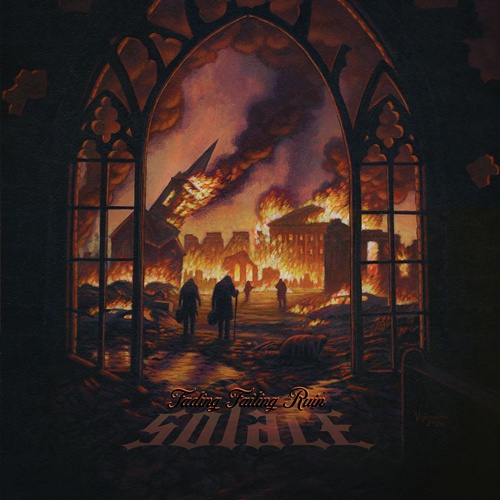
Thirty years in and still running on pure gasoline, sweat, and riffs, Solace remain one of the most distinctive voices to emerge from the American heavy underground. With Justin Skyler Daniels and Tommy Southard guiding the ship through the release of “Fading Failing Ruin”, out via Magnetic Eye Records, the New Jersey veterans continue to embrace their own path, far from trends and easy labels. We spoke with them about strange time signatures, apocalyptic moods, line-up evolution, and the enduring spirit that has kept this beast alive for three decades.
First of all, thank you for joining us, Justin and Tommy, and welcome to Il Raglio Del Mulo. With your new album “Fading Failing Ruin” arriving on July 3 via Magnetic Eye Records and the final advance single “Malengine (The Scaffold)” now out in the open, how would you frame this record as a statement of identity for Solace at this point in your career, especially in relation to the thirty-year path behind you?
J: I like what we’ve grown into. Our sound and songwriting have evolved but at its core it’s certainly still Solace. Probably a bit due to not wanting to keep writing the same song over and over and also due to newer band members bringing in different ideas and fresh perspectives.
T: This is a continuation of what we have always done. We try and write riffs and hooks that we find interesting. Something that we like and would appreciate even if we had not written it.
“Malengine (The Scaffold)” stands out for its unusual structural logic and shifting rhythmic architecture, so rather than the usual songwriting approach, how did you actually build this track from a compositional point of view, especially once you realized it wasn’t following conventional timing patterns?
J: The typical Solace way of building our songs is Tommy will have a riff or a string of riffs together and we’ll jam on them at band practice where we all throw ideas in about structure or dynamics or harmonies. “Malengine” in particular was a tough nut to crack because that main riff is in such an odd time signature. But that’s what makes it great in my opinion. We’ve never embraced conventionality in structuring our songs.
T: I never write from a “conventional” songwriting style. We’ve never been a verse, chorus, verse, chorus type of band. Like I said, I try and come up with different ideas that don’t have to fit into some sort of pop music mold. It took a while for the song to come together, but we worked hard on it as a band to get all the puzzle pieces and odd time signatures and different riffs and sounds together. It sums up perfectly what Solace is. It has a lot of all the elements that make us what we are.
The song also moves through very distinct emotional zones, from heaviness to almost hallucinatory textures, so how do you decide when a piece of music should break its own initial mood and evolve into something more unpredictable?
J: We like to go where the song takes us. We try not to force parts into songs just for the sake of adding another riff but often we’ll feel that it’s time to take a left turn here or there because we like to keep a song interesting. Sometimes it’s almost a “song within a song”. The evolution is always a natural thing, we never force a part or shoehorn something in. It’s got to feel right to us.
T: I usually come up with the ideas and bring them to the band and then, as a band, flesh them out. Some things change, some things stay the same. It’s never a dictatorship. If someone has an idea to change something and it makes the song better, then that is what we do. I never worry about the length of a song or if a song has too many different parts or changes. To me, that makes our songs more interesting. All these twists and turns. One thing that people have said to me over the years is that even though our songs are long, because we have so many twists in any given song, the songs never feel that long and they are over before you know it. I like that.
Listening to “Fading Failing Ruin” as a whole, there is a strong sense of thematic cohesion around apocalyptic imagery, so at what point in the writing process did this concept of decay and collapse become the central thread of the album, if it was planned at all?
T: Most definitely planned. We play dark, doomy, moody riff rock. This isn’t happy go lucky music. We try to set a mood. The world is chaotic and uncertain. Shit is fucked up all over the world. I try to express that in the riffs and ideas for the band.
The album was recorded and shaped with Eric Rachel across multiple locations, so how much of the final sound comes from deliberate studio planning versus spontaneous decisions made during tracking and mixing?
J: The bones of our songs are written before we ever step foot in the studio. For the most part we record them like we wrote them. That being said there are certain instances where we’ll extend a section (or cut a section) to make it work better. There are definitely times where one of us will hear something in our head and have someone try something interesting in the overdub. Like a guitar harmony or vocal harmony. Ideas get thrown around a lot and we don’t ignore anyone. There’s an acoustic guitar solo in “Everyday is a Loaded Gun” that was just an impulsive idea, for instance.
T: I’d say it’s a little bit of both planning and spontaneous actions. Of course you go into a studio with a plan but as you move along in the process things change. I think the fact that we recorded over 7 months and had a bit more time in between sessions to reflect on the recordings and make changes accordingly.
Solace have often been associated with labels like “dirt metal” and “shorecore”, so how do you personally relate to these definitions today, and do you feel they still capture the way you understand your music internally?
J: I believe we declared ourselves “dirt metal” because the musical labels that often are associated with us don’t fit perfectly. While we certainly have elements of stoner rock and doom we certainly don’t fit those molds.
T: Never really cared about what other people call us. The shorecore thing was a tag that followed me from my old hardcore band “Social Decay” and that term has NOTHING to do with Solace as far as I am concerned. I don’t mind the “dirt metal” tag at all. We all return to the ground eventually. Seems fitting….
The band’s history includes key transitions between eras and line-up changes, so how have those shifts in personnel and personal dynamics influenced the way you approach writing and arranging music today compared to your earlier records like “Further” or “13”?
J: I am proud of every incarnation of this band. Every member I’ve played with through the years has brought something cool and interesting to the table. I’ve said this many times recently. Justin Goins had huge shoes to fill – Jason was a phenom – And here is the important distinction: Justin never tried to be Jason. He didn’t fill Jason’s shoes, he made the shoes his own. I really appreciate his awareness of harmony and melody and his words are mind-blowing.
T: For those earlier albums it was mostly me conducting the band. I’ve always wanted another guitar player and a player whose ideas I can trust. So since Justin has joined the band I have another person who I can bounce ideas off. I’m not sure, but this current line-up might be the longest consistent line-up we’ve ever had. So I think having that consistency and being able to bounce ideas off the same people who have been there for a while works to our advantage. The more ideas the merrier.
In the current heavy music landscape, where doom and stoner metal have taken many different directions, where do you feel Solace sits now in terms of influence, and is there any desire to consciously push against trends rather than align with them?
J: I’m not even sure we are aware of what is trending. We just do our own thing and if it lines up with what people are into at the moment, great! The only thing we consciously push is ourselves. We want to make great records that stand on their own and we do not ever want to make the same record over and over.
T: Its not up to us to try and figure out what, if any influence we may or may not have had. We’ve just been here for a long while so it is what it is. As far as pushing against trends, all you have to do is listen to us to know we never gave one fucking shit about trends… we play the least trendy music in the world IMHO.
Finally, as “Fading Failing Ruin” arrives during a milestone anniversary period for the band, what does this moment represent for Solace personally, and what kind of artistic or emotional goals still remain ahead after this chapter closes?
J: We’ve never been busier and we’re happy to be putting in this much effort. We’ve come up against a lot of adversity over the years that stalled our momentum. I think our goal is to play in front of audiences that have wanted to see us but haven’t had the chance. To experience new things together as a band touring places we haven’t been. We are five brothers who enjoy each other’s company and we have a blast together onstage and off.
T: It’s pretty amazing that 30 years later we’re still a band. I’m never one to really look back. I just try and push ahead. The main goal going forward is to create as much music as possible, get it in as many hands as possible and stay alive as long as possible….

