
ENGLISH VERSION BELOW: PLEASE, SCROLL DOWN!
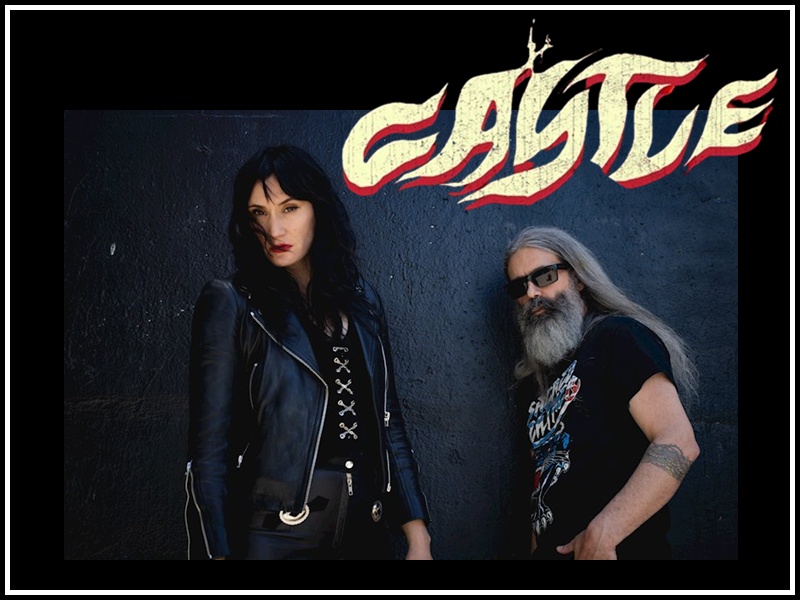
Il doom vive di peso, atmosfera e riff capaci di lasciare il segno, ma i Castle hanno sempre saputo che la vera prova arriva quando quei riff vengono gettati nel fuoco del palco. Dopo oltre 800 concerti, Mat Davis, insieme a Liz Blackwell e Mike Cotton, torna con “Carrie Chains”, un nuovo capitolo di heavy doom ruvido e diretto pubblicato da Hammerheart Records, dove l’istinto old school della band incontra l’immediatezza di una registrazione eseguita dal vivo in studio. Abbiamo parlato con Mat di songwriting, titoli contorti, tour, chimica e della potenza del trio che continua a vivere e respirare metal.
Prima di tutto, Mat, benvenuto su Il Raglio Del Mulo e grazie per essere con noi. Dopo più di un anno on the road a supporto di “Evil Remains”, i Castle tornano con “Carrie Chains”, un album costruito su un heavy doom ruvido, riff enormi e un’atmosfera inconfondibilmente old school: la strada ha affinato il nuovo materiale prima ancora che entraste in studio e avete sentito che queste canzoni dovevano suonare più immediate perché sono nate dopo così tanto tempo trascorso a suonare dal vivo?
È una mentalità: accelera il processo nel capire cosa funziona e cosa non funziona. Abbiamo sempre usato il fatto di suonare dal vivo come un modo per elevare il nostro sound e il nostro istinto quando si tratta di scrivere canzoni. Non è necessario, ma per quello che facciamo aggiunge muscolarità e potenza.
I Castle hanno sempre avuto il talento di trasformare riff pesanti in hook che rimangono impressi nella testa, e “Carrie Chains” sembra spingere ancora più avanti questo aspetto della band. Quando scrivete un riff, cosa viene prima per i Castle: la pesantezza, il groove, la melodia o quel momento istintivo in cui capisci di avere tra le mani un hook che la gente continuerà a cantare anche quando la canzone sarà finita?
Non c’è uno schema prestabilito. Seguiamo l’ispirazione. A volte è il titolo di una canzone e a volte è un riff o una melodia che ho in testa io o Liz. Da lì ci lavoriamo finché non è pronta. Può essere una cosa veloce, come “Truckgrinder”, che ha richiesto circa una settimana, oppure può essere lunga, come “Cold Grave” da “Evil Remains”, una canzone sulla quale ho lavorato per circa 3 o 4 anni. E alla fine non importa: non puoi dire che una canzone abbia richiesto più tempo dell’altra, non dovrebbe sentirsi questa differenza, dovrebbe semplicemente funzionare come canzone.
Avete registrato “Carrie Chains” dal vivo in studio per la prima volta, con Mike Cotton che ha eseguito le parti di batteria insieme al resto della band. Dopo anni di registrazioni effettuate in circostanze più controllate, cosa è successo quando avete deciso di mettervi tutti e tre nella stessa stanza e catturare le canzoni come una vera performance in tempo reale? Avete mantenuto errori o momenti spontanei semplicemente perché avevano più attitudine rispetto a una take perfetta?
Sì, esattamente, il feeling e la performance erano un tutt’uno e abbiamo mantenuto quasi tutto così com’era stato suonato. Ci sono sempre stati elementi di quella dimensione live nelle nostre registrazioni, di solito batteria e basso suonati insieme, ecc., ma questa volta era essenzialmente tutto dal vivo contemporaneamente.
L’album attinge alla tradizione ricca di riff di Black Sabbath, Judas Priest e Mercyful Fate, mentre i Castle portano nel loro DNA anche tracce di Danzig e Motörhead. Secondo te, cosa rende senza tempo un riff old school? È il suono, la semplicità, il groove, lo spazio tra le note oppure qualcosa che non può essere realmente spiegato e deve semplicemente essere sentito?
Ancora una volta, sì, è una sensazione, e in quel momento non stai davvero facendo paragoni con nulla: è semplicemente il pensiero “funziona?”. E, cosa ancora più importante, “è divertente da suonare e mi piace?”. Se la risposta è sì, allora di solito è quello che teniamo.
Le vocals intrise di whiskey di Liz Blackwell danno a “Carrie Chains” un carattere molto particolare, soprattutto quando si scontrano con il lavoro di chitarra di Mat Davis e con l’attacco essenziale della band. Come si è evoluto nel corso degli anni l’equilibrio tra voce, basso e chitarra all’interno dei Castle e la chimica di questa formazione ha cambiato il modo in cui arrangiate le canzoni rispetto agli esordi della band?
Come ogni rapporto di collaborazione, continua a crescere. Nel songwriting mio e di Liz, ormai c’è una comprensione reciproca di come elevare o valorizzare al massimo le idee dell’altro. Quindi è uno scambio continuo che mantiene tutto entusiasmante e pieno di sorprese.
I titoli di “Carrie Chains” sono meravigliosamente strani, da “Evil Nun” e “Truckgrinder” fino a “Goat Vision” e “Orb Weaver”. Da dove arriva l’immaginario più oscuro e occasionalmente contorto dei Castle quando si tratta di dare un nome alle canzoni e creare questi personaggi e queste immagini? A volte i titoli ispirano la musica oppure di solito nascono dopo che il riff e l’atmosfera sono già esistenti?
Semplicemente dall’essere nel momento e dall’essere aperti alle idee: per esempio, “Orb Weaver” è una storia di fantasia raccontata dal punto di vista di un ragno. Quando Liz era a Vancouver e stavamo scrivendo il disco, la sera ci sedevamo sul portico davanti a casa mia e c’erano decine di ragni che avevano tessuto enormi ragnatele sopra di noi, sotto il tetto, e Liz ha pensato al titolo, che è nato proprio da lì. C’è molta casualità in tutto questo. “3 Knocks” si basa su un documentario che ho visto sulle infestazioni paranormali di Enfield, in Inghilterra; si adattava ai riff e poi i testi aiutano a guidare l’arrangiamento… se sei aperto durante il processo. Ci si diverte, no?
I Castle hanno ormai suonato più di 800 concerti in tre continenti e condiviso il palco con band come The Obsessed, Anvil, Pentagram, The Skull, The Sword e Goatsnake. Dopo così tante notti trascorse in club, festival e locali sudati, esiste ancora un particolare tipo di concerto, pubblico o band in cartellone capace di farvi sentire di nuovo adolescenti, mentre caricate l’attrezzatura su un furgone perché dovete semplicemente suonare?
Non ci pensiamo, se non per il fatto che fa parte di quello che facciamo… Penso che l’unica differenza, adesso, sia che ci sono meno band che lo fanno. Amiamo tutti i pubblici e, in definitiva, il massimo si raggiunge quando c’è uno scambio di energia: ci nutriamo di quella energia e possiamo far salire di livello lo show. È il rituale.
“Carrie Chains” è stato scritto insieme all’EP di cover “Double Vision”, dopo un lungo periodo di tour, il che significa che la band guardava contemporaneamente al passato, alle canzoni che vi hanno influenzato, e al futuro, con nuovo materiale. Suonare quelle cover ha cambiato il vostro approccio al songwriting, magari rivelando qualcosa del sound dei Castle che era sempre stato presente ma non era mai stato sfruttato pienamente?
Tutto finisce sempre per entrare nel mix: musica, vita, persone, non importa, quindi certo, ma valeva in entrambe le direzioni. L’album di cover era davvero un esercizio sugli arrangiamenti, visto che una buona parte del materiale era stato personalizzato o aveva ricevuto il trattamento dei Castle o, in alcuni casi, era stato persino riscritto. È questo che ha fatto partire il nostro motore e ci ha spinto a lavorare su “Carrie Chains” in primo luogo, quindi è stata più un’ispirazione a lavorare che qualcosa di legato allo stile.
Il rituale dal vivo è già pronto a continuare, con un tour negli Stati Uniti a settembre e ottobre, il Giappone a dicembre e l’Europa prevista per marzo 2027: cosa possono aspettarsi i fan dalla scaletta dal vivo di “Carrie Chains” e i nuovi brani cambieranno l’equilibrio dello show? Ci sono date o luoghi europei in particolare nei quali siete particolarmente felici di tornare?
Energia e potenza da trio. Ora abbiamo sette dischi di materiale con cui lavorare e questo è allo stesso tempo stimolante ed entusiasmante. Penso che sentirete almeno 4 o 5 dei nuovi brani, più alcune vecchie canzoni, qualcosa da ogni disco. Ci fa sempre piacere suonare in Europa e nel prossimo tour arriveremo in molti posti nuovi, quindi non vediamo l’ora.
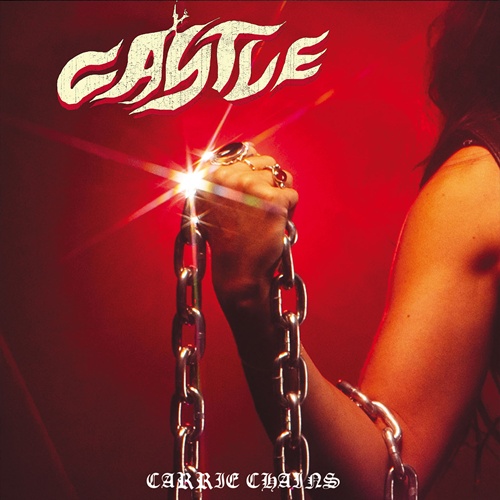
Doom lives on weight, atmosphere and riffs capable of leaving a mark, but Castle have always understood that the real test comes when those riffs are thrown into the fire of the stage. After more than 800 shows, Mat Davis, alongside Liz Blackwell and Mike Cotton, return with “Carrie Chains”, a new chapter of raw, direct heavy doom released by Hammerheart Records, where the band’s old-school instincts meet the immediacy of a live-in-the-room recording. We talked to Mat about songwriting, twisted titles, touring, chemistry and the three-piece power that keeps Castle living and breathing metal.
First of all, Mat, welcome to Il Raglio Del Mulo and thanks for joining us. After more than a year on the road supporting “Evil Remains”, Castle return with “Carrie Chains”, an album built around raw heavy doom, huge riffs and an unmistakably old school atmosphere: did the road sharpen the new material before you even entered the studio, and did you feel that these songs had to sound more immediate because they were born out of so much time spent playing live?
It’s a mindset – it fast-tracks what works and what doesn’t. We have always used playing live as a way to elevate our sound and our instincts when it comes to songwriting. It’s not necessary, but for what we do, it adds a muscularity and power.
Castle have always had a knack for turning heavy riffs into hooks that stick in the brain, and “Carrie Chains” seems to push that side of the band even further. When you are writing a riff, what comes first for Castle: the heaviness, the groove, the melody or that instinctive moment when you know you’ve got a hook that people will still be singing after the song is over?
There is no set pattern. We are following the muse. Sometimes it’s a song title and sometimes a riff or a melody in my or Liz’s head. From there, we work it until it’s ready. It could be quick, like “Truckgrinder” – it took about a week – or it could be long, like “Cold Grave” from “Evil Remains”, which was a song I worked on for like 3 or 4 years. And in the end, it doesn’t matter – you can’t tell one song took longer than the other – it shouldn’t sound like it – it should just work as a song.
You recorded “Carrie Chains” live in the studio for the first time, with Mike Cotton laying down the drums alongside the rest of the band. After years of recording in more controlled circumstances, what happened when you decided to put the three of you in the same room and capture the songs as a real-time performance? Did you keep any mistakes or spontaneous moments simply because they had more attitude than a perfect take?
Yes, exactly, the vibe and performance were married together and we kept almost everything intact as it was played. There have always been elements of that live playing in our recordings – usually drums and bass played together, etc. – but this time it was essentially live altogether.
The album draws from the riff-heavy tradition of Black Sabbath, Judas Priest and Mercyful Fate, while Castle also carry traces of Danzig and Motörhead in their DNA. What do you think makes an old school riff timeless? Is it the tone, the simplicity, the groove, the space between the notes, or something that cannot really be explained and just has to be felt?
Again, yes, it’s a feeling – and not really comparing anything in the moment – it’s just basically the thought: does it work? And even more important – is it fun to play and do I like it? If yes, then it’s usually what we keep.
Liz Blackwell’s whiskey-soaked vocals give “Carrie Chains” a very distinctive character, especially when they collide with Mat Davis’ guitar work and the band’s stripped-down attack. How has the balance between vocals, bass and guitar evolved inside Castle over the years, and has the chemistry of this lineup changed the way you arrange songs compared with the early days of the band?
Like anything that’s a partnership, it continues to grow. With Liz and I’s songwriting, there is a recognition there now between us of how to elevate or maximize the other’s ideas. So it’s a back and forth that keeps things exciting and full of surprises.
The titles on “Carrie Chains” are wonderfully strange, from “Evil Nun” and “Truckgrinder” to “Goat Vision” and “Orb Weaver”. Where does Castle’s darker and occasionally twisted imagination come from when it comes to naming songs and creating these characters and images? Do the titles sometimes inspire the music, or are they usually born after the riff and atmosphere already exist?
Just being in the moment and open to ideas – for instance, “Orb Weaver” is a fictional story told from the perspective of a spider. When Liz was in Vancouver and we were writing the record, we would sit on my front porch at night and there were dozens of spiders that had woven massive spiderwebs up above us under the roof, and Liz thought of the title and it came from there really. There’s a lot of randomness to it all. “3 Knocks” is based on a documentary I watched about the Enfield hauntings in England, it fit the riffs and then the lyrics help guide the arrangement… if you are open during the process. It’s having some fun, isn’t it?
Castle have now played more than 800 shows across three continents and shared stages with bands such as The Obsessed, Anvil, Pentagram, The Skull, The Sword and Goatsnake. After that many nights in clubs, festivals and sweaty venues, is there still a particular type of show, crowd or band on a bill that can make you feel like you’re teenagers again, loading the gear into a van because you simply have to play?
We don’t think about it other than it’s part of what we do… I think the only difference now is that fewer bands do it. We love all crowds and ultimately it’s the best when there’s an exchange of energy, we feed off that and can elevate the show – that’s the ritual.
“Carrie Chains” was written alongside the “Double Vision” covers EP, after a long period of touring, which means the band were simultaneously looking backwards at songs that influenced you and forwards with new material. Did playing those covers change the way you approached your own songwriting, perhaps revealing something about Castle’s sound that had been there all along but had never been fully exploited?
Everything is always working its way into the mix, music, life, people – it doesn’t matter, so of course, but that went both ways. The covers album was really an exercise in arrangements since quite a bit of the material was personalized or given the Castle treatment or in some cases even re-written – that’s what got our motor running to work on “Carrie Chains” in the first place, so it was more an inspiration to work rather than stylistically.
The live ritual is already set to continue, with a US tour in September and October, Japan in December and Europe scheduled for March 2027: what can fans expect from the “Carrie Chains” live set, and will the new songs change the balance of the show? Are there any particular European dates or places you’re especially excited about returning to?
Energy and three-piece power. We have seven records of material to work with now and that’s challenging and exciting. I think you’ll be hearing at least 4 or 5 of the new tracks plus some old ones, something from every record. We always look forward to playing in Europe and we are hitting lots of new places on the upcoming tour, so can’t wait.

