
ENGLISH VERSION BELOW: PLEASE, SCROLL DOWN!
Con gli Stygian Steel, E.R., Abraxas d’Ruckus e R.K.V. trasformanoil materiale nato originariamente per gli Stygian Ruin in una creatura underground fatta di heavy metal epico, doom, atmosfere oscure e suggestioni arcane. In questa intervista, E.R. ripercorre la genesi di “Black Lotus Veil”, la cui edizione fisica sarà pubblicata da High Roller Records, il passaggio da progetto solista a band, il ruolo dei synth nella costruzione dell’atmosfera ritualistica e la direzione che sta prendendo il prossimo capitolo.
Grazie, E.R., per essere con noi. “Black Lotus Veil”, la cui pubblicazione fisica è prevista per High Roller Records, mette insieme epic doom, heavy metal, passaggi atmosferici e un’aura inconfondibilmente arcana, ma le sue origini sono piuttosto diverse da quanto ci si potrebbe aspettare, visto che gran parte del materiale era stata scritta originariamente per gli Stygian Ruin. Come hanno fatto, nel corso del tempo, questi brani a mostrare di appartenere agli Stygian Steel piuttosto che al loro progetto originale?
Grazie per l’interesse. È successo in un momento ben preciso del processo di scrittura del quarto album degli Stygian Ruin, quando avevo scritto quella che oggi è la progressione degli accordi del ritornello di “The Serpent’s Steel”. Ho capito immediatamente che questa parte avrebbe richiesto una voce cantata in modo tradizionale, piuttosto che delle vocals alla black metal. Quindi, avrei dovuto cantarla io? Neanche per sogno. E avrei dovuto spingere gli Stygian Ruin ancora di più verso l’Heavy Metal? Alla fine, ho deciso di tenere separati questi due mondi. Volevo avere un cantante dedicato, con l’estensione vocale, la qualità e la capacità di trasmettere ciò che stavo cercando di fare con questa nuova creatura, mantenendo al tempo stesso Stygian Ruin come entità separata, dove posso addentrarmi in territori più torbidi e oscuri come musicista (perlopiù) solista.
Una volta che quel materiale ha assunto un’identità più spiccatamente metal, la musica ha iniziato naturalmente a muoversi verso la tradizione epic e doom, con riferimenti che vanno dai Warlord e dai primi Manowar a Candlemass, Manilla Road e Bathory dell’era vichinga. Qual è stata la difficoltà principale nel trovare il giusto equilibrio tra queste influenze e preservare un’identità distintiva per Stygian Steel?
Cerco semplicemente di assicurarmi della qualità del particolare brano che sto scrivendo e spero che l’identità emerga da sola. Per questo, mentre scrivo, non ascolto molto altre band o altri artisti, per essere sicuro che i miei suoni e le mie idee siano in primo piano nella mia mente. Ovviamente, fare musica in un genere così tradizionale rende inevitabili le somiglianze con altri brani, ma non ha senso fare musica se non cerchi almeno di rappresentare ciò che è unicamente tuo. I collegamenti con altre band o con altra musica arrivano dopo, spesso dalle reazioni e dai riferimenti di altre persone. Per esempio, non ho mai considerato Stygian Steel una band Doom Metal, anche se sul disco ci sono alcune parti più lente e doom. Ma è così che alcuni lo hanno descritto. Le band che hai menzionato hanno indubbiamente contribuito a formarmi come musicista; è solo difficile riuscire a vedere e sentire queste influenze quando sei immerso nella bolla della creazione.
L’album possiede anche una forte componente atmosferica e la presenza dei synth accanto a basso e chitarre svolge un ruolo importante nella creazione di quella dimensione antica, quasi ritualistica. Come avete sviluppato gli arrangiamenti per fare in modo che “Black Lotus Veil” desse la sensazione di un viaggio unitario, piuttosto che di una semplice raccolta di brani heavy metal?
I synth sono estremamente importanti negli Stygian Ruin, con alcune pubblicazioni composte esclusivamente da synth, e per questo erano parte integrante del materiale e dell’atmosfera che sarebbe poi diventata Stygian Steel. Le caratteristiche che cerco non sono direttamente orchestrali, ma piuttosto ambient. Non voglio necessariamente che il suono sia sinfonico o bombastico, quindi non cerco archi, ottoni o timpani campionati alla perfezione. Cerco suoni più oscuri e intangibili, capaci di costruire atmosfera e creare unicità laddove i miei suoni di chitarra (o le mie capacità) vengono meno. Mi piacciono le parole che hai usato: antico e ritualistico. È proprio questo l’obiettivo.
Questa idea dell’album come corpo unico si collega direttamente all’ammirazione per dischi come “Secret Treaties” e “Imaginos” dei Blue Öyster Cult, oltre che per Dark Quarterer, Magnum e Fates Warning. Cosa c’è in un album concepito come un mondo completo che continua ad avere così tanta importanza in un’epoca sempre più dominata dai singoli brani?
Il formato album è davvero interessante e fa qualcosa che nessuna singola canzone o playlist di Spotify può fare. I suoi circa 40 minuti sono sufficienti per raccontare una storia o trasportarti in un’altra dimensione, un po’ come un film che ha bisogno di circa 90 minuti o un romanzo di 200 pagine. Esiste una sorta di zona Goldilocks per tutti questi formati. Non ho nulla contro gli EP o i singoli, ma per me il punto centrale è sempre l’album. Per me, e sono sicuro anche per molti altri, la scrittura spesso avviene per blocchi. In un determinato periodo, stato d’animo, stagione o circostanza, e questo influenza i brani scritti in quello spazio di tempo; il formato album si adatta bene a questa forma di espressione. Gli album che ricordo e custodisco sono quelli che mi tengono prigioniero, che tengono il mio dito lontano dal pulsante per saltare la traccia e che riescono persino a convincermi a leggere i testi. Non tutte le canzoni devono essere dei pezzi da novanta, però. Se ci sono uno scopo e una visione generale, l’album può catturarti e persino elevare i brani più deboli.
Il passaggio del progetto da un’entità one-man a un trio ha cambiato anche la sua identità musicale, con Abraxas d’Ruckus e R.K.V., che si sono uniti a te, alla voce e alla batteria. Cosa ha portato ciascuno di loro al materiale che non sarebbe stato possibile ottenere attraverso l’approccio originale da progetto solista?
Hanno portato le capacità e la qualità che mi mancavano per rendere questo progetto realizzabile fin dall’inizio. Non so cantare né suonare la batteria neanche se ne andasse della mia vita. E questo album non avrebbe visto la luce se non avessi potuto coinvolgere qualcuno capace di garantirne le qualità necessarie. Oltre a questo, sono anche dei grandi ragazzi e vecchi amici. Quando ho proposto il progetto ad Abraxas, abbiamo iniziato a incontrarci ogni due settimane per fare delle demo di un paio di canzoni e credo che entrambi abbiamo capito abbastanza rapidamente che avrebbe funzionato. Inoltre, penso che una volta partiti abbia sentito un maggiore senso di appartenenza e abbia contribuito ai testi, oltre a fornire preziosi input sulle linee vocali e sulle melodie che avevo scritto. Da lì in poi ci siamo mossi piuttosto velocemente. Una volta scritte tutte le canzoni, si trattava semplicemente di provare tutto e registrarlo.
Esiste un’interessante connessione tra Stygian Steel e Dødskvad, dato che tu ed R.K.V. condividete anche quella band death metal. Quanto è diversa la chimica creativa tra i due progetti e lavorare in un ambiente musicale così differente influenza il modo in cui si sviluppa il lato più epico e atmosferico di Stygian Steel?
Io e R.K.V. ci siamo conosciuti quando eravamo alla fine dell’adolescenza, nella scena Death Metal. Io suonavo in una band chiamata Abominat; lui, ovviamente, nei grandi Obliteration. Quindi abbiamo sempre condiviso un interesse per quello stile musicale, ma, come molti musicisti, ci interessano praticamente tutti i generi esistenti. E le nostre sensibilità si incastrano piuttosto bene, sia quando si parla di Heavy Metal che di Death Metal. Spesso cerchiamo le stesse qualità nella musica. Il processo di scrittura non è poi così diverso quando si tratta dei Dødskvad. È un genere completamente diverso, questo è certo, ma la mia mentalità è simile. Anche quello è un paesaggio oscuro, lurido, arcano e mitologico. Semplicemente si manifesta in modo diverso. L’Heavy Metal è stato il mio primo amore ed è fantastico poter finalmente mettere i piedi dentro questo genere, qualcosa che desideravo fare da quando ho iniziato a suonare.
“Black Lotus Veil” contiene sei brani, tra cui la lunga “Een Stygisk Overtyre”, mentre “Incantation I” funziona quasi come un intermezzo rituale all’interno dell’album. Questi formati così diversi sono stati disposti deliberatamente per modellare l’esperienza dell’ascoltatore oppure la struttura è emersa naturalmente durante il processo di scrittura?
Entrambe le affermazioni sono vere. Inizio a pensare alle dinamiche dell’album molto presto nel processo, innanzitutto a cosa appartiene al Lato A o al Lato B. Poi: lento contro veloce, lungo contro breve, caldo contro freddo, brutto contro bello e così via. Sapevo già che la maggior parte delle canzoni sarebbe risultata piuttosto lunga, anche dopo aver tagliato molto materiale, quindi volevo mettere “Incantation I” a metà come detergente per il palato. Ironia della sorte, “Een Stygisk Overtyre” è un’ouverture, composta principalmente da temi che non sono comparsi in questo album, ed è il brano conclusivo, non un’introduzione come vorrebbe la tradizione. Ma chi può dirlo? Sapevo che doveva stare sull’album, come un sogno febbrile, un brutto trip, una transizione verso un’altra dimensione. Un diario di viaggio metaforico attraverso i temi introdotti nella primissima canzone dell’album. Abraxas ha scritto il testo tenendo a mente proprio questo concetto, consolidando ulteriormente quella sensazione. Questi processi emergenti e alchemici sono tutte parti interessanti della realizzazione di un album.
L’album è stato originariamente pubblicato in digitale, mentre l’edizione High Roller Records lo renderà disponibile nei formati fisici da ottobre 2026. Vedere “Black Lotus Veil” passare da un progetto relativamente personale a una vera pubblicazione fisica ha cambiato il modo in cui percepisci gli Stygian Steel , oppure continua a sembrarti la stessa creatura underground di quando tutto è iniziato?
In realtà non ha cambiato nulla, ma devo ammettere che è stata una piacevole sorpresa ricevere la chiamata di High Roller. Non do mai per scontato che alla gente piaccia ciò che faccio. Cerco semplicemente di soddisfare le mie aspettative. È un cliché, lo so, ma penso che sia la mentalità che devi avere quando operi in un genere così di nicchia. Non ci sono oro né gloria, solo la soddisfazione di creare per il semplice gusto di creare. Una cosa, però, è cambiata: Abraxas e io stiamo lavorando più a stretto contatto alla realizzazione del secondo album. Non è più un mio progetto, ma una situazione più simile a quella di una band.
C’è già abbastanza materiale per il prossimo album, con alcuni brani rimasti dalle sessioni di “Black Lotus Veil” e il seguito già in fase di pre-produzione. Il prossimo capitolo approfondirà la stessa atmosfera epic doom e arcana oppure c’è la voglia di spingere Stygian Steel verso territori che non sono ancora stati esplorati?
Penso che una certa evoluzione sia inevitabile, come dovrebbe essere. Abraxas sta contribuendo alla scrittura del prossimo album e abbiamo lavorato insieme su un paio di canzoni. Lui fornisce il nucleo e io scrivo gli arrangiamenti attorno alle sue idee e ai suoi testi. Suona decisamente come Stygian Steel, per quanto mi riguarda, ma è diverso, questo è certo. Se dovessi azzardare un’ipotesi, direi che suona un po’ più epico e progressivo. Per me, progressivo è una cosa positiva. Non voglio fare lo stesso album ancora e ancora, ma allo stesso tempo non voglio spezzare completamente i confini del genere, dell’ambientazione o dell’atmosfera, assicurandomi che quella sensazione di album, di cui abbiamo parlato prima, venga preservata. Questo è l’equilibrio da trovare. O si affonda o si nuota.
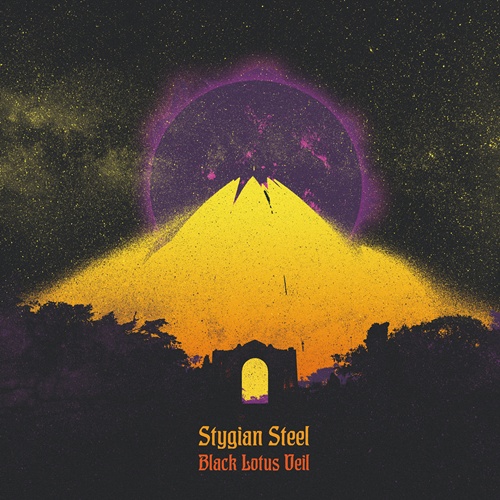
With Stygian Steel, E.R., Abraxas d’Ruckus and R.K.V. turn material originally conceived for Stygian Ruin into a different kind of underground beast: epic heavy metal steeped in doom, atmosphere and arcane imagery. On “Black Lotus Veil”, due for physical release through High Roller Records, E.R. traces the record’s unusual origins, the transformation from a solo endeavour into a three-piece, the role of synths in shaping its ritualistic atmosphere, and the path already opening toward the band’s next chapter.
Thank you, E.R., for joining us. “Black Lotus Veil”, due for its physical release through High Roller Records, brings together epic doom, heavy metal, atmospheric passages and an unmistakably arcane aura, but its origins are rather different from what one might expect, since much of the material was originally written for Stygian Ruin. How did these songs gradually reveal that they belonged to Stygian Steel rather than to their original project?
Thank you for your interest. It was at a very specific point in the writing process for the fourth Stygian Ruin album, when I had written what is today the chorus chord progression for “The Serpent’s Steel”. I instantly felt that this part would require traditionally sung vocals rather than black metal-like vocals. So, was I to sing it myself? No chance. And should I then take Stygian Ruin more into Heavy Metal territory? Ultimately, I decided to separate these two worlds. I wanted to have a dedicated vocalist with the range, quality and ability to convey what I was trying to do with this new thing, while keeping Stygian Ruin as a separate entity, where I can delve into murkier, more obscure territory as a (mostly) solo player.
Once that material was given a heavier metal identity, the music naturally began to move toward the epic and doom traditions, with references ranging from Warlord and early Manowar to Candlemass, Manilla Road and Viking-era Bathory. What was the main challenge in finding the right balance between those influences and preserving a distinctive Stygian Steel identity?
I’m just trying to ensure the quality of the particular piece of music that I’m writing and hope that identity will emerge on its own. Therefore, I don’t listen to other bands or artists much when I’m writing, to make sure that my sounds and ideas are at the forefront of my mind. Of course, making music in such a traditional genre makes similarities to other pieces of music inevitable, but there is no point in making music if you’re not at least trying to represent what is uniquely you. The associations with other bands or music are something that come afterwards, often from other people’s responses and references. For example, I never considered Stygian Steel to be Doom Metal, even though there are a few slower, doomier parts on the record. But that’s how it’s been described by some. The bands mentioned have undoubtedly been a part of shaping me as a musician; it’s just hard to see and hear it sometimes from within the bubble of creation.
The album also has a strong sense of atmosphere, and the presence of synths alongside bass and guitars plays an important role in creating that ancient, almost ritualistic dimension. How were the arrangements developed to make “Black Lotus Veil” feel like a unified journey rather than simply a collection of heavy metal songs?
Synths are extremely important in Stygian Ruin, with some releases being synth-only, and therefore, they were integral to the would-be Stygian Steel material and ambience. The qualities I look for are not directly orchestral, but more ambient. I don’t want it to sound symphonic or bombastic necessarily, so I’m not after perfectly sampled strings, brass or timpani. I’m after more obscure and intangible sounds that can build ambience and create uniqueness where my guitar sounds (or skills) fail. I like the words that you mentioned: ancient and ritualistic. That’s something to aim for.
That idea of the album as a unified body of work connects directly with the admiration for records such as Blue Öyster Cult’s “Secret Treaties” and “Imaginos”, as well as Dark Quarterer, Magnum and Fates Warning. What is it about an album conceived as a complete world that continues to matter so much in an age increasingly dominated by individual tracks?
The album format is really interesting, and it does what no single song or Spotify playlist can do. Its allotted time, 40 minutes or so, is enough to tell a story or to transport you into a different realm, maybe similar to how a movie needs around 90 minutes, or a novel needs 200 pages. There’s a certain Goldilocks zone for all of these formats. I don’t mind EPs or singles at all, but the big focus for me is always the album. Writing for me, and I’m sure many others, often happens in clusters. At a certain time, mood, season or circumstance, that affects the pieces written within that space, and the album format is a good fit for that expression. The albums I remember and treasure are those that keep me captive, keep my finger away from the skip button, and even convince me to read the lyrics. Not every song has to be a total banger, though. If the general purpose and vision are there, it can entrance me and even elevate the weaker numbers on an album.
The project’s transition from a one-man endeavour to a three-piece also changed its musical identity, with Abraxas d’Ruckus and R.K.V., joining you, on vocals and drums. What did each of them bring to the material that could not have been achieved through the original solo-project approach?
They brought the skills and quality I lacked to make this project feasible in the first place. I can’t sing or play the drums if my life depended on it. And this album wouldn’t have seen the light of day if I couldn’t bring someone in who could ensure the qualities it required. On top of that, they’re great guys and old chums as well. When I pitched it to Abraxas, we started getting together on a bi-weekly basis to demo a couple of songs, and I think we both saw pretty quickly that this would work out. Also, I think he felt a greater sense of ownership once we got going, and he contributed to the lyrics and had valuable input on the vocal lines and melodies that I had written. So from there, we moved pretty fast. As all the songs were written, it was just a matter of getting it all rehearsed and recorded.
There is an interesting connection between Stygian Steel and Dødskvad, since R.K.V. and you also share duties in that death metal band. How different is the creative chemistry between the two projects, and does working in such a different musical environment influence the way the more epic and atmospheric side of Stygian Steel develops?
Me and R.K.V. met in our late teens in the Death Metal scene. I played in a band called Abominat; he, of course, in the great Obliteration. So we’ve always shared an interest in that style of music, but, as many musicians are, we’re into pretty much every genre there is. And our sensibilities gel pretty well, both when it comes to Heavy Metal and Death Metal. We often seek out the same qualities in music. The writing process is not all that different when it comes to Dødskvad. It’s a vastly different genre, for sure, but my headspace is similar. That, too, is a dark, grimy, arcane and mythological landscape. It just manifests in a different way. Heavy Metal was my first love, and it’s a great feeling finally being able to dip my feet into the genre, something I’ve been wanting to do ever since I started playing music.
“Black Lotus Veil” contains six pieces, including the lengthy “Een Stygisk Overtyre”, while “Incantation I” works almost like a ritual interlude within the album. Were these contrasting formats deliberately arranged to shape the listener’s experience, or did the structure emerge naturally during the writing process?
Both of those statements are true. I start thinking about the album dynamics very early in the process, firstly, what belongs on Side A or B. Then: slow versus fast, long versus short, hot versus cold, ugly versus pretty, and so on. I already knew most songs turned out pretty lengthy, even after cutting a lot of material, so I wanted to put “Incantation I” midway as a palate cleanser. Ironically, “Een Stygisk Overtyre” is an overture, consisting mostly of themes that did not appear on this album, and is the very final piece, not an introduction, as tradition dictates. But who’s to say? I knew it belonged on the album, as a fever dream, a bad trip, a transition to a different realm. A metaphorical travelogue into the themes introduced on the very first song on the album. Abraxas wrote the lyrics for it with that in mind, further cementing that feeling. These emergent and alchemical processes are all interesting parts of making an album.
The album was originally released digitally, while the High Roller Records edition is bringing it into physical formats in October 2026. Has seeing “Black Lotus Veil” move from a relatively personal project into a proper physical release changed the way Stygian Steel is perceived internally, or does it still feel like the same underground creation it was at the beginning?
It hasn’t really changed anything, but I must admit it was a pleasant surprise getting the call from High Roller. I never have any notion of people liking what I make. I just try to meet my own expectations. A cliché, I’m sure, but I think that’s the mindset you’ve got to have when you’re operating in such a niche genre. There’s no gold or glory, just the satisfaction of creation for creation’s sake. One thing that has changed, though, is that Abraxas and I are working more closely together on crafting the second album. It’s no longer my project, but more of a band situation.
There is already enough material for the next album, with some of the songs left over from the “Black Lotus Veil” sessions and the follow-up already in pre-production. Will the next chapter deepen the same epic doom and arcane atmosphere, or is there an urge to push Stygian Steel into territory that has not yet been explored?
I think a certain evolution is inevitable, as it should be. Abraxas is contributing to the songwriting on the next one, and we’ve been working on a couple of songs together. He’s providing the nucleus, and I’m writing arrangements around his ideas and lyrics. It very much sounds like Stygian Steel to me, but it is different, for sure. If I were to guess, I’d say it sounds a bit more epic and progressive. Progressive, to me, is a good thing. I don’t want to make the same album over and over, but at the same time, I don’t want to totally break the bounds of the genre, the setting or the ambience, ensuring that the album feeling, as previously discussed, is preserved. That’s the balancing act. Sink or swim.

