
ENGLISH VERSION BELOW: PLEASE, SCROLL DOWN!
Ci sono band che attraversano l’oscurità cercando una via d’uscita e altre che, disco dopo disco, scavano sempre più a fondo, fino a farne la propria dimora. I Cultus Sanguine appartengono alla seconda categoria: dal seminale “Shadows’ Blood” a “Tears Painted Sky”, il nuovo album pubblicato da My Kingdom Music, il loro viaggio continua tra ferite che non si rimarginano, presenze spettrali e un dolore capace di oscurare persino il cielo. Abbiamo incontrato Joe, voce della formazione italiana, per addentrarci nelle viscere del disco, tra radici artistiche, visioni decadenti e quella necessità di non cercare mai la luce che, da quasi trent’anni, alimenta il loro universo sonoro.
Ciao Joe, grazie ancora per aver accettato questa nuova intervista. Quando hai raccontato “Shadows’ Blood” per la rubrica Album Raccontati, hai scritto che quel disco aveva definito il percorso musicale dei Cultus Sanguine e che, a distanza di molti anni, lo amavi ancora. Oggi arriva “Tears Painted Sky”: cosa rappresenta per te questo nuovo capitolo rispetto a quel percorso iniziato nel 1997?
Ciao Giuseppe, è un piacere essere ancora con voi e, innanzitutto, grazie davvero per il costante supporto che ci avete sempre dimostrato! Per quanto riguarda la tua domanda, sì, confermo di amare ancora profondamente “Shadows’ Blood” e soprattutto quella sua atmosfera di tomba, così oscura e soffocante. Credo che quell’album, insieme al precedente mini-CD, abbia gettato il seme di quella che negli anni successivi sarebbe diventata la nostra direzione musicale: un percorso sempre più rivolto verso l’oscurità, l’oblio e tutto ciò che si nasconde nelle zone più profonde dell’animo umano. Ogni tassello della nostra storia è nato, in qualche modo, da quello precedente. Non abbiamo mai cercato di ripeterci, ma piuttosto di evolvere lentamente, lasciando che ogni album portasse con sé qualcosa del passato e, allo stesso tempo, aprisse una nuova porta. Anche “Tears Painted Sky” parte da quelle coordinate iniziali. Ritrovo ancora quella stessa oscurità, quella sensazione di freddo e di morte che ci appartiene da sempre, ma filtrata attraverso tutto ciò che abbiamo vissuto e musicalmente elaborato negli anni. È un disco che guarda indietro senza essere nostalgico e che, allo stesso tempo, porta avanti il nostro percorso verso luoghi ancora più oscuri. In fondo, credo che il filo conduttore sia sempre lo stesso: non abbiamo mai cercato la luce. Abbiamo semplicemente continuato a scendere.
In quel racconto ricordavi anche come “Shadows’ Blood” fosse nato dalla fusione di doom, black e dark sound, con influenze come Celtic Frost, Christian Death, Candlemass, Bauhaus, Death In June e Death SS. Quali ascolti, immagini o suggestioni hanno invece accompagnato la nascita di “Tears Painted Sky”?
Tra noi abbiamo influenze e background molto diversi e credo che sia proprio questa varietà a confluire, in modi differenti, nella musica dei Cultus Sanguine. Ognuno di noi porta qualcosa del proprio percorso e questo rende il risultato finale più personale. Personalmente, le mie influenze principali rimangono quelle che hai citato: Celtic Frost, Christian Death, Candlemass, Type O Negative, Death In June, Death SS, ma non posso non menzionare Depeche Mode, Current 93, Slayer, Iron Maiden e moltissimi altri che adoro, oltre a tutto quel mondo oscuro che mi ha accompagnato per tanti anni. Ma sono sempre stato affetto da una sorta di “bulimia musicale”: ascolto davvero di tutto. Posso passare dal black metal alla dark wave, dal doom al thrash, fino all’heavy metal più classico. Non mi interessa molto il genere in sé: quello che cerco è qualcosa che riesca a emozionarmi, che abbia un’atmosfera, che lasci una traccia. Per “Tears Painted Sky” sono state importanti anche immagini, sensazioni e suggestioni che appartengono più al mondo del cinema, della letteratura e dell’arte che a quello strettamente musicale. Il disco è nato da un insieme di queste percezioni: oscurità, perdita, solitudine, decadimento e quella sensazione di vuoto che rimane quando non esiste più alcuna forma di consolazione. Credo che, alla fine, le influenze siano soltanto il punto di partenza. Quello che conta è ciò che riesci a trasformare in qualcosa di tuo. E “Tears Painted Sky” è sicuramente il risultato di tutto quello che abbiamo assorbito, ascoltato e vissuto negli anni.
“Tears Painted Sky” sembra immergersi ancora più profondamente nella dimensione emotiva e decadente dei Cultus Sanguine. Nei temi dell’album tornano dolore, solitudine, silenzio e morte, ma senza lasciare spazio a una vera consolazione: quanto è importante per te mantenere questa visione così radicalmente oscura?
È il nostro marchio, le stimmate marce di una creatura nata dal buio e per il buio. “Tears Painted Sky” porta questa natura ancora più in profondità. È un album che nasce e si muove dentro il dolore, la solitudine, il silenzio e la morte, senza la necessità di cercare una via d’uscita o una consolazione. Sono emozioni e immagini che appartengono da sempre al mondo dei Cultus Sanguine, ma in questo disco le sento ancora più presenti, più crude e intime. Non abbiamo mai cercato di addolcire l’oscurità, perché per noi non è una semplice scelta estetica o musicale: è parte della nostra identità. “Tears Painted Sky” è proprio questo: un’immersione nel buio, senza compromessi e senza la promessa di tornare alla luce. Dopo tanti anni, quelle stimmate sono diventate parte della nostra pelle. E ormai sono così profonde, così marce e infette, che non possono più guarire. E forse è proprio questa la nostra condanna: continuare a sanguinare nel buio, senza mai cercare la luce.
Il titolo “Tears Painted Sky” è un’immagine molto evocativa. Come si è trasformata questa immagine iniziale nel corso della scrittura fino a diventare il filo conduttore dell’intero album?
Abbiamo scelto “Tears Painted Sky” perché è un’immagine che abbiamo sentito subito molto forte e rappresentativa dell’album: un dolore così grande, così profondo, da riuscire a dipingere con le lacrime persino il cielo. È un’immagine quasi impossibile, ma proprio per questo rende bene la dimensione del dolore che attraversa il disco. Non è più soltanto qualcosa che appartiene all’individuo: è un dolore che diventa enorme, che si espande fino a ricoprire tutto ciò che ci circonda. Durante la scrittura, questa immagine è diventata naturalmente il filo conduttore dell’album. Le lacrime, il cielo, il silenzio, l’assenza, la morte e la solitudine sono diverse manifestazioni della stessa oscurità. Non c’è una vera redenzione, non c’è un ritorno alla luce: c’è soltanto questo cielo ormai dipinto dal dolore. “Tears Painted Sky” rappresenta quindi l’intero album: quando il dolore è così grande da non poter più essere contenuto dentro di noi, finisce per contaminare persino il cielo.
Brani come “When Silence Devours”, “My Wounds Are Eternal”, “Pale Presence” e “Funeral Farewells” sembrano avere personalità molto precise. C’è una canzone dell’album che, durante la composizione o la registrazione, vi ha sorpreso particolarmente rispetto a come l’avevate immaginata inizialmente?
Ovviamente tutte, perché ogni brano, durante la composizione e la registrazione, finisce in qualche modo per prendere una strada propria. Ma se devo rispondere così, di getto, direi “Le Tue Ossa Sono Fredde”. Era nata inizialmente quasi come una sorta di outro musicale, un momento conclusivo nel quale Luca avrebbe avuto modo di esprimersi con il violino. L’idea era molto più semplice rispetto a quello che poi è diventato il brano. Quando però l’abbiamo sentita prendere forma, ci ha conquistati tutti. Quel violino ha dato alla composizione una dimensione completamente diversa, malinconica, spettrale e profondamente emotiva. A quel punto ci siamo resi conto che non poteva essere semplicemente un outro: aveva una personalità propria e meritava di diventare una vera canzone. A mio parere è diventata una delle sorprese più belle dell’album, proprio perché è nata quasi inaspettatamente e alla fine si è trasformata in qualcosa di molto più grande di quello che avevamo immaginato.
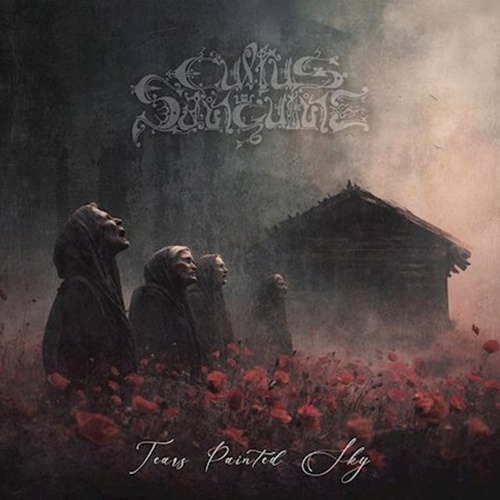
“Tears Painted Sky” arriva in diversi formati, dal CD al vinile e alla cassetta, e porta con sé una forte componente visiva oltre che musicale. Quanto avete lavorato sull’identità complessiva dell’album, pensando non soltanto alle canzoni ma anche a come sarebbe stato percepito come oggetto?
Vediamo ogni nostro lavoro come un insieme unico: le canzoni, i testi, i titoli, la grafica, la copertina e soprattutto l’aura che l’album deve trasmettere. Tutto deve ricondurre allo stesso significato e creare una precisa atmosfera. Per noi è importante che, ancora prima di addentrarti nella musica, semplicemente guardando la copertina, leggendo i titoli o tenendo il disco tra le mani, tu possa già immaginare quale sarà il viaggio che stai per affrontare. Con “Tears Painted Sky” abbiamo cercato esattamente questo. L’aspetto visivo non è qualcosa che viene aggiunto alla musica in un secondo momento, ma è parte integrante del concept. Volevamo che tutto parlasse la stessa lingua: quella del dolore, della perdita, della solitudine e di un’oscurità che avvolge ogni cosa. Per noi il formato fisico è l’unico vero modo di concepire la musica. Un disco deve essere qualcosa che puoi tenere tra le mani, guardare, leggere e conservare, non soltanto qualcosa che passa attraverso uno schermo o un algoritmo. Siamo quindi davvero felici che “Tears Painted Sky” possa uscire in tutti questi formati: CD, vinile e cassetta. Ognuno di questi supporti contribuisce a rendere l’album un oggetto reale, qualcosa che possa accompagnare la musica e conservarne l’atmosfera nel tempo.
Dopo tanti anni di storia, cosa significa per te entrare oggi in studio con i Cultus Sanguine? È cambiato il tuo modo di affrontare la voce, i testi e la fase di registrazione rispetto ai primi album?
Credo sicuramente di essere cresciuto, e molto di questo lo devo anche agli stimoli e all’aiuto che gli altri ragazzi mi danno durante la scrittura e la registrazione. Ognuno di loro mi spinge sempre a dare qualcosa in più, a non accontentarmi della prima soluzione e a cercare di andare oltre quello che penso di poter fare. Rispetto ai primi album, oggi affronto lo studio con una consapevolezza diversa. Conosco meglio la mia voce, ma soprattutto ho imparato a capire meglio come utilizzarla per trasmettere quello che voglio raccontare. Lo stesso vale per la scrittura: con gli anni ho trovato un modo più personale di trasformare immagini, sensazioni e parole in qualcosa che possa realmente appartenere ai Cultus Sanguine. Con “Tears Painted Sky” sento di aver fatto un passo importante in questa direzione, sia come cantante che come scrittore. È stata una crescita che non avrei potuto raggiungere da solo: il confronto con gli altri e il loro continuo stimolo sono una parte fondamentale del nostro modo di lavorare. Dopo tutti questi anni, la cosa più importante è forse proprio questa: continuare ad avere qualcosa da imparare e riuscire ancora a sorprendermi di quello che possiamo creare insieme.
L’uscita di “Tears Painted Sky” aprirà una nuova fase anche dal vivo. Avete già in programma concerti o altri appuntamenti per portare queste canzoni sul palco, e ci sono brani dell’album che non vedi l’ora di suonare dal vivo?
Sì, assolutamente. In questo momento siamo impegnati nelle prove per il debutto live del 7 novembre al Centrale di Erba, una serata speciale che sarà dedicata a “Tears Painted Sky” e nella quale presenteremo l’album sul palco. Poi abbiamo già in programma diversi concerti nel 2027, dove naturalmente alterneremo i brani di “Tears Painted Sky” a quelli degli altri album, costruendo una scaletta che rappresenti tutto il percorso dei Cultus Sanguine. Ci sono sicuramente alcuni brani di “Tears” che sono molto promettenti in sede live. La title track, “When Silence Devours” e “Pale Presence” hanno un’energia e un’atmosfera che credo possano acquistare ancora più forza davanti al pubblico. Ora non vediamo l’ora di portarli fuori dallo studio e vedere come reagiranno una volta immersi nel buio di un palco.
Guardando oltre “Tears Painted Sky”, cosa ti piacerebbe ancora esplorare con i Cultus Sanguine? Hai già qualche idea, anche embrionale, sulla direzione che potrebbe prendere la band nei prossimi anni?
Credo sia ancora troppo presto per parlare di una vera e propria direzione futura, perché siamo ancora completamente immersi nella release di “Tears Painted Sky” e vogliamo vivere questo momento fino in fondo. Detto questo, qualcosa sta già iniziando a muoversi. Stiamo mettendo giù alcune idee, ancora molto embrionali, che dovranno essere sviluppate e capiremo solo più avanti dove ci porteranno. Non voglio però anticipare troppo. Preferisco lasciare che siano la musica e il tempo a decidere quale sarà il prossimo passo dei Cultus Sanguine. Per ora il nostro pensiero è ancora rivolto a “Tears Painted Sky” e a tutto quello che questo album avrà ancora da dire.
Some bands navigate the darkness in search of a way out, while others dig deeper with every album until it becomes their home. Cultus Sanguine belong to the latter category: from the seminal “Shadows’ Blood” to “Tears Painted Sky”, their new album released by My Kingdom Music, their journey continues through unhealed wounds, spectral presences and a pain capable of darkening even the sky. We caught up with Joe, the Italian band’s vocalist, to delve into the depths of the record, exploring its artistic roots, decadent visions and that refusal to seek the light which has fueled their sonic universe for almost three decades.
Hi Joe, thanks again for agreeing to do another interview with us. When you discussed “Shadows’ Blood” for our Album Raccontati feature, you wrote that the full length had defined Cultus Sanguine’s musical path and that, many years later, you still loved it. Now “Tears Painted Sky” is here: what does this new chapter represent for you in relation to the journey that began in 1997?
Hi Giuseppe, it’s a pleasure to be here with you again and, first of all, thank you so much for the constant support you’ve always shown us! As for your question, yes, I can confirm that I still deeply love “Shadows’ Blood”, especially its tomb-like atmosphere, so dark and suffocating. I believe that album, together with the preceding mini-CD, sowed the seeds of what would become our musical direction in the following years: a path increasingly focused on darkness, oblivion and everything that lies hidden in the deepest recesses of the human soul. Every piece of our history has somehow grown out of the one that came before it. We’ve never tried to repeat ourselves, but rather to evolve slowly, allowing each album to carry something from the past while also opening a new door. “Tears Painted Sky” also starts from those original coordinates. I can still feel that same darkness, that same sense of cold and death that has always been part of us, but filtered through everything we’ve experienced and musically developed over the years. It’s an album that looks back without being nostalgic while, at the same time, taking our journey towards even darker places. Ultimately, I believe the common thread has always been the same: we’ve never sought the light. We’ve simply kept descending.
In that feature, you also recalled how “Shadows’ Blood” had emerged from a fusion of doom, black metal and dark sounds, with influences such as Celtic Frost, Christian Death, Candlemass, Bauhaus, Death In June and Death SS. Which records, images or suggestions accompanied the creation of “Tears Painted Sky”?
We have very different influences and backgrounds among us, and I believe it’s precisely this variety that finds its way into Cultus Sanguine’s music in different ways. Each of us brings something from our own journey, making the final result more personal. Personally, my main influences remain the ones you’ve mentioned: Celtic Frost, Christian Death, Candlemass, Type O Negative, Death In June and Death SS. But I also have to mention Depeche Mode, Current 93, Slayer, Iron Maiden and many others I love, along with that entire dark world that has accompanied me for so many years. I’ve always suffered from a kind of “musical bulimia”: I really listen to everything. I can go from black metal to dark wave, from doom to thrash, all the way to classic heavy metal. I’m not particularly interested in the genre itself; what I look for is something that can move me, something with an atmosphere that leaves a mark. For “Tears Painted Sky”, images, feelings and suggestions from the worlds of cinema, literature and art were also important, perhaps even more so than those strictly related to music. The album emerged from a combination of these perceptions: darkness, loss, loneliness, decay and that sense of emptiness that remains when no form of consolation exists anymore. Ultimately, I believe influences are merely the starting point. What matters is what you manage to transform into something of your own. And “Tears Painted Sky” is undoubtedly the result of everything we’ve absorbed, listened to and experienced over the years.
“Tears Painted Sky” seems to delve even deeper into Cultus Sanguine’s emotional and decadent world. The album’s themes revisit pain, loneliness, silence and death, but leave no room for genuine consolation. How important is it to you to preserve this radically dark vision?
It’s our trademark, the rotten stigmata of a creature born from darkness and for darkness. “Tears Painted Sky” takes this nature even deeper. It’s an album born and moving within pain, loneliness, silence and death, without any need to seek a way out or consolation. These are emotions and images that have always belonged to Cultus Sanguine’s world, but on this record I feel they’re even more present, rawer and more intimate. We’ve never tried to soften the darkness because, to us, it’s not merely an aesthetic or musical choice: it’s part of our identity. “Tears Painted Sky” is precisely that: an immersion in darkness, without compromise and without the promise of returning to the light. After so many years, those stigmata have become part of our skin. And now they’re so deep, so rotten and infected, that they can no longer heal. Perhaps this is precisely our curse: to keep bleeding in the darkness without ever seeking the light.
The title “Tears Painted Sky” is a very evocative image. How did this initial image evolve throughout the songwriting process until it became the album’s guiding thread?
We chose “Tears Painted Sky” because it was an image that immediately struck us as powerful and representative of the album: pain so immense, so profound, that it can paint even the sky with tears. It’s an almost impossible image, but that’s precisely why it conveys the scale of the pain running through the record so well. It’s no longer something that belongs solely to the individual: it’s a pain that becomes enormous, spreading until it covers everything around us. During the songwriting process, this image naturally became the album’s guiding thread. Tears, the sky, silence, absence, death and loneliness are different manifestations of the same darkness. There’s no true redemption, no return to the light: there’s only this sky, now painted by pain. “Tears Painted Sky” therefore represents the album as a whole: when pain becomes so immense that it can no longer be contained within us, it ends up contaminating even the sky.
Tracks such as “When Silence Devours”, “My Wounds Are Eternal”, “Pale Presence” and “Funeral Farewells” seem to have very distinct personalities. Was there a song on the album that particularly surprised you during the writing or recording process, turning out differently from how you’d initially imagined it?
Obviously, all of them, because every song somehow ends up taking its own path during the writing and recording process. But if I have to answer off the top of my head, I’d say “Le Tue Ossa Sono Fredde”. It initially came about almost as a kind of musical outro, a closing moment in which Luca would have the opportunity to express himself on the violin. The original idea was much simpler than what the track eventually became. But when we heard it taking shape, it won us all over. The violin gave the composition a completely different dimension, melancholic, ghostly and deeply emotional. At that point, we realised it couldn’t simply be an outro: it had a personality of its own and deserved to become a fully fledged song. In my opinion, it became one of the album’s most beautiful surprises precisely because it emerged almost unexpectedly and ultimately turned into something much greater than we’d imagined.
“Tears Painted Sky” is available in several formats, from CD to vinyl and cassette, and has a strong visual component alongside the music. How much work went into shaping the album’s overall identity, considering not only the songs but also how it would be experienced as a physical object?
We see each of our works as a unified whole: the songs, lyrics, titles, artwork, cover and, above all, the aura the album needs to convey. Everything must lead back to the same meaning and create a specific atmosphere. It’s important to us that, even before immersing yourself in the music, simply by looking at the cover, reading the titles or holding the record in your hands, you can already imagine the journey you’re about to undertake. With “Tears Painted Sky”, that’s exactly what we tried to achieve. The visual aspect isn’t something added to the music afterwards; it’s an integral part of the concept. We wanted everything to speak the same language: that of pain, loss, loneliness and a darkness that envelops everything. For us, physical formats are the only true way to conceive of music. A record should be something you can hold in your hands, look at, read and keep, not merely something that passes through a screen or an algorithm. We’re therefore genuinely happy that “Tears Painted Sky” is being released in all these formats: CD, vinyl and cassette. Each of these formats helps make the album a tangible object, something that can accompany the music and preserve its atmosphere over time.
After so many years of history, what does it mean to you to enter the studio with Cultus Sanguine today? Has your approach to vocals, lyrics and the recording process changed compared with the early albums?
I certainly believe I’ve grown, and I owe a great deal of that to the encouragement and help the other guys give me during the writing and recording processes. Each of them constantly pushes me to give something more, not to settle for the first solution and to go beyond what I think I’m capable of doing. Compared with the early albums, I now approach the studio with a different level of awareness. I know my voice better, but above all, I’ve learned to understand how to use it to convey what I want to tell. The same applies to the writing: over the years, I’ve found a more personal way of transforming images, feelings and words into something that can genuinely belong to Cultus Sanguine. With “Tears Painted Sky”, I feel I’ve taken an important step in this direction, both as a singer and as a writer. It’s been a process of growth I couldn’t have achieved on my own: exchanging ideas with the others and their constant encouragement are fundamental parts of the way we work. After all these years, perhaps the most important thing is precisely this: to keep having something to learn and still be able to surprise myself with what we can create together.
The release of “Tears Painted Sky” will also usher in a new phase on stage. Do you already have concerts or other dates planned to bring these songs to the stage, and are there any tracks from the album you’re particularly looking forward to performing live?
Yes, absolutely. We’re currently rehearsing for our live debut on November 7 at Centrale in Erba, a special evening dedicated to “Tears Painted Sky”, during which we’ll present the album on stage. We already have several concerts planned for 2027, where we’ll naturally alternate tracks from “Tears Painted Sky” with songs from our other albums, putting together a setlist that represents the entire journey of Cultus Sanguine. There are certainly some tracks from “Tears” that show great promise in a live setting. The title track, “When Silence Devours” and “Pale Presence” have an energy and atmosphere that I believe can become even more powerful in front of an audience. We can’t wait to take them out of the studio and see how they’ll be received once they’re immersed in the darkness of a stage.
Looking beyond “Tears Painted Sky”, what would you still like to explore with Cultus Sanguine? Do you already have any ideas, even at an embryonic stage, about the direction the band might take in the coming years?
I think it’s still too early to talk about a genuine future direction, because we’re still completely immersed in the release of “Tears Painted Sky” and want to experience this moment to the fullest. That said, something is already beginning to take shape. We’re putting down some ideas, still very much in their embryonic stages, which will need to be developed; only later will we understand where they’ll take us. However, I don’t want to reveal too much. I’d rather let the music and time decide what the next step for Cultus Sanguine will be. For now, our thoughts are still focused on “Tears Painted Sky” and everything this album still has to say.

