
ENGLISH VERSION BELOW: PLEASE, SCROLL DOWN!
Quando il caos è finito, ciò che rimane non è necessariamente il silenzio, ma un diverso tipo di oscurità. Con Runemagick, Nicklas esplora quello spazio in “After Chaos: Nocturnal Vigil”, il nuovo album in uscita il 18 settembre per Hammerheart Records. Attraverso otto composizioni interconnesse, Death/Doom Metal, ritualismo, visioni cosmiche e pensiero animistico diventano frammenti di un viaggio più ampio oltre il collasso, dove la quiete diventa una soglia e la dissoluzione apre la strada verso l’illimitato.
Ciao Nicklas, grazie per essere con noi su Il Raglio Del Mulo. Il 18 settembre uscirà “After Chaos: Nocturnal Vigil”, segnando un nuovo capitolo nel percorso dei Runemagick. Emergendo dalle rovine e dal silenzio successivi al collasso evocato in “Cycle of the Dying Sun (Dawn of Ashen Realms)”, l’album entra in una dimensione più introspettiva, ritualistica e cosmica attraverso otto composizioni interconnesse. Quale immagine, sensazione o necessità creativa ti ha ispirato per prima a esplorare ciò che viene “dopo il caos”, e in che modo questa idea ha plasmato l’album nel suo insieme?
La prima cosa che mi è venuta in mente, in realtà, non era un’immagine di distruzione, ma la sua assenza. Il silenzio dopo che qualcosa di enorme è già accaduto. Esistono innumerevoli storie sul collasso, sulla guerra, sull’apocalisse e sulla fine dei mondi. Nella musica, nella letteratura e nel cinema veniamo spesso condotti verso quel momento drammatico finale in cui tutto va in pezzi. La battaglia, la distruzione, lo scontro finale, la fine del mondo. Naturalmente sono sempre stato attratto da questi temi e fanno parte dei Runemagick da moltissimo tempo. Ma mentre lavoravo a “Cycle of the Dying Sun (Dawn of Ashen Realms)”, ho iniziato gradualmente a interessarmi a un’altra domanda. Cosa succede quando il collasso è già avvenuto? Cosa rimane quando non c’è più nulla contro cui combattere, nulla da salvare e forse nemmeno più nulla da piangere nel modo in cui lo facevi prima? Cosa succede quando il rumore è scomparso e ti ritrovi semplicemente lì, sveglio e presente, qualunque cosa sia rimasta? Questo è diventato il punto di partenza di “After Chaos: Nocturnal Vigil”. Non vedo davvero l’album come l’inizio di una storia completamente nuova. Inizia negli avanzi di quella precedente. “Cycle of the Dying Sun” attraversava mondi morenti, ricordi, morte, trasformazione e il graduale collasso di strutture familiari. “After Chaos” comincia quando quel movimento ha raggiunto una sorta di punto morto. Le vecchie strutture sono già crollate. Non c’è un’esplosione all’inizio di questo album. Ci sono silenzio e presenza. C’è anche un livello personale in tutto questo. Non voglio mai spiegare i testi come autobiografia, perché questo li renderebbe molto più piccoli e letterali di quanto intendo che siano, ma inevitabilmente parti della mia vita entrano nel lavoro. Entra tutto. Diverse fasi della vita, conclusioni, cambiamenti, ricordi, cose che scompaiono, cose che lasci alle spalle e lo strano silenzio che può seguire quando qualcosa che un tempo sembrava permanente improvvisamente non c’è più. Questo non significa che un determinato testo rappresenti un evento specifico della mia vita. Raramente lavoro in questo modo. È tutto molto più intuitivo. Le esperienze diventano impressioni, le impressioni diventano immagini e, alla fine, quelle immagini possono diventare parole, musica o atmosfera. Quindi, quando scrivo di collasso, dissoluzione, memoria o di ciò che rimane dopo, quelle immagini possono esistere contemporaneamente su diversi livelli. Possono essere cosmiche, mitologiche, spirituali o puramente atmosferiche, ma possono anche funzionare come metafore di cambiamenti interiori e passaggi attraverso la mia stessa vita. La vita entra nel lavoro e viene trasformata e, alla fine, potrei persino non sapere più esattamente dove si trovi il confine tra esperienza personale, immaginazione e concetto più ampio. Rileggendo alcuni testi in seguito, a volte riesco a riconoscere cose che probabilmente non avevo compreso fino in fondo mentre scrivevo. E mi piace. A volte crei un’immagine perché senti che è necessaria e solo molto tempo dopo capisci perché proprio quell’immagine sia comparsa. Se so già esattamente cosa significa ogni cosa prima di cominciare, c’è ben poco da scoprire attraverso il processo creativo. Il concetto si è inoltre collegato al modo in cui oggi vivo il mondo che mi circonda. Viviamo in uno stato di distrazione quasi permanente. Tutto vuole la nostra attenzione. Telefoni, notifiche, feed infiniti, doomscrolling, frammenti di informazioni, indignazione, intrattenimento e quello strano brainrot che può derivare dal consumare continuamente cose senza elaborarle davvero. Il silenzio è diventato quasi scomodo perché siamo addestrati a riempirlo immediatamente con qualcosa. Per me, la veglia notturna è diventata l’opposto di tutto questo. Rimanere svegli quando il rumore scompare. Osservare senza reagire immediatamente. Permettere a qualcosa di esistere senza doverlo consumare, spiegare o trasformare in contenuto. È anche qui che la runa Isa è diventata importante. Isa è spesso associata al ghiaccio e alla quiete, ma mi sono interessato alla possibilità più profonda della quiete come concentrazione e presenza totale. Non morte e non passività. Più come un punto in cui il movimento cessa temporaneamente e la percezione diventa più nitida. Da lì l’intero album ha iniziato a svilupparsi. Il silenzio dopo il caos non è uno spazio vuoto. È una soglia. Quando le vecchie forme scompaiono, qualcosa di diverso può diventare percepibile. La memoria cambia. L’identità cambia. Il tempo cambia. Alla fine, persino il confine tra l’individuo e il mondo circostante inizia a dissolversi. Quindi la necessità creativa alla base dell’album era semplicemente quella di rimanere in quello spazio invece di correre verso il prossimo evento drammatico. Vedere cosa succede se rimani lì abbastanza a lungo.
Se il punto di partenza non è più il collasso in sé, ma il silenzio che rimane quando tutto è già accaduto, anche l’approccio alla composizione sembra essersi evoluto. In “After Chaos: Nocturnal Vigil”, atmosfera, parole e musica sembrano svilupparsi insieme. Quanto è stato importante lasciare che il concept influenzasse direttamente la scrittura dei brani, invece di creare prima la musica e svilupparne il significato in un secondo momento?
È stato estremamente importante e rappresenta un cambiamento piuttosto significativo nel modo in cui lavoro con i Runemagick. In passato, il materiale dei Runemagick iniziava spesso in maniera più tradizionale. Compariva un riff di chitarra, un altro riff rispondeva, si sviluppava un arrangiamento e alla fine testi e voce entravano a far parte di quella struttura. C’era sempre atmosfera e intenzione dietro la musica, ma generalmente il materiale musicale veniva prima. Con “Cycle of the Dying Sun” e “After Chaos: Nocturnal Vigil”, questo processo è cambiato. Entrambi gli album sono infatti nati in parte da testi scritti in svedese. In origine non erano testi convenzionali con strofe e ritornelli. Erano frammenti, immagini, pensieri e qualcosa di più vicino a poesie o brevi visioni. Scrivevo di determinati stati, luoghi e trasformazioni prima ancora di sapere necessariamente come avrebbero suonato. La musica ha poi iniziato gradualmente a crescere attorno a quelle parole. Questo ha cambiato tutto perché una composizione non doveva più seguire la logica tradizionale di una canzone. Se un’atmosfera aveva bisogno di rimanere per diversi minuti, la lasciavo rimanere. Se la ripetizione rafforzava lo stato che volevo creare, non sentivo alcun bisogno di introdurre un nuovo riff semplicemente perché una regola non scritta stabilisce che dopo un certo numero di battute debba succedere qualcosa. A volte le parole suggerivano un ritmo. A volte un passaggio musicale cambiava il significato di qualcosa che avevo scritto. A volte un arrangiamento diventava molto più semplice perché mi rendevo conto che aggiungere altro lo avrebbe indebolito. Ci sono stati anche momenti in cui il silenzio o una quiete quasi totale comunicavano più di quanto avrebbe potuto fare un altro strato di chitarra. Il concept è quindi diventato parte della composizione stessa, invece di essere qualcosa aggiunto alla musica in un secondo momento. Questo è un altro motivo per cui iniziare dalle parole è diventato sempre più importante per me. Non scrivo quei testi in un universo concettuale isolato. Qualunque cosa io stia vivendo in quel momento inevitabilmente vi si fa strada. Tutto può diventare parte di questo processo. Una passeggiata nel bosco può diventare parte di un testo. Qualcosa che leggo può aprire un’altra strada. Un ricordo può riaffiorare improvvisamente dopo molti anni. Cambiamenti personali, relazioni, conclusioni, invecchiamento, solitudine, natura, sogni, conversazioni e momenti completamente ordinari possono diventare tutti materiale. Ma raramente rimangono letterali. Passano attraverso l’atmosfera e il linguaggio dei Runemagick e diventano qualcos’altro. Una transizione personale può diventare il collasso di un mondo. Un periodo di solitudine può diventare una veglia notturna. Lasciare andare qualcosa può diventare dissoluzione. Un’esperienza di connessione con qualcosa di più grande può diventare una trama cosmica. Qualcosa di molto ordinario può infine apparire nei testi in una forma quasi irriconoscibile rispetto al punto da cui era partito. Per questo preferisco non spiegare i testi in modo troppo preciso. Ci sono certamente significati molto specifici per me, ma non penso che quei significati debbano trasformarsi in istruzioni per l’ascoltatore. La metafora deve rimanere abbastanza aperta da permettere a qualcun altro di entrarci attraverso le proprie esperienze. Credo sia importante perché, una volta pubblicato, un brano non appartiene più completamente alla persona che lo ha creato. Qualcun altro può trovare in un testo qualcosa che io non avevo mai intenzionalmente previsto, ma se quell’interpretazione ha un significato per quella persona non vedo perché la mia dovrebbe automaticamente invalidarla. La durata delle composizioni è collegata alla stessa filosofia. I brani non sono lunghi perché ho deciso che i Runemagick dovessero fare canzoni volutamente lunghe. Avevano semplicemente bisogno di tempo. È diverso. Se stai cercando di creare qualcosa di contemplativo, ipnotico o ritualistico, interromperlo continuamente con nuove idee può distruggere esattamente ciò che stai cercando di ottenere. A volte la ripetizione ha bisogno di abbastanza tempo per smettere di sembrare ripetizione e iniziare a diventare uno stato. Le moderne abitudini d’ascolto a volte vanno contro tutto questo. Ci stiamo abituando all’immediatezza. Deve succedere qualcosa subito, il ritornello deve arrivare rapidamente e, se non cambia nulla nel giro di pochi secondi, c’è sempre un’altra canzone, un altro video o un altro feed che ci aspetta. Non ho alcun interesse ad adattare i Runemagick a tutto questo. Se mai, “After Chaos” chiede all’ascoltatore di fare l’opposto. Dargli tempo. Entrarci dentro. Permettere alla ripetizione e alla lentezza di agire su di te. I testi, i riff, le percussioni, le tastiere, gli elementi acustici, le voci e i passaggi ambient non erano quindi strati separati che ho assemblato in seguito. Si sono sviluppati dialogando tra loro. Questo processo ora mi sembra molto più naturale. Mi interessa meno scrivere canzoni su un concept e molto di più lasciare che il concept, le parole, le mie esperienze e l’atmosfera determinino ciò che la musica stessa diventerà.
Questo approccio fa percepire l’album quasi come un unico viaggio diviso in quattro movimenti, da “The Stillness After Collapse” a “Dissolution into the Unbounded”. Come hai lavorato sulla sequenza delle otto composizioni affinché ogni transizione avesse una funzione precisa all’interno del viaggio, e quanto è importante per te che l’album venga vissuto come un’opera completa piuttosto che semplicemente come una raccolta di brani?
Per me è assolutamente un’opera completa. Naturalmente ogni traccia deve comunque avere una propria identità e alcune possono essere ascoltate separatamente, ma non è davvero così che ho costruito l’album. I quattro movimenti sono diventati un modo per dare struttura a qualcosa che immaginavo più come una trasformazione continua. L’inizio è molto importante perché l’ascoltatore non deve avere la sensazione di entrare all’inizio di un evento. Sta arrivando dopo. Qualcosa è già successo. Il primo movimento quindi riguarda molto più la quiete, la presenza e l’osservazione che l’azione. Da lì, la prospettiva cambia gradualmente. Ciò che inizialmente appare come vuoto inizia a rivelare altre correnti. Quel movimento attraverso l’album è importante. Volevo che sembrasse che l’ascoltatore si allontanasse gradualmente da ciò che è familiare, piuttosto che semplicemente passare dal brano uno al brano otto. La sequenza è stata quindi studiata con grande attenzione. Ho riflettuto molto su come una composizione lascia l’ascoltatore e su dove quella successiva lo accoglie. A volte il rapporto è musicale. A volte è lirico. A volte è quasi psicologico. Una sezione molto pesante può far sembrare enorme un passaggio scarno. Il silenzio può cambiare il significato di ciò che è venuto prima. Qualcosa che inizialmente sembra una conclusione può rivelarsi la porta d’ingresso al movimento successivo. I quattro movimenti mi hanno inoltre aiutato a pensare all’arco generale. Iniziamo con ciò che rimane dopo il collasso, ma l’album non rimane lì. La prospettiva si rivolge lentamente verso l’interno e verso l’esterno allo stesso tempo. Memoria, coscienza, simbolismo runico, spazio cosmico e rapporto tra l’individuo e qualcosa di più grande iniziano a sovrapporsi. C’è anche una progressione importante nel ruolo dell’osservatore. All’inizio c’è ancora chiaramente qualcuno in piedi tra i resti, che osserva ciò che rimane. In seguito quella distinzione inizia a indebolirsi. Nella parte finale, persino la separazione tra osservatore e osservato comincia a diventare meno certa. Quando arriviamo a “Dissolution into the Unbounded”, la domanda è cambiata. Non riguarda più semplicemente ciò che rimane dopo il collasso. Diventa una domanda su ciò che rimane quando i confini attraverso cui normalmente comprendiamo noi stessi iniziano a dissolversi. È anche qui che penso che l’album possa funzionare sia a livello concettuale sia personale. Una dissoluzione cosmica e una trasformazione umana non devono necessariamente essere cose separate all’interno di una metafora. Tutti attraversiamo periodi in cui una vecchia versione di noi stessi, del nostro ambiente o della nostra comprensione della vita smette di funzionare. Qualcosa finisce, ma noi continuiamo. A volte non sappiamo immediatamente cosa verrà dopo. Questa incertezza mi interessa molto più di una narrazione semplice in cui alla distruzione segue la rinascita e improvvisamente tutto acquista un senso. La vera trasformazione raramente è così lineare. È anche per questo che continuo a tenere molto alla forma dell’album. Lo streaming ha ovviamente cambiato il modo in cui le persone consumano la musica e lo capisco. Le piattaforme digitali sono utili e non sono contrario. Ma “After Chaos: Nocturnal Vigil” non è mai stato concepito come qualcosa da mettere in shuffle tra brani non collegati mentre fai altre dieci cose. Idealmente, vorrei che qualcuno mettesse l’album e gli dedicasse davvero il tempo che richiede. Magari ascoltare la prima parte, fare una pausa e poi continuare con la seconda. Leggere i testi. Guardare l’artwork. Permettere alla presentazione fisica, alle parole e alla musica di diventare parti della stessa esperienza. Può sembrare un atteggiamento antiquato oggi, ma in realtà penso si possa sostenere il contrario. Dedicare la propria completa attenzione a una sola cosa per un periodo prolungato è quasi diventato un atto radicale in una cultura costruita sull’interruzione continua. Sono cresciuto con gli album come opere complete. Mettevi un disco e entravi in quel particolare mondo per quaranta minuti o un’ora. La copertina, i testi, la sequenza dei brani e persino il gesto di girare il disco facevano parte dell’esperienza. Continuo ad attribuire a tutto questo un valore enorme. Con un album così lungo, ovviamente non mi aspetto che tutti rimangano completamente immobili dall’inizio alla fine ogni volta che lo ascoltano. Non è questo il punto. Ma penso davvero che benefici dell’essere affrontato come un viaggio piuttosto che come otto destinazioni scollegate. L’album non pretende attenzione perché credo sia in qualche modo più importante di tutto il resto. Semplicemente non può rivelare tutto ciò che contiene se viene trattato come musica di sottofondo.
Uno degli elementi più distintivi dell’album è il rapporto tra il peso del Death/Doom Metal e i suoi passaggi più meditativi, ritualistici e cosmici, insieme alla voce sciamanica di Dísa Draugurinn. Come hai definito l’equilibrio tra questi diversi linguaggi e cosa ha aggiunto la sua interpretazione alle atmosfere che avevi immaginato inizialmente?
Non ho mai affrontato questi elementi come linguaggi differenti che dovessero essere forzati insieme. Per me sono espressioni diverse della stessa atmosfera. La base Death/Doom è ancora essenziale per i Runemagick. Non ho alcun desiderio di allontanarmi dalla pesantezza. Chitarre distorte, riff lenti, peso fisico e la forza primitiva del Death Metal fanno parte del DNA dei Runemagick e probabilmente sarà sempre così. Ma la pesantezza non significa necessariamente che tutto debba essere rumoroso. È qualcosa che mi interessa sempre di più nel corso degli anni. A volte un suono scarno può risultare più pesante di diversi strati di chitarre distorte se compare esattamente nel momento giusto. Una voce in uno spazio altrimenti vuoto può creare una forma completamente diversa di intensità. La ripetizione può diventare ipnotica. Le percussioni possono diventare rituali anziché semplicemente ritmiche. Il silenzio stesso può diventare parte della composizione. Se tutto è enorme per tutto il tempo, alla fine nulla sembra enorme. È il contrasto a creare il peso. I passaggi ritualistici e cosmici quindi non mi sono mai sembrati un allontanamento dal Death/Doom. Mi sono sembrati piuttosto un modo per esplorare la stessa oscurità da un’altra prospettiva. Nei Runemagick c’è sempre stata atmosfera, anche quando la musica era più diretta e primitiva. Quello che è cambiato, credo, è che ora concedo molto più spazio a questi elementi atmosferici. Non sento il bisogno di tornare immediatamente a un riff perché temo che qualcosa abbia smesso di essere abbastanza Metal. Se l’atmosfera ha bisogno di spazio, riceve spazio. Il contributo di Dísa è stato particolarmente importante perché la sua voce proviene da un luogo completamente diverso rispetto alla mia. Ci conosciamo da molti anni e ho un enorme rispetto per ciò che fa con Draugurinn e per la sua esplorazione dell’espressione ritualistica e sciamanica. Non volevo che il suo contributo suonasse come una classica partecipazione di un ospite, in cui un’altra vocalist compare semplicemente per una strofa o un ritornello. Avrebbe completamente mancato il punto. La sua voce doveva funzionare quasi come un’altra presenza all’interno dell’album. Ci sono momenti in cui sembra umana e intima e altri in cui diventa qualcosa di più difficile da collocare. È un ricordo? Una voce proveniente dall’esterno? Qualcosa che emerge dal paesaggio? Qualcosa proveniente da un altro livello di coscienza? Qualcosa che era già presente, ma che poteva essere percepito solo quando tutto il resto è diventato silenzioso? Mi piace molto questa ambiguità. Si collega fortemente al mio rapporto con la natura e con il pensiero animistico. Trascorro molto tempo camminando nei boschi e nei paesaggi naturali, spesso da solo. Più a lungo rimani in un luogo senza imporgli continuamente la tua presenza, più inizi a notare che sei circondato da processi che non hanno assolutamente nulla a che fare con gli orari o le priorità umane. Il vento attraversa gli alberi. Le cose muoiono e si decompongono. Compaiono i funghi. Gli animali attraversano luoghi in cui non li vediamo mai. Le stagioni cambiano. Il paesaggio contiene storie che esistevano molto prima del tuo arrivo e continueranno dopo che te ne sarai andato. Inizi a notare ritmi che erano già lì. Per me, il pensiero animistico è collegato a questa consapevolezza. Non mi interessa fingere di possedere qualche antica verità segreta o ricostruire qualcosa che non posso realmente conoscere. Si tratta più di mettere in discussione l’idea secondo cui l’essere umano sarebbe sempre al centro e tutto il resto sarebbe semplicemente scenario o materia che lo circonda. Volevo che alcune parti dell’album avessero qualcosa di questa qualità. Dísa lo ha compreso istintivamente. La sua interpretazione non si è limitata a decorare un’atmosfera che avevo già creato. Ha aperto al suo interno un’altra dimensione.
Dal punto di vista sonoro, “After Chaos: Nocturnal Vigil” è stato interamente composto e suonato da te, mentre mix e mastering sono stati affidati ad Andy La Rocque presso i Sonic Train Studios. Con una produzione costruita essenzialmente attorno a una sola mente creativa e a una gamma così ampia di strumenti, quanto era importante preservare un senso di immediatezza e carattere organico, e cosa ha aggiunto il contributo di La Rocque all’identità finale dell’album?
Preservare il carattere organico era essenziale perché un album del genere potrebbe diventare molto facilmente iperprodotto. Quando lavori principalmente da solo hai possibilità praticamente illimitate. È una libertà fantastica, ma è anche pericolosa. Puoi continuare ad aggiungere strati per sempre. Un’altra chitarra, un’altra texture, un’altra traccia di percussioni, un’altra tastiera, un altro effetto. C’è sempre qualcos’altro che potresti aggiungere o correggere. Alla fine puoi lucidare via il motivo per cui la musica esisteva in primo luogo. Volevo che “After Chaos” mantenesse imperfezioni, dinamica e movimento fisico. Anche quando ci sono molti strati, volevo che sembrassero appartenere allo stesso mondo. Non volevo che ogni strumento fosse perfettamente separato e controllato in maniera clinica. Death e Doom Metal devono avere texture. Devi sentire corde, amplificatori, batteria, aria e attrito. Deve esserci qualcosa di fisico nel suono. Lo stesso vale per gli elementi più ritualistici. Se quelle parti diventano troppo levigate, perdono immediatamente qualcosa. Devono sembrare integrate nell’atmosfera, non effetti aggiunti in seguito semplicemente per rendere la musica più misteriosa. C’è anche una difficoltà particolare quando suoni così tanto da solo. Hai il controllo completo, ma il controllo completo può diventare sterile se non stai attento. Cerco di lasciare spazio all’istinto e all’imprevisto. A volte la prima o la seconda take contiene qualcosa che scompare quando cerchi di renderla tecnicamente perfetta. Una piccola imperfezione può contenere più carattere della versione corretta. Ovviamente non cerco deliberatamente di suonare male, ma la perfezione non è l’obiettivo. L’emozione per me è più importante della perfezione. Andy ha compreso molto bene questo equilibrio. Lo conosco da moltissimo tempo e tra noi c’è una grande fiducia. Il suo ruolo non è mai stato quello di trasformare il materiale in qualcos’altro o imporgli un’identità diversa. Si trattava molto più di far emergere ciò che era già presente nelle registrazioni e fare in modo che tutti questi elementi diversi potessero convivere senza perdere il proprio carattere. Questo diventa particolarmente importante in un album in cui sezioni molto dense possono essere seguite da altre estremamente scarne. Le parti massicce devono davvero sembrare massicce, ma quelle tranquille non possono semplicemente sembrare come se qualcuno avesse abbassato il volume. Devono avere una propria profondità e un proprio spazio. Andy ha un approccio al mix molto musicale. Ovviamente conosce il heavy music estremamente bene, ma comprende anche dinamica e atmosfera. C’è differenza tra rendere qualcosa tecnicamente potente e renderlo emotivamente potente. Penso che il suono finale conservi la ruvidità e il carattere organico che volevo, pur mantenendo chiarezza e profondità. Puoi sentire i diversi strati quando vuoi seguirli, ma continuano a sembrare parti di un unico corpo. Per me questa è la collaborazione ideale. Io mantengo la libertà di costruire il lavoro e seguire il concept ovunque abbia bisogno di andare, mentre una persona di cui mi fido può successivamente entrare in quel mondo con orecchie nuove e aiutarmi a sentire ciò che sono diventato troppo vicino per giudicare in maniera obiettiva.
Guardando alla storia dei Runemagick, il progetto è iniziato nei primi anni Novanta come iniziativa solista e ha attraversato diverse formazioni, pause e trasformazioni nel corso dei decenni, diventando infine più un’entità creativa che una band tradizionale. Ripensando a questa evoluzione, c’è stato un momento preciso in cui hai capito che i Runemagick non avevano più bisogno di seguire le regole di una band convenzionale?
Non credo ci sia stato un momento drammatico preciso in cui l’ho deciso all’improvviso. È successo gradualmente e, forse, in qualche modo i Runemagick sono sempre stati così. Sono iniziati come un mio progetto, poi sono diventati una band, hanno cambiato formazione, attraversato periodi diversi, sono scomparsi per un po’, sono tornati e si sono trasformati diverse volte. Ci sono state epoche in cui la chimica di una determinata formazione è stata estremamente importante e non vorrei mai sminuire ciò che quei musicisti hanno portato. Ogni persona e ogni periodo hanno lasciato qualcosa. I Runemagick non avrebbero la storia o l’identità che hanno oggi senza quei diversi capitoli. Ma a un certo punto ho smesso di pensare che i Runemagick dovessero rientrare in una forma organizzativa permanente. Normalmente ci si aspetta che una band funzioni secondo un determinato modello. Hai membri fissi, provi regolarmente, scrivi insieme, registri, suoni dal vivo e poi ripeti il processo. Non c’è nulla di sbagliato in questo modello. Ho lavorato in questo modo molte volte e continuo ad apprezzare la collaborazione. Ma costringere i Runemagick dentro quella struttura semplicemente perché è così che una band dovrebbe funzionare potrebbe in realtà limitare ciò che i Runemagick sono in grado di diventare. Ora penso ai Runemagick più come a un’entità. Le persone possono entrare in questa entità e contribuirvi. Possono esistere diverse configurazioni. L’attività live può assumere una forma e il lavoro in studio un’altra. A volte potrei creare quasi tutto da solo, mentre un altro periodo potrebbe diventare molto più collaborativo. Ciò che conta è l’identità che sta dietro al progetto. Dopo più di trent’anni, penso che quell’identità sia più forte di qualsiasi formazione specifica. Questo modo di pensare mi offre anche un’enorme libertà creativa. Non devo chiedermi se qualcosa sia appropriato per una band Death Metal convenzionale. Se credo che uno strumento acustico, percussioni rituali, tastiere, un lungo passaggio ambient, il silenzio o una ripetizione prolungata debbano essere lì, allora devono esserci. L’unica vera domanda è se appartengano al mondo dell’album. Questa libertà è diventata sempre più importante per me con l’avanzare dell’età. Il tempo diventa più prezioso e non ho alcun interesse a spendere il tempo che ho cercando di rispettare regole che in realtà non ha creato nessuno, se non noi stessi. Allo stesso tempo, lavorare in gran parte da solo non significa che abbia perso interesse per gli altri musicisti. Al contrario. Quando un’altra persona entra nella musica oggi, voglio che ci sia una ragione. Voglio che quella persona porti qualcosa che io non avrei creato da solo. È questo che rende significativa una collaborazione. I Runemagick sono già esistiti in diverse forme. Cercare di congelarli adesso mi sembrerebbe molto più strano che permettere loro di continuare a cambiare. A questo punto mi interessa molto di più seguire dove i Runemagick vogliono andare che definire cosa dovrebbero essere.
La tua storia nell’underground svedese comprende anche esperienze con realtà come Sacramentum e The Funeral Orchestra, oltre a numerosi altri progetti, eppure hai sempre mantenuto una certa distanza dalle consuete idee di fama e successo. Dopo più di tre decenni di attività, cosa è rimasto immutato nel tuo modo di affrontare la musica e cosa hai completamente smesso di considerare importante?
Ciò che è rimasto immutato è probabilmente la necessità di creare qualcosa che io personalmente voglio ascoltare e vivere. Sembra una cosa molto semplice, ma penso che diventi sempre più importante quanto più a lungo fai questo lavoro. Quando sei più giovane c’è molto rumore esterno attorno alla musica. Scene, aspettative, case discografiche, recensioni, vendite, altre band, ciò che viene considerato abbastanza underground, ciò che viene considerato di successo, chi riceve attenzione e chi no. Alcune di queste cose possono essere stimolanti e importanti. Le comunità underground attorno alle quali sono cresciuto hanno significato moltissimo per me. C’erano lo scambio di cassette, le lettere, le fanzine e la sensazione autentica di scoprire cose che esistevano al di fuori del mainstream. Quel periodo mi ha plasmato enormemente e non vorrei mai riscrivere quella storia come se l’isolamento in sé fosse l’obiettivo. La musica è sempre stata anche connessione. Ma alla fine devi chiederti perché continui a farlo. Ora ho cinquant’anni. Se continuassi a fare dischi perché spero che prima o poi qualcuno mi dica che ho avuto successo, vorrebbe dire che qualcosa è andato terribilmente storto. Per me il successo consiste nel riuscire a terminare un album e sentire che è diventato ciò che doveva diventare. Naturalmente voglio che la gente lo ascolti. Apprezzo le buone recensioni. Apprezzo quando qualcuno compra un disco, viene a un concerto o scrive per dirmi che la musica ha significato qualcosa per lui. Quel legame è reale e importante per me. Senza ascoltatori mancherebbe certamente qualcosa di significativo. Ma i numeri non sono la ragione. Follower, algoritmi, statistiche dello streaming e coinvolgimento sui social media possono facilmente creare una versione distorta della realtà. Puoi avere una visibilità enorme per quindici secondi e non lasciare assolutamente nulla dietro di te. Un altro disco può raggiungere un numero relativamente piccolo di persone ma rimanere importante per alcune di loro per decenni. È questo che mi interessa. Sono diventato anche meno interessato a presentare continuamente me stesso. Viviamo in un’epoca strana in cui ai musicisti viene richiesto sempre più di diventare produttori di contenuti. Dovresti alimentare continuamente la macchina affinché le persone non si dimentichino che esisti. Ogni prova, ogni pasto, ogni pensiero e ogni piccolo evento può apparentemente diventare contenuto. Capisco perché i musicisti lo facciano. L’intero sistema richiede sempre più visibilità e, naturalmente, anch’io uso i social media quando c’è qualcosa che voglio davvero comunicare. Ma personalmente preferirei sparire per un po’, camminare nel bosco, vivere la mia vita, pensare, creare qualcosa quando c’è davvero qualcosa da creare e infine tornare con un album che abbia sostanza. Guardo pochissima televisione e praticamente non lo faccio da molti anni. Cerco deliberatamente di non riempire ogni momento di silenzio con informazioni o intrattenimento. La natura, camminare, leggere, pensare e semplicemente stare lontano dagli schermi sono diventati sempre più importanti per me. Forse è anche per questo che la musica è diventata più introspettiva. Anche la vita è cambiata. Invecchi. Le persone entrano ed escono dalla tua vita. Le relazioni cambiano. I figli crescono. Le cose che una volta ritenevi permanenti si rivelano tutt’altro che permanenti. Il tuo rapporto con il tempo cambia perché diventi sempre più consapevole che non è illimitato. Tutto questo entra inevitabilmente nel processo creativo. Ancora una volta, non mi siedo a scrivere un diario sotto forma di testi dei Runemagick. Ma la persona che crea la musica non è separata dalla persona che vive la propria vita. Tutto lascia delle tracce. Musicalmente, in questo momento i Runemagick sono sicuramente il mio obiettivo principale, soprattutto con l’uscita imminente di “After Chaos: Nocturnal Vigil” e con le idee che stanno già iniziando a prendere forma oltre questo album. Ma non sono l’unica musica nella mia vita. Sto anche scrivendo materiale per un prossimo album dei The Funeral Orchestra. È un’altra entità con una propria storia, atmosfera e identità e penso sia salutare per me avere più di un canale creativo. Non voglio che ogni idea musicale che ho diventi Runemagick semplicemente perché i Runemagick sono il mio focus principale. Alcune idee appartengono chiaramente ad altro. The Funeral Orchestra mi offre un altro spazio in cui lavorare, con un altro tipo di peso e un’altra atmosfera. Penso che i diversi progetti possano coesistere senza entrare in competizione perché so quando qualcosa appartiene ai Runemagick e quando invece non è così. Ciò che ho completamente smesso di considerare importante è se tutto questo rientri o meno in ciò che attualmente ci si aspetta dall’extreme metal. Dopo tutti questi anni, inseguire la rilevanza sarebbe probabilmente il modo più rapido per diventare irrilevanti.
“After Chaos: Nocturnal Vigil” sembra suggerire che una fine non sia davvero una fine, ma una soglia verso un’altra forma di consapevolezza, continuità e trasformazione. Una volta completato questo capitolo, quale pensi potrebbe essere il prossimo territorio inesplorato per i Runemagick e c’è già un’idea, un’immagine o un’intuizione che sta iniziando a indicarti una direzione precisa?
Sì. C’è già qualcosa che sta crescendo oltre “After Chaos”, anche se per ora non voglio rivelare troppo. Una parte del processo creativo per me consiste nel permettere a un’idea di rimanere indefinita per un po’, prima di spiegarla agli altri e forse persino prima di spiegarla completamente a me stesso. Vedo sempre più “Cycle of the Dying Sun (Dawn of Ashen Realms)” e “After Chaos: Nocturnal Vigil” come parti di un movimento più ampio. “Cycle of the Dying Sun” era discesa e collasso. “After Chaos” è ciò che accade quando rimani sveglio nel silenzio che segue. La domanda successiva diventa naturalmente: cosa emerge da quel silenzio? È più o meno lì che stanno iniziando a muoversi i miei pensieri. Mi interessa sempre di più allontanarmi dall’immagine di una coscienza individuale isolata e muovermi verso qualcosa di più interconnesso. La natura diventa importante in questo senso, ma non la natura semplicemente come scenario bello o come fuga romantica. Intendo la natura come intelligenza, rete, decomposizione, trasformazione, comunicazione e continuità. Processi che continuano indipendentemente dal fatto che li osserviamo o che comprendiamo persino che siano in corso. Un’immagine che continua a tornarmi in mente è quella della rete miceliare sotto il suolo della foresta. Cammini in un bosco e vedi singoli alberi, piante, funghi, pietre, rami caduti e materiale morto, ma sotto ciò che è immediatamente visibile esistono vasti sistemi di connessione. Le cose comunicano, si decompongono, si nutrono e si trasformano. Vita e morte non sono davvero opposti netti. Il morto diventa nutrimento. Una forma si dissolve ed entra in un’altra. Ciò che appare finito continua attraverso qualcos’altro. Trovo tutto questo estremamente potente, sia come realtà della natura sia come immagine. C’è qualcosa di quasi contraddittorio. In superficie possono esserci silenzio e apparente immobilità, mentre sotto i tuoi piedi è attivo un intero mondo nascosto. Qualcosa può sembrare concluso mentre sta già partecipando a un altro processo. Questa mi sembra una direzione naturale dopo “After Chaos”. C’è anche una dimensione animistica che è diventata sempre più importante nel modo in cui penso e creo. Non nel senso di cercare di ricostruire una religione storica o fingere di possedere conoscenze antiche. Mi interessa di più mettere in discussione l’assunto moderno secondo cui l’osservatore umano sarebbe in qualche modo separato da tutto ciò che lo circonda. Quando trascorri abbastanza tempo nella natura, quella separazione può iniziare a sembrare sempre più artificiale. Trascorro parecchio tempo camminando nei boschi e lì la percezione del tempo è completamente diversa rispetto al ritmo artificiale che ci costruiamo attorno nella vita quotidiana. La società umana è ossessionata dalla velocità, dalle informazioni e dalla reazione continua. In una foresta i processi avvengono secondo scale completamente diverse. Qualcosa cresce. Qualcosa muore. Qualcosa si decompone. Qualcosa se ne nutre. Il ciclo continua senza richiedere la nostra attenzione. C’è qualcosa di profondamente radicato in tutto questo, ma anche qualcosa di misterioso. E inevitabilmente questa progressione riflette anche qualcosa di personale. Questi album non sono diari e non vorrei mai ridurre i testi a una semplice autobiografia diretta, ma quando li guardo a posteriori riesco a riconoscervi fasi della mia vita. A volte lo capisci solo dopo. Crei un’immagine perché in quel particolare momento senti che è necessaria e, in seguito, ti rendi conto che stavi anche scrivendo di te stesso. Probabilmente è vero anche per il movimento da “Cycle of the Dying Sun” attraverso “After Chaos” verso qualunque cosa venga dopo. C’è collasso e dissoluzione, ma anche accettazione e quiete. Alla fine esiste la possibilità che qualcosa cambi all’interno di ciò che rimane. Non intendo una semplice idea di morte seguita dalla rinascita o un ritorno a ciò che esisteva prima, in cui improvvisamente tutto torna a essere integro. Sarebbe quasi troppo rassicurante e troppo semplice. Sono più interessato alla trasformazione e alla continuità. Ciò che ha attraversato il collasso non è necessariamente scomparso. Ha cambiato condizione. Qualcosa può continuare senza tornare alla propria forma precedente. Possono esistere nuove possibilità senza aver ancora deciso cosa diventeranno. È molto vicino al modo in cui comprendo le parti finali di “After Chaos”. Il movimento continua, ma perde sempre più il bisogno di una destinazione, di una spiegazione e persino di un osservatore. L’album non arriva davvero da qualche parte nel senso convenzionale. Continua oltre il punto in cui l’arrivo ha importanza. Sono processi cosmici e naturali, ma sono anche profondamente umani. Tutto ispira il lavoro in qualche modo. La musica che porto con me da decenni, la natura, le rune, il pensiero animistico, i libri, le conversazioni, i ricordi, l’invecchiamento, i cambiamenti nella mia vita, il camminare da solo in un bosco, i sogni, il silenzio o semplicemente un pensiero inatteso che compare mentre sto facendo qualcosa di completamente estraneo alla musica. Ormai non separo più davvero queste fonti. Alla fine entrano tutte nella stessa corrente creativa e vengono trasformate in qualcosa che appartiene ai Runemagick. Quindi sì, ci sono già immagini e idee che indicano ciò che potrebbe arrivare. Ma penso sia meglio fermarmi qui per ora. Alcune cose è meglio lasciarle crescere nell’oscurità per un po’ prima di portarle alla luce. E forse il prossimo territorio inesplorato non si trova affatto più lontano, nel cosmo. Forse è stato sotto i nostri piedi per tutto questo tempo.
I Runemagick hanno attraversato diverse ere della musica estrema senza mai sembrare interessati a seguire mode o aspettative esterne. Guardando al futuro, lo vedi principalmente come un’ulteriore esplorazione di queste dimensioni ritualistiche e cosmiche, oppure senti il bisogno di spingere il progetto verso qualcosa che ancora non riesci a definire?
Probabilmente entrambe le cose. Penso che le dimensioni ritualistiche, cosmiche e animistiche rimarranno perché non sono concetti che ho introdotto semplicemente per dare a questi album una determinata estetica. Riflettono cose a cui sono realmente interessato e, a questo punto, sono diventate intrecciate al modo in cui creo e al modo in cui vivo il mondo che mi circonda. Anche le rune fanno parte di questo. Non le vedo semplicemente come simboli da mettere sull’artwork o associare ai brani perché hanno un aspetto misterioso. Possono rappresentare o indicare diverse forze, stati, movimenti e prospettive. Mi offrono un linguaggio per avvicinarmi a idee che a volte sono difficili da esprimere direttamente. Ma, soprattutto in “After Chaos”, non vedo le rune come guide che ci indicano dove andare. Sono più simili a soglie, tracce o indicatori di forze incontrate durante il passaggio. Non impartiscono istruzioni e non promettono risposte. Segnalano qualcosa senza necessariamente spiegarlo. Questa distinzione per me è importante. Lo stesso vale per gli aspetti ritualistici e animistici della musica. Non voglio mai che diventino decorazione. Se sono lì semplicemente perché rendono l’album più oscuro o misterioso, allora non hanno alcuna vera funzione. Ma allo stesso tempo non voglio mai che tutto questo diventi un’altra formula. Nel momento in cui decido che i Runemagick devono ora essere una band Death/Doom cosmico e ritualistico e che ogni disco futuro debba contenere un determinato insieme di ingredienti, ho semplicemente costruito un’altra prigione. Preferisco lasciare alcune porte aperte. La base Death/Doom probabilmente sarà sempre presente in una forma o nell’altra perché quel linguaggio musicale è profondamente radicato in me. Sono cresciuto con l’extreme metal quando sembrava ancora pericoloso, misterioso e in gran parte scollegato dalla macchina professionale che oggi circonda tanta musica. Quella forza primitiva per me conta ancora. C’è qualcosa in un riff semplice, lento e devastante che non può essere sostituito da nessuna quantità di ragionamento concettuale. Anche questo è importante. Posso parlare per ore di concept, rune, natura, coscienza e trasformazione, ma i Runemagick sono pur sempre musica. Se il riff non ha peso, nessuna spiegazione filosofica potrà salvarlo. Allo stesso tempo, dopo più di tre decenni, ripetere un vecchio album dei Runemagick semplicemente perché è piaciuto alla gente sarebbe privo di significato dal punto di vista creativo. Preferisco rischiare di fare qualcosa che confonda alcuni ascoltatori. Il territorio interessante di solito comincia quando non sei completamente sicuro di ciò che stai facendo. Questo non significa diventare deliberatamente strani o sperimentali fine a se stessi. Non sono mai stato interessato alla novità come obiettivo. Significa seguire un’atmosfera o un’intuizione abbastanza a lungo da arrivare infine in un luogo che non avresti potuto pianificare razionalmente. È essenzialmente ciò che è successo con “Cycle of the Dying Sun” e “After Chaos”. Hanno cambiato il mio modo di pensare ai Runemagick mentre li stavo realizzando. L’aspetto concettuale è diventato più importante. Le parole hanno iniziato a comparire prima. Il rapporto tra musica, silenzio, atmosfera e significato è cambiato. Sospetto che qualunque cosa arriverà dopo continuerà questa trasformazione, ma non voglio decidere in anticipo esattamente come. Potrebbe diventare più organica e terrena. Forse più primitiva. Forse più astratta. Forse tutte queste cose insieme. Ho già determinate immagini, testi e direzioni, ma deliberatamente non voglio sapere tutto ancora. E mentre i Runemagick sono sicuramente il mio principale focus musicale e creativo in questo momento, sto anche scrivendo per il prossimo album dei The Funeral Orchestra. Penso che avere un altro mondo musicale in cui entrare sia utile perché mi impedisce di cercare di infilare ogni idea oscura o pesante nei Runemagick. I progetti hanno identità differenti, anche se naturalmente ci sono parti di me presenti in entrambi. Ma con i Runemagick in particolare voglio preservare la possibilità della scoperta. Deve esserci sempre un po’ di oscurità davanti a noi. Se riesco già a vedere l’intera strada, c’è ben poca ragione per percorrerla. Questa incertezza è ancora una delle cose che rende significativo per me creare musica dopo tutti questi anni. Non ho bisogno che i Runemagick arrivino a una forma definitiva. Non credo che ne esista una. Probabilmente lo stesso vale per la vita stessa. Tendiamo a dividere tutto in inizi e fini perché rende le cose più facili da comprendere, ma una fine spesso è visibile come fine solo da una particolare prospettiva. Qualcosa scompare, qualcosa cambia e un altro processo potrebbe essere già in corso prima che siamo in grado di riconoscerlo. Questa idea collega “Cycle of the Dying Sun”, “After Chaos: Nocturnal Vigil” e qualunque cosa arriverà dopo. Un ciclo si chiude. Rimane il silenzio. Poi, da qualche parte sotto la superficie, qualcosa ricomincia a muoversi. Potresti non riuscire ancora a vederlo. Ma questo non significa che non sia vivo.
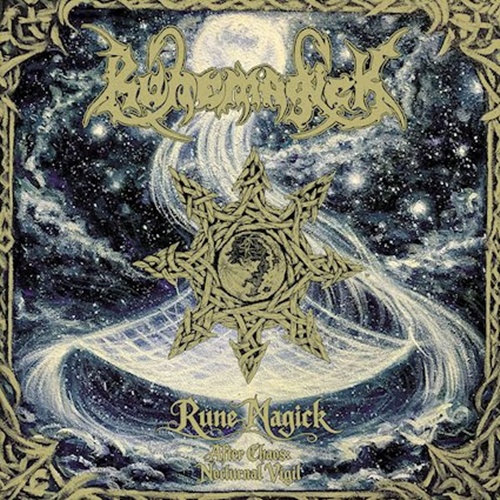
When the chaos is over, what remains is not necessarily silence, but a different kind of darkness. With Runemagick, Nicklas explores that space on “After Chaos: Nocturnal Vigil”, the new album due on September 18 through Hammerheart Records. Across eight interconnected compositions, Death/Doom Metal, ritualism, cosmic visions and animistic thought become fragments of a larger journey beyond collapse, where stillness becomes a threshold and dissolution opens the way towards the unbounded.
Hi Nicklas, thank you for joining us at Il Raglio Del Mulo. On September 18, “After Chaos: Nocturnal Vigil” will be released, marking a new chapter in Runemagick’s journey. Emerging from the ruins and silence following the collapse evoked in “Cycle of the Dying Sun (Dawn of Ashen Realms)”, the album enters a more introspective, ritualistic and cosmic dimension through eight interconnected compositions. What image, feeling or creative necessity first inspired you to explore what comes “after chaos”, and how did this idea shape the album as a whole?
The first thing that came to me was actually not an image of destruction, but the absence of it. The silence after something enormous has already happened. There are countless stories about collapse, war, apocalypse and the end of worlds. In music, literature and film we are often brought towards that final dramatic moment where everything breaks apart. The battle, the destruction, the final confrontation, the world ending. I have always been attracted to those themes myself, of course, and they have existed within Runemagick for a very long time. But while working with Cycle of the Dying Sun (Dawn of Ashen Realms) I gradually became more interested in another question. What happens when the collapse is already over? What remains when there is nothing left to fight against, nothing left to save and perhaps not even anything left to mourn in the way you did before? What happens when the noise has disappeared and you are simply left there, awake and present in whatever remains? That became the starting point for After Chaos: Nocturnal Vigil. I do not really see the album as beginning a completely new story. It begins in the residue of the previous one. Cycle of the Dying Sun descended through fading worlds, memories, death, transformation and the gradual collapse of familiar structures. After Chaos begins when that movement has reached a kind of still point. The old structures have already fallen away. There is no explosion at the beginning of this album. There is silence and presence. There is also a personal layer to all of this. I never want to explain the lyrics as autobiography because that would make them much smaller and more literal than I intend them to be, but inevitably parts of my own life enter the work. Everything does. Different phases of life, endings, changes, memories, things that disappear, things you leave behind and the strange silence that can follow when something that once seemed permanent is suddenly no longer there. That does not mean that a certain lyric represents a specific event from my life. I rarely work like that. It is much more intuitive. Experiences become impressions, impressions become images, and eventually those images can become words, music or atmosphere. So when I write about collapse, dissolution, memory or what remains afterwards, those images can exist on several levels at the same time. They can be cosmic, mythological, spiritual or purely atmospheric, but they can also function as metaphors for internal changes and passages through my own life. Life enters the work and becomes transformed, and eventually I may not even know exactly where the boundary lies between personal experience, imagination and the larger concept. Looking back at some of the lyrics afterwards, I can sometimes recognise things that I probably did not fully understand while I was writing them. I like that. Sometimes you create an image because it feels necessary, and only much later do you understand why that particular image appeared. If I already know exactly what everything means before I begin, there is very little for me to discover through the creative process. The concept also became connected to how I experience the world around me today. We live in an almost permanent state of distraction. Everything wants our attention. Phones, notifications, endless feeds, doom scrolling, short fragments of information, outrage, entertainment and the strange brainrot that can come from constantly consuming things without ever really processing them. Silence has almost become uncomfortable because we are trained to immediately fill it with something. For me, the nocturnal vigil became the opposite of that. To remain awake when the noise disappears. To observe without immediately reacting. To allow something to exist without having to consume it, explain it or turn it into content. That is also where the rune Isa became important. Isa is often associated with ice and stillness, but I became interested in the deeper possibility of stillness as concentration and complete presence. Not death and not passivity. More like a point where movement temporarily ceases and perception becomes sharper. From there the entire album began to unfold. The silence after chaos is not an empty space. It is a threshold. Once the old forms disappear, something else can become perceptible. Memory changes. Identity changes. Time changes. Eventually even the boundary between the individual and the surrounding world begins to dissolve. So the creative necessity behind the album was really to stay in that space instead of rushing towards the next dramatic event. To see what happens if you remain there long enough.
If the starting point is no longer the collapse itself, but the silence that remains once everything has already happened, the approach to composition also seems to have evolved. On “After Chaos: Nocturnal Vigil”, atmosphere, words and music appear to develop together. How important was it to allow the concept to directly influence the songwriting, rather than creating the music first and developing its meaning afterwards?
It was extremely important, and it represents a fairly significant change in how I work with Runemagick. Earlier Runemagick material often began in a more traditional way. A guitar riff appeared, another riff answered it, an arrangement developed and eventually lyrics and vocals became part of that structure. There was always atmosphere and intention behind the music, but the musical material usually came first. With Cycle of the Dying Sun and After Chaos: Nocturnal Vigil, that process changed. Both albums actually began partly as texts written in Swedish. They were not originally conventional lyrics with verses and choruses. They were fragments, images, thoughts and something closer to poems or short visions. I was writing about certain states, places and transformations before I necessarily knew what they would sound like as music. The music then gradually began growing around those words. That changed everything because a composition no longer needed to follow the traditional logic of a song. If an atmosphere needed to remain for several minutes, I allowed it to remain. If repetition strengthened the state I wanted to create, I did not feel any need to introduce a new riff simply because some unwritten rule says something should happen after a certain number of bars. Sometimes the words suggested a rhythm. Sometimes a musical passage changed the meaning of something I had written. Sometimes an arrangement became much simpler because I realised that adding more would actually weaken it. There were also moments where silence or almost complete stillness communicated more than another guitar layer could have done. The concept therefore became part of the composition itself rather than something placed on top of the music afterwards. This is another reason why beginning with words has become increasingly important to me. I do not write those texts in some isolated conceptual universe. Whatever I am experiencing at the time inevitably finds its way into them. Everything can become part of it. A walk in the forest can become part of a lyric. Something I read can open another path. A memory can suddenly return after many years. Personal changes, relationships, endings, ageing, solitude, nature, dreams, conversations and completely ordinary moments can all become material. But they rarely remain literal. They pass through the atmosphere and language of Runemagick and become something else. A personal transition can become the collapse of a world. A period of solitude can become a nocturnal vigil. Letting go of something can become dissolution. An experience of being connected to something larger can become a cosmic weave. Something very ordinary can eventually appear in the lyrics in a form that is almost unrecognisable from where it began. This is why I prefer not to explain the lyrics too precisely. There are certainly meanings that are very specific to me, but I do not think those meanings should become instructions for the listener. The metaphor should remain open enough for someone else to enter it with their own experiences. I think that is important because once a piece of music is released it no longer belongs entirely to the person who created it. Someone else may hear something in a lyric that I never consciously intended, but if that interpretation has meaning for them I do not see why mine should automatically invalidate it. The length of the compositions is connected to the same philosophy. The songs are not long because I decided that Runemagick should make deliberately long songs. They simply required time. There is a difference. If you are trying to create something contemplative, hypnotic or ritualistic, constantly interrupting it with new ideas can destroy exactly what you are trying to achieve. Sometimes repetition needs enough time to stop feeling like repetition and start becoming a state. Modern listening habits sometimes work against that. We are becoming accustomed to immediacy. Something should happen immediately, the hook should arrive quickly and if nothing changes within seconds there is always another song, another video or another feed waiting. I have no interest in adapting Runemagick to that. If anything, After Chaos asks the listener to do the opposite. Give it time. Enter it. Allow repetition and slowness to work on you. The lyrics, riffs, percussion, keyboards, acoustic elements, voices and ambient passages were therefore not separate layers that I assembled afterwards. They developed in dialogue with each other. That process feels much more natural to me now. I am less interested in writing songs about a concept than in allowing the concept, the words, my experiences and the atmosphere to determine what the music itself becomes.
This approach makes the album feel almost like a single journey divided into four movements, from “The Stillness After Collapse” to “Dissolution into the Unbounded”. How did you work on the sequence of the eight compositions so that each transition would have a specific function within the journey, and how important is it for you that the album is experienced as a complete work rather than simply as a collection of songs?
For me it is absolutely a complete work. Of course every track must still have its own identity, and some of them can be experienced separately, but that is not really how I constructed the album. The four movements became a way of giving structure to something that I imagined more as a continuous transformation. The beginning is very important because the listener should not feel that they are entering at the beginning of an event. They are arriving afterwards. Something has already taken place. The first movement therefore deals much more with stillness, presence and observation than with action. From there the perspective gradually changes. What initially appears to be emptiness begins to reveal other currents. That movement through the album is important. I wanted it to feel as if the listener gradually moves further away from the familiar rather than simply travelling from song one to song eight. The sequence was therefore very deliberate. I thought a lot about how one composition leaves the listener and where the next one receives them. Sometimes that relationship is musical. Sometimes it is lyrical. Sometimes it is almost psychological. A very heavy section can make a sparse passage feel enormous. Silence can change the meaning of what came before it. Something that initially appears to be an ending can reveal itself as the doorway into the next movement. The four movements also helped me think about the larger arc. We begin with what remains after collapse, but the album does not stay there. The perspective slowly turns inward and outward at the same time. Memory, consciousness, runic symbolism, cosmic space and the relationship between the individual and something larger begin to overlap. There is also an important progression in the role of the observer. At the beginning there is still very clearly someone standing among the remnants and witnessing what remains. Later that distinction begins to weaken. By the final part, even the separation between observer and observed starts to become less certain. By the time we reach Dissolution into the Unbounded, the question has changed. It is no longer simply about what remains after collapse. It becomes a question of what remains when the boundaries through which we normally understand ourselves begin to dissolve. That is also where I think the album can work on both a conceptual and personal level. A cosmic dissolution and a human transformation do not necessarily need to be separate things within a metaphor. We all pass through periods where an old version of ourselves, our surroundings or our understanding of life ceases to function. Something ends, but we continue. Sometimes we do not immediately know what comes next. That uncertainty interests me much more than a simple narrative where destruction is followed by rebirth and everything suddenly makes sense. Real transformation is rarely that clean. This is one reason why I still care deeply about the album format. Streaming has obviously changed how people consume music, and I understand that. Digital platforms are useful and I am not against them. But After Chaos: Nocturnal Vigil was never designed as something to shuffle between unrelated tracks while doing ten other things. Ideally, I would like someone to put on the album and actually give it the time it requires. Perhaps listen to the first part, take a pause, and then continue with the second. Read the lyrics. Look at the artwork. Allow the physical presentation, the words and the music to become parts of the same experience. That may sound old fashioned now, but I actually think the opposite can be argued. Giving your complete attention to one thing for an extended period of time has almost become a radical act in a culture built around constant interruption. I grew up with albums as complete works. You put on a record and entered that particular world for forty minutes or an hour. The cover, the lyrics, the sequence of songs and even turning the record over were part of the experience. I still value that enormously. With an album this long, I am obviously not expecting everyone to sit completely motionless from beginning to end every time they hear it. That is not the point. But I do think it benefits from being approached as a journey rather than as eight unrelated destinations. The album does not demand attention because I believe it is somehow more important than everything else. It simply cannot reveal everything it contains if it is treated as background noise.
One of the album’s most distinctive elements is the relationship between the weight of Death/Doom Metal and its more meditative, ritualistic and cosmic passages, together with the shamanic voice of Dísa Draugurinn. How did you define the balance between these different languages, and what did her performance add to the atmospheres you had originally envisioned?
I never really approached those elements as different languages that needed to be forced together. To me they are different expressions of the same atmosphere. The Death/Doom foundation is still essential to Runemagick. I have no desire to escape from heaviness. Distorted guitars, slow riffs, physical weight and the primitive force of Death Metal are part of the DNA of Runemagick and probably always will be. But heaviness does not necessarily mean that everything has to be loud. That is something I have become increasingly interested in over the years. Sometimes a sparse sound can feel heavier than several layers of distorted guitars if it appears at exactly the right moment. A voice in an otherwise empty space can create a completely different form of intensity. Repetition can become hypnotic. Percussion can become ritual rather than simply rhythm. Silence itself can become part of the composition. If everything is massive all the time, eventually nothing feels massive. The contrast creates the weight. The ritualistic and cosmic passages therefore did not feel like departures from Death/Doom to me. They felt like ways of exploring the same darkness from another perspective. There has always been atmosphere in Runemagick, even when the music was more direct and primitive. I think what has changed is that I now allow those atmospheric elements much more space. I do not feel any need to immediately return to a riff because I am worried that something has stopped being Metal enough. If the atmosphere requires space, it gets space. Dísa’s contribution was particularly important because her voice comes from a completely different place than mine. We have known each other for many years, and I have great respect for what she does with Draugurinn and her exploration of ritualistic and shamanic expression. I did not want her contribution to sound like a conventional guest appearance where another vocalist simply appears for a verse or a chorus. That would have completely missed the point. Her voice needed to function almost as another presence within the album. There are moments where it feels human and intimate, and others where it becomes something more difficult to locate. Is it a memory? A voice from outside? Something emerging from the landscape? Something from another layer of consciousness? Something that was already present but could only be perceived once everything else became silent? I like that ambiguity very much. It connects strongly with my own relationship to nature and animistic thought. I spend a lot of time walking in forests and landscapes, often alone. The longer you remain somewhere without constantly imposing yourself upon it, the more you begin to notice that you are surrounded by processes that have absolutely nothing to do with human schedules or priorities. Wind moves through the trees. Things die and decompose. Fungi appear. Animals move through places you never see them. Seasons change. The landscape contains histories that existed long before you arrived and will continue after you leave. You begin to notice rhythms that were already there. For me, animistic thought is connected to that awareness. I am not interested in pretending that I possess some secret ancient truth or reconstructing something I cannot genuinely know. It is more about questioning the assumption that the human being is always the centre and everything else is simply scenery or material surrounding us. I wanted parts of the album to have something of that quality. Dísa understood this instinctively. Her performance did not merely decorate an atmosphere I had already created. It opened another dimension inside it.
From a sonic perspective, “After Chaos: Nocturnal Vigil” was entirely composed and performed by you, while the mixing and mastering were handled by Andy La Rocque at Sonic Train Studios. With a production built essentially around one creative mind and such a wide range of instruments, how important was it to preserve a sense of immediacy and organic character, and what did La Rocque’s contribution add to the album’s final identity?
Preserving the organic character was essential because an album like this could very easily become overproduced. When you are working mostly alone you have almost unlimited possibilities. That freedom is wonderful, but it is also dangerous. You can keep adding layers forever. Another guitar, another texture, another percussion track, another keyboard, another effect. There is always something else you could add or correct. Eventually you can polish away the reason the music existed in the first place. I wanted After Chaos to retain imperfections, dynamics and physical movement. Even when there are many layers, I wanted them to feel as though they belong to the same world. I did not want every instrument perfectly separated and clinically controlled. Death and Doom Metal should have texture. You should feel strings, amplifiers, drums, air and friction. There should be something physical in the sound. The same applies to the more ritualistic elements. If those parts become too polished, they immediately lose something. They should feel integrated into the atmosphere rather than sounding like effects added afterwards simply to make the music appear more mysterious. There is also a particular challenge when you perform so much yourself. You have complete control, but complete control can become sterile if you are not careful. I try to leave space for instinct and accident. Sometimes the first or second take contains something that disappears when you try to make it technically perfect. A small imperfection can contain more character than the corrected version. Obviously I do not deliberately try to play badly, but perfection is not the goal. Emotion is more important to me than perfection. Andy understood that balance very well. I have known Andy for a very long time, and there is a great deal of trust there. His role was never to transform the material into something else or impose another identity on it. It was much more about revealing what was already inside the recordings and making all these different elements coexist without losing their character. That becomes particularly important on an album where very dense sections can be followed by extremely sparse ones. The massive parts must actually feel massive, but the quiet sections cannot simply feel like someone turned the volume down. They need their own depth and space. Andy has a very musical way of mixing. He obviously understands heavy music extremely well, but he also understands dynamics and atmosphere. There is a difference between making something technically powerful and making it emotionally powerful. I think the final sound retains the roughness and organic character I wanted while still having clarity and depth. You can hear the different layers when you want to follow them, but they still feel like parts of one body. For me that is the ideal collaboration. I retain the freedom of constructing the work and following the concept wherever it needs to go, while someone I trust can later enter that world with fresh ears and help me hear what I have become too close to judge objectively.
Looking at Runemagick’s history, the project began in the early Nineties as a solo endeavour and has gone through different line-ups, pauses and transformations over the decades, eventually becoming more of a creative entity than a traditional band. Looking back at that evolution, was there a particular moment when you realised that Runemagick no longer needed to follow the rules of a conventional band?
I do not think there was one dramatic moment when I suddenly decided that. It happened gradually, and perhaps in some sense Runemagick was always like this. It began as my project, then became a band, changed lineups, went through different periods, disappeared for a while, returned and transformed several times. There have been eras where the chemistry of a particular lineup has been extremely important, and I would never want to diminish what those musicians contributed. Every person and every period left something behind. Runemagick would not have the history or identity it has today without those different chapters. But somewhere along that path I stopped thinking that Runemagick needed to fit one permanent organisational form. A band is usually expected to function according to a certain model. You have fixed members, rehearse regularly, write together, record, play live and then repeat the process. There is nothing wrong with that model. I have worked that way many times and still enjoy collaboration. But forcing Runemagick into that structure simply because that is how a band is supposed to operate could actually limit what Runemagick is able to become. I now think of Runemagick more as an entity. People can enter that entity and contribute to it. Different constellations can exist. Live activity can take one form and studio work another. Sometimes I may create almost everything myself, while another period may become much more collaborative. What matters is the identity behind it. After more than thirty years I think that identity is stronger than any particular lineup. This way of thinking also gives me enormous creative freedom. I do not need to ask whether something is appropriate for a conventional Death Metal band. If I believe an acoustic instrument, ritual percussion, keyboards, a long ambient passage, silence or an extended repetition belongs there, then it belongs there. The only real question is whether it belongs within the world of the album. That freedom has become increasingly important to me as I have grown older. Time becomes more valuable, and I have no interest in spending the time I have available trying to fulfil rules that nobody actually created except ourselves. At the same time, working largely alone does not mean that I have somehow lost interest in other musicians. Quite the opposite. When another person enters the music now, I want there to be a reason for it. I want that person to bring something I would not have created myself. That is what makes collaboration meaningful. Runemagick has existed in several different forms already. Trying to freeze it now would feel much stranger to me than allowing it to continue changing. At this stage I am much more interested in following where Runemagick wants to go than in defining what Runemagick is supposed to be.
Your history within the Swedish underground also includes experiences with acts such as Sacramentum and The Funeral Orchestra, alongside numerous other projects, yet you have always maintained a certain distance from the usual ideas of fame and success. After more than three decades of activity, what has remained unchanged in the way you approach music, and what have you completely stopped considering important?
What has remained unchanged is probably the need to create something that I personally want to hear and experience. That sounds very simple, but I think it becomes increasingly important the longer you do this. When you are younger there can be a lot of external noise around music. Scenes, expectations, record labels, reviews, sales, other bands, what is considered underground enough, what is considered successful, who is getting attention and who is not. Some of that can be exciting and important. The underground communities I grew up around meant a great deal to me. There was tape trading, letters, fanzines and a genuine feeling that you were discovering things that existed outside the mainstream. That period shaped me enormously, and I would never want to rewrite that history as if isolation itself was somehow the goal. Music has always also been about connection. But eventually you have to ask why you are still doing it. I am now in my fifties. If I were still making records because I hoped someone would finally tell me that I had succeeded, something would have gone terribly wrong. Success for me is being able to finish an album and feel that it became what it needed to become. Of course I want people to hear it. I appreciate good reviews. I appreciate when someone buys a record, comes to a concert or writes to say that the music meant something to them. That connection is real and important to me. Without listeners, something meaningful would certainly be missing. But numbers are not the reason. Followers, algorithms, streaming statistics and social media engagement can easily create a distorted version of reality. You can have enormous visibility for fifteen seconds and leave absolutely nothing behind. Another record can reach a relatively small number of people but remain important to some of them for decades. I know which one interests me. I have also become less interested in constantly presenting myself. We live in a strange time where musicians are increasingly expected to become content producers. You are supposed to continuously feed the machinery so people do not forget that you exist. Every rehearsal, meal, thought and minor event can apparently become content. I understand why musicians do it. The entire system increasingly demands visibility, and of course I also use social media when there is something I actually want to communicate. But personally I would rather disappear for a while, walk in the forest, live my life, think, create something when there is actually something to create, and eventually return with an album that has substance. I hardly watch television and have not really done so for many years. I deliberately try not to fill every silent moment with information or entertainment. Nature, walking, reading, thinking and simply being away from screens have become increasingly important to me. Perhaps that is also why the music has become more introspective. Life itself has changed as well. You get older. People enter and leave your life. Relationships change. Children grow older. Things you once believed were permanent turn out not to be permanent at all. Your relationship with time changes because you become increasingly aware that it is not unlimited. All of that inevitably enters the creative process. Again, I do not sit down and write a diary in the form of Runemagick lyrics. But the person creating the music is not separate from the person living the life. Everything leaves traces. Musically, Runemagick is definitely my main focus at the moment, especially with After Chaos: Nocturnal Vigil approaching release and with ideas already beginning to form beyond it. But it is not the only music in my life. I am also writing material for a coming album with The Funeral Orchestra. That is another entity with its own history, atmosphere and identity, and I think it is healthy for me to have more than one creative channel. I do not want every musical idea I have to become Runemagick simply because Runemagick is my main focus. Some ideas clearly belong somewhere else. The Funeral Orchestra gives me another space to work within, with another kind of weight and another atmosphere. I think the different projects can coexist without competing with each other because I know when something belongs to Runemagick and when it does not. What I have completely stopped considering important is whether any of it fits into whatever is currently expected from extreme metal. After this many years, chasing relevance would probably be the fastest way to become irrelevant.
“After Chaos: Nocturnal Vigil” seems to suggest that an ending is not really an ending, but a threshold towards another form of awareness, continuity and transformation. Once this chapter has been completed, what do you think could be the next unexplored territory for Runemagick, and is there already an idea, image or intuition beginning to point you in a particular direction?
Yes. There is already something growing beyond After Chaos, although I do not want to reveal too much about it yet. Part of the creative process for me is allowing an idea to remain undefined for a while, before explaining it to others and perhaps even before fully explaining it to myself. I increasingly see Cycle of the Dying Sun (Dawn of Ashen Realms) and After Chaos: Nocturnal Vigil as parts of a larger movement. Cycle of the Dying Sun was descent and collapse. After Chaos is what happens when you remain awake in the silence that follows. The next question naturally becomes: what emerges from that silence? That is roughly where my thoughts are beginning to move now. I am becoming increasingly interested in moving away from the image of isolated individual consciousness and towards something more interconnected. Nature becomes important there, but not nature simply as beautiful scenery or romantic escapism. I mean nature as intelligence, network, decomposition, transformation, communication and continuity. Processes that continue regardless of whether we are observing them or even understand that they are taking place. One image that has stayed with me is the mycelial network beneath the forest floor. You walk through a forest and see individual trees, plants, fungi, stones, fallen branches and dead material, but underneath what is immediately visible there are vast systems of connection. Things are communicating, decomposing, feeding and transforming. Life and death are not really clean opposites there. The dead becomes nourishment. One form dissolves and enters another. What appears to have ended continues through something else. I find that extremely powerful, both as something real in nature and as an image. There is something almost contradictory about it. On the surface there can be silence and apparent stillness, while beneath your feet an entire hidden world is active. Something can look finished while already participating in another process. That feels like a natural direction after After Chaos. There is also an animistic dimension to this that has become increasingly important in how I think and create. Not in the sense of trying to reconstruct some historical religion or pretending to possess ancient knowledge. I am more interested in questioning the modern assumption that the human observer is somehow separate from everything around it. When you spend enough time in nature, that separation can begin to feel increasingly artificial. I spend quite a lot of time walking in forests, and there is a completely different perception of time there compared with the artificial rhythm we surround ourselves with in everyday life. Human society is obsessed with speed, information and constant reaction. In a forest, processes are taking place according to completely different scales. Something grows. Something dies. Something decomposes. Something feeds upon it. The cycle continues without requiring our attention. There is something very grounding in that, but also something mysterious. And inevitably this progression also reflects something personal. These albums are not diaries, and I would never want to reduce the lyrics to direct autobiography, but when I look back at them I can recognise phases of my own life inside them. Sometimes you only understand that afterwards. You create an image because it feels necessary at that particular moment, and later you realise that you were also writing about yourself. That is probably true of the movement from Cycle of the Dying Sun through After Chaos and into whatever eventually comes next. There is collapse and dissolution, but also acceptance and stillness. Eventually there is the possibility of something changing within what remains. I do not mean a simple idea of death followed by rebirth, or a return to what existed before where everything suddenly becomes whole again. That would almost be too comforting and too simple. I am more interested in transformation and continuance. What has passed through collapse has not necessarily vanished. It has changed its condition. Something may continue without returning to its previous form. New possibilities can exist without having decided what they will become. That is very close to how I understand the final parts of After Chaos. The movement continues, but it increasingly loses the need for destination, explanation and even an observer. The album does not really arrive somewhere in the conventional sense. It continues beyond the point where arrival matters. Those are cosmic and natural processes, but they are also deeply human ones. Everything inspires the work in some way. The music I have carried with me for decades, nature, runes, animistic thought, books, conversations, memories, ageing, changes in my own life, walking alone through a forest, dreams, silence, or simply an unexpected thought that appears when I am doing something completely unrelated to music. I do not really separate those sources anymore. Eventually they enter the same creative current and become transformed into something that belongs to Runemagick. So yes, there are already images and ideas pointing towards what might come next. But I think I should leave it there for now. Some things are better allowed to grow in darkness for a while before they are brought into the light. And perhaps the next unexplored territory is not somewhere farther out in the cosmos at all. Perhaps it has been beneath our feet the entire time.
Runemagick has now crossed several eras of extreme music without ever seeming interested in following trends or external expectations. Looking ahead, do you see the future mainly as a further exploration of these ritualistic and cosmic dimensions, or do you feel the need to push the project towards something that you cannot yet define?
Probably both. I think the ritualistic, cosmic and animistic dimensions will remain because they are not concepts I introduced simply to give these albums a particular aesthetic. They reflect things I am genuinely interested in, and at this point they have become intertwined with how I create and how I experience the world around me. The runes are part of that as well. I do not see them merely as symbols to place on artwork or attach to songs because they look mysterious. They can represent or mark different forces, states, movements and perspectives. They give me a language for approaching ideas that are sometimes difficult to express directly. But particularly on After Chaos, I do not see the runes as guides telling us where to go. They are closer to thresholds, traces or markers of forces encountered during the passage. They do not give instructions and they do not promise answers. They mark something without necessarily explaining it. That distinction is important to me. The same applies to the ritualistic and animistic aspects of the music. I never want them to become decoration. If they are there simply because they make the album appear darker or more mysterious, then they have no real purpose. But I also never want any of this to become another formula. The moment I decide that Runemagick must now be a ritualistic cosmic Death/Doom band and every future record must contain a particular set of ingredients, I have simply constructed another prison. I would rather leave some doors open. The Death/Doom foundation will probably always be there in one form or another because that musical language is deeply rooted in me. I grew up with extreme metal when it still felt dangerous, mysterious and largely disconnected from the professional machinery that surrounds so much music today. That primitive force still matters to me. There is something in a simple, slow, crushing riff that cannot be replaced by any amount of conceptual thinking. That is important as well. I can talk for hours about concepts, runes, nature, consciousness and transformation, but Runemagick is still music. If the riff does not have weight, no philosophical explanation is going to save it. At the same time, after more than three decades, repeating an earlier Runemagick album simply because people liked it would be creatively meaningless. I would rather risk making something that confuses some listeners. The interesting territory usually begins when you are not completely certain what you are doing. That does not mean deliberately becoming strange or experimental for its own sake. I have never been interested in novelty as a goal. It means following an atmosphere or intuition far enough that you eventually arrive somewhere you could not have planned intellectually. That is essentially what happened with Cycle of the Dying Sun and After Chaos. They changed the way I think about Runemagick while I was making them. The conceptual side became more important. The words began appearing earlier. The relationship between music, silence, atmosphere and meaning changed. I suspect whatever eventually follows will continue that transformation, but I do not want to decide in advance exactly how. Maybe it will become more organic and earthy. Maybe more primitive. Maybe more abstract. Perhaps all of those things at once. I already have certain images, texts and directions, but I deliberately do not want to know everything yet. And while Runemagick is definitely my main musical and creative focus right now, I am also writing for the next The Funeral Orchestra album. I think having another musical world to enter is useful because it prevents me from trying to force every dark or heavy idea into Runemagick. The projects have different identities, even if naturally there are parts of me present in both. But with Runemagick in particular, I want to preserve the possibility of discovery. There should always be some darkness ahead. If I can already see the entire road, there is very little reason for me to walk it. That uncertainty is still one of the things that makes creating music meaningful to me after all these years. I do not need Runemagick to arrive at a final form. I do not think there is one. The same is probably true of life itself. We tend to divide everything into beginnings and endings because it makes things easier to understand, but an ending is often only visible as an ending from one particular perspective. Something disappears, something changes, and another process may already be taking place before we are able to recognise it. That idea connects Cycle of the Dying Sun, After Chaos: Nocturnal Vigil and whatever eventually follows. One cycle closes. Silence remains. Then, somewhere beneath the surface, something begins to move again. You may not see it yet. But that does not mean it is not alive.

